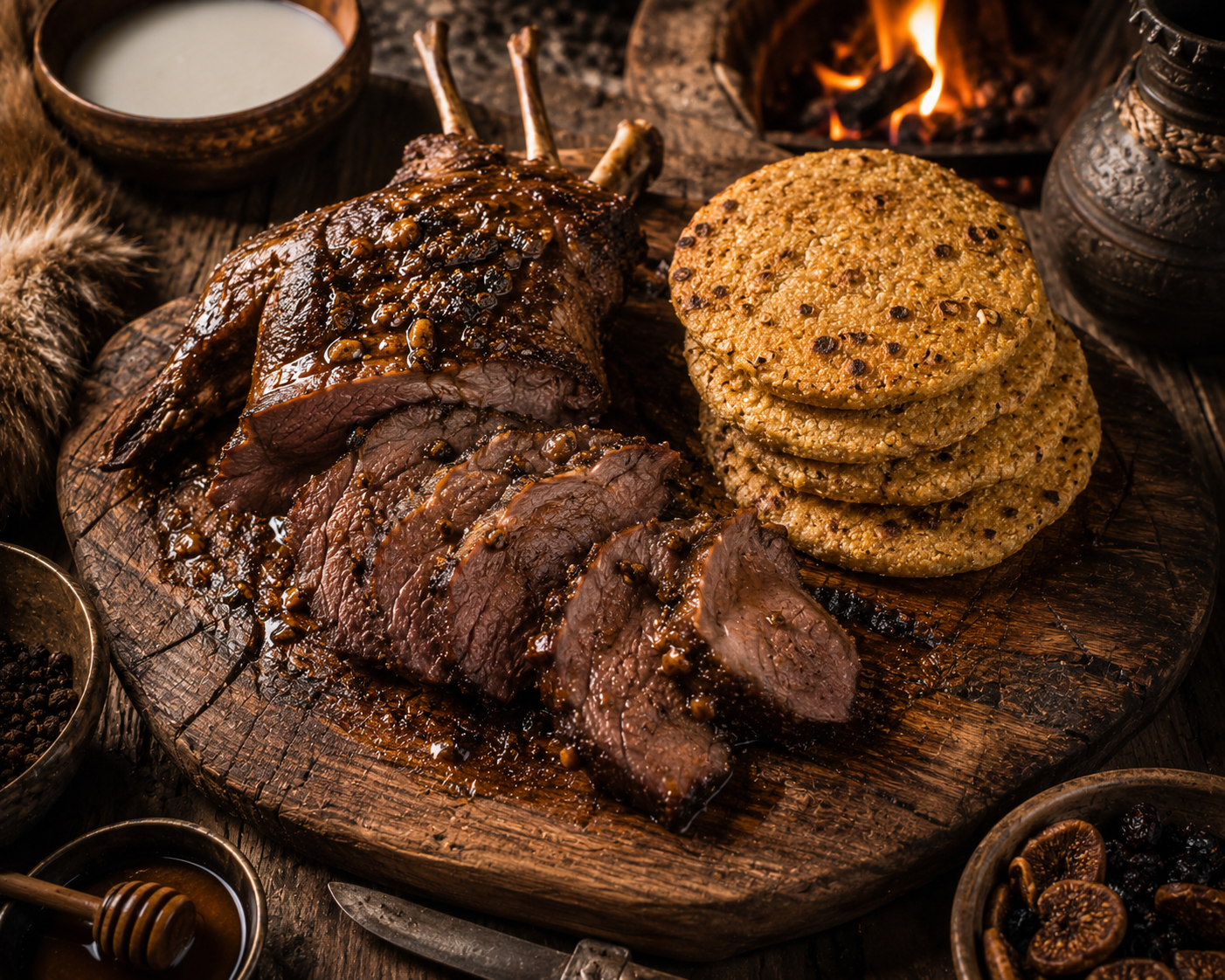
Roast Suckling Pig with Honey and Garum Sauce
A piece of pork slowly roasted, served under a glossy sauce blending garum, honey, wine, and spices. The sweetness of the honey answers the deep saltiness of the garum: this is the 'sweet-and-sour' balance characteristic of Apicius's great Roman sauces.
A piece of pork slowly roasted, served under a glossy sauce blending garum, honey, wine, and spices. The sweetness of the honey answers the deep saltiness of the garum: this is the 'sweet-and-sour' balance characteristic of Apicius's great Roman sauces.
On the day I dedicated my city, the New Rome on the Propontis, I wished for a table worthy of a renewed empire. Let the pork be roasted on the spit, let it be glazed with that sauce where garum embraces honey, where wine is married to pepper and lovage! My guests asked for more, and I reflected that God had given me to reign over such abundance. Taste this contrast of salt and honey: therein lies all the art of our cooks.
- •Pork shoulder or loin — a fine piece (meat)
- •Garum (liquamen) — a good splash (salty umami)
- •Honey — two spoonfuls (sweetness)
- •Wine (passum or cut wine) — a cup (deglazing)
- •Pepper, cumin, lovage — to taste (spices)
- •Dates — a few (sweet binder)
Roast Suckling Pig with Honey and Garum Sauce
A piece of pork slowly roasted, served under a glossy sauce blending garum, honey, wine, and spices. The sweetness of the honey answers the deep saltiness of the garum: this is the 'sweet-and-sour' balance characteristic of Apicius's great Roman sauces.
Why this dish? For the inauguration of Constantinople in 330, Constantine offered lavish feasts to the new capital. Roast pork, the noble meat of the Roman banquet, glazed with a sweet-and-sour garum sauce, embodied the magnificence of the imperial table described in the sources.
On the day I dedicated my city, the New Rome on the Propontis, I wished for a table worthy of a renewed empire. Let the pork be roasted on the spit, let it be glazed with that sauce where garum embraces honey, where wine is married to pepper and lovage! My guests asked for more, and I reflected that God had given me to reign over such abundance. Taste this contrast of salt and honey: therein lies all the art of our cooks.
Ingredients (period version)
- Pork shoulder or loin — a fine piece (meat)
- Garum (liquamen) — a good splash (salty umami)
- Honey — two spoonfuls (sweetness)
- Wine (passum or cut wine) — a cup (deglazing)
- Pepper, cumin, lovage — to taste (spices)
- Dates — a few (sweet binder)
Ingredients
- Pork roast (shoulder) — 1.2 kg (meat)
- Fish sauce (nuoc-mam or reconstituted garum) — 2 tablespoons (salty umami)
- Honey — 2 tablespoons (sweetness)
- Sweet white wine — 150 ml (deglazing)
- Ground black pepper — 1 teaspoon (spice)
- Ground cumin — 1/2 teaspoon (spice)
- Pitted dates — 4 (sweet binder)
- Wine vinegar — 1 tablespoon (acid balance)
Method
- Roast the pork in the oven at 180°C until golden and tender (about 1 hour 15 minutes), basting with its juices.
- In a saucepan, melt the crushed dates with the wine and a little water.
- Add the garum, honey, pepper, and cumin; let reduce to a syrupy sauce.
- Adjust with a dash of vinegar to balance the sweetness.
- Slice the roast, coat with hot sauce, and serve immediately.
How it was made : Apicius is full of sweet-and-sour sauces for meats, combining garum, honey, cooked wine (defrutum/passum), spices, and dried fruits. Pork was the most prized meat among Romans, prepared in countless ways for elite banquets. Spit-roasting and glazing with thick sauce were markers of refinement.
The contemporary twist : Serve glazed slices on a slate board with a few roasted dates: name the dish 'The Roast of New Rome'.
Sources : Apicius, De re coquinaria, book VIII (Quadrupedia) · Pliny the Elder, Natural History
Constantine I · Charactorium