 flip
flipBarley Maza with Olives and Cheese
Barley Maza with Olives and Cheese
Why this dish? Before the gold and court sauces, Lydia was a fertile land living from its fields: maza, an unleavened barley paste, was the daily bread of the Greek and Lydian world. Even at the palace, this simple base accompanied festive dishes.
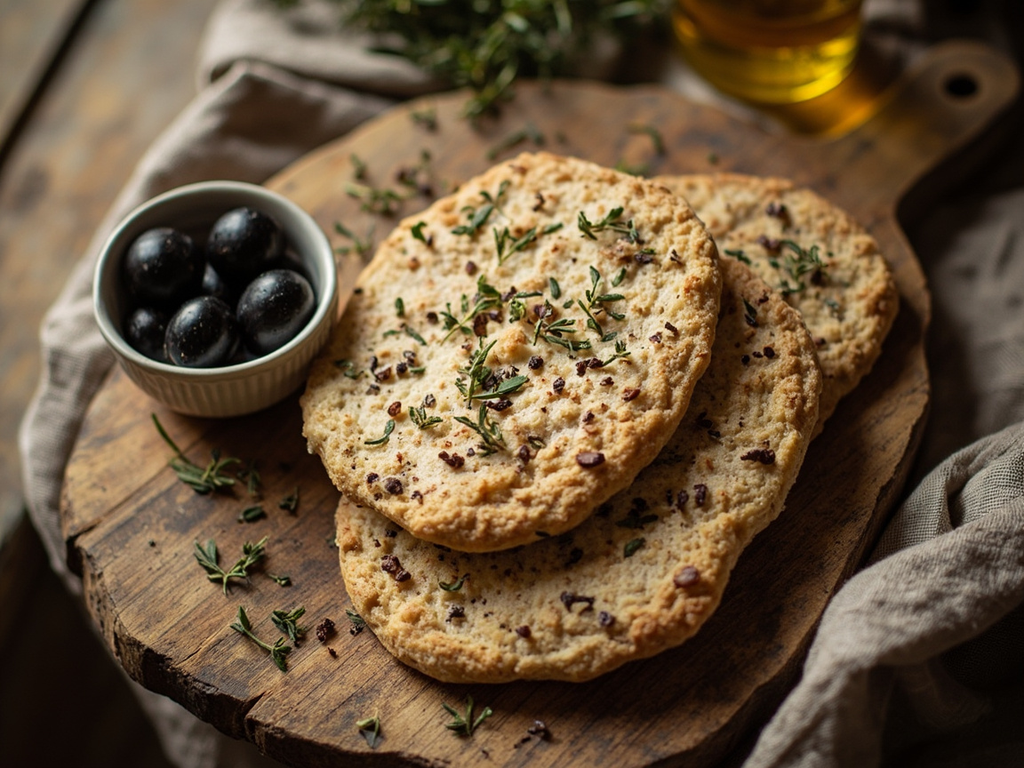
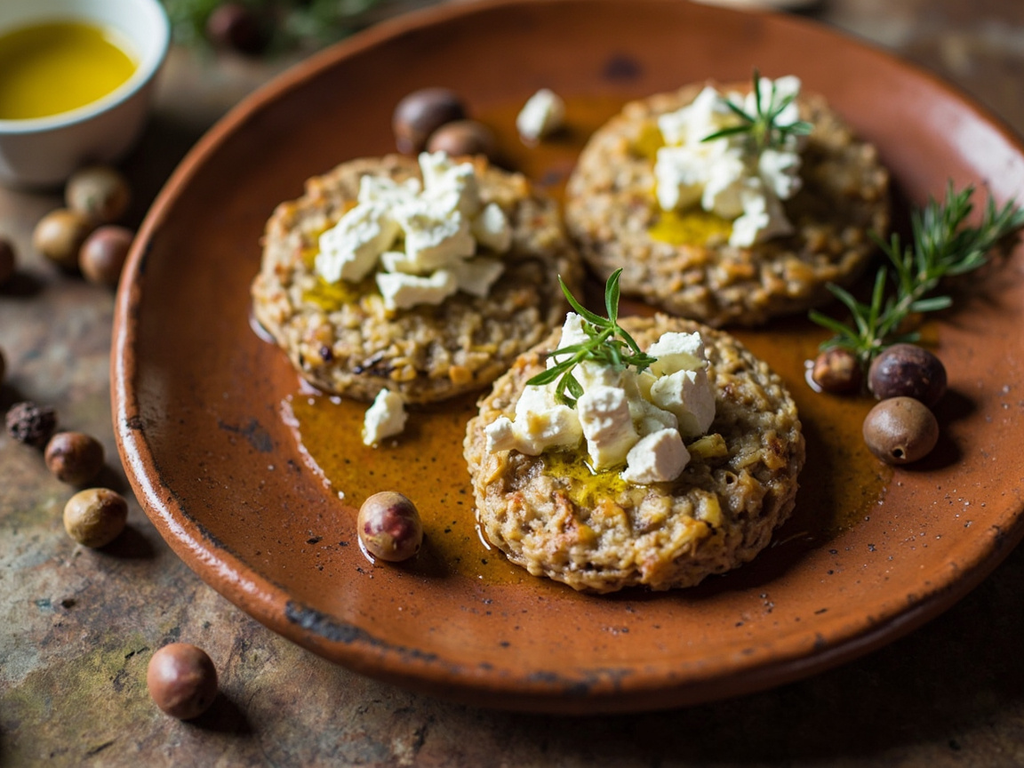
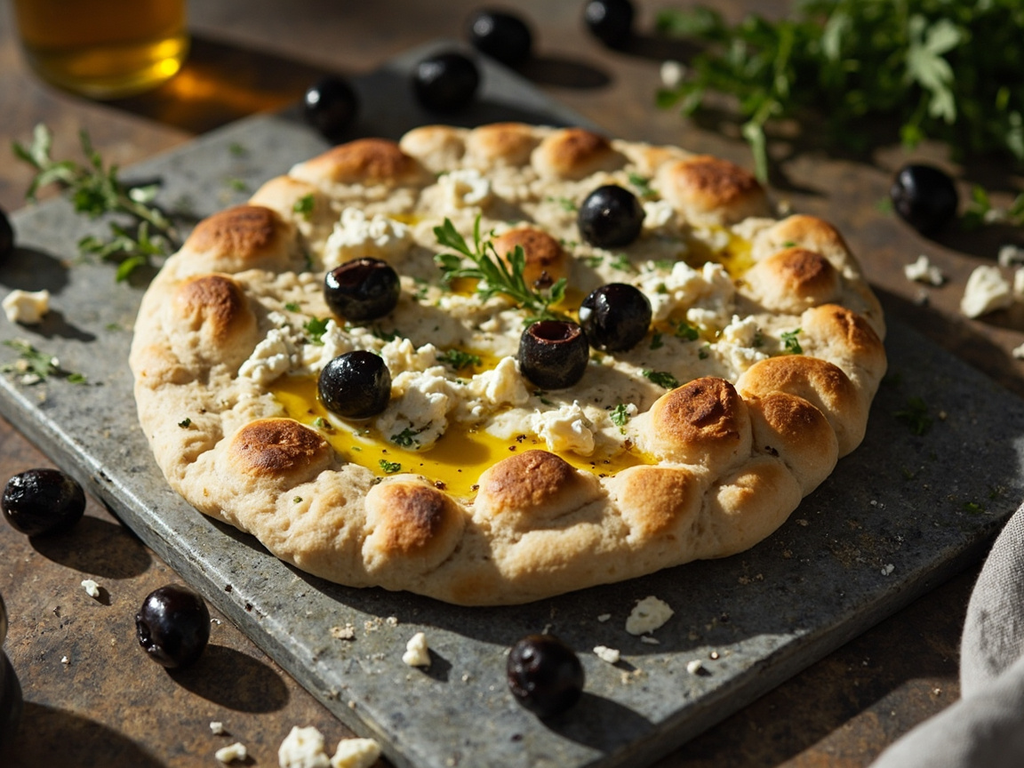
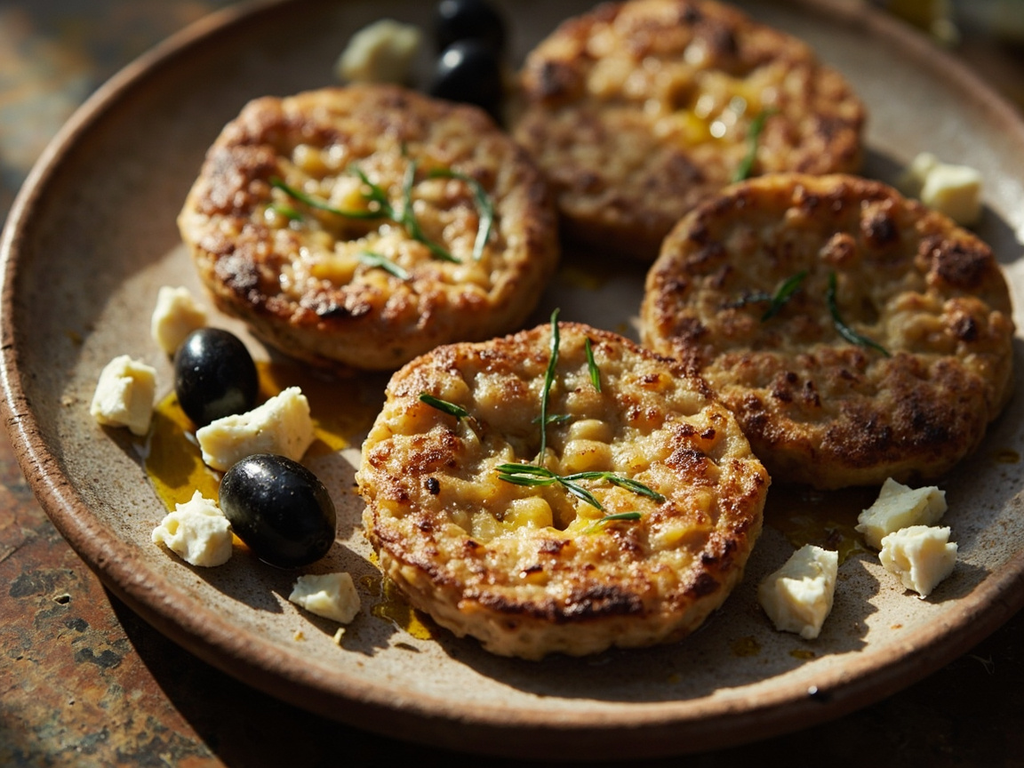
A dense, rustic grilled barley cake, served with plump olives and sheep cheese. The basic, honest meal that nourished both the royal household and the farmer of the Pactolus.
You marvel that a king knows the taste of barley? Know that my fortune came from this earth before it flowed from the Pactolus. Take this maza: we toast the barley, knead it with water and a little oil, and break the piece with black olives and sheep cheese. This is what my laborers ate and, on some days, I myself — for the wise man, I am told, never scorns the bread that made him rich.
- •Toasted barley flour — two handfuls per person (cereal base)
- •Water — for kneading (binder)
- •Olive oil — a drizzle (richness)
- •Black olives — a handful (opson, bitterness)
- •Sheep cheese — a few pieces (salty opson)
- •Salt — a pinch (seasoning)
Barley Maza with Olives and Cheese
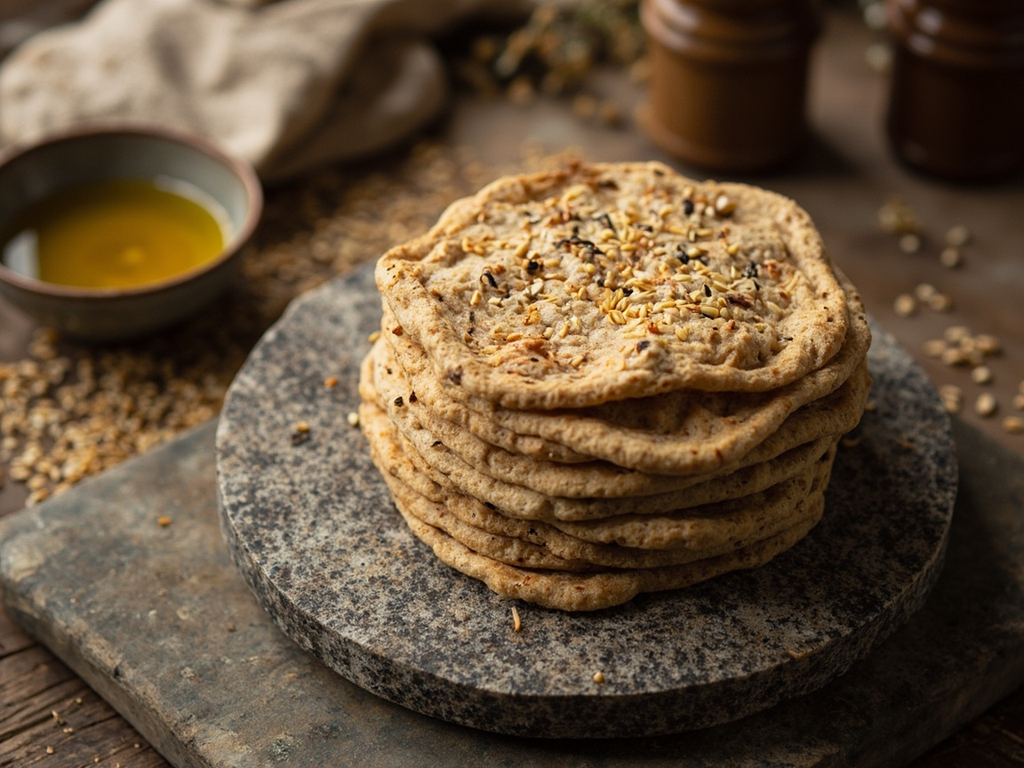
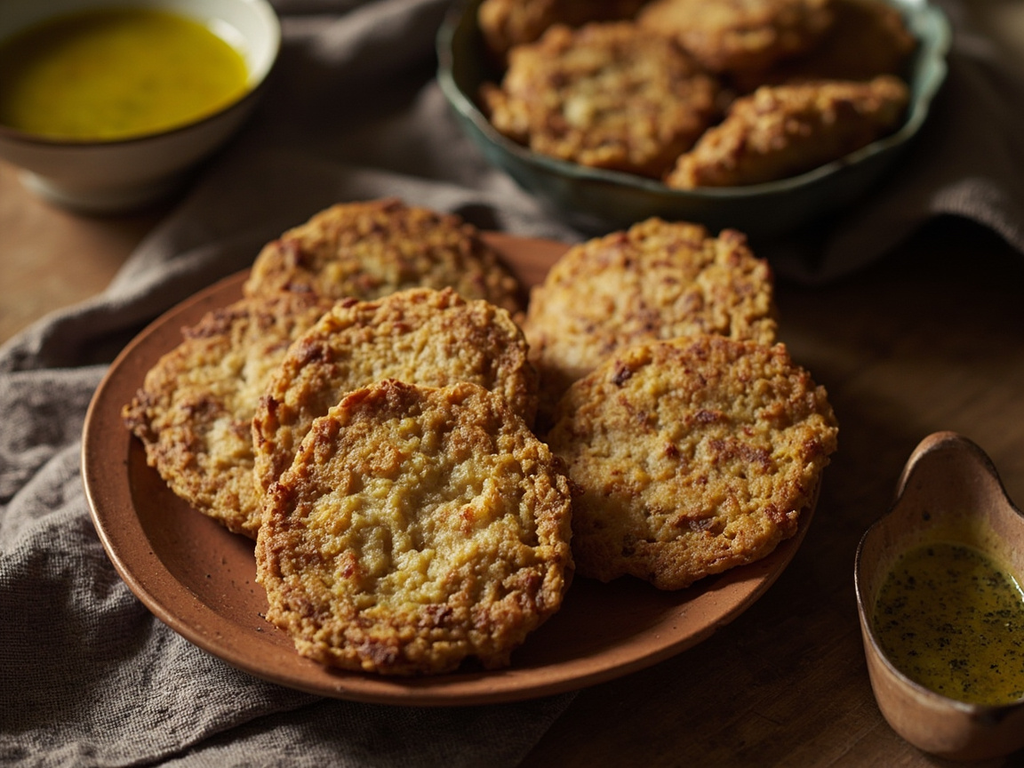
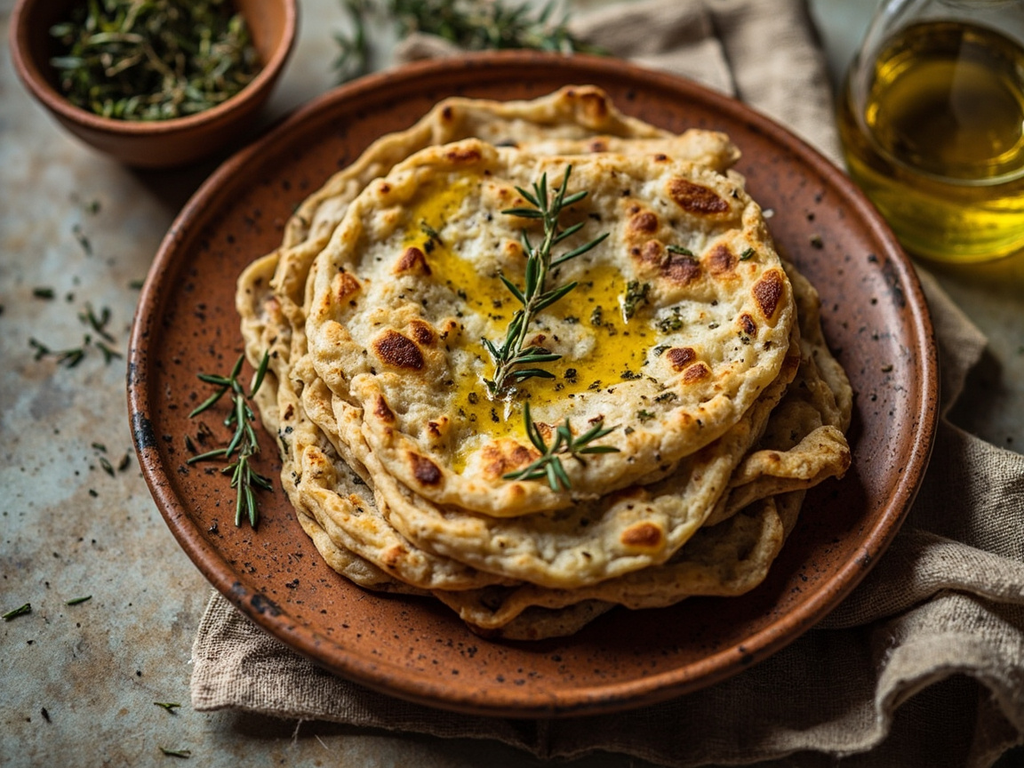
A dense, rustic grilled barley cake, served with plump olives and sheep cheese. The basic, honest meal that nourished both the royal household and the farmer of the Pactolus.
Why this dish? Before the gold and court sauces, Lydia was a fertile land living from its fields: maza, an unleavened barley paste, was the daily bread of the Greek and Lydian world. Even at the palace, this simple base accompanied festive dishes.
You marvel that a king knows the taste of barley? Know that my fortune came from this earth before it flowed from the Pactolus. Take this maza: we toast the barley, knead it with water and a little oil, and break the piece with black olives and sheep cheese. This is what my laborers ate and, on some days, I myself — for the wise man, I am told, never scorns the bread that made him rich.
Ingredients (period version)
- Toasted barley flour — two handfuls per person (cereal base)
- Water — for kneading (binder)
- Olive oil — a drizzle (richness)
- Black olives — a handful (opson, bitterness)
- Sheep cheese — a few pieces (salty opson)
- Salt — a pinch (seasoning)
Ingredients
- Barley flour (toasted dry in a pan) — 200 g (base)
- Warm water — 12-15 cl (binder)
- Olive oil — 2 tbsp (softness)
- Pitted black olives (Kalamata type) — 80 g (garnish)
- Sheep cheese (sheep feta) — 120 g (garnish)
- Salt — 1 pinch (seasoning)
Method
- Toast the barley flour dry in a pan for 3-4 minutes, stirring, until it smells nutty.
- Mix the toasted flour, salt, oil, and warm water to form a soft, non-sticky dough.
- Shape into small thick cakes and cook 3-4 minutes per side on a lightly oiled hot griddle.
- Crumble the sheep cheese and pit the olives.
- Serve the warm cakes surrounded by olives and cheese, drizzled with olive oil.
How it was made : Maza — toasted barley paste kneaded and sometimes simply dried — was the staple food of the Aegean world, distinct from the more prestigious leavened wheat bread (artos). It was eaten with opson: olives, cheese, onion, dried fish. Lydia, a renowned granary, produced barley and wheat in abundance.
The contemporary twist : Arranged as mini cakes with crumbled cheese and a whole olive speared with a thyme sprig: an "ancient appetizer" that beats chips.
Sources : Herodotus, Histories, book I (agricultural wealth of Lydia) · Andrew Dalby, Siren Feasts: A History of Food and Gastronomy in Greece (on maza and opson)
Croesus of Lydia · Charactorium