 flip
flipBarley Maza with Oil, Olives, and Fresh Cheese
Barley Maza with Oil, Olives, and Fresh Cheese
Why this dish? Cronus brandishes the adamantine sickle, the weapon that is also the harvester's tool. Under his Golden Age reigned barley, the first grain reaped by the Greeks. Maza, an unleavened barley dough, was the daily bread of the Greek world long before the Olympian gods: it was kneaded by hand, without an oven, as in the earliest times.
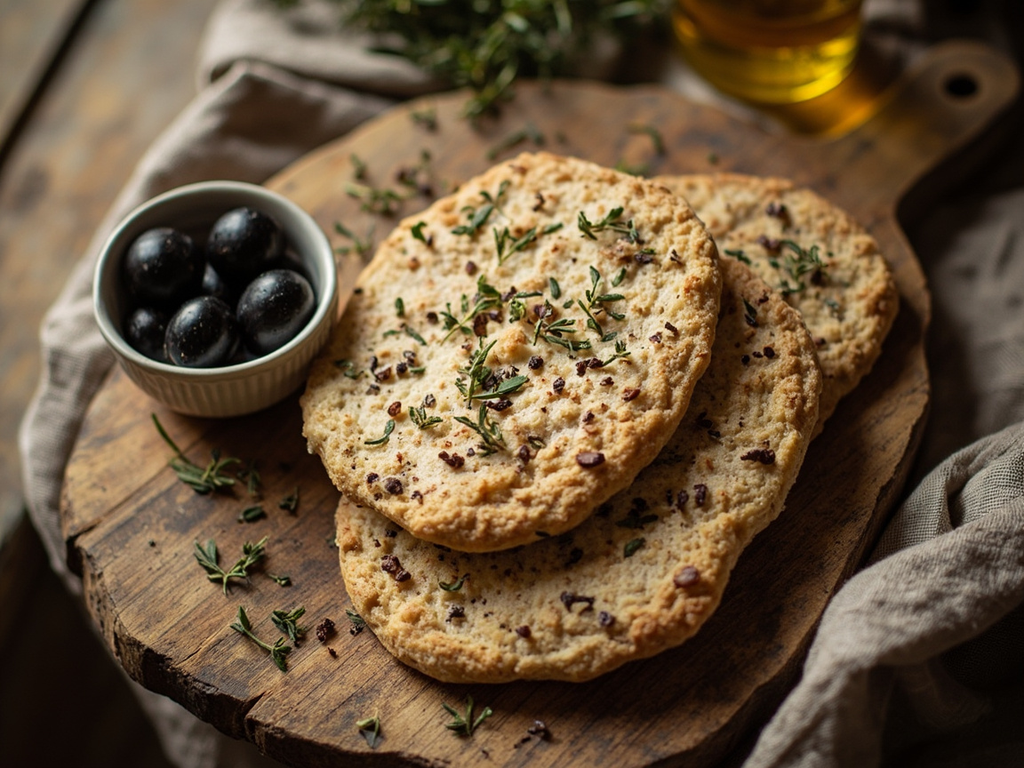
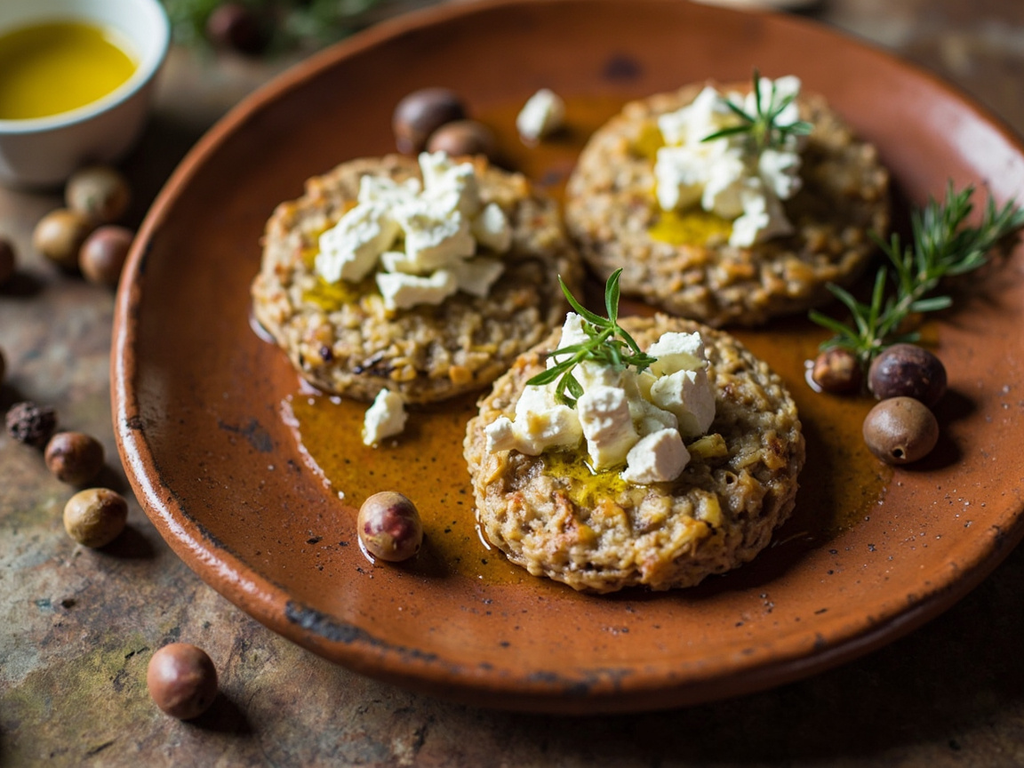
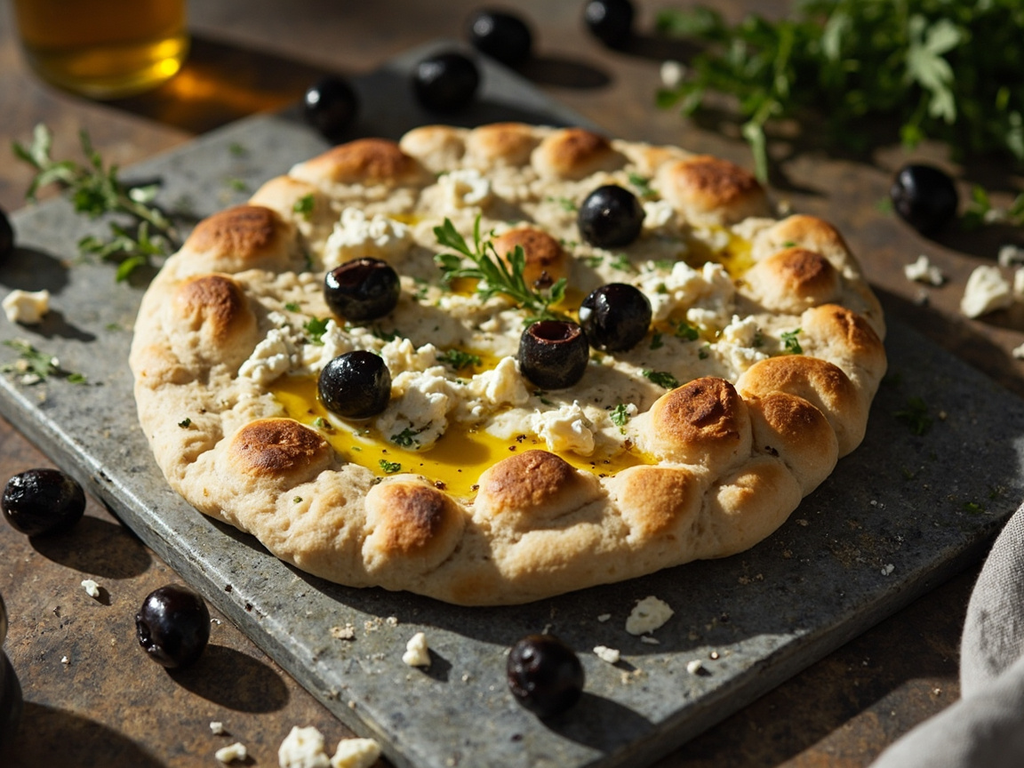
A toasted barley dough, kneaded with water and oil, shaped into a dense flatbread eaten with a few olives and some fresh goat cheese. It is the meal of the peasant and the plowman, simple and nourishing, the foundation of every archaic Greek table.
Mortal, look at this sickle: it has cut my father's sky, but it also reaps the barley of the plains. In my time, the earth gave itself freely and no one had to sweat to eat. Knead this barley flour between your palms as they did in the earliest ages, without flame or oven, and eat it with olive and curd: this is the food of the Golden Age, simple as the hearts of men were then. Remember that all that grows, I one day return to the earth.
- •Toasted barley flour (alphita) — two handfuls (staple grain)
- •Spring water — as needed (binder)
- •Olive oil — a drizzle (fat)
- •Black olives — a handful (opson)
- •Fresh goat cheese — a piece (opson)
- •Sea salt — a pinch (seasoning)
Barley Maza with Oil, Olives, and Fresh Cheese
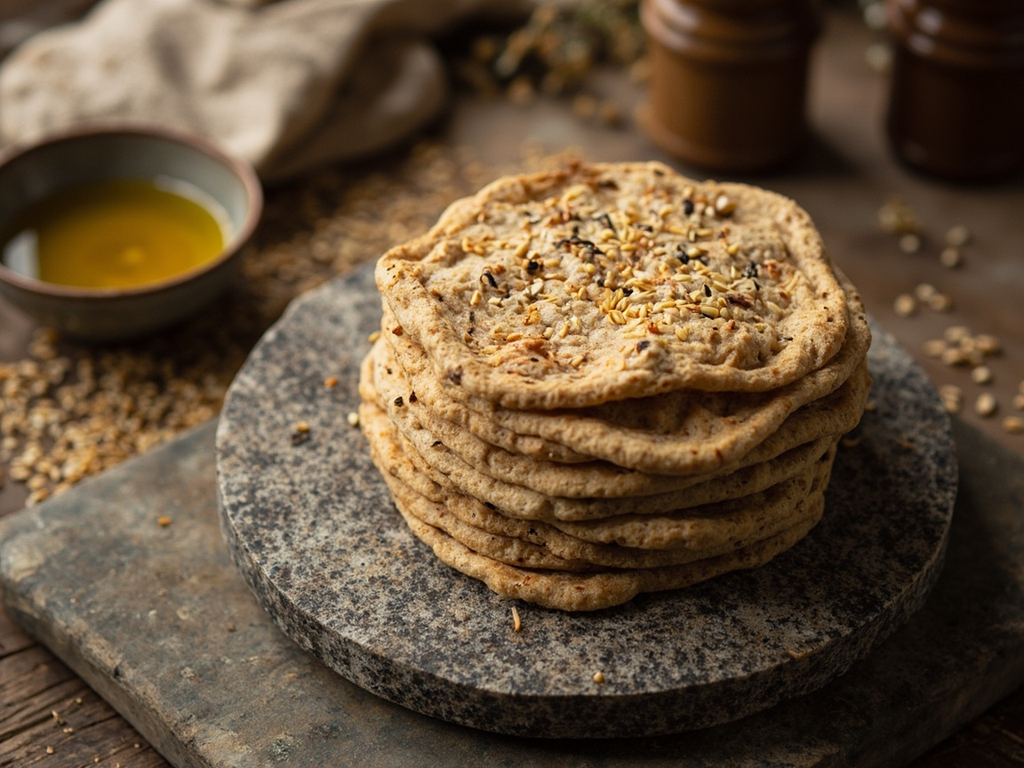
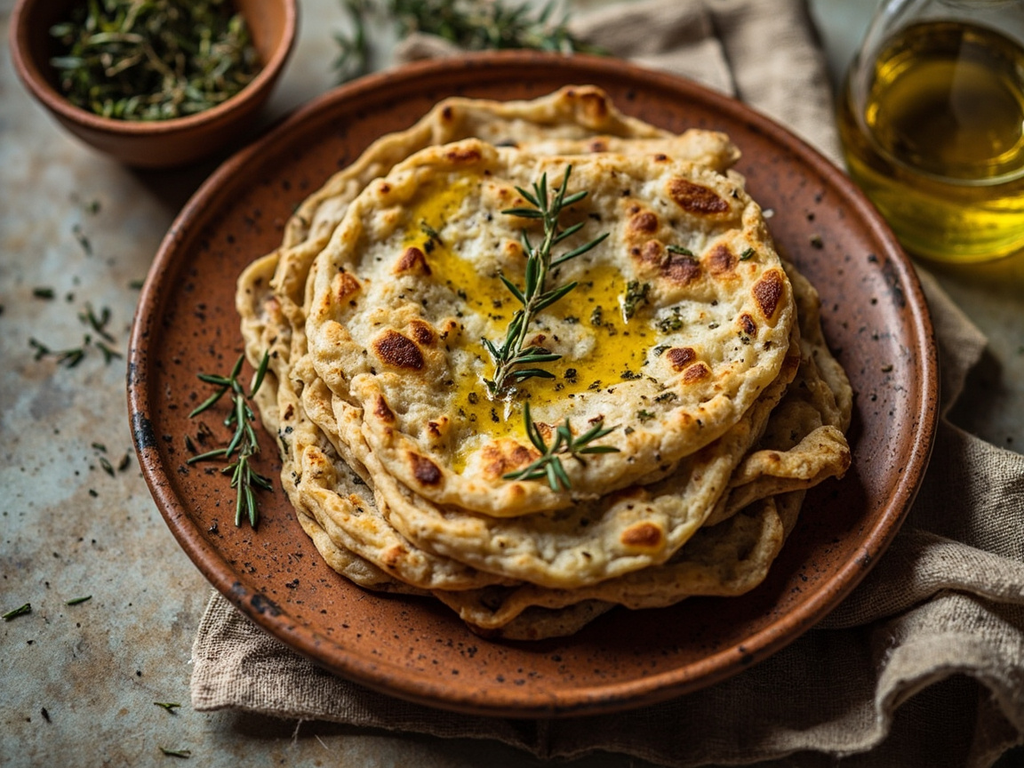
A toasted barley dough, kneaded with water and oil, shaped into a dense flatbread eaten with a few olives and some fresh goat cheese. It is the meal of the peasant and the plowman, simple and nourishing, the foundation of every archaic Greek table.
Why this dish? Cronus brandishes the adamantine sickle, the weapon that is also the harvester's tool. Under his Golden Age reigned barley, the first grain reaped by the Greeks. Maza, an unleavened barley dough, was the daily bread of the Greek world long before the Olympian gods: it was kneaded by hand, without an oven, as in the earliest times.
Mortal, look at this sickle: it has cut my father's sky, but it also reaps the barley of the plains. In my time, the earth gave itself freely and no one had to sweat to eat. Knead this barley flour between your palms as they did in the earliest ages, without flame or oven, and eat it with olive and curd: this is the food of the Golden Age, simple as the hearts of men were then. Remember that all that grows, I one day return to the earth.
Ingredients (period version)
- Toasted barley flour (alphita) — two handfuls (staple grain)
- Spring water — as needed (binder)
- Olive oil — a drizzle (fat)
- Black olives — a handful (opson)
- Fresh goat cheese — a piece (opson)
- Sea salt — a pinch (seasoning)
Ingredients
- Barley flour — 200 g (staple grain)
- Warm water — 100 to 120 ml (binder)
- Olive oil — 2 tbsp (fat)
- Black olives (Kalamata type) — about a dozen (opson)
- Fresh goat cheese — 100 g (opson)
- Salt — 1 tsp (seasoning)
Method
- Lightly toast the barley flour in a dry pan for a few minutes until it smells nutty, then let cool.
- Mix the flour and salt, add the oil, then gradually add warm water while kneading until you get a soft but firm dough.
- Shape two thick flatbreads by hand and let them rest for 15 minutes.
- Serve the maza at room temperature, accompanied by olives and crumbled fresh cheese, drizzled with a final touch of oil.
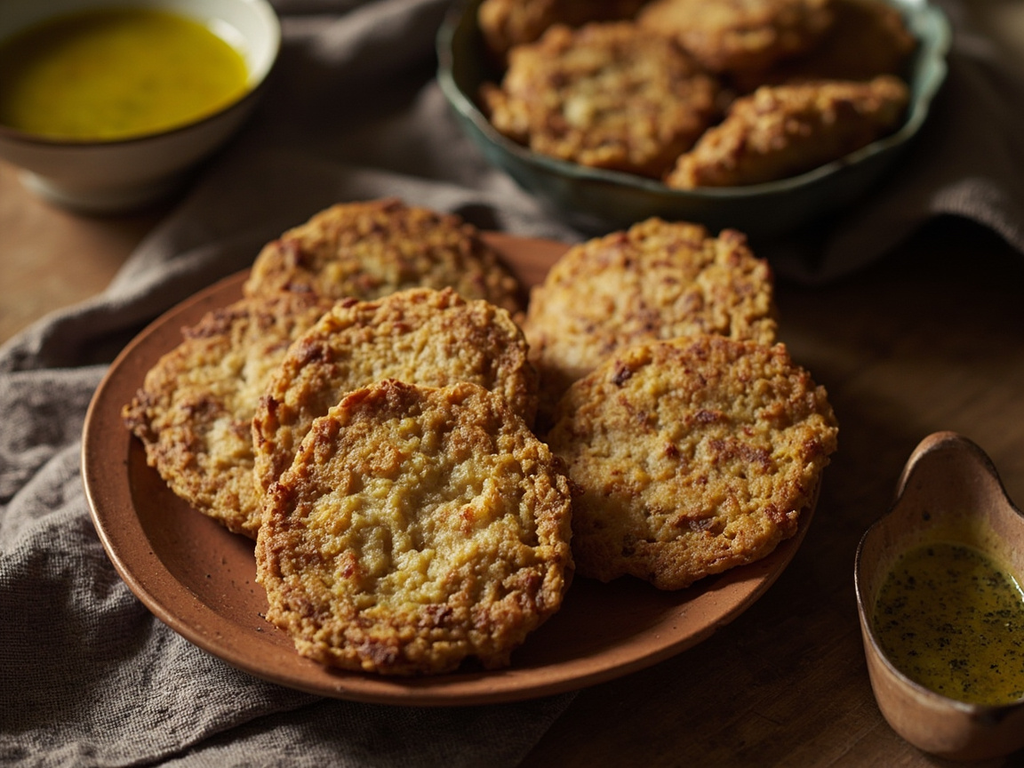
- Cooked variation: cook the flatbreads in a hot pan for 8–10 minutes to firm them up.
How it was made : Maza was the staple food of the ancient Greek, more common than leavened wheat bread, which was reserved for feast days. It was made from alphita, toasted barley flour, sometimes simply moistened with water and rolled into balls without cooking. Athenaeus describes many versions in the *Deipnosophistae*.
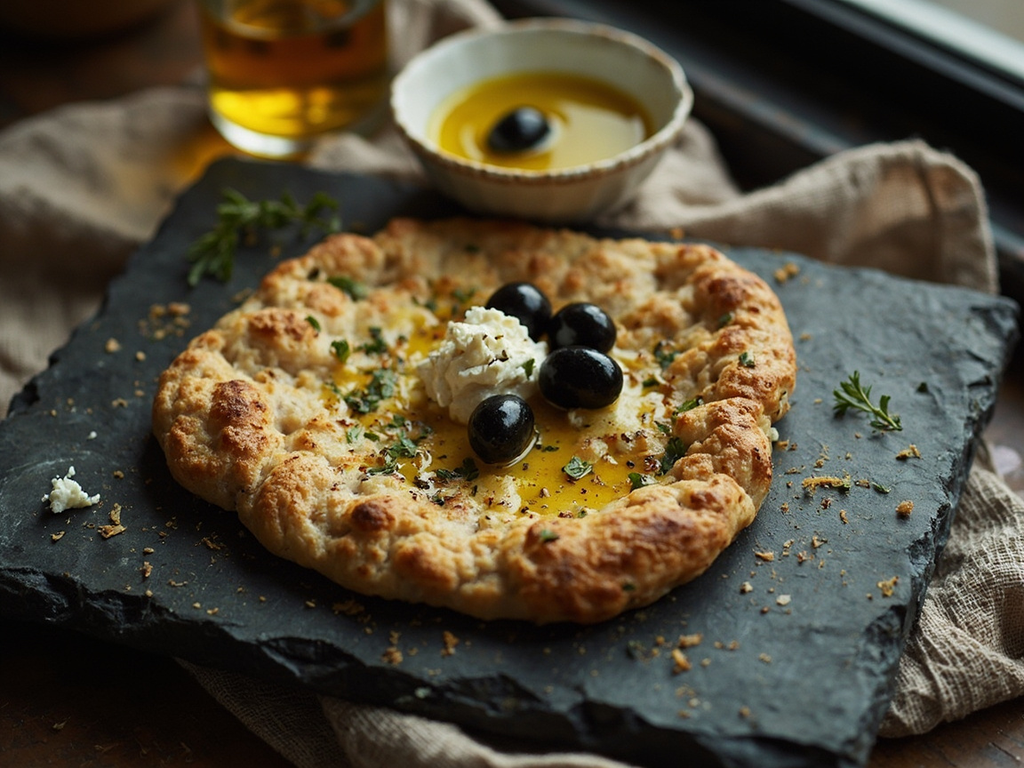
The contemporary twist : Serve the flatbread on a dark slate board like a fragment of adamant, the cheese in a quenelle, and three olives lined up like the Titan's children — to be devoured one by one.
Sources : Athenaeus, *The Deipnosophists*, Book III · Andrew Dalby, *Siren Feasts: A History of Food and Gastronomy in Greece*
Cronos · Charactorium