 flip
flipSe'udat hamelekh — royal roast lamb with bitter herbs
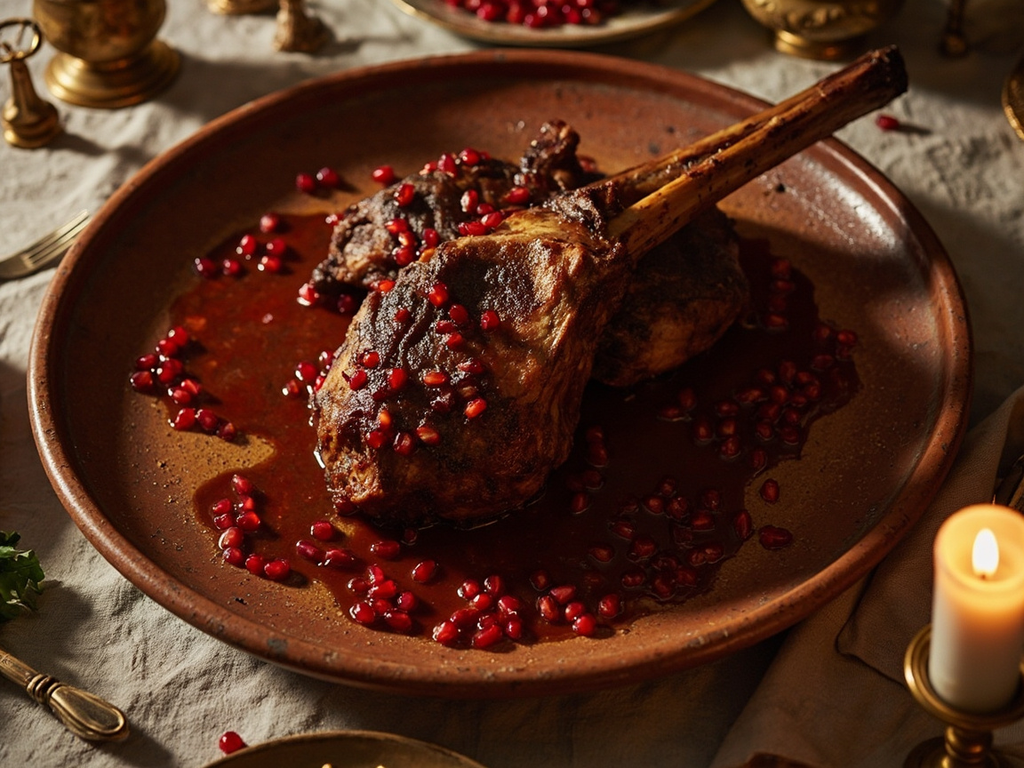
Se'udat hamelekh — royal roast lamb with bitter herbs
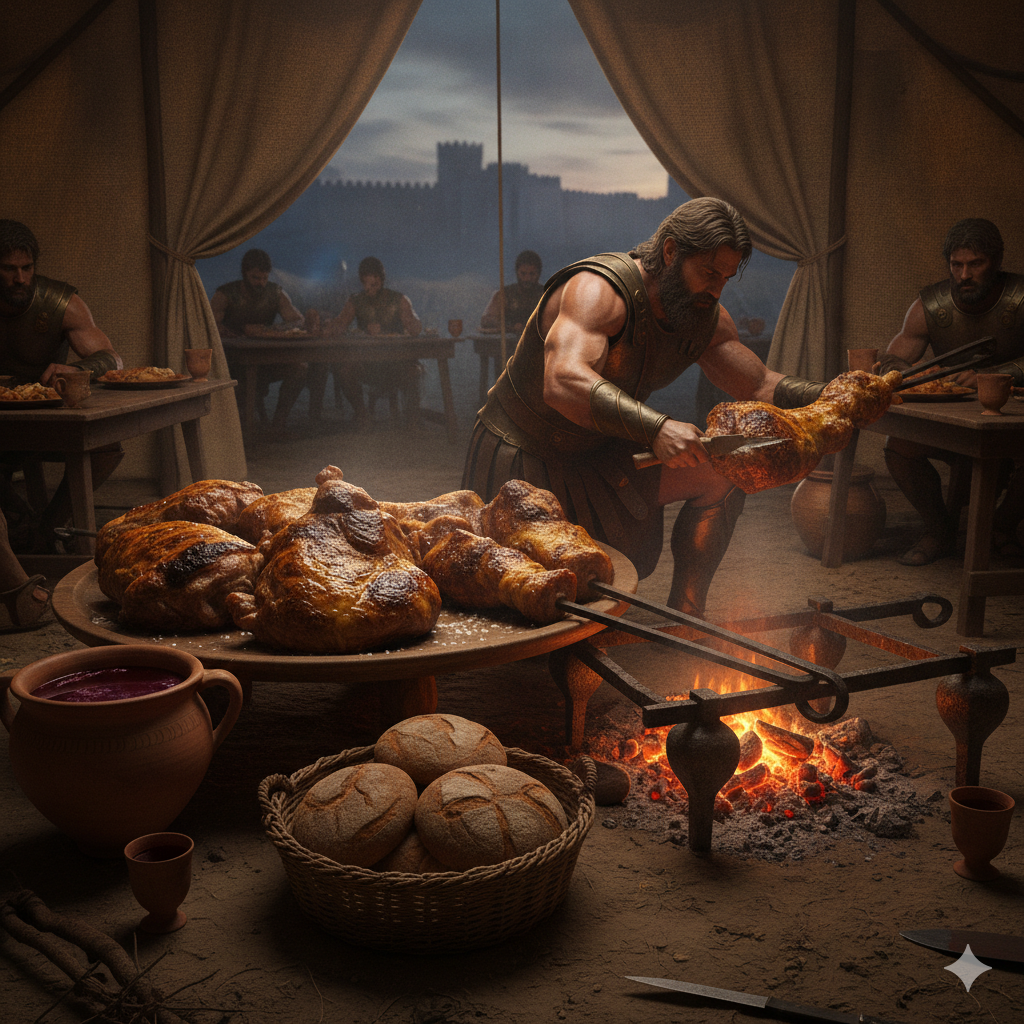
Why this dish? Having become king in Hebron and then Jerusalem, David received chiefs and prophets at his table. Meat — lamb or kid from the royal flocks — marked great occasions, alliances, and thanksgivings. The royal feast proclaimed the wealth of the king anointed by Samuel.
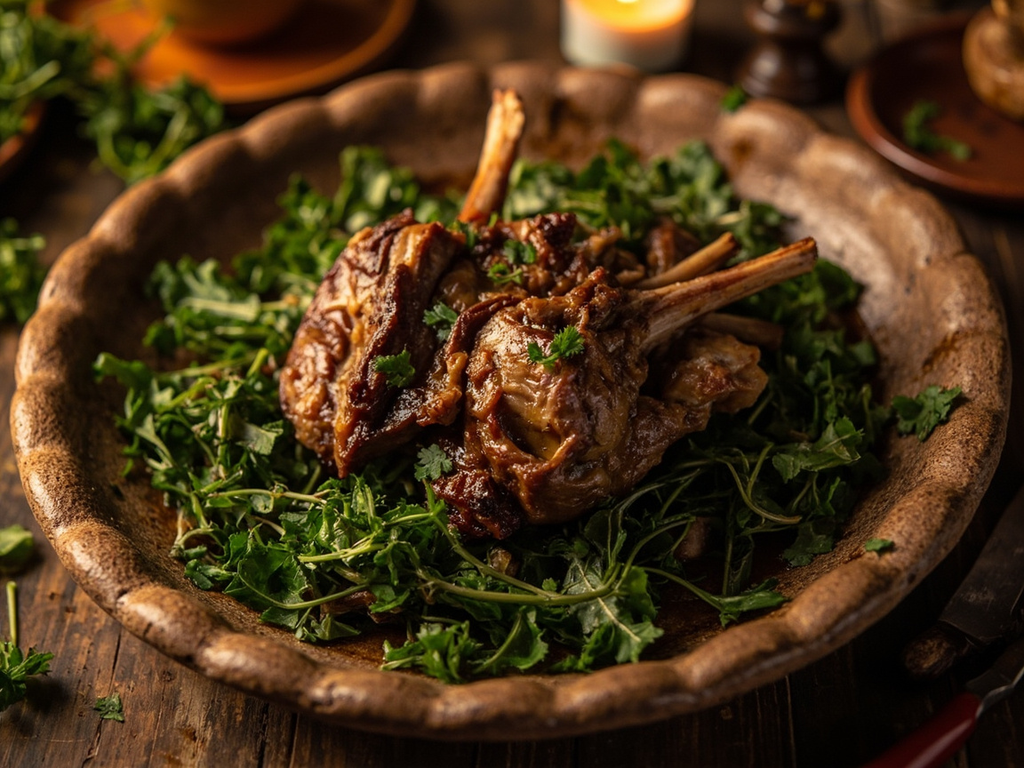
Lamb shoulder rubbed with oil, garlic, and hyssop, slow-roasted until falling apart, served on a bed of bitter herbs and accompanied by fine wheat bread reserved for nobles.
Let the table be set! Today is not a day for lentils, but a day of rejoicing before the Lord. Take the best lamb from the flock, rub it with oil and hyssop, and leave it on the coals until the flesh yields under your finger. Eat with bitter herbs, for even at the feast it is fitting to remember days of hardship. And bring the lyre: a satisfied king gives thanks with music.
- •Lamb shoulder — one piece (base)
- •Olive oil — generous (coating)
- •Garlic — several crushed cloves (aromatic)
- •Fresh hyssop and coriander — one bunch (herbs)
- •Salt — by hand (seasoning)
- •Bitter herbs (wild arugula, dandelion, chicory) — a large bouquet (garnish)
Se'udat hamelekh — royal roast lamb with bitter herbs
Lamb shoulder rubbed with oil, garlic, and hyssop, slow-roasted until falling apart, served on a bed of bitter herbs and accompanied by fine wheat bread reserved for nobles.
Why this dish? Having become king in Hebron and then Jerusalem, David received chiefs and prophets at his table. Meat — lamb or kid from the royal flocks — marked great occasions, alliances, and thanksgivings. The royal feast proclaimed the wealth of the king anointed by Samuel.
Let the table be set! Today is not a day for lentils, but a day of rejoicing before the Lord. Take the best lamb from the flock, rub it with oil and hyssop, and leave it on the coals until the flesh yields under your finger. Eat with bitter herbs, for even at the feast it is fitting to remember days of hardship. And bring the lyre: a satisfied king gives thanks with music.
Ingredients (period version)
- Lamb shoulder — one piece (base)
- Olive oil — generous (coating)
- Garlic — several crushed cloves (aromatic)
- Fresh hyssop and coriander — one bunch (herbs)
- Salt — by hand (seasoning)
- Bitter herbs (wild arugula, dandelion, chicory) — a large bouquet (garnish)
Ingredients
- Lamb shoulder — 1.5 kg bone-in (base)
- Extra virgin olive oil — 5 tbsp (coating)
- Garlic — 6 crushed cloves (aromatic)
- Oregano or marjoram (substitute for hyssop) — 2 tbsp (herbs)
- Fresh coriander — 1 bunch (herbs)
- Salt — 2 tsp (seasoning)
- Arugula and dandelion leaves — 150 g (bitter herb bed)
Method
- Mix oil, garlic, oregano, and salt; coat the lamb shoulder thoroughly. Let rest 1 hour.
- Sear the lamb on all sides, then roast covered at 150°C for 3–4 hours until the meat falls off the bone.
- Uncover for the last 20 minutes to brown.
- Arrange on a bed of arugula and dandelion leaves, scatter coriander on top.
- Serve with warm wheat bread to soak up the juices.
How it was made : The whole animal or quarters were roasted over an open fire or baked in an earthen oven (tannour). Bitter herbs, already associated with ritual meals, balanced the fat of the meat. White wheat bread, rarer and more expensive than barley, signaled the guest's rank.
The contemporary twist : Shredded and tucked into warm flatbread with a drizzle of tahini and bitter herbs: David's feast goes street food.
Sources : Hebrew Bible, 2 Samuel 6:19; 1 Kings 1 (royal feasts) · Nathan MacDonald, *What Did the Ancient Israelites Eat?*, Eerdmans, 2008
David · Charactorium