 flip
flipHoney-roasted lamb ribs with Sichuan pepper (蜜炙羊)
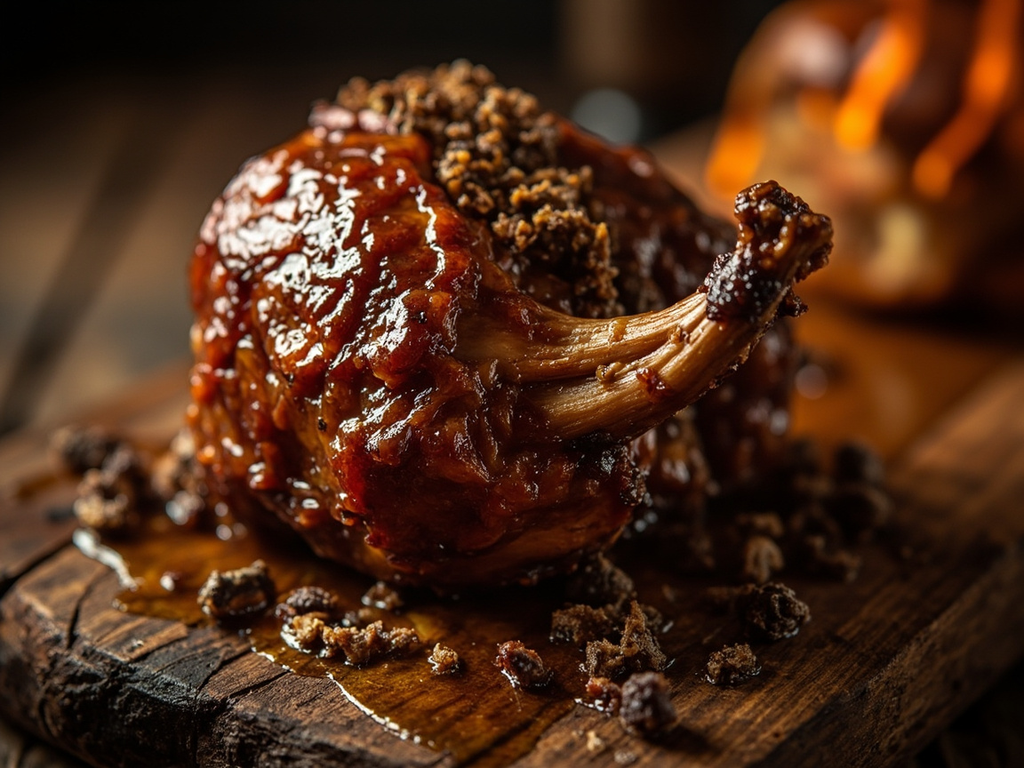
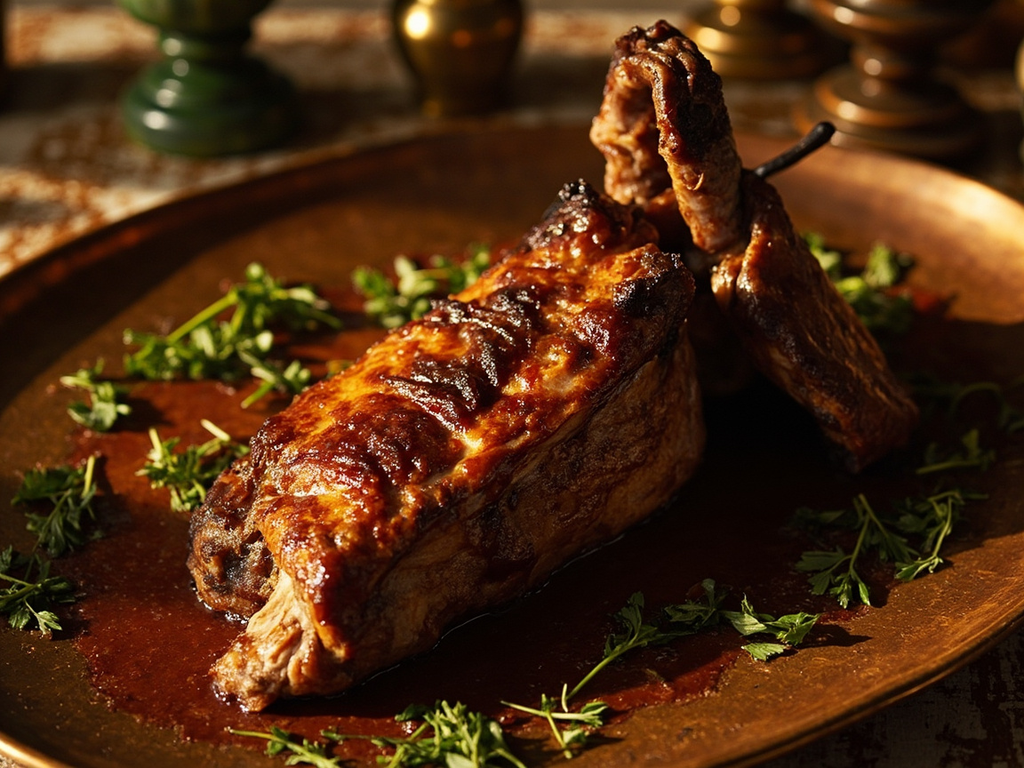
Honey-roasted lamb ribs with Sichuan pepper (蜜炙羊)
Why this dish? Even a frugal regent had to receive dignitaries and princes during grand audiences and calendar festivals. The zhì (炙), meat roasted over embers, was the prestige dish of Han banquets. It can be imagined on the table of the Northern Palace of Luoyang during an official reception — a controlled luxury, served in moderate quantities according to Deng Sui's taste.
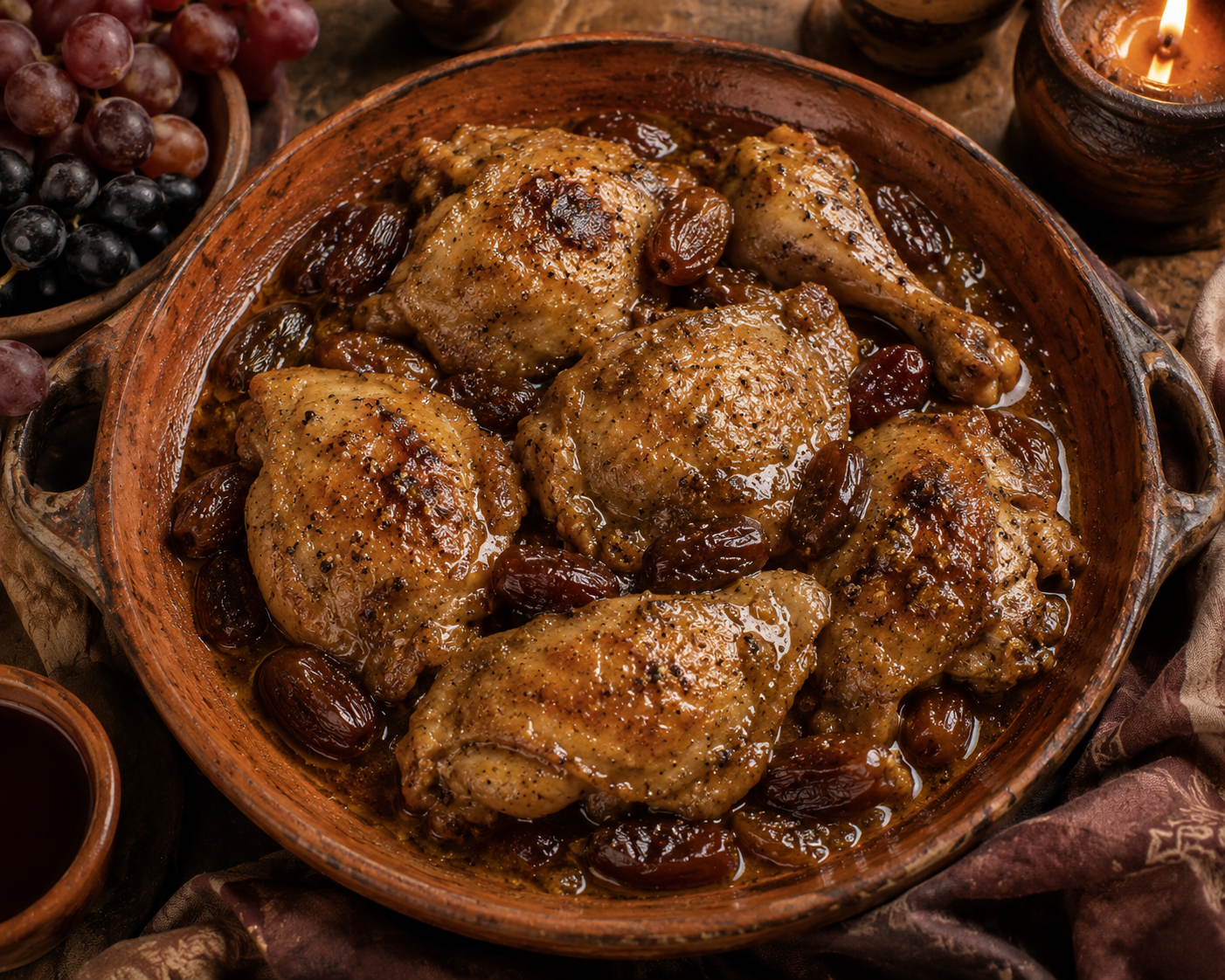
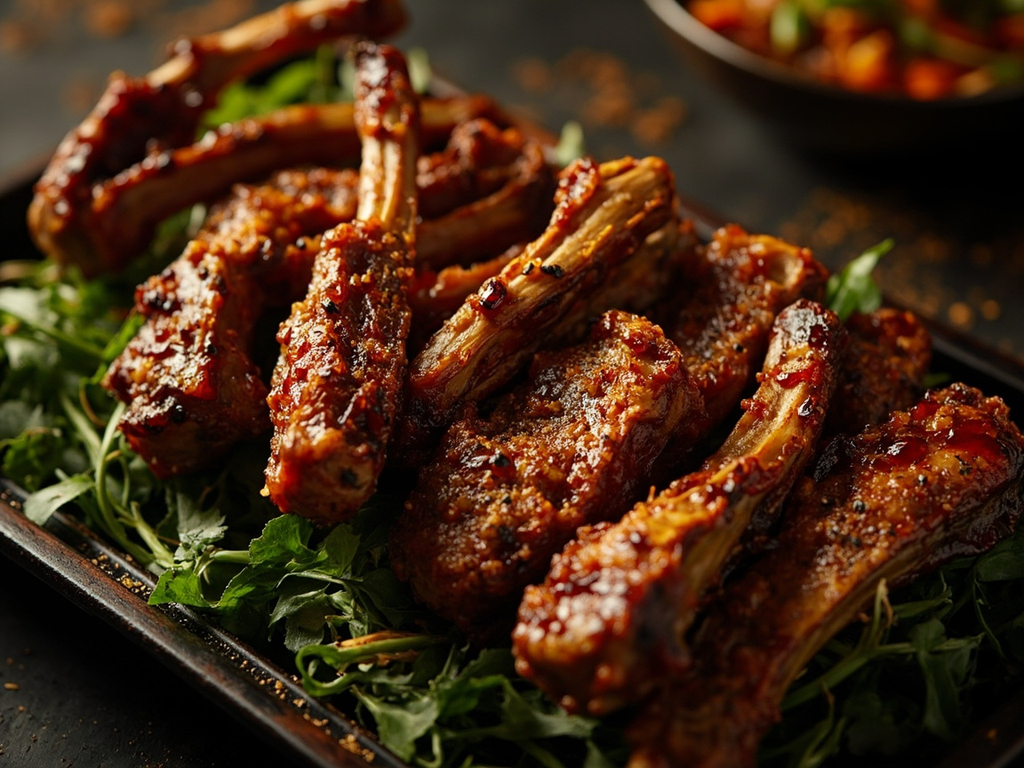
Lamb ribs lacquered with honey and fermented soybean, roasted until caramelized, then dusted with toasted Sichuan pepper and ginger. The festive dish par excellence of the Han, where the sweetness of honey meets the floral bite of huājiāo.
Receiving princes and envoys from distant marches is a duty, not a pleasure: the audience table speaks for the empire. So I had the zhì prepared, these roasted ribs glazed with honey and fermented beans, but I made sure only a reasonable measure was presented — none of those mountains of meat that some emperors paraded. Sprinkle them with flower pepper before they leave the embers: the scent rises and announces the dish even before it is set down.
- •Lamb ribs (羊) — one rack (banquet meat)
- •Honey (蜜) — for brushing (sweet glaze)
- •Fermented soybean or soybean paste (豉/醬) — a few spoonfuls (umami and salt)
- •Sichuan pepper (花椒) — a pinch (floral spice)
- •Fresh ginger (薑) — a piece (aromatic)
- •Grain wine (酒) — a little (marinade)
Honey-roasted lamb ribs with Sichuan pepper (蜜炙羊)
Lamb ribs lacquered with honey and fermented soybean, roasted until caramelized, then dusted with toasted Sichuan pepper and ginger. The festive dish par excellence of the Han, where the sweetness of honey meets the floral bite of huājiāo.
Why this dish? Even a frugal regent had to receive dignitaries and princes during grand audiences and calendar festivals. The zhì (炙), meat roasted over embers, was the prestige dish of Han banquets. It can be imagined on the table of the Northern Palace of Luoyang during an official reception — a controlled luxury, served in moderate quantities according to Deng Sui's taste.
Receiving princes and envoys from distant marches is a duty, not a pleasure: the audience table speaks for the empire. So I had the zhì prepared, these roasted ribs glazed with honey and fermented beans, but I made sure only a reasonable measure was presented — none of those mountains of meat that some emperors paraded. Sprinkle them with flower pepper before they leave the embers: the scent rises and announces the dish even before it is set down.
Ingredients (period version)
- Lamb ribs (羊) — one rack (banquet meat)
- Honey (蜜) — for brushing (sweet glaze)
- Fermented soybean or soybean paste (豉/醬) — a few spoonfuls (umami and salt)
- Sichuan pepper (花椒) — a pinch (floral spice)
- Fresh ginger (薑) — a piece (aromatic)
- Grain wine (酒) — a little (marinade)
Ingredients
- Rack or ribs of lamb/mutton — 1 kg (banquet meat)
- Honey — 3 tbsp (glaze)
- Soybean paste (huángjiàng) or crushed dòuchǐ — 2 tbsp (umami and salt)
- Sichuan pepper (huājiāo) — 1 tsp, toasted and ground (floral spice)
- Fresh grated ginger — 2 tbsp (aromatic)
- Rice wine (Shaoxing) — 3 tbsp (marinade)
Method
- Mix the soybean paste, ginger, rice wine, and half the honey; coat the ribs and marinate at least 2 hours (overnight is better).
- Dry-toast the Sichuan pepper in a pan until fragrant, then grind.
- Roast the ribs at 200°C (or over embers) for 25–35 minutes, turning once.
- Halfway through, brush with the remaining honey to glaze and caramelize the surface.
- Upon removal, dust generously with ground Sichuan pepper.
- Cut and serve in modest portions on a platter lined with fresh herbs.
How it was made : Zhì (炙), direct roasting of skewered meat over fire, is attested from Chinese antiquity and appears among the noble dishes of Han banquets. Honey was already used for glazing, and Sichuan pepper (花椒), a native spice, was THE pungent condiment of China long before the arrival of the American chili in the 16th century. Mutton, the meat of the northern elites, suited imperial tables.
The contemporary twist : Present the ribs standing upright in a bundle, like a small bonfire, with a drizzle of warm honey and a final sprinkle of flower pepper at serving.
Sources : Françoise Sabban, « La diète parfaite d'un lettré retiré sous les Song », L'Homme, et travaux sur la cuisine chinoise ancienne · H. T. Huang, Science and Civilisation in China, vol. 6 part 5, Cambridge University Press, 2000 · 齊民要術 (Qímín Yàoshù), agronomic treatise of the 6th century compiling earlier techniques
Deng Sui · Charactorium