 flip
flipSour pickled greens (葵菹)
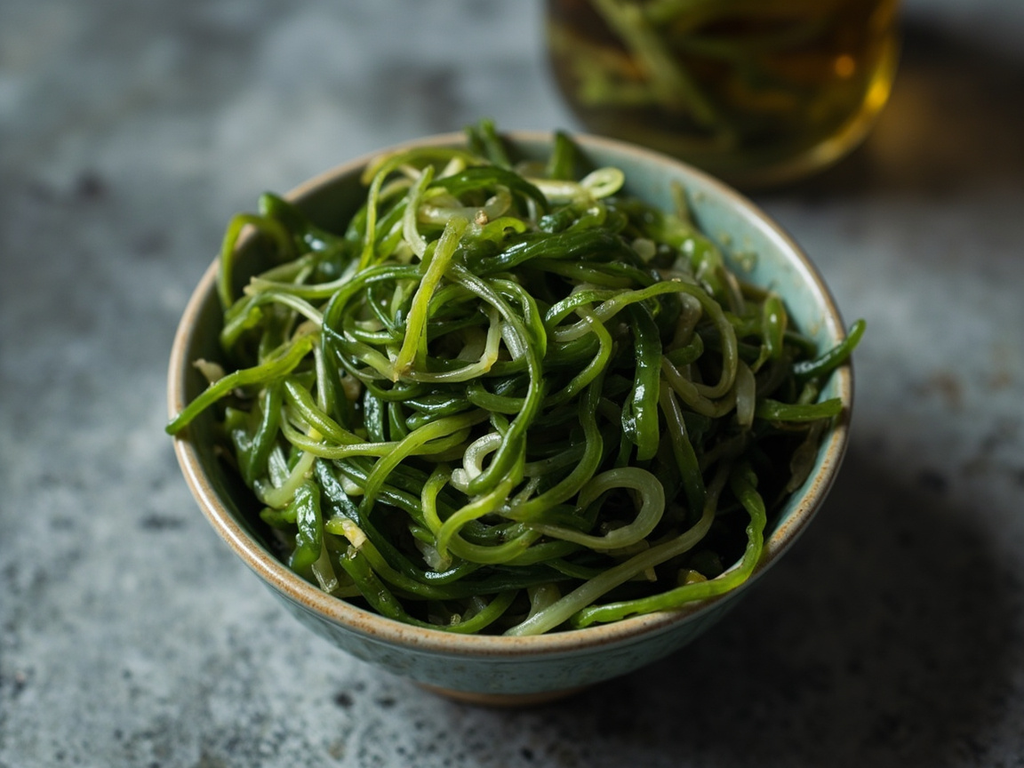
Sour pickled greens (葵菹)
Why this dish? A court that wishes to be provident in the face of famines and bad harvests keeps reserves. Zū, greens salted and acidified by fermentation, allowed summer leaves to be preserved through the heart of winter — a domestic wisdom perfectly in line with the frugal management that Deng Sui imposed on the empire.
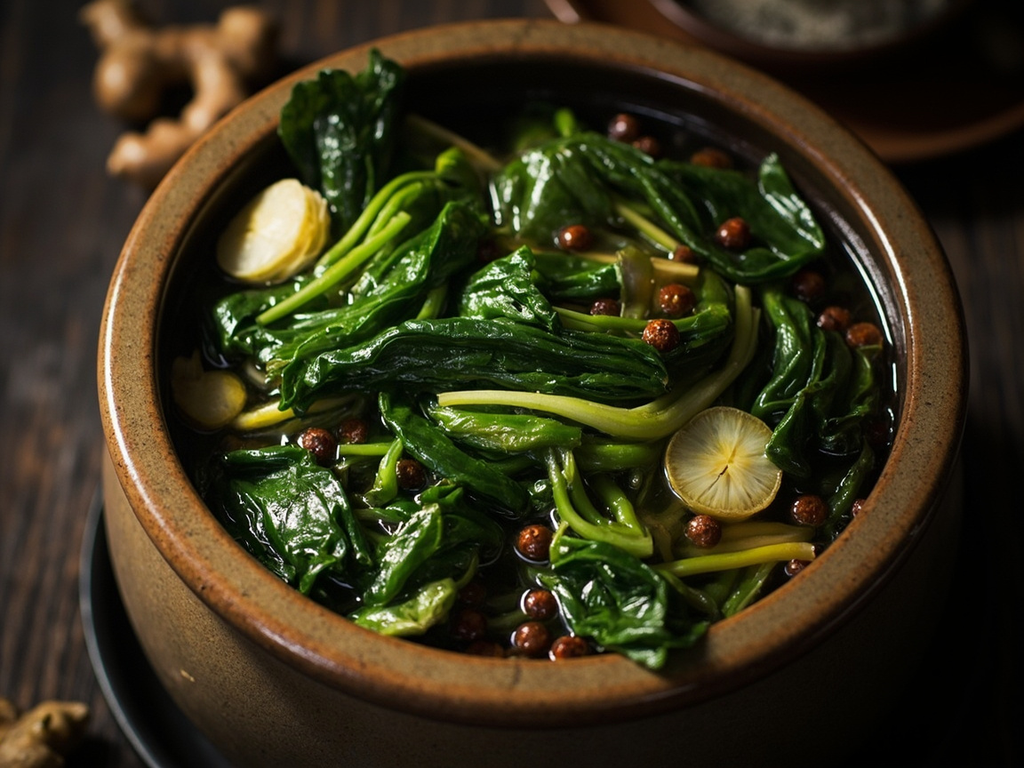
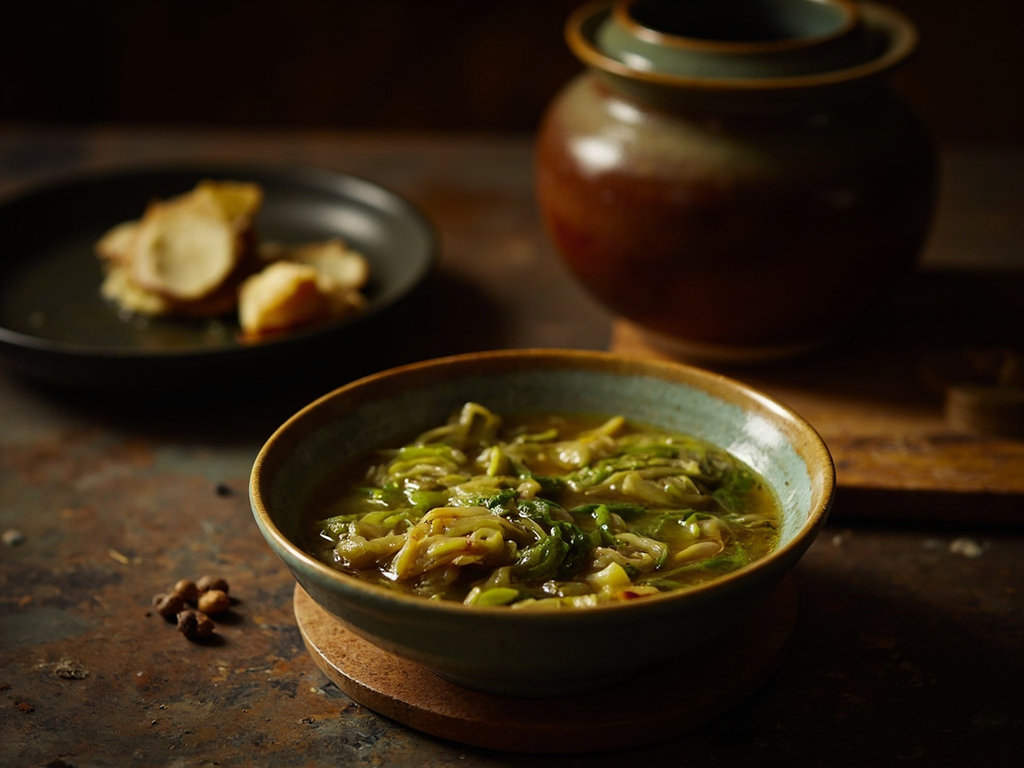
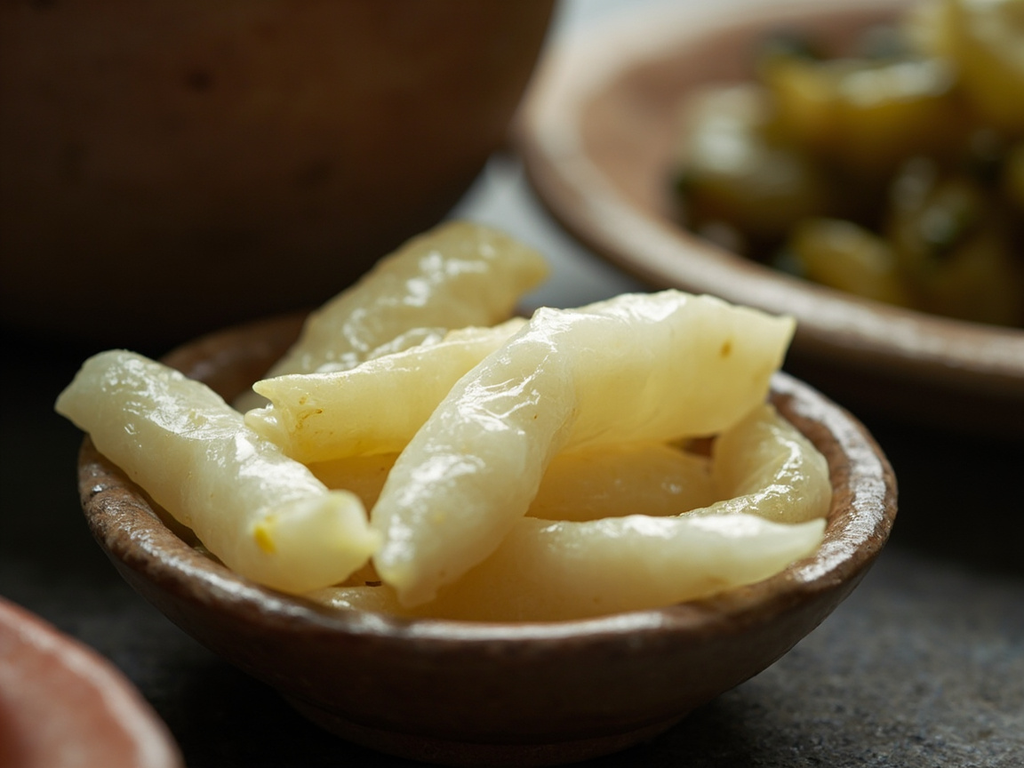
Green leaves pressed in brine and left to ferment until sour and crisp. The Han vegetable preserve, which brought freshness and acidity to the table in every season.
Who governs must think of winter in summer, and of dearth in abundance. I had the garden leaves salted and packed into jars when they were plentiful, so that in the coldest part of the year the table would not lack a lively, tart dish. This is not a luxury — it is a lesson in foresight that every housewife and every minister should ponder.
- •Mallow or mustard leaves (葵 / 芥) — in quantity (vegetable to pickle)
- •Salt — in proportion to leaf weight (salting agent)
- •Millet or rice cooking water (漿) — a little (fermentation starter)
Sour pickled greens (葵菹)
Green leaves pressed in brine and left to ferment until sour and crisp. The Han vegetable preserve, which brought freshness and acidity to the table in every season.
Why this dish? A court that wishes to be provident in the face of famines and bad harvests keeps reserves. Zū, greens salted and acidified by fermentation, allowed summer leaves to be preserved through the heart of winter — a domestic wisdom perfectly in line with the frugal management that Deng Sui imposed on the empire.
Who governs must think of winter in summer, and of dearth in abundance. I had the garden leaves salted and packed into jars when they were plentiful, so that in the coldest part of the year the table would not lack a lively, tart dish. This is not a luxury — it is a lesson in foresight that every housewife and every minister should ponder.
Ingredients (period version)
- Mallow or mustard leaves (葵 / 芥) — in quantity (vegetable to pickle)
- Salt — in proportion to leaf weight (salting agent)
- Millet or rice cooking water (漿) — a little (fermentation starter)
Ingredients
- Chinese mustard greens (gài cài) or firm green cabbage — 1 kg (vegetable to pickle)
- Non-iodized salt — 20 g (2% of vegetable weight) (salting and preservation)
- Water — to cover (brine)
- Rice cooking water (optional) — 1 ladle (lactic fermentation starter)
Method
- Wash and dry the leaves, then massage with salt until they release water and soften.
- Pack tightly into a clean jar, pressing out air, until the liquid rises above the leaves.
- Top up with a little water (and rice water to activate fermentation) if needed to ensure everything is submerged.
- Place a weight to keep the greens under the brine, cover without sealing airtight.
- Ferment at room temperature for 5–10 days: the taste becomes distinctly sour.
- Taste, then refrigerate. Serve in a small dish, drained, alongside the grain and potage.
How it was made : Zū (菹), vegetables preserved by salting and lactic fermentation, is one of the oldest Chinese preservation techniques, mentioned in ritual texts like the Liji (禮記) and detailed later in the Qimin Yaoshu. Before refrigeration, it was the way to get through winter and ensure a supply of the rare and prized sour flavor year-round.
The contemporary twist : Serve these sour leaves finely shredded in a small bright pile, like a lively condiment, to wake up a bowl of grains or accompany roasted ribs.
Sources : 齊民要術 (Qímín Yàoshù), section on zū, 6th century · 禮記 (Lǐjì, Book of Rites), mentions of ritual pickled vegetables · H. T. Huang, Science and Civilisation in China, vol. 6 part 5, Cambridge University Press, 2000
Deng Sui · Charactorium