 flip
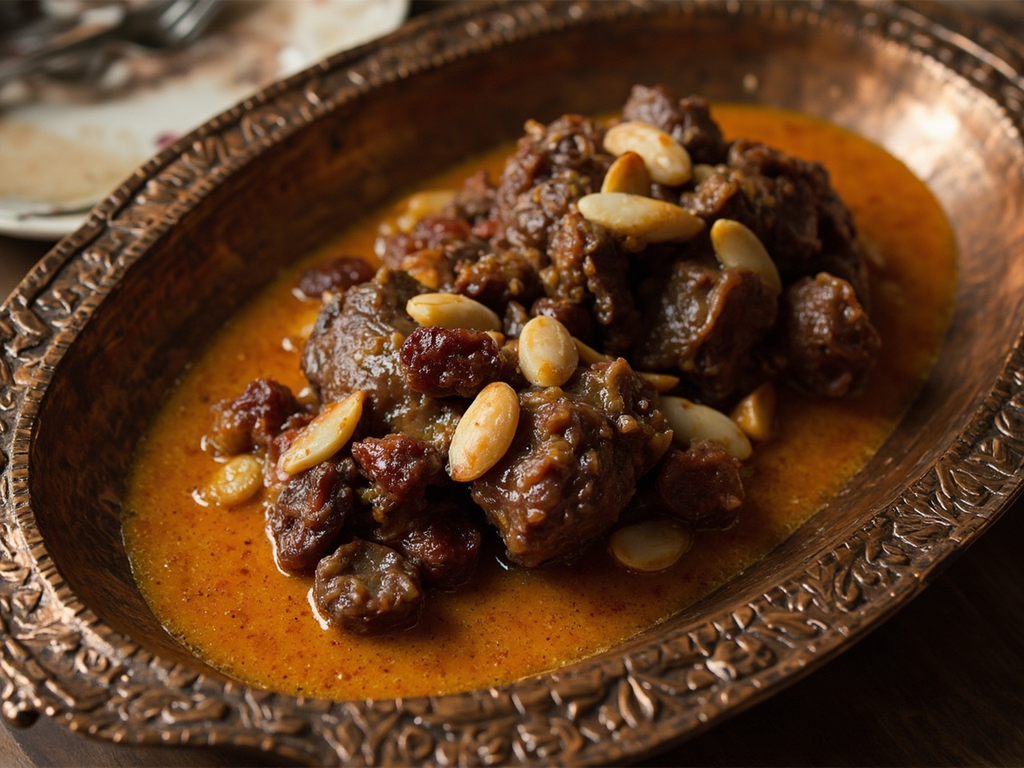
flipCordero a la miel y almendras (Lamb with Honey and Almonds, al-Andalus Style)
Cordero a la miel y almendras (Lamb with Honey and Almonds, al-Andalus Style)
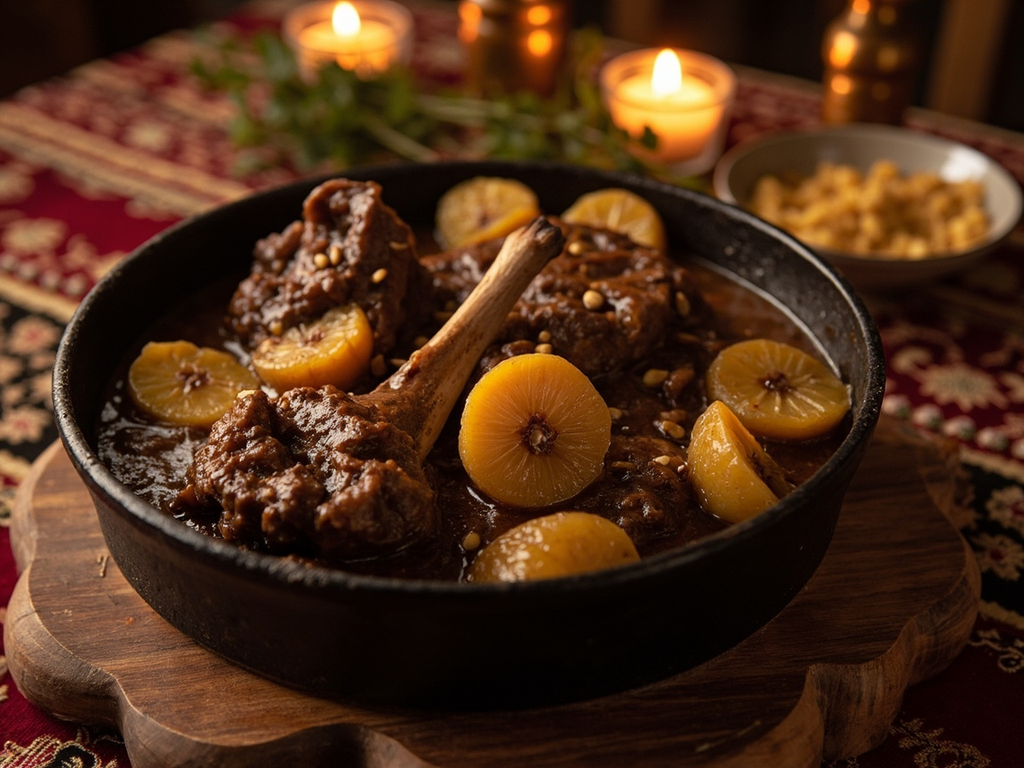
Why this dish? After the capture of Valencia, El Cid holds court like a prince and receives Christian lords and Moorish notables at his table. This agridulce dish, heir to the kitchens of al-Andalus, is for great occasions when the Campeador shows he can rule as well as fight.
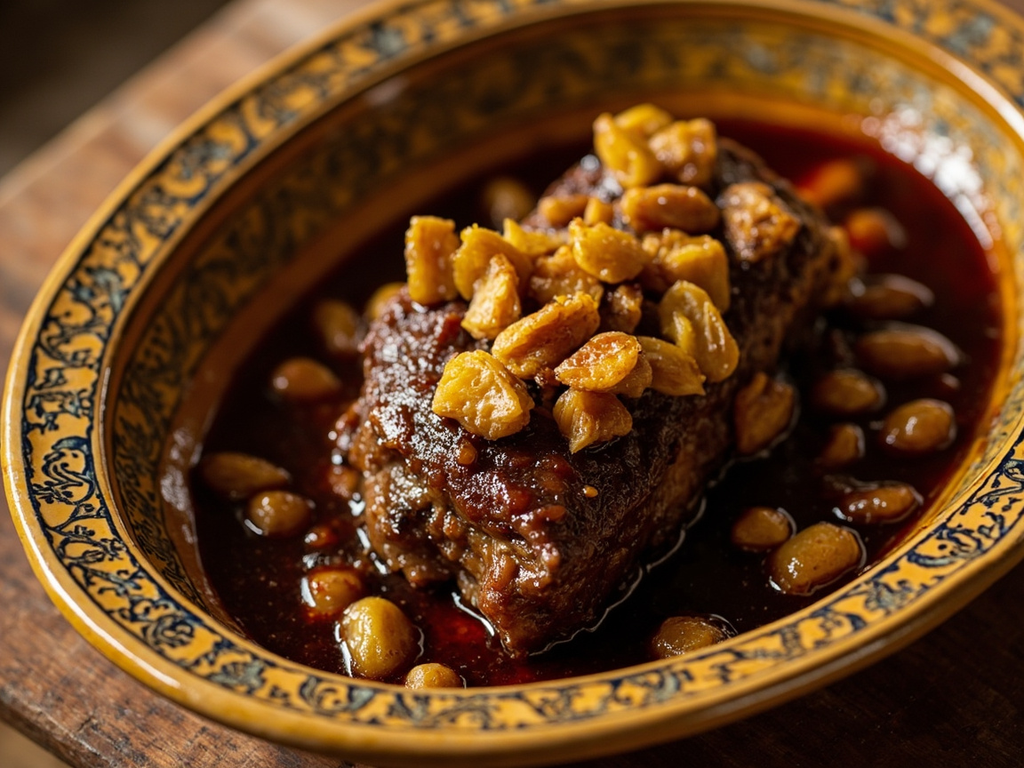
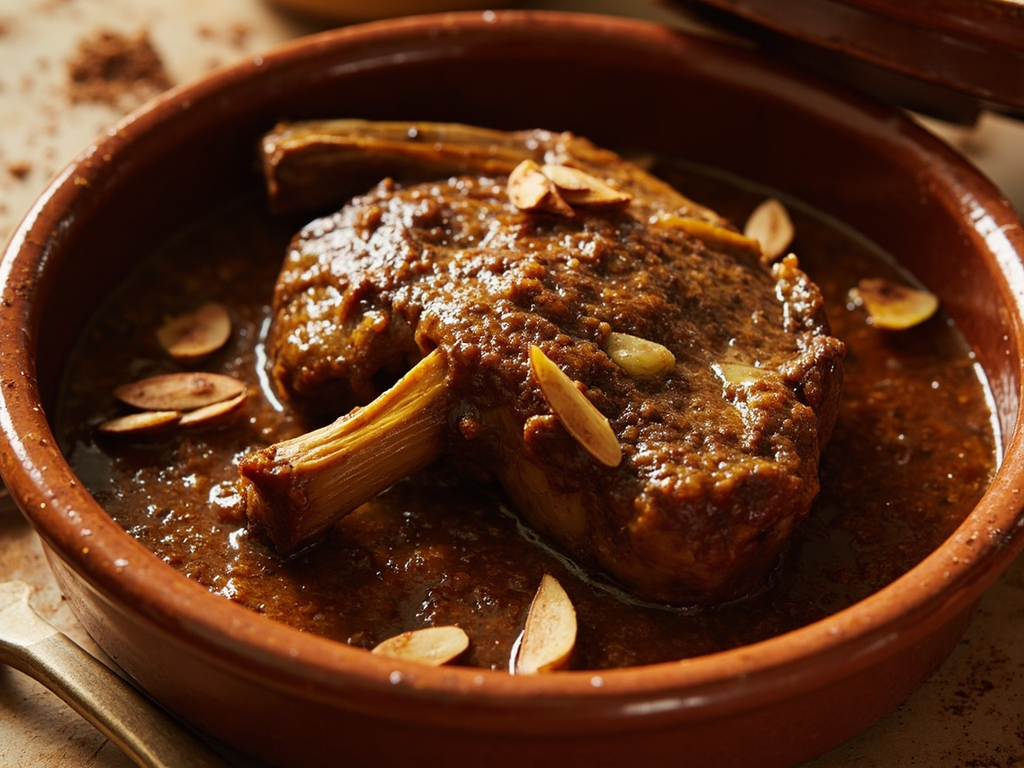
Lamb slowly simmered in a broth of honey, ground almonds, cinnamon, and saffron until the sauce becomes amber and coating. The sweet-and-sour, pinnacle of Andalusian refinement, contrasts with the rusticity of the meat.
You who sit at my table in Valencia, know that this dish is not served every day: it is for victories and honored guests. I learned from the master cooks of this land to marry honey and flesh, which the lords of the North find strange and which I, for my part, find worthy of a king. Grind the almonds in a mortar until they become a paste, dilute them in the broth with cinnamon and saffron, and the lamb cooks gently until it falls apart under the fingers. Eat with honor, for he who shares my sauce shares my word.
- •Lamb shoulder — a fine piece (festive meat)
- •Almonds — a generous handful (thickener and richness of the sauce)
- •Honey — by the spoonful (agridulce sweetness)
- •Cinnamon — one stick (warm spice)
- •Saffron — a few threads (color and fragrance)
- •Onion — two (aromatic base)
- •Wine vinegar — a dash (acidity to balance the honey)
Cordero a la miel y almendras (Lamb with Honey and Almonds, al-Andalus Style)
Lamb slowly simmered in a broth of honey, ground almonds, cinnamon, and saffron until the sauce becomes amber and coating. The sweet-and-sour, pinnacle of Andalusian refinement, contrasts with the rusticity of the meat.
Why this dish? After the capture of Valencia, El Cid holds court like a prince and receives Christian lords and Moorish notables at his table. This agridulce dish, heir to the kitchens of al-Andalus, is for great occasions when the Campeador shows he can rule as well as fight.
You who sit at my table in Valencia, know that this dish is not served every day: it is for victories and honored guests. I learned from the master cooks of this land to marry honey and flesh, which the lords of the North find strange and which I, for my part, find worthy of a king. Grind the almonds in a mortar until they become a paste, dilute them in the broth with cinnamon and saffron, and the lamb cooks gently until it falls apart under the fingers. Eat with honor, for he who shares my sauce shares my word.
Ingredients (period version)
- Lamb shoulder — a fine piece (festive meat)
- Almonds — a generous handful (thickener and richness of the sauce)
- Honey — by the spoonful (agridulce sweetness)
- Cinnamon — one stick (warm spice)
- Saffron — a few threads (color and fragrance)
- Onion — two (aromatic base)
- Wine vinegar — a dash (acidity to balance the honey)
Ingredients
- Lamb shoulder, cubed — 1.2 kg (meat)
- Blanched almonds — 120 g (thickener)
- Honey — 3 tbsp (sweetness)
- Cinnamon — 1 stick + 1/2 tsp ground (spice)
- Saffron — 1 pinch (color)
- Onions — 2 large (aromatic)
- Wine vinegar — 2 tbsp (acidity)
- Olive oil, salt, water — as needed (cooking)
Method
- Brown the lamb pieces in olive oil, then set aside.
- Sauté the sliced onions in the same pot until tender.
- Return the meat, cover with hot water, add the cinnamon stick and saffron, and simmer covered for 1.5 hours.
- Grind the almonds into a fine paste (or blend) with a little broth, then stir into the pot to thicken the sauce.
- Add honey, ground cinnamon, vinegar, and salt; continue simmering uncovered for 30 minutes until the sauce is amber and coating.
- Adjust the honey/vinegar balance and serve with bread.
How it was made : Medieval Andalusian recipes (compiled in cookbooks like the Kitāb al-ṭabīḫ) abound in these sweet-and-sour dishes thickened with ground almonds: honey-and-spice stewed meat was the hallmark of a courtly cuisine that the Christian elites of the Reconquista eagerly adopted.
The contemporary twist : Scatter toasted slivered almonds and a dusting of cinnamon on top when serving, in the style of an Iberian pre-tajine.
El Cid · Charactorium