 flip
flipMjöðr — Mead of the Ancestors
Mjöðr — Mead of the Ancestors
Why this dish? Inspired by the ritual mead of the Norse: to Ask and Embla, first couple and source of humanity, is dedicated the drink of oaths and libations to the gods. The mead cup sealed alliances and honored the ancestors — exactly what this founding couple represents.
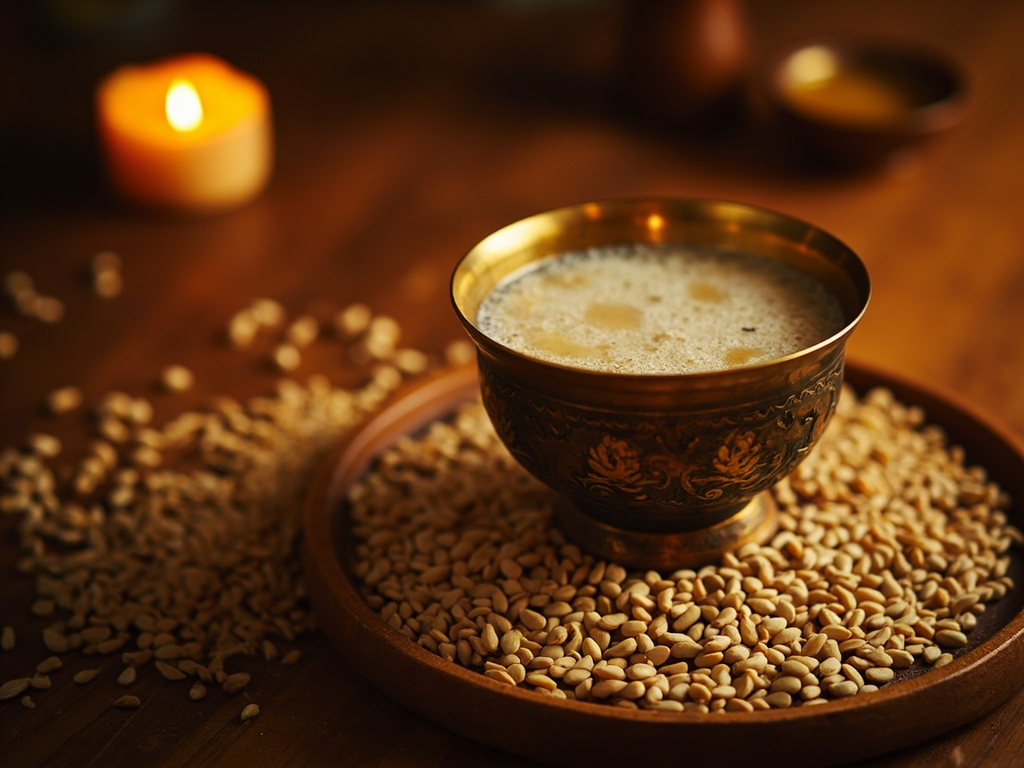
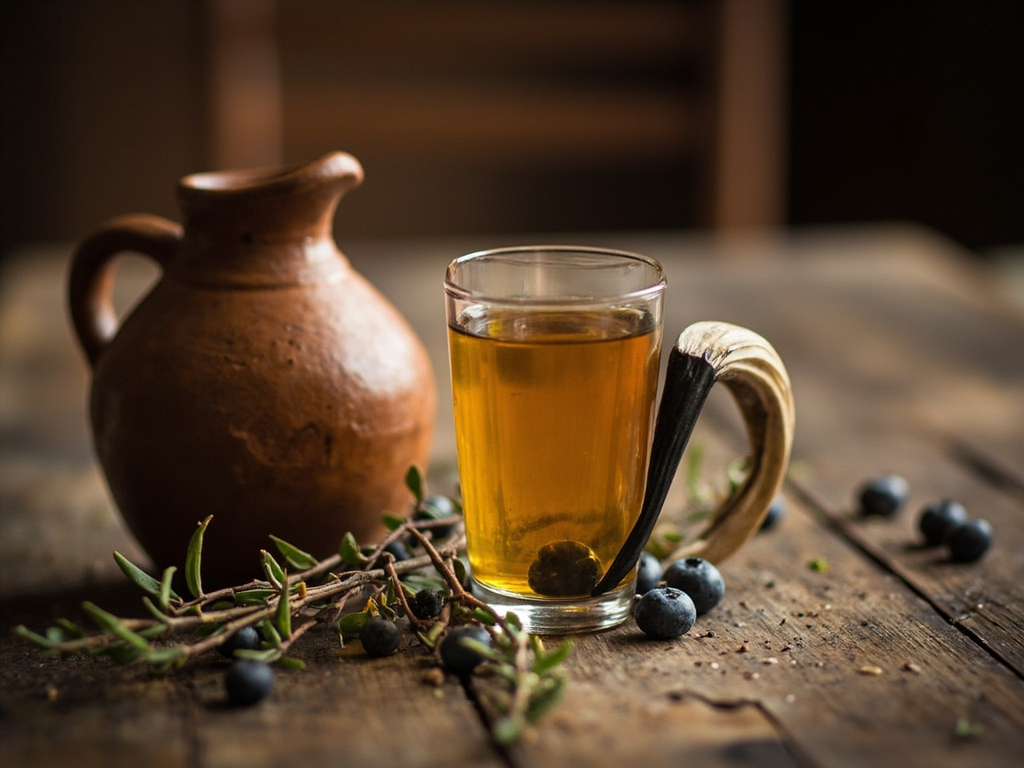
A golden drink born from the fermentation of honey in water, sometimes flavored with herbs and berries. Sweet then wine-like, it was shared from the horn during libations.
Raise the horn, and listen. The honey of bees, the clear water of the spring, and time: that is all the secret. I mix the honey with warm water, throw in a berry, a sprig of fragrant herb, and let the spirit of the brew awaken alone, day after day, until it sings in the jar. First we pour to the earth and the powers, then we drink to the ancestors — to us, who were the first. Drink with measure, for this honey carries fire as much as sweetness.
- •Wild honey — a good portion (fermentable sugar)
- •Spring water — three parts to one of honey (base)
- •Wild berries (bilberry, lingonberry) — a handful (flavor / natural ferment)
- •Fragrant herbs (bog myrtle, yarrow) — a few sprigs (flavor)
Mjöðr — Mead of the Ancestors
A golden drink born from the fermentation of honey in water, sometimes flavored with herbs and berries. Sweet then wine-like, it was shared from the horn during libations.
Why this dish? Inspired by the ritual mead of the Norse: to Ask and Embla, first couple and source of humanity, is dedicated the drink of oaths and libations to the gods. The mead cup sealed alliances and honored the ancestors — exactly what this founding couple represents.
Raise the horn, and listen. The honey of bees, the clear water of the spring, and time: that is all the secret. I mix the honey with warm water, throw in a berry, a sprig of fragrant herb, and let the spirit of the brew awaken alone, day after day, until it sings in the jar. First we pour to the earth and the powers, then we drink to the ancestors — to us, who were the first. Drink with measure, for this honey carries fire as much as sweetness.
Ingredients (period version)
- Wild honey — a good portion (fermentable sugar)
- Spring water — three parts to one of honey (base)
- Wild berries (bilberry, lingonberry) — a handful (flavor / natural ferment)
- Fragrant herbs (bog myrtle, yarrow) — a few sprigs (flavor)
Ingredients
- Honey — 1 kg (fermentable sugar)
- Non-chlorinated water — 3 L (base)
- Yeast (mead or wine yeast) — 1 packet (ferment)
- Wild berries (bilberries, lingonberries) — 1 handful (flavor)
- Untreated lemon wedge (optional, for balance) — 1 (acidity)
Method
- Warm the water (without boiling) and completely dissolve the honey to make the must.
- Let cool to room temperature, pour into a clean demijohn with the berries.
- Add rehydrated yeast, seal with an airlock.
- Ferment for 3 to 6 weeks away from light, until bubbling stops.
- Rack into clean bottles, let mature in a cool place for a few weeks before tasting in moderation. (Adults only.)
How it was made : Mead (mjöðr) was the prestigious drink of the Norse world, linked to the gods and poetry (Odin's 'poetic mead'). During the sumbel, the horn was passed to make toasts to the gods, dead ancestors, and oaths. Fermentation occurred spontaneously thanks to yeasts from honey and berries, without cultivated yeast.
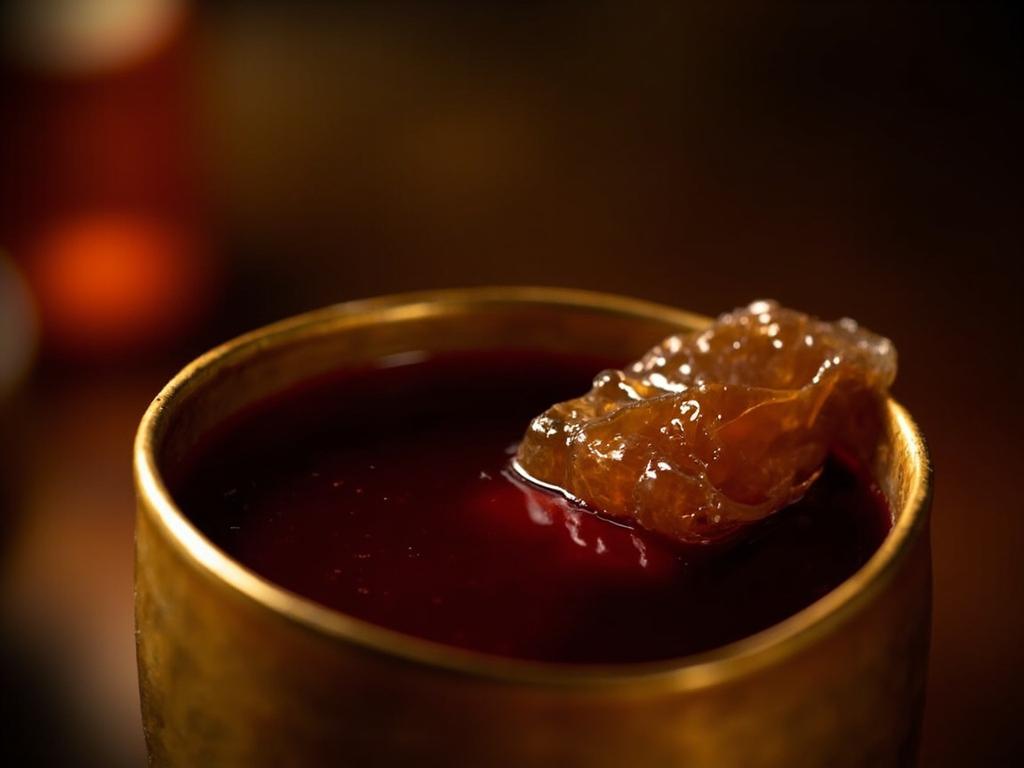
The contemporary twist : Serve chilled in a modern cup or horn, lightly sparkling, with a few fresh berries at the bottom — a toast to the 'first humans'.
Embla · Charactorium