 flip
flipLǐ: Sweet Millet Ale for the Offering
Lǐ: Sweet Millet Ale for the Offering
Why this dish? Confucius venerated the Zhou rites ('The Zhou are accomplished! I follow the Zhou,' Analects III) and scrupulously observed ancestral sacrifices. The lǐ (醴), a sweet, barely fermented drink, was poured as a libation on altars before being shared. A drink of filial piety more than of drunkenness—the Master, it is said, 'never let himself be confused by wine.'
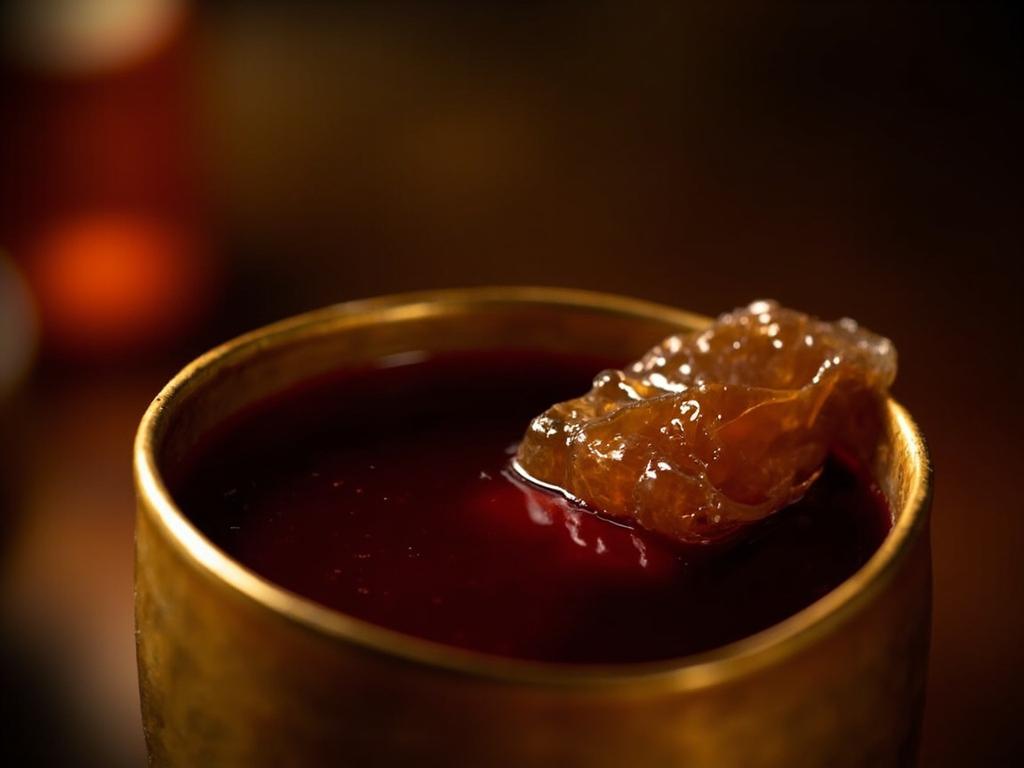
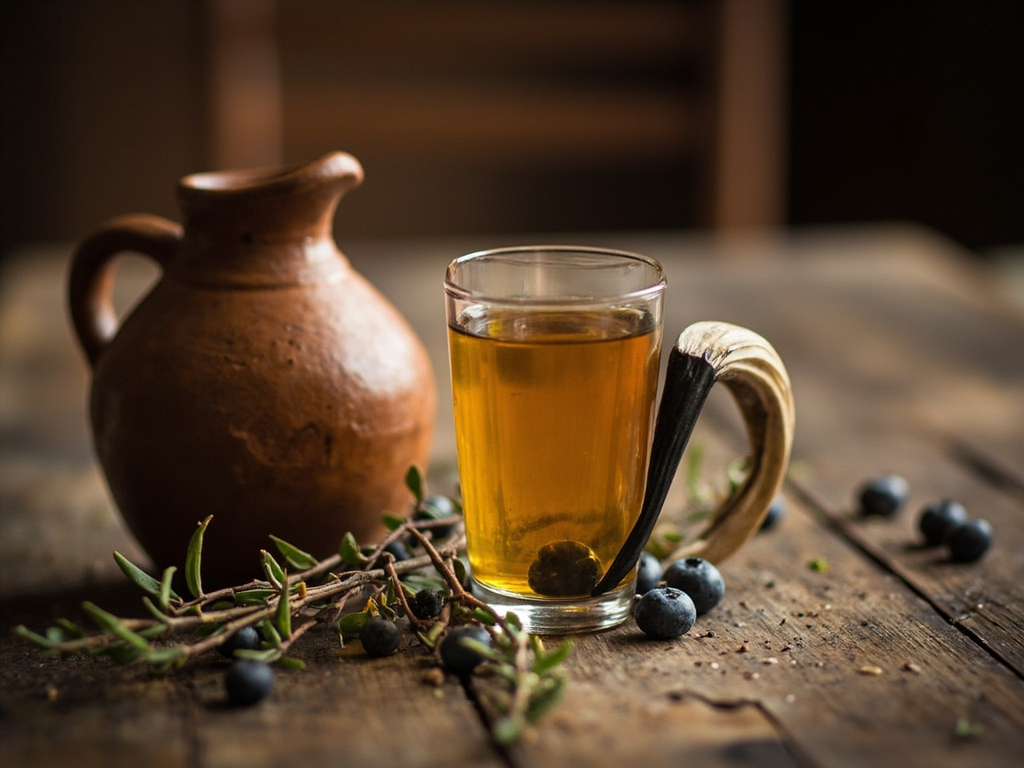
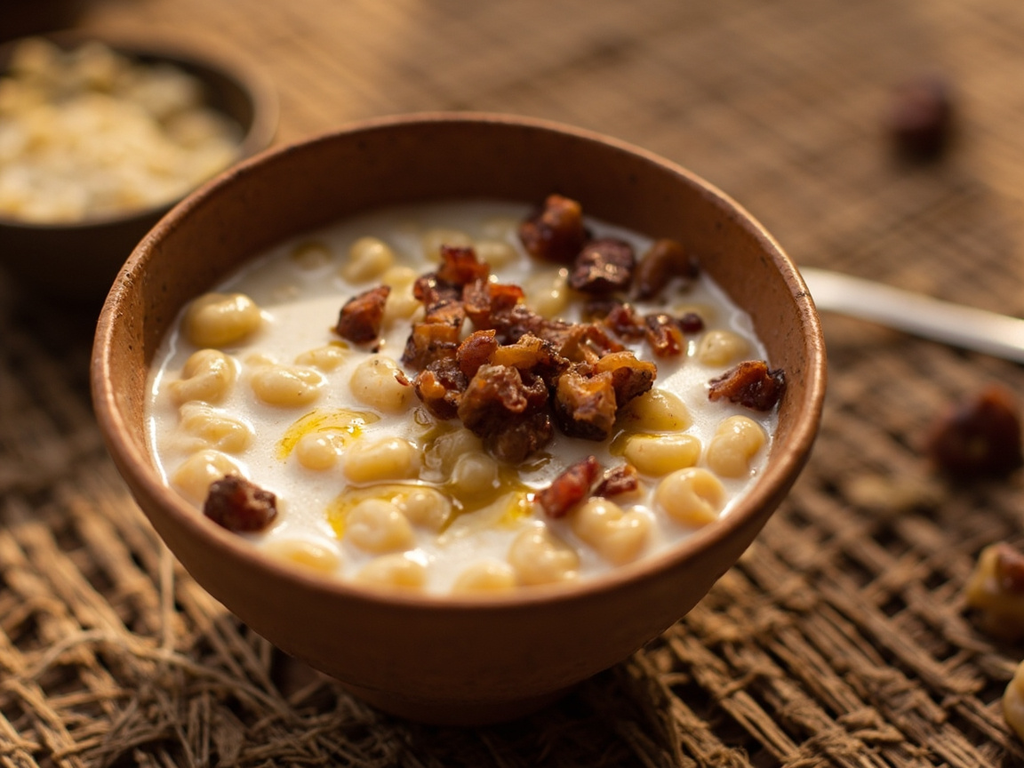
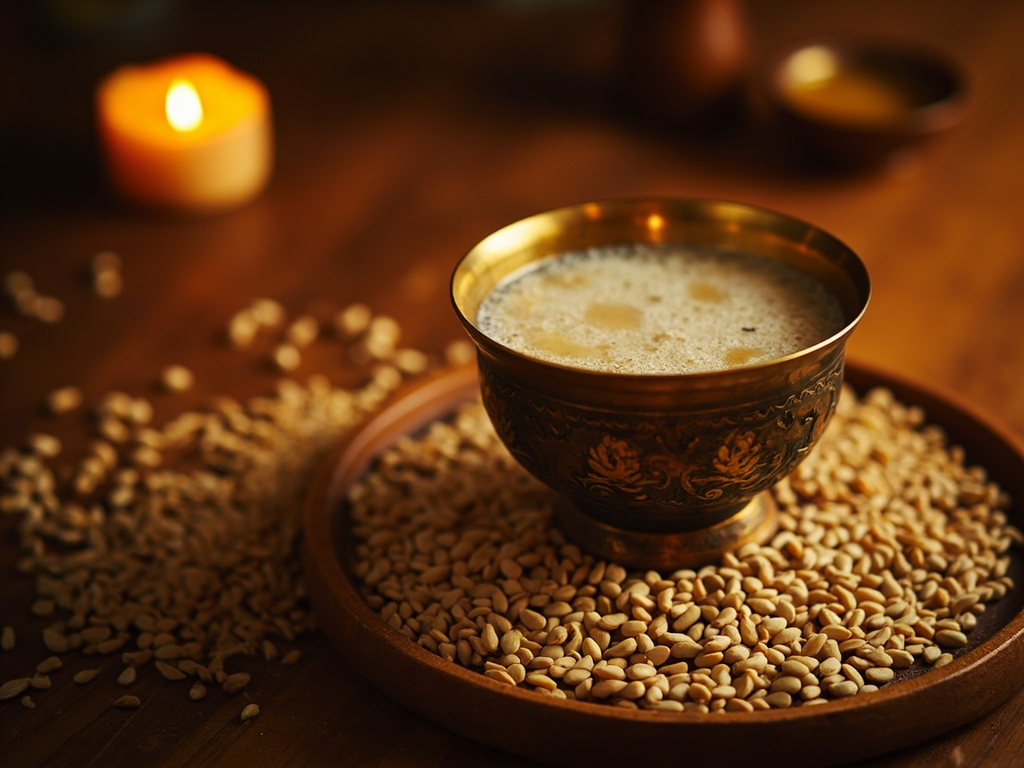
A cloudy, sweet, and slightly sparkling drink, obtained by briefly fermenting cooked millet with a starter: barely alcoholic, almost a milky nectar. First poured for the ancestors, then shared among the living. (A non-alcoholic version is offered for family audiences.)
Before your lip touches it, pour first for those who came before you: the first cup belongs to the ancestors. This sweet millet liquor, barely risen, I taste without ever losing myself—for wine, I set no measure, but it never confuses me. Serve it warm, with a collected heart, and let the rite always precede pleasure.
- •Cooked glutinous millet (黍) — one bushel (sweet fermentable base)
- •Grain starter (麴, qū) — as needed (fermentation agent)
- •Spring water — to cover (liquid)
- •Wild honey — a little (sweetness (depending on means))
Lǐ: Sweet Millet Ale for the Offering
A cloudy, sweet, and slightly sparkling drink, obtained by briefly fermenting cooked millet with a starter: barely alcoholic, almost a milky nectar. First poured for the ancestors, then shared among the living. (A non-alcoholic version is offered for family audiences.)
Why this dish? Confucius venerated the Zhou rites ('The Zhou are accomplished! I follow the Zhou,' Analects III) and scrupulously observed ancestral sacrifices. The lǐ (醴), a sweet, barely fermented drink, was poured as a libation on altars before being shared. A drink of filial piety more than of drunkenness—the Master, it is said, 'never let himself be confused by wine.'
Before your lip touches it, pour first for those who came before you: the first cup belongs to the ancestors. This sweet millet liquor, barely risen, I taste without ever losing myself—for wine, I set no measure, but it never confuses me. Serve it warm, with a collected heart, and let the rite always precede pleasure.
Ingredients (period version)
- Cooked glutinous millet (黍) — one bushel (sweet fermentable base)
- Grain starter (麴, qū) — as needed (fermentation agent)
- Spring water — to cover (liquid)
- Wild honey — a little (sweetness (depending on means))
Ingredients
- Cooked and cooled glutinous millet or sticky rice — 300 g (fermentation base)
- Rice koji / sweet rice starter (酒麴, jiuqu) — 1 ball or 1 tsp (starter)
- Filtered water — 400 ml (liquid)
- Honey — 1 tbsp (sweetness)
- Family-friendly alternative (non-alcoholic) — — (see steps: toasted millet infusion + honey, unfermented)
Method
- Steam the millet, spread it out, and let cool to lukewarm.
- Crumble the starter over it, mix, press into a clean jar, making a well in the center.
- Cover with a cloth and let ferment for 1 to 2 days at 25–30 °C: a sweet, cloudy liquid forms in the well.
- Add the water and honey, let sit another day, then strain: the drink is barely alcoholic and slightly sparkling.
- Symbolically pour the first cup as an offering, then serve cool or warm.
- Non-alcoholic family version: infuse toasted millet in simmering water for 15 minutes, strain, sweeten with honey, and serve warm—same ritual gesture, zero alcohol.
How it was made : The Zhou Chinese distinguished jiǔ (酒, stronger grain ale) from lǐ (醴), a sweet drink from a very short fermentation, almost a sweet 'must.' Without grapes, all these beverages came from fermented grains (especially millet) using qū, a moldy starter characteristic of China. The libation wine was central to the ancestral cult that Confucius considered fundamental.
The contemporary twist : Serve the family version in small bronze (or imitation) cups with a few toasted millet grains floating on top: a toast to the ancestors accessible to the whole table.
Sources : Entretiens de Confucius (Lunyu), books III and X · K. C. Chang (ed.), Food in Chinese Culture, Yale University Press, 1977
Confucius · Charactorium