 flip
flipKatauo — dried and salted fish for the great voyage
Katauo — dried and salted fish for the great voyage
Why this dish? Legend says that Jingū led her fleet across the Korea Strait while pregnant, slipping a stone (chinkai-seki) into her belt to delay childbirth. Such a crossing required non-perishable food: fish hardened by salt and sun, ancestor of katsuobushi, was the ration of sailors and warriors.
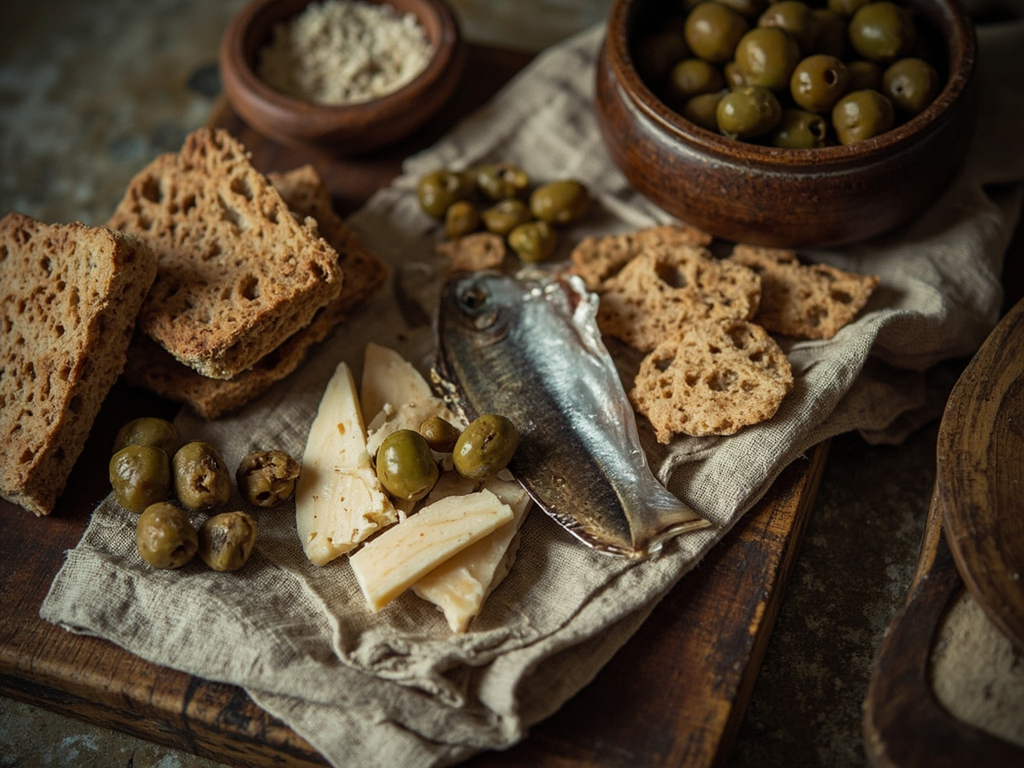
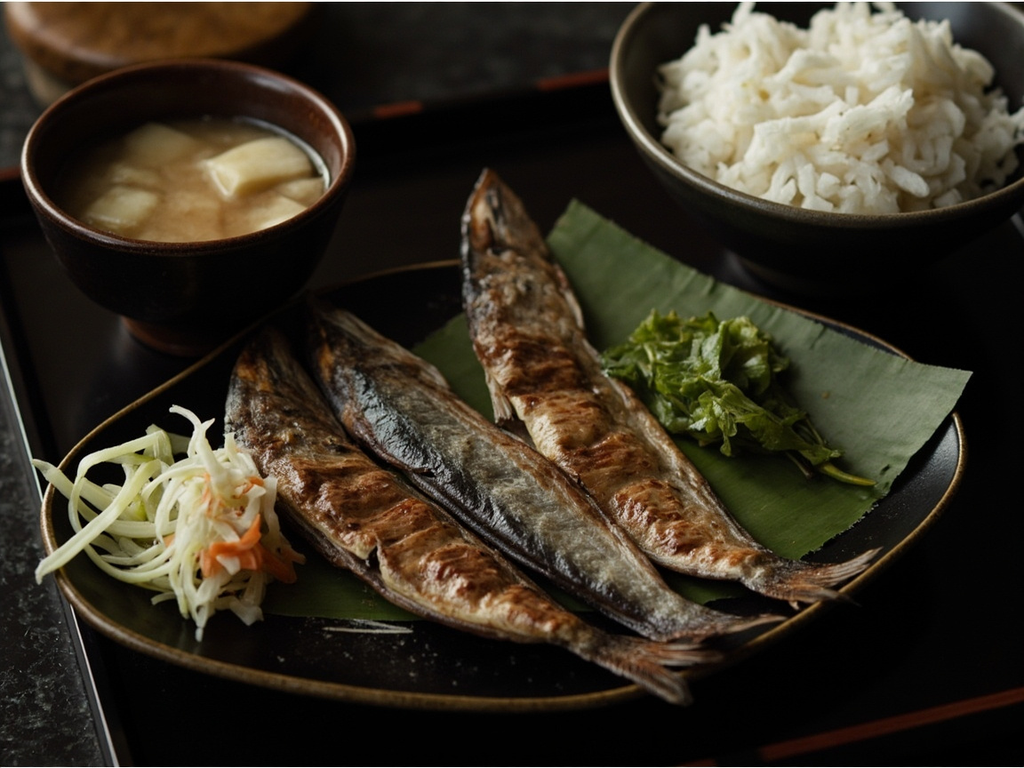
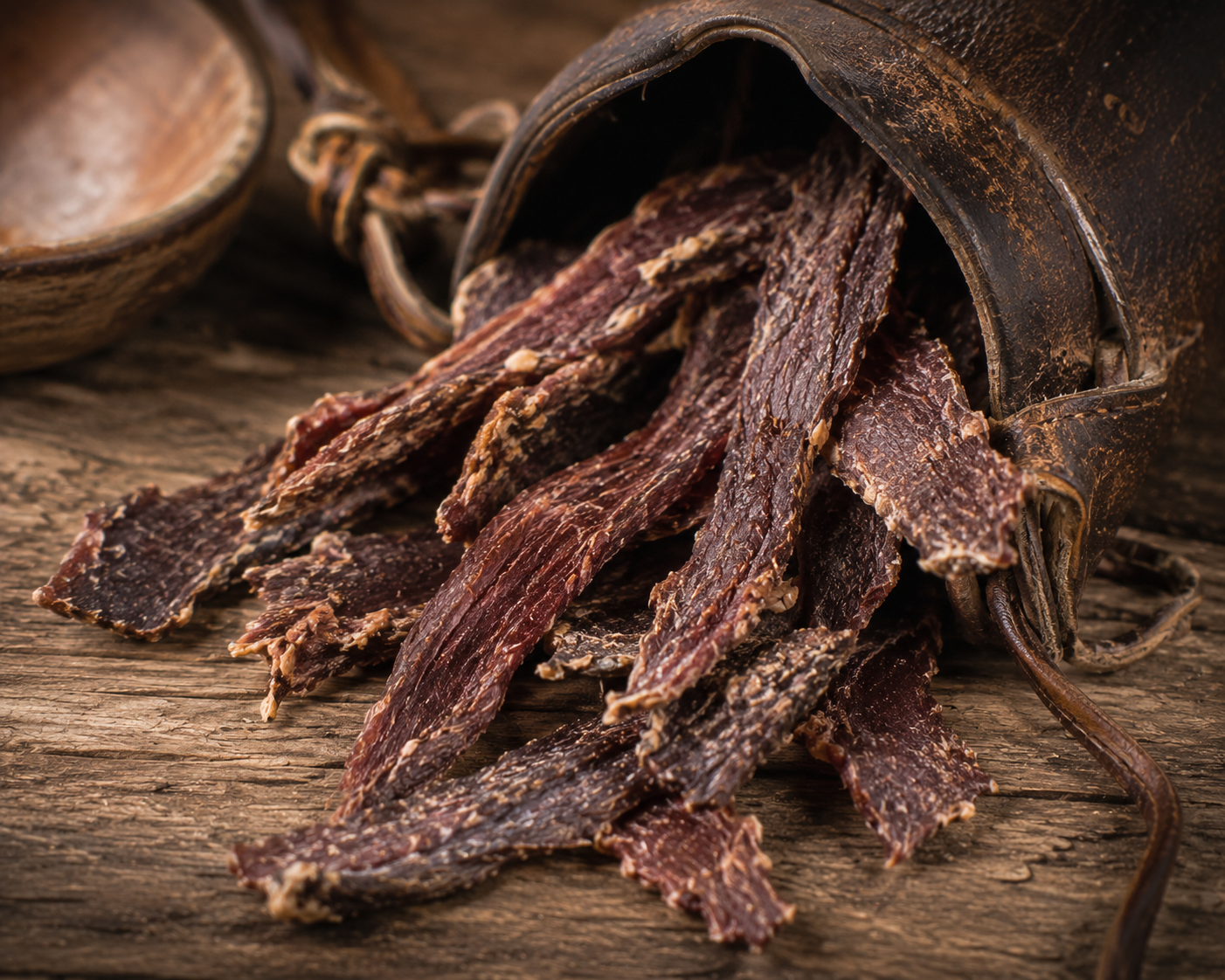
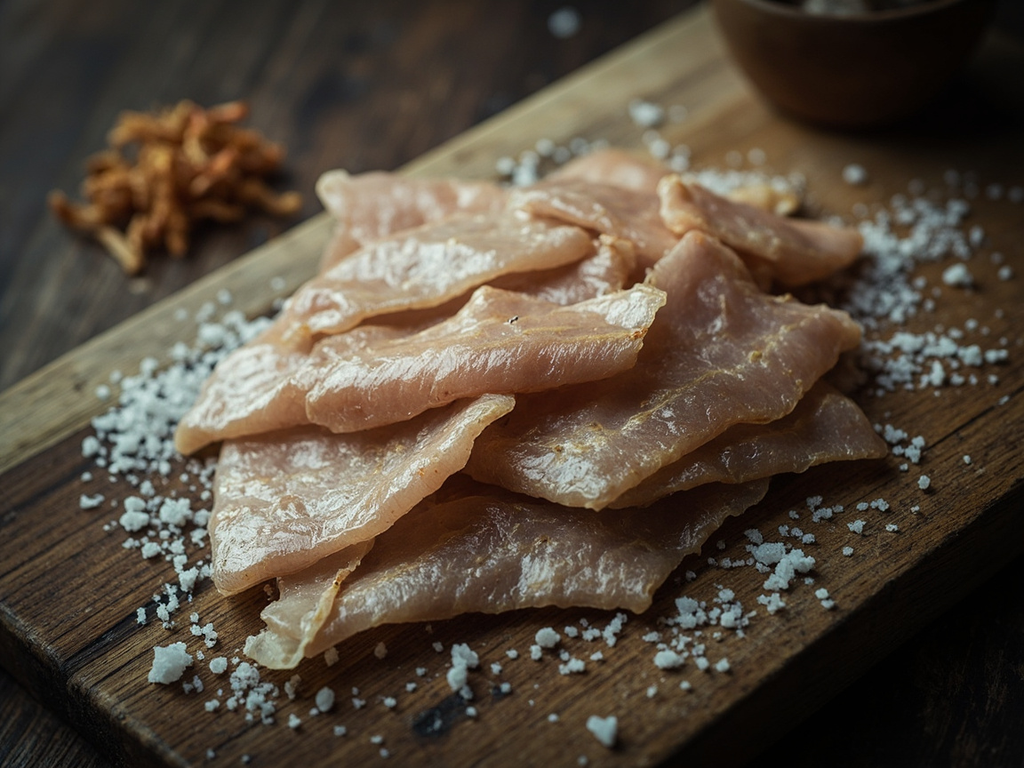
Thin strips of fish (bonito or mackerel) salted and dried in wind and sun until hard as wood and intensely flavored. They are nibbled as-is at sea, or soaked to flavor a broth. The journey made edible.
When you cut through the sea toward a distant land, you need provisions that neither water nor time can spoil. I carried a cold stone against my loins to hold the child, and in the holds, this fish hard as pebbles. Slice it thin, rub it with salt in full hands, then give it to the salt wind and sun until it sounds hollow. At sea, we gnaw it thus; on land, we let it yield its soul in hot water to warm the men. That is how a fleet crosses without faltering.
- •Fresh bonito or mackerel — one fish (preserved ingredient)
- •Sea salt — abundantly (preservative)
Katauo — dried and salted fish for the great voyage
Thin strips of fish (bonito or mackerel) salted and dried in wind and sun until hard as wood and intensely flavored. They are nibbled as-is at sea, or soaked to flavor a broth. The journey made edible.
Why this dish? Legend says that Jingū led her fleet across the Korea Strait while pregnant, slipping a stone (chinkai-seki) into her belt to delay childbirth. Such a crossing required non-perishable food: fish hardened by salt and sun, ancestor of katsuobushi, was the ration of sailors and warriors.
When you cut through the sea toward a distant land, you need provisions that neither water nor time can spoil. I carried a cold stone against my loins to hold the child, and in the holds, this fish hard as pebbles. Slice it thin, rub it with salt in full hands, then give it to the salt wind and sun until it sounds hollow. At sea, we gnaw it thus; on land, we let it yield its soul in hot water to warm the men. That is how a fleet crosses without faltering.
Ingredients (period version)
- Fresh bonito or mackerel — one fish (preserved ingredient)
- Sea salt — abundantly (preservative)
Ingredients
- Mackerel or bonito fillets — 2 fillets (base)
- Coarse salt — 100 g (dry brine)
- Water (for rinsing brine) — one bowl (light desalting)
Method
- Slice the fish into regular strips.
- Bury them in coarse salt for 12 to 24 hours in a cool place to dehydrate.
- Briefly rinse, dry, then air-dry in dry air and sun (or in an oven at 60 °C, door ajar, for several hours) until the strips are firm and brittle.
- Store away from humidity. Eat as shavings, or rehydrate in hot broth.
How it was made : Before the noble fermentation of katsuobushi (a later development), fish was simply preserved by salting and prolonged drying: "katauo" (hard fish). Light, non-perishable and rich in umami, it was the ration for maritime and military expeditions of the archipelago.
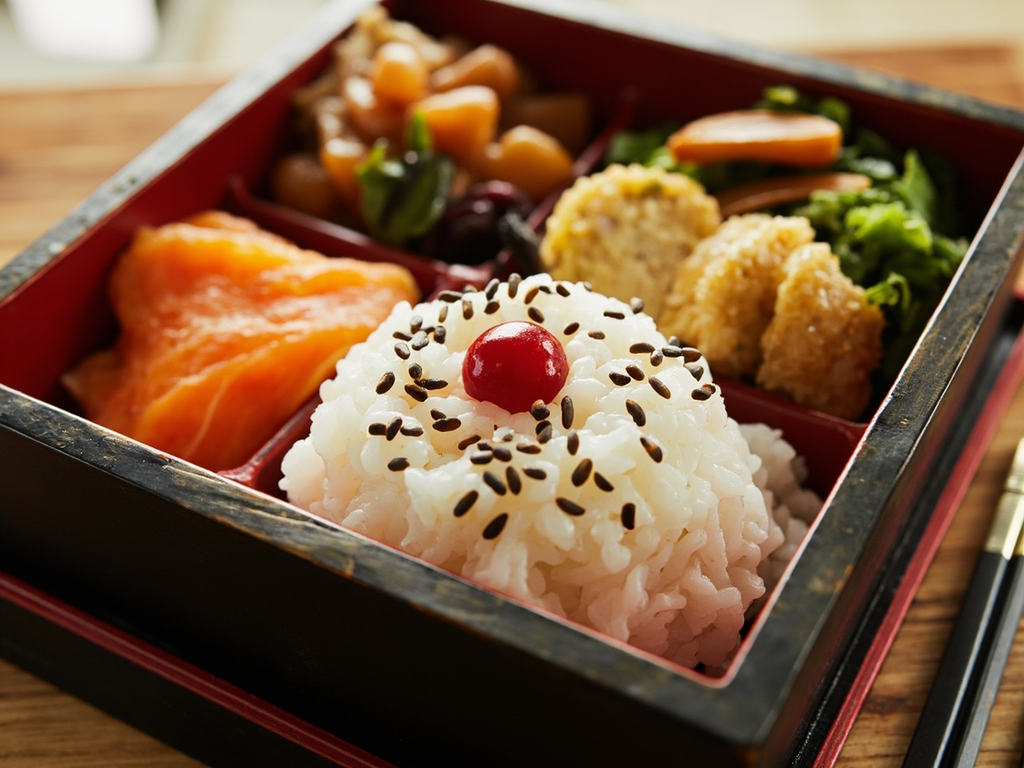
The contemporary twist : Grated into fine shavings over a bowl of steaming rice with a few drops of soy sauce: the very first ancestor of the bonito flakes that dance on Japanese dishes.
Empress Jingu · Charactorium