 flip
flipGarden barley maza
Garden barley maza
Why this dish? Barley, water, and a drizzle of oil formed Epicurus's daily fare at the Garden in Athens. He taught that barley bread and water provide the highest pleasure when eaten with hunger — maza was literally the daily bread of his philosophy.
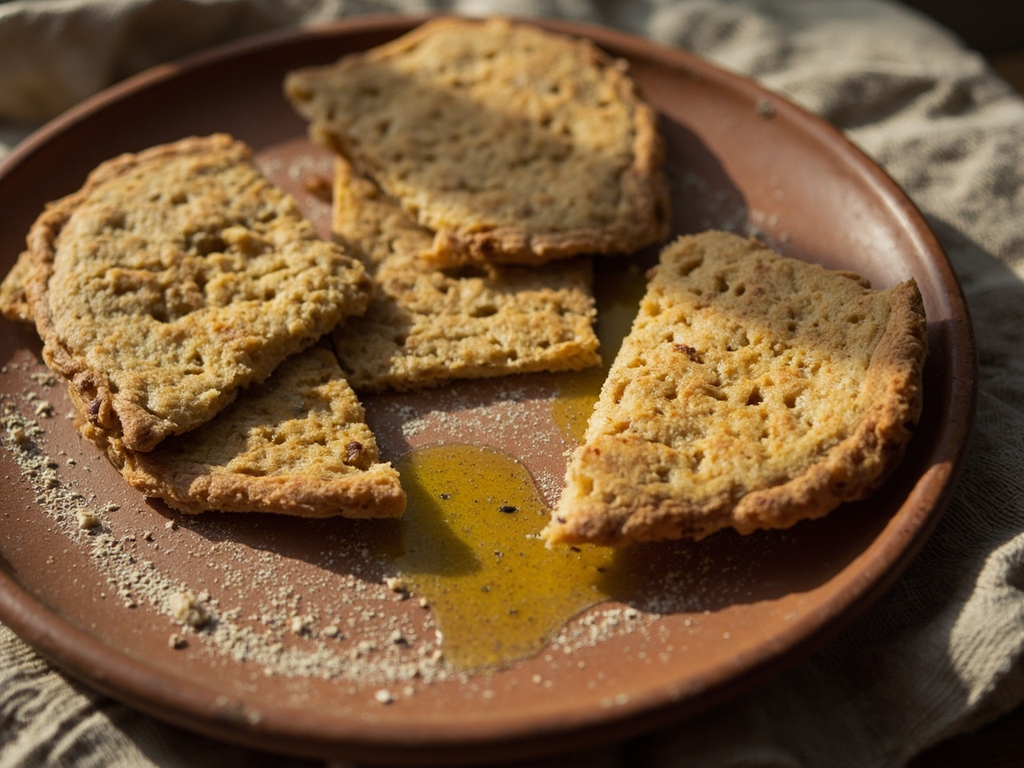
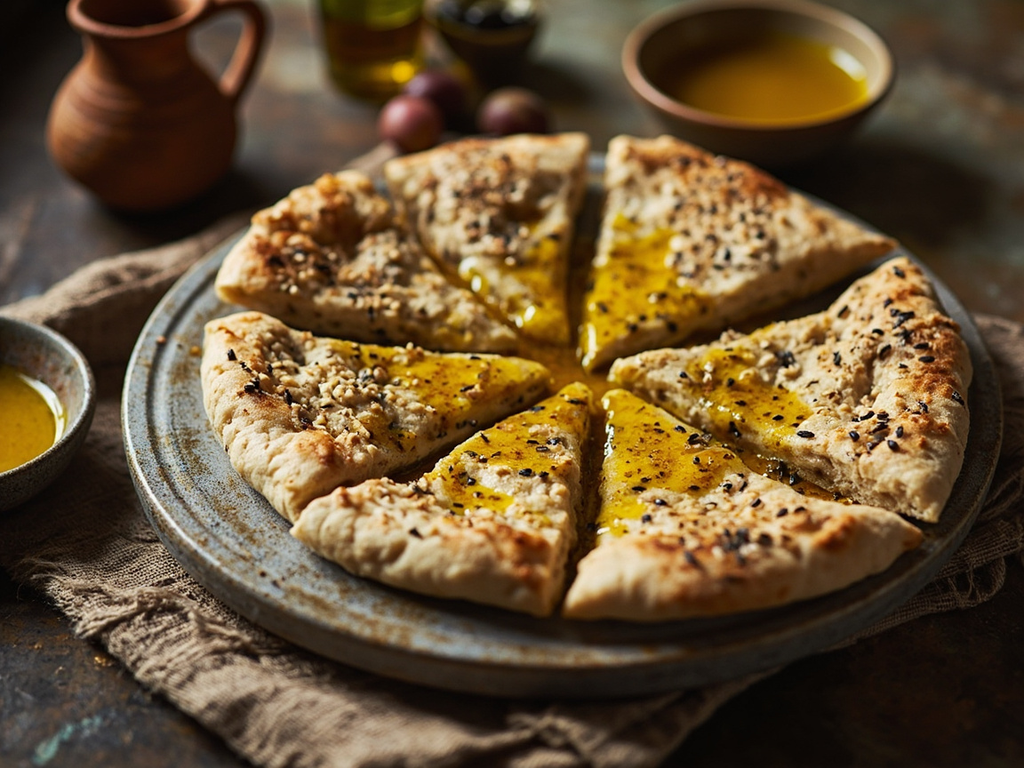
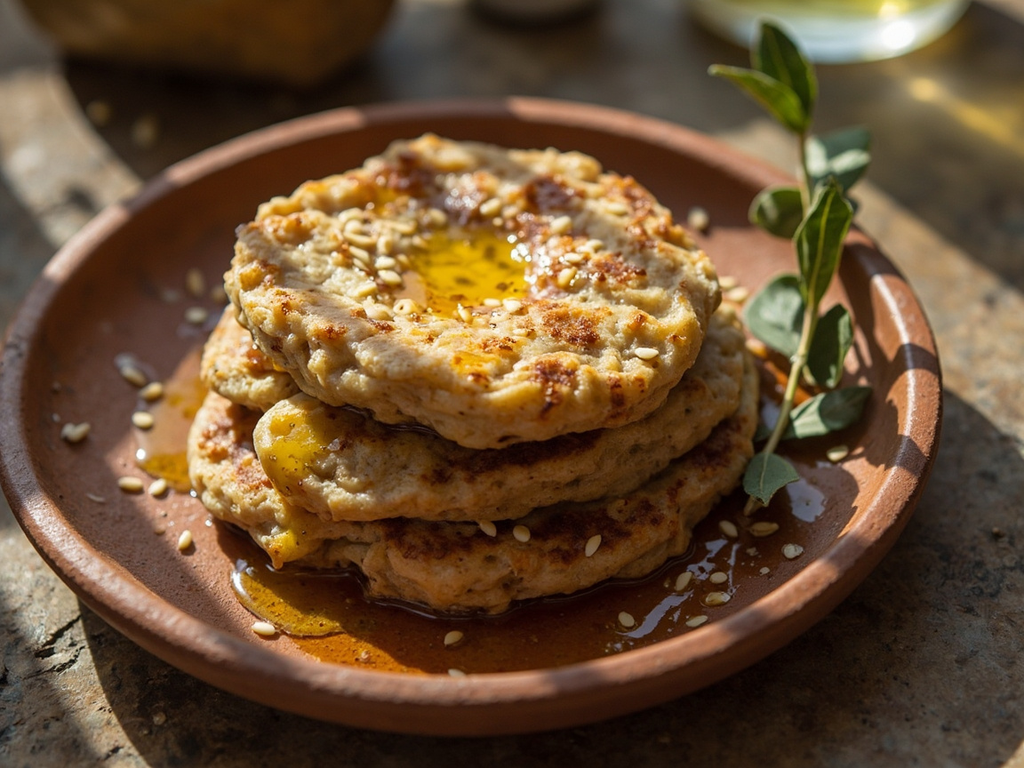
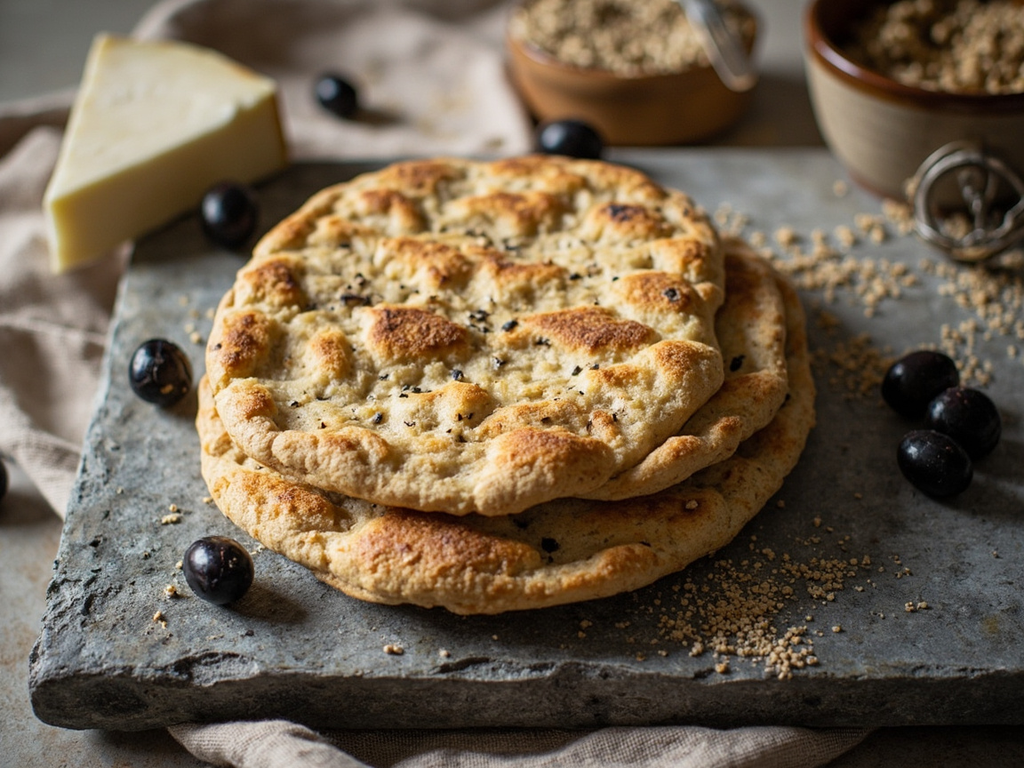
An unleavened barley flatbread, kneaded raw with water and a little olive oil, barely seasoned with salt. Dense, rustic, slightly bitter: the simplest food in Greece, shared by the poor and the wise.
Come closer, my friend, and do not fear the modesty of this table. See: a little barley flour, water from my pitcher, a few drops of oil — here is enough to live happily. I knead this flatbread with my own hands, without oven or fuss, and when hunger visits me I find it sweeter than any tyrant's feast. He who can be content with barley has nothing left to fear from fortune; that, believe me, is the beginning of all tranquility.
- •Barley flour (alphita) — two handfuls (grain base)
- •Spring water — as needed (binder)
- •Olive oil — a drizzle (softness and flavor)
- •Sea salt — a pinch (seasoning)
Garden barley maza
An unleavened barley flatbread, kneaded raw with water and a little olive oil, barely seasoned with salt. Dense, rustic, slightly bitter: the simplest food in Greece, shared by the poor and the wise.
Why this dish? Barley, water, and a drizzle of oil formed Epicurus's daily fare at the Garden in Athens. He taught that barley bread and water provide the highest pleasure when eaten with hunger — maza was literally the daily bread of his philosophy.
Come closer, my friend, and do not fear the modesty of this table. See: a little barley flour, water from my pitcher, a few drops of oil — here is enough to live happily. I knead this flatbread with my own hands, without oven or fuss, and when hunger visits me I find it sweeter than any tyrant's feast. He who can be content with barley has nothing left to fear from fortune; that, believe me, is the beginning of all tranquility.
Ingredients (period version)
- Barley flour (alphita) — two handfuls (grain base)
- Spring water — as needed (binder)
- Olive oil — a drizzle (softness and flavor)
- Sea salt — a pinch (seasoning)
Ingredients
- Barley flour (or blended barley flakes) — 150 g (grain base)
- Warm water — 90 to 110 ml (binder)
- Extra virgin olive oil — 2 tbsp (softness and flavor)
- Fine salt — 1/2 tsp (seasoning)
Method
- Mix the barley flour and salt in a bowl.
- Add the oil, then gradually add the warm water while working with your hands until you get a smooth, non-sticky dough.
- Shape into a flatbread about 1.5 cm thick.
- Cook dry on a baking sheet or hot pan, 5 to 6 minutes per side, until golden and firm.
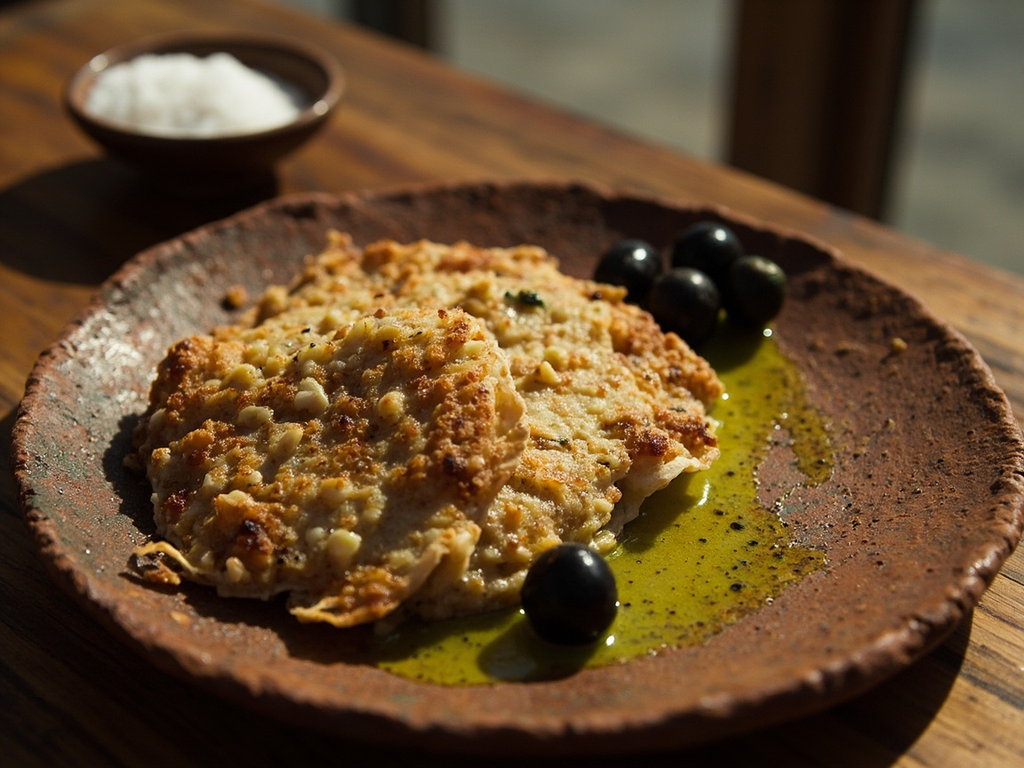
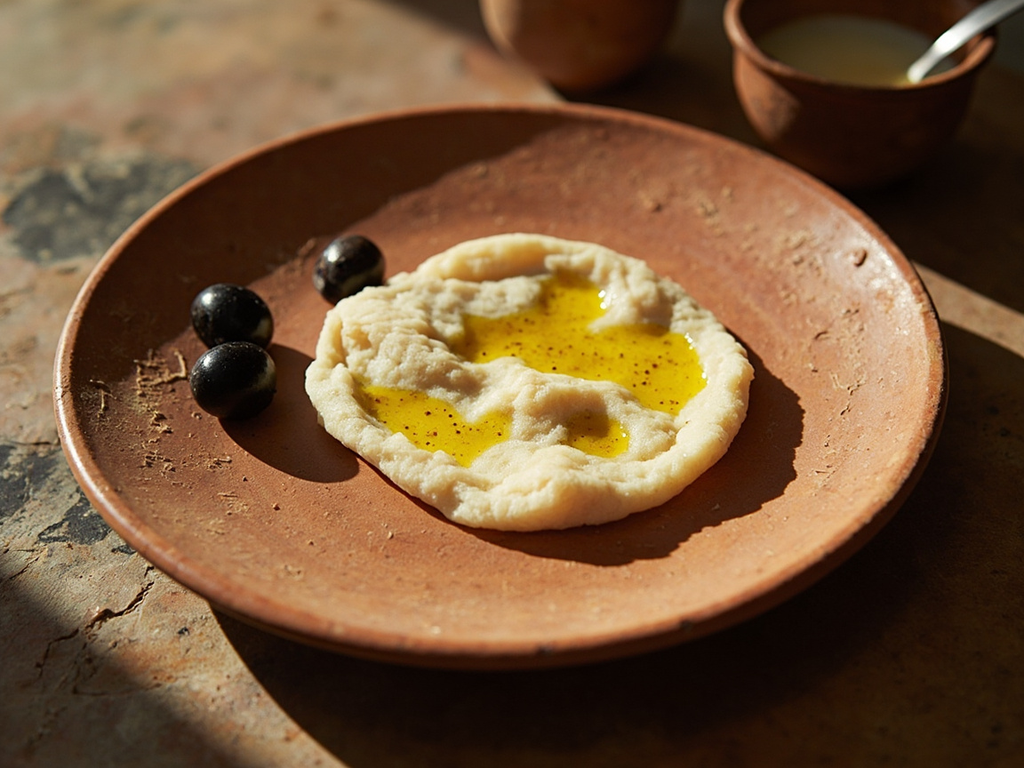
- Serve warm, drizzled with a little oil, with a few olives on the side.
How it was made : Maza was often eaten raw or barely dried: roasted ground barley (alphita) was kneaded with water, wine, milk, or oil, not always cooked. It was the 'bread' of the poor, as opposed to the more prestigious wheat artos.
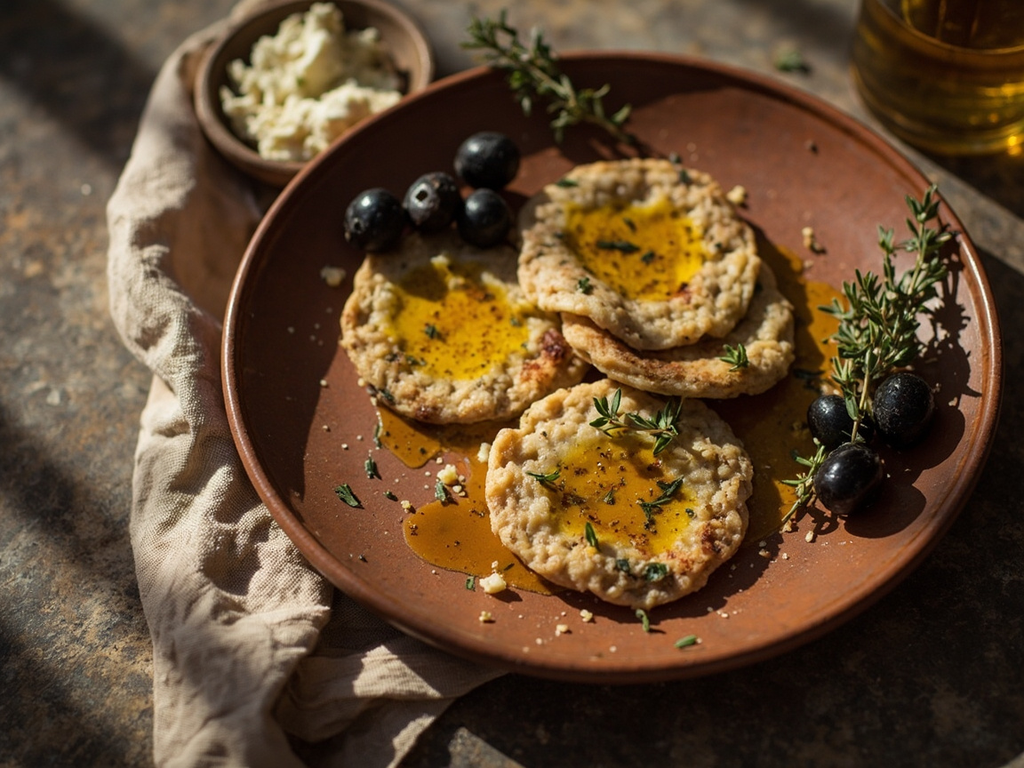
The contemporary twist : Serve as mini flatbreads for appetizers, with a drizzle of oil and fresh thyme: a 'philosopher's toast' to share.
Sources : Diogenes Laërtius, Lives and Opinions of Eminent Philosophers, Book X (Epicurus) · Andrew Dalby, Food in the Ancient World from A to Z (2003), entry 'barley'
Epicurus · Charactorium