 flip
flipBarley maza with oil and thyme
Barley maza with oil and thyme
Why this dish? Maza, a flatbread made from barley flour, was the daily bread of the Athenian citizen — far more common than wheat bread, reserved for festive days. Euripides, who lived modestly, sometimes retreating to a cave on Salamis to write, probably ate it every day as a simple accompaniment to his olives and goat cheese.
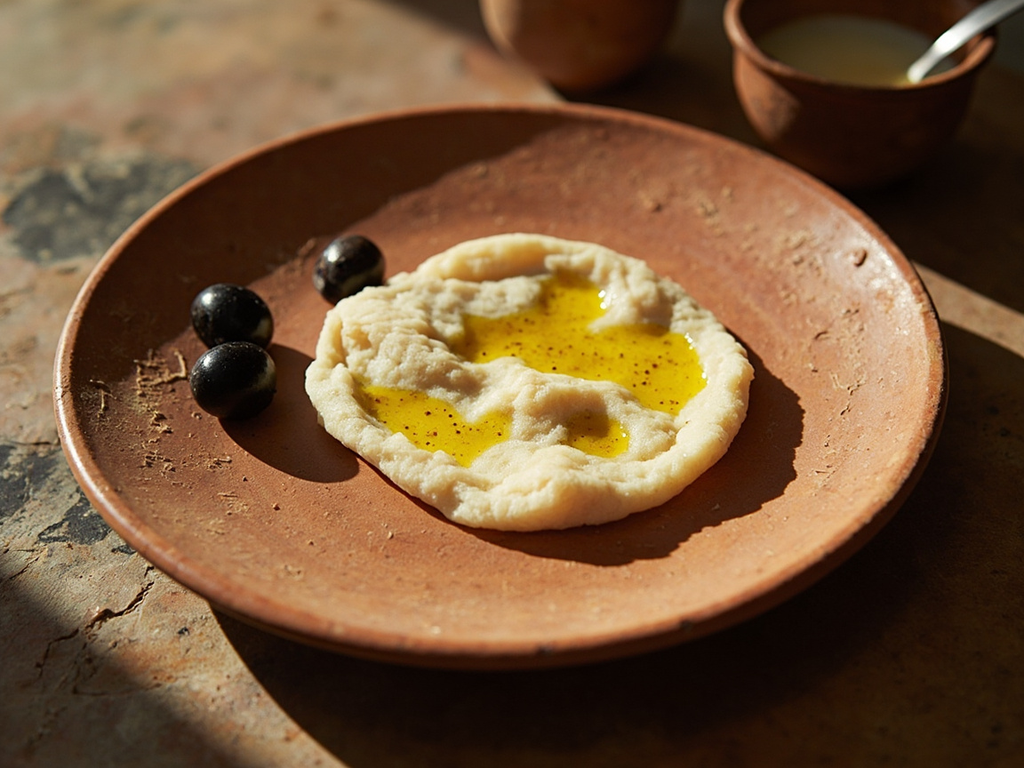
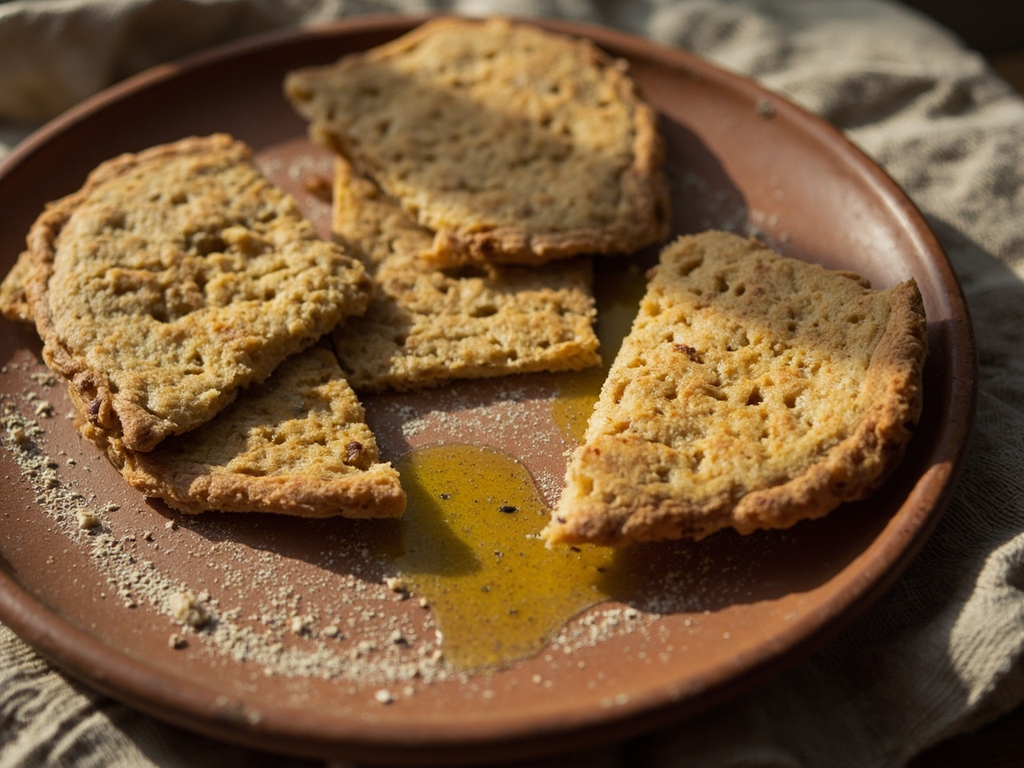
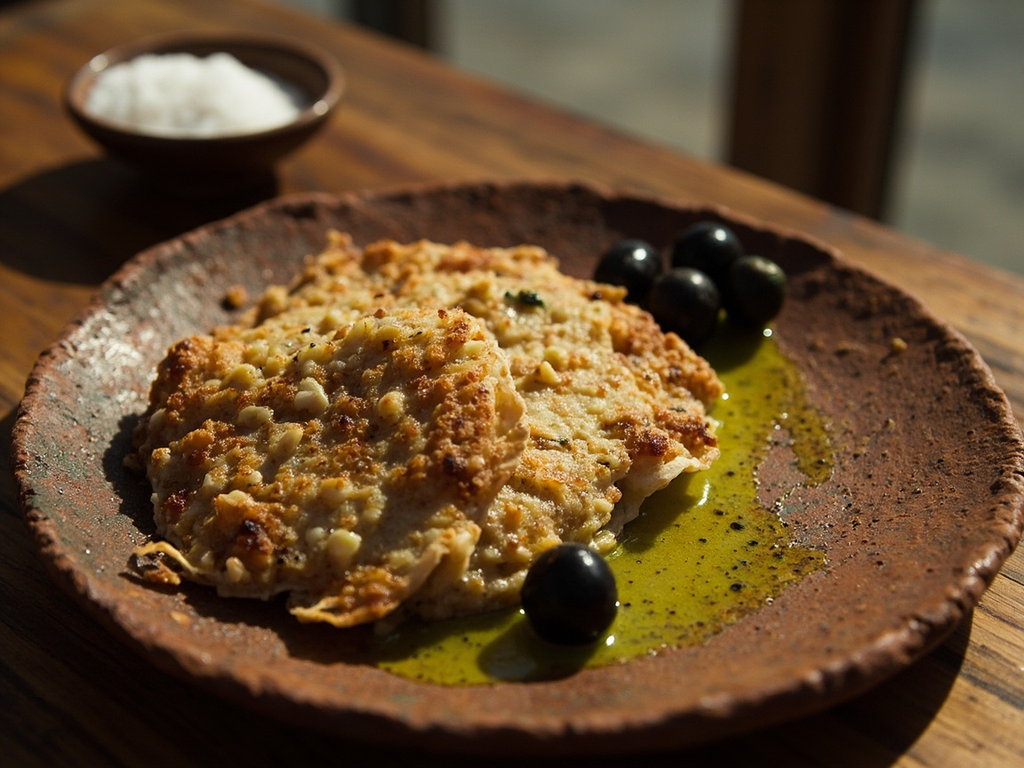
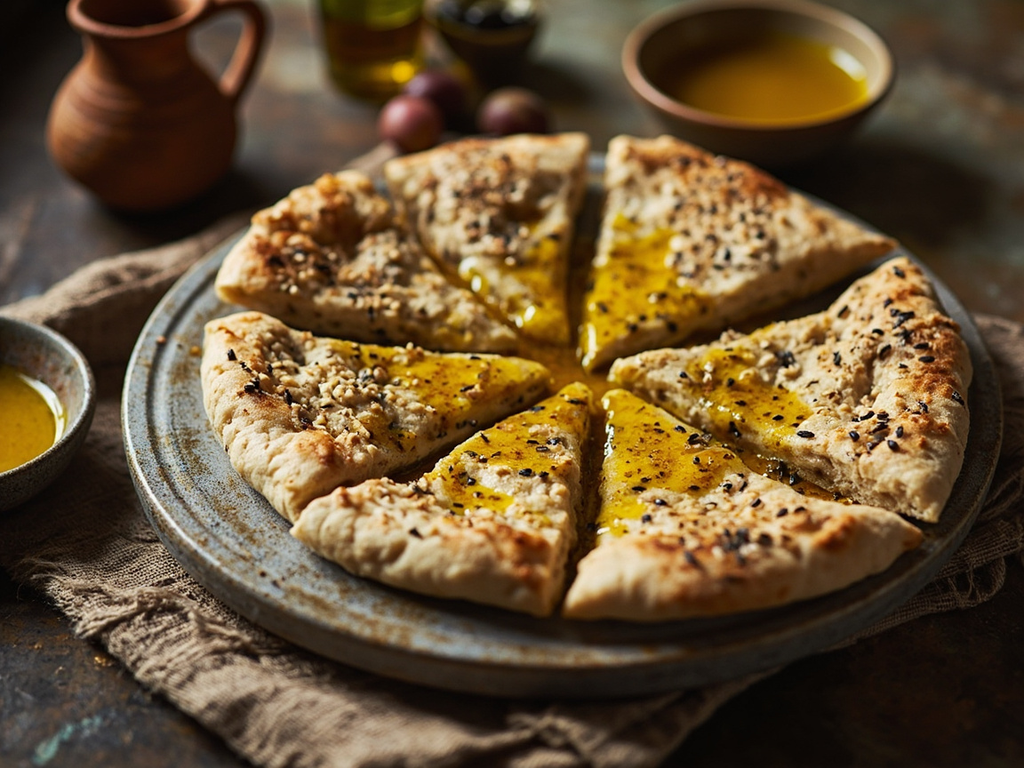
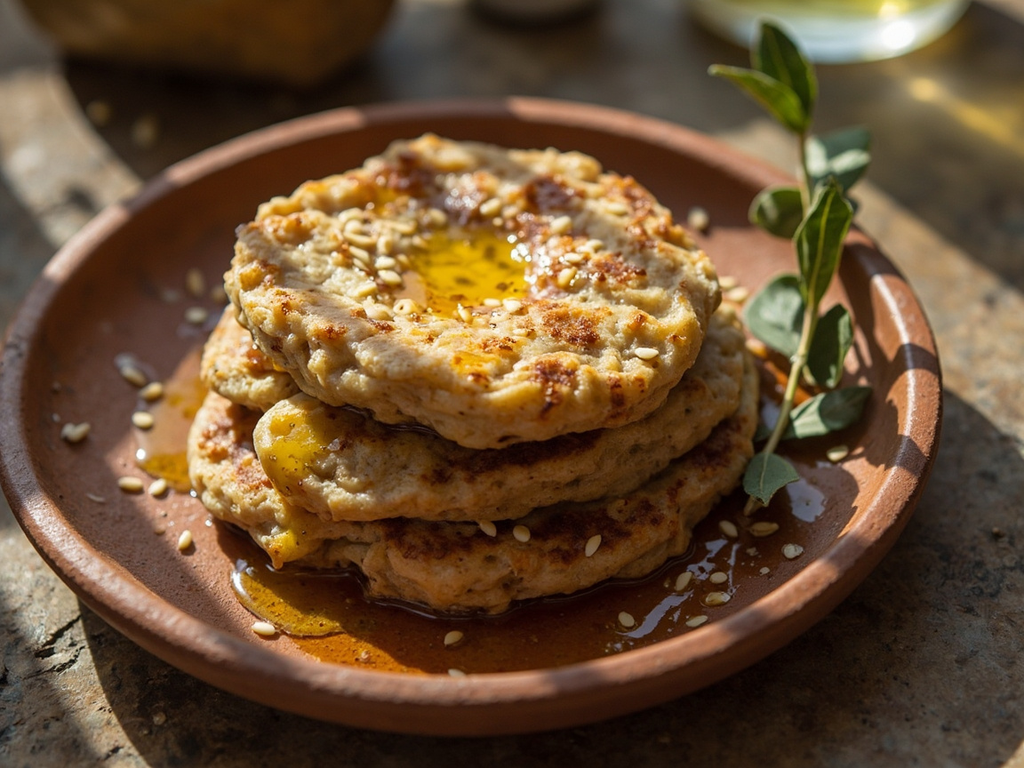
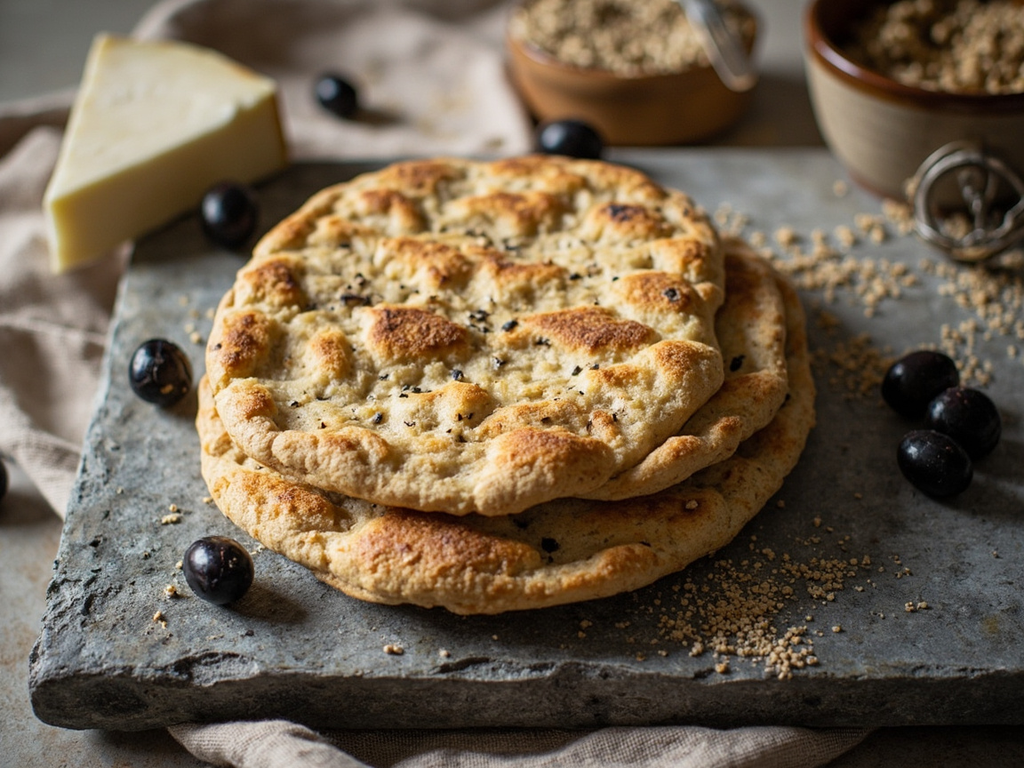
A flat, rustic barley flatbread made from toasted barley, kneaded with water and olive oil, seasoned with thyme and a little salt. Dense, slightly bitter, it is the companion of all modest meals.
Stranger, do not be fooled by the humble appearance of this flatbread. It is this that nourishes the people of Athens — barley more than wheat, for the gods did not make all mortals rich. I toast the flour before kneading it with a drizzle of oil, and I eat it outdoors, my gaze turned toward the sea of Salamis, searching for the verse that tomorrow will make the theater weep. Break off a piece: wisdom, like bread, is meant to be shared.
- •Barley flour — two generous handfuls (base of sitos)
- •Attic olive oil — a drizzle (binder and flavor)
- •Water — as needed (kneading)
- •Wild thyme — a pinch (flavor)
- •Sea salt — a pinch (seasoning)
Barley maza with oil and thyme
A flat, rustic barley flatbread made from toasted barley, kneaded with water and olive oil, seasoned with thyme and a little salt. Dense, slightly bitter, it is the companion of all modest meals.
Why this dish? Maza, a flatbread made from barley flour, was the daily bread of the Athenian citizen — far more common than wheat bread, reserved for festive days. Euripides, who lived modestly, sometimes retreating to a cave on Salamis to write, probably ate it every day as a simple accompaniment to his olives and goat cheese.
Stranger, do not be fooled by the humble appearance of this flatbread. It is this that nourishes the people of Athens — barley more than wheat, for the gods did not make all mortals rich. I toast the flour before kneading it with a drizzle of oil, and I eat it outdoors, my gaze turned toward the sea of Salamis, searching for the verse that tomorrow will make the theater weep. Break off a piece: wisdom, like bread, is meant to be shared.
Ingredients (period version)
- Barley flour — two generous handfuls (base of sitos)
- Attic olive oil — a drizzle (binder and flavor)
- Water — as needed (kneading)
- Wild thyme — a pinch (flavor)
- Sea salt — a pinch (seasoning)
Ingredients
- Barley flour (or ground hulled barley) — 200 g (base)
- Extra virgin olive oil — 3 tbsp (binder)
- Warm water — 100–120 ml (kneading)
- Dried thyme — 1 tsp (flavor)
- Salt — 1/2 tsp (seasoning)
Method
- Toast the barley flour in a dry pan for a few minutes until it smells nutty, then let cool slightly.
- Mix the flour, salt, and thyme; add oil, then water little by little, kneading until a soft but firm dough forms.
- Shape into flat discs about half a centimeter thick.
- Cook on a hot griddle or pan for 3–4 minutes per side, until marked and dry.
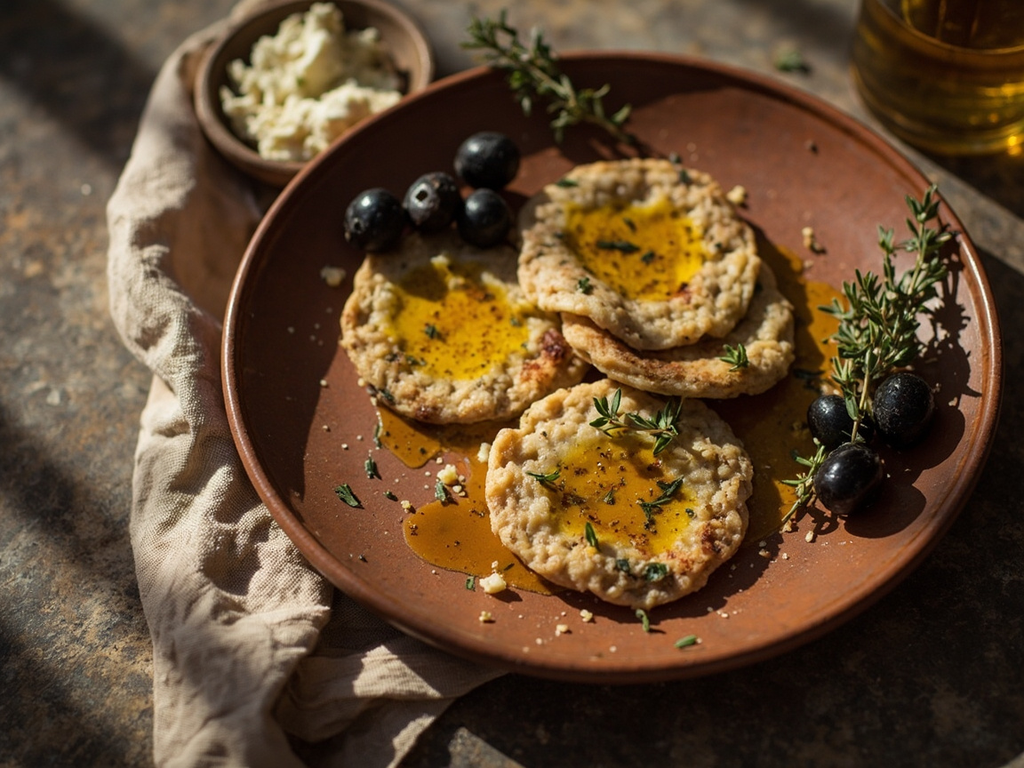
- Serve warm with olives, goat cheese, and a drizzle of oil.
How it was made : Barley was toasted before grinding because this grain does not knead well into leavened dough. Maza could be barely cooked, almost raw, eaten like a thick porridge, or dried into flatbreads for preservation.
The contemporary twist : Served as mini flatbreads for an appetizer, topped with fresh cheese and a sprig of flowering thyme.
Sources : Andrew Dalby, Siren Feasts (1996) · Athenaeus of Naucratis, The Deipnosophists
Euripides · Charactorium