 flip
flipGaudebillaux — fat beef tripe Tourangelle style
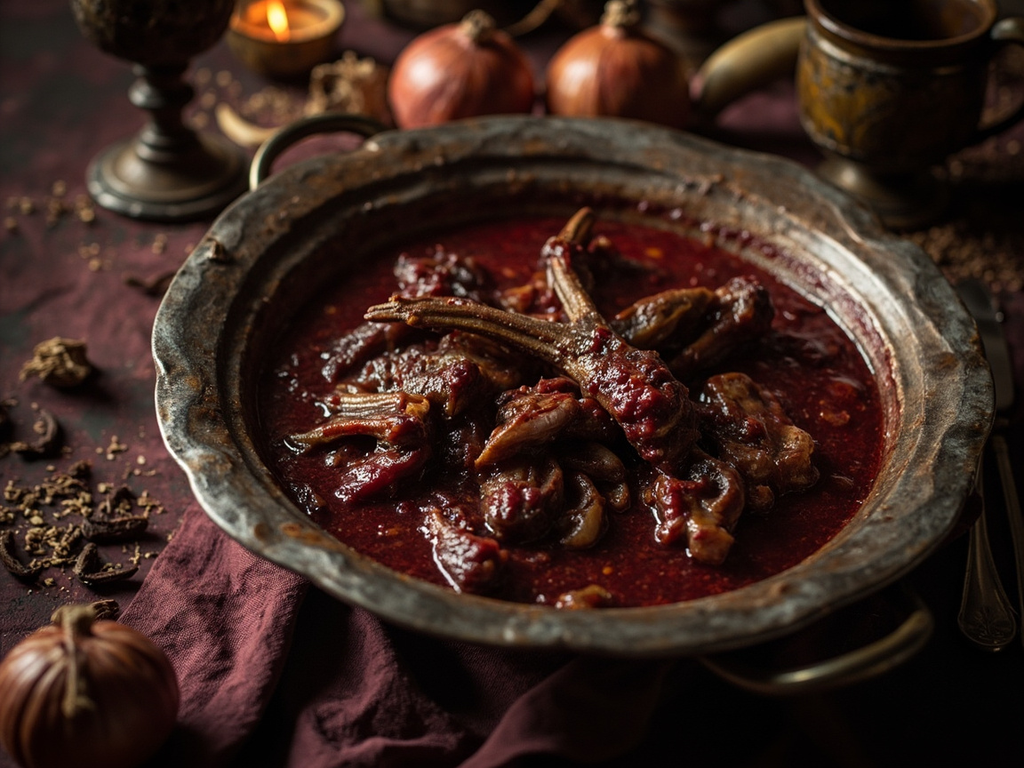
Gaudebillaux — fat beef tripe Tourangelle style
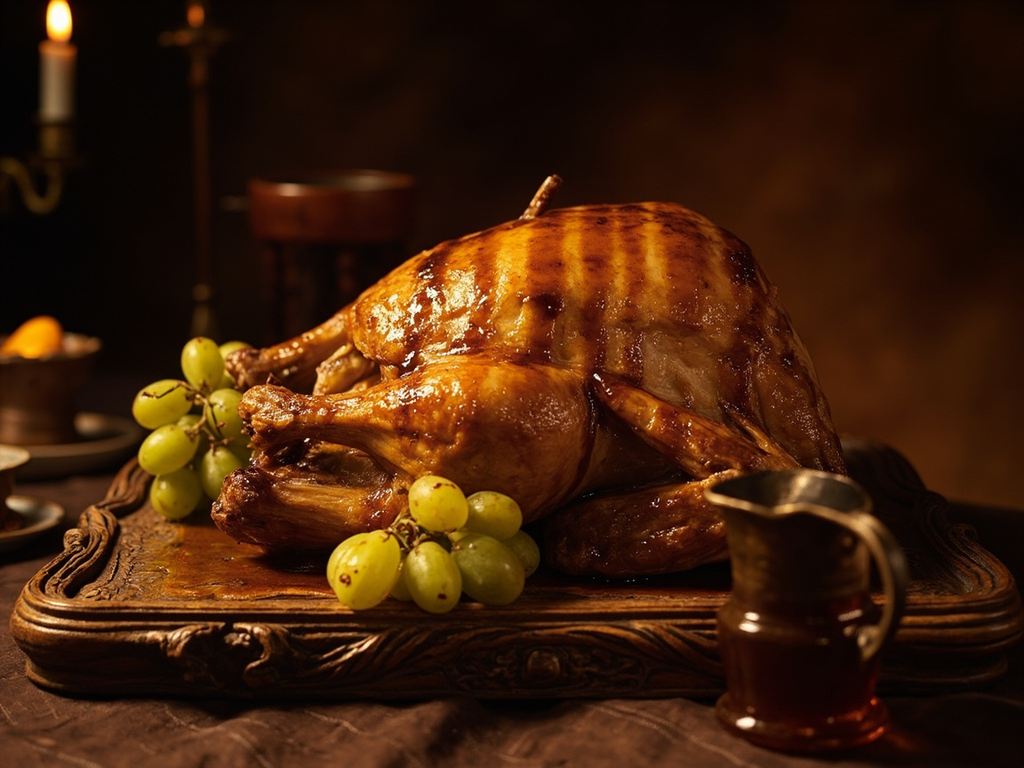
Why this dish? In chapter IV of *Gargantua*, the giant is born in the midst of a tripe feast: Grandgousier and his people devour "force gaudebillaux," these fat tripe of fatted beef, washed down with wine. Rabelais made this popular Touraine dish the very birth act of his hero.
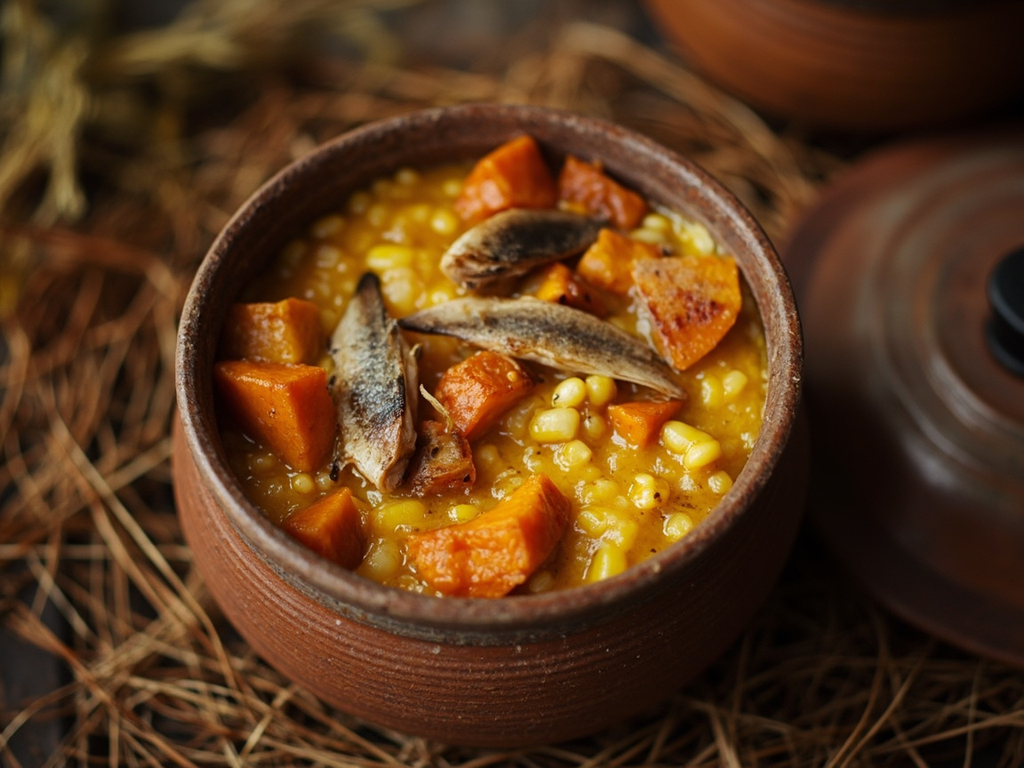
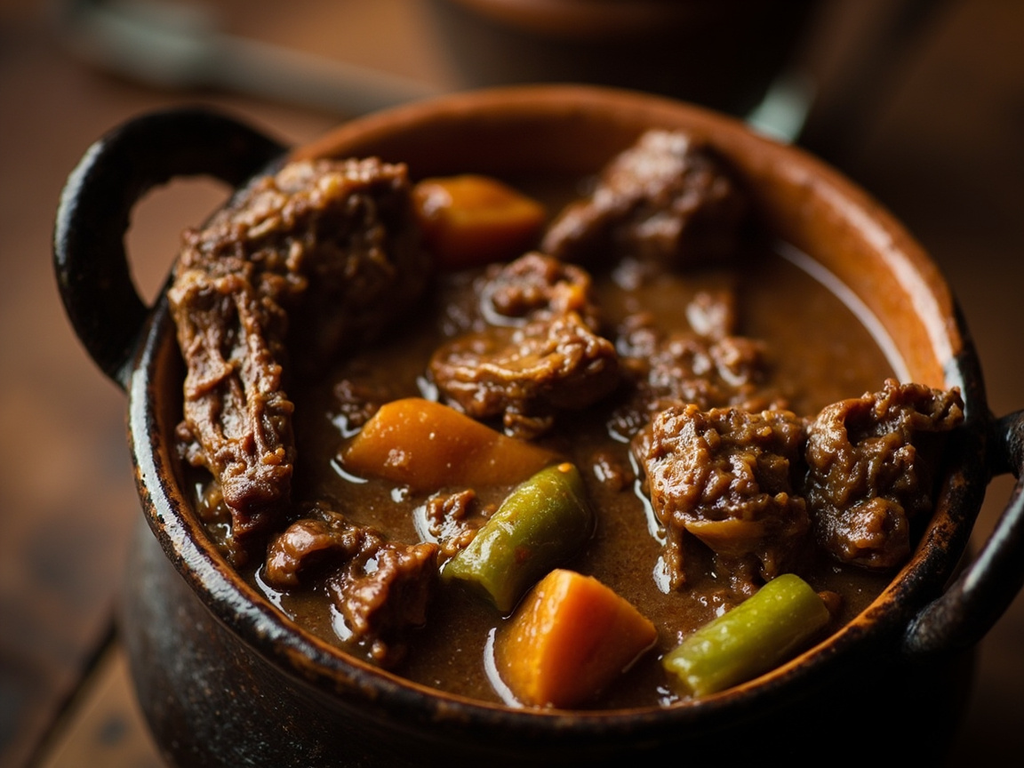
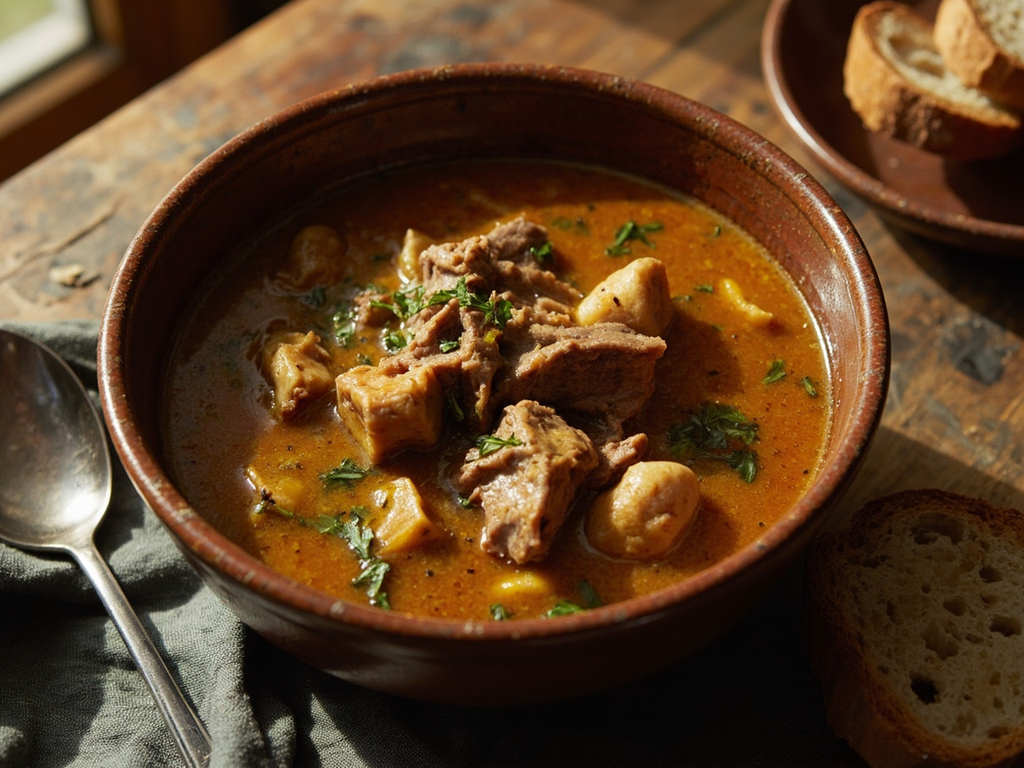
A long simmer of beef tripe and foot, tender, perfumed with saffron and sweet spices, brightened with a dash of verjus. A village feast dish, generous and hearty, as served during the great autumn cattle slaughters.
Beuveurs très illustres, approchez et tendez l'écuelle ! Voici les gaudebillaux dont ma mère se gorgea tant qu'il fallut bien que je vinsse au monde séance tenante. Prends les tripes du bœuf le plus gras, lave-les sept fois en claire fontaine, et fais-les confire tout un jour à petit feu avec safran, gingembre et un bon trait de verjus de nos vignes. Et n'oublie point le vin de Chinon pour les arroser, car tripes sans vin sont comme cloches sans battant : muettes et tristes. Mange, ris, et que ton ventre soit content !
- •Fat beef tripe (gras-double, bonnet) — large amount (base of the dish)
- •Beef foot — one (gelatinous binder)
- •Onions and leeks — as desired (aromatic base)
- •Saffron, ginger, clove — according to purse (sweet spices)
- •Verjus — a good splash (signature souring agent)
- •White Touraine wine — a pitcher (cooking liquid)
Gaudebillaux — fat beef tripe Tourangelle style
A long simmer of beef tripe and foot, tender, perfumed with saffron and sweet spices, brightened with a dash of verjus. A village feast dish, generous and hearty, as served during the great autumn cattle slaughters.
Why this dish? In chapter IV of *Gargantua*, the giant is born in the midst of a tripe feast: Grandgousier and his people devour "force gaudebillaux," these fat tripe of fatted beef, washed down with wine. Rabelais made this popular Touraine dish the very birth act of his hero.
Beuveurs très illustres, approchez et tendez l'écuelle ! Voici les gaudebillaux dont ma mère se gorgea tant qu'il fallut bien que je vinsse au monde séance tenante. Prends les tripes du bœuf le plus gras, lave-les sept fois en claire fontaine, et fais-les confire tout un jour à petit feu avec safran, gingembre et un bon trait de verjus de nos vignes. Et n'oublie point le vin de Chinon pour les arroser, car tripes sans vin sont comme cloches sans battant : muettes et tristes. Mange, ris, et que ton ventre soit content !
Ingredients (period version)
- Fat beef tripe (gras-double, bonnet) — large amount (base of the dish)
- Beef foot — one (gelatinous binder)
- Onions and leeks — as desired (aromatic base)
- Saffron, ginger, clove — according to purse (sweet spices)
- Verjus — a good splash (signature souring agent)
- White Touraine wine — a pitcher (cooking liquid)
Ingredients
- Beef tripe (gras-double and bonnet), already blanched — 1 kg (base of the dish)
- Calf's foot — 1 (gelatinous binder)
- Onions — 2 large (aromatic base)
- Leek — 1 white part (aromatic base)
- Saffron — 1 generous pinch (color and perfume)
- Ground ginger — 1 tsp (sweet spice)
- Cloves — 2 (spice)
- Verjus (or green grape juice) — 5 cl (signature souring agent)
- Dry white Touraine wine — 50 cl (cooking liquid)
- Salt — to taste (seasoning)
Method
- Cut the tripe into strips and rinse thoroughly in cold water.
- In a large pot, sweat the sliced onions and leek in a little fat.
- Add the tripe, split calf's foot, saffron, ginger, and cloves.
- Moisten with white wine and add water to cover; season lightly with salt.
- Cover and simmer over very low heat for 4 to 5 hours, until the tripe is tender.
- Remove the bones from the foot, return the meat to the pot, add the verjus, adjust seasoning, and serve very hot with country bread.
How it was made : In autumn, fat cattle were slaughtered and the offal, which did not keep, was consumed immediately. The tripe simmered for hours in communal cauldrons during village feasts, perfumed with spices that trade from Lyon and fairs made accessible even to commoners.
The contemporary twist : Serve in individual ramekins with a fine slice of grilled bread rubbed with garlic, and name the dish "Birth of Gargantua" on the menu.
Sources : François Rabelais, *Gargantua*, ch. IV (tripe feast / gaudebillaux)
François Rabelais · Charactorium