 flip
flipJavanese Pepes Ikan
Javanese Pepes Ikan
Why this dish? Freshwater fish, abundant in the rivers and ponds of Trowulan, was the daily accompaniment to rice at the Majapahit court. Pepes — fish wrapped in banana leaves and steamed or grilled — is an ancient Javanese technique that concentrates flavors without needing metal pots, ideal for Gajah Mada's military expeditions.
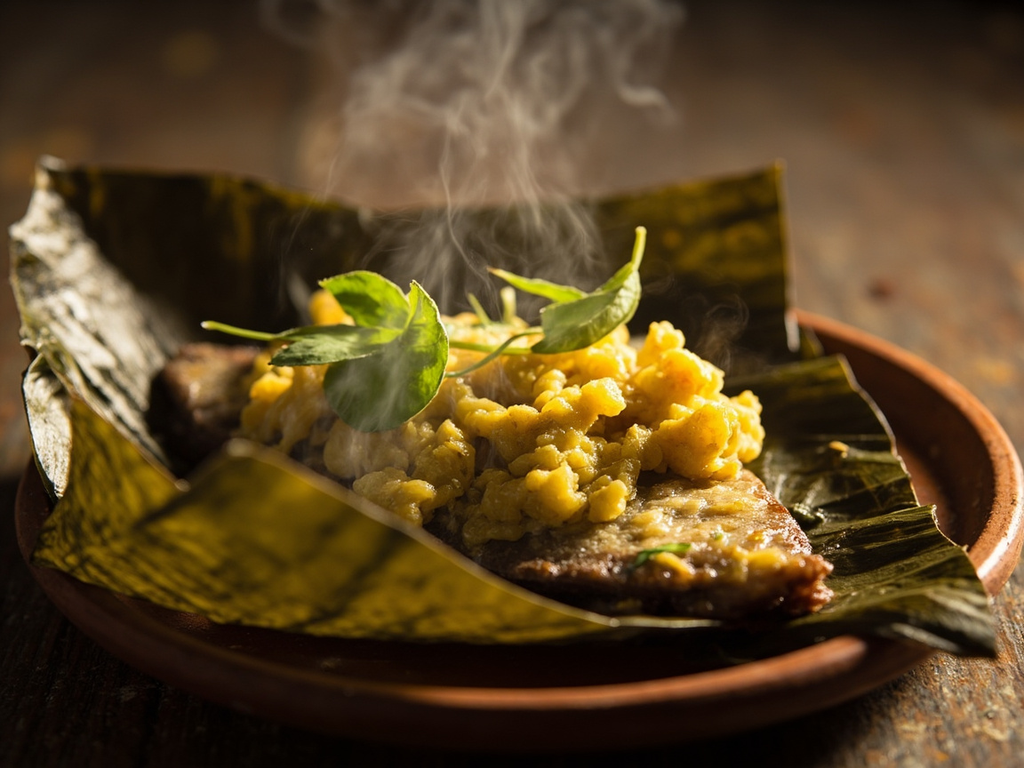
Freshwater fish fillet marinated in a paste of turmeric, galangal, lemongrass, and candlenuts, wrapped in a banana leaf and steamed or cooked over embers. The leaf perfumes the flesh and retains all the juices.
Before leading my men toward Bali, I ate what soldiers eat — fish wrapped in a leaf, set on the bivouac embers. We pound the kunir with the laos and the kemiri nuts until it becomes a paste thick as the mud of the rice fields. We rub the fish with it, close the leaf, tie it with a palm fiber, and wait. When the leaf blackens and the fragrance rises, it is ready. A warrior who eats well fights better — and this one needs neither plate nor spoon.
- •Freshwater fish (tilapia or gourami) — a fine fish (protein base)
- •Fresh turmeric — a piece (color and natural antiseptic)
- •Fresh galangal — a small piece (aromatic heat)
- •Lemongrass — one stalk (citrus fragrance)
- •Candlenuts (kemiri) — four to five nuts (binder and creaminess)
- •Shallots — a few (aromatic base)
- •Tamarind (asam) — a little pulp (acidity)
- •Lemon basil (kemangi) — a handful (herbaceous freshness)
- •Banana leaves — two large leaves (cooking wrapper)
- •Salt — to taste (seasoning)
Javanese Pepes Ikan
Freshwater fish fillet marinated in a paste of turmeric, galangal, lemongrass, and candlenuts, wrapped in a banana leaf and steamed or cooked over embers. The leaf perfumes the flesh and retains all the juices.
Why this dish? Freshwater fish, abundant in the rivers and ponds of Trowulan, was the daily accompaniment to rice at the Majapahit court. Pepes — fish wrapped in banana leaves and steamed or grilled — is an ancient Javanese technique that concentrates flavors without needing metal pots, ideal for Gajah Mada's military expeditions.
Before leading my men toward Bali, I ate what soldiers eat — fish wrapped in a leaf, set on the bivouac embers. We pound the kunir with the laos and the kemiri nuts until it becomes a paste thick as the mud of the rice fields. We rub the fish with it, close the leaf, tie it with a palm fiber, and wait. When the leaf blackens and the fragrance rises, it is ready. A warrior who eats well fights better — and this one needs neither plate nor spoon.
Ingredients (period version)
- Freshwater fish (tilapia or gourami) — a fine fish (protein base)
- Fresh turmeric — a piece (color and natural antiseptic)
- Fresh galangal — a small piece (aromatic heat)
- Lemongrass — one stalk (citrus fragrance)
- Candlenuts (kemiri) — four to five nuts (binder and creaminess)
- Shallots — a few (aromatic base)
- Tamarind (asam) — a little pulp (acidity)
- Lemon basil (kemangi) — a handful (herbaceous freshness)
- Banana leaves — two large leaves (cooking wrapper)
- Salt — to taste (seasoning)
Ingredients
- Tilapia or sea bass fillets — 400 g (base)
- Fresh turmeric — 3 cm (or ½ tsp powder) (color)
- Fresh galangal — 2 cm (aroma)
- Lemongrass — 1 stalk (white part only) (fragrance)
- Macadamia nuts (substitute for kemiri) — 4 nuts (binder)
- Shallots — 3 (aromatic)
- Tamarind paste — 1 tbsp (acidity)
- Thai basil (or lemon basil) — 1 bunch (freshness)
- Banana leaves (or aluminum foil) — 2 leaves (wrapper)
- Salt — ½ tsp (seasoning)
Method
- Blend or pound together the turmeric, galangal, sliced lemongrass, shallots, and macadamia nuts to form a smooth paste.
- Add the tamarind paste and salt to the spice paste.
- Coat the fish fillets on both sides with this paste.
- Pass the banana leaves over a flame for a few seconds to soften them (or use aluminum foil).
- Place the fish in the center of each leaf, add a few basil leaves, fold into a parcel, and tie.
- Steam for 20 minutes or bake at 180°C for 25 minutes.
- Serve in the leaf, opened at the table to release the fragrance.
How it was made : Cooking in banana leaves is one of the oldest techniques in the archipelago, predating the spread of metal pots in common households. The reliefs of Borobudur temple (9th century) already show scenes of cooking and banqueting. Kemiri nuts (candlenuts), native to the archipelago, were used as a binder in spice pastes long before Chinese influences arrived.
The contemporary twist : Open the parcel at the table and drizzle with lime juice for a dramatic and fragrant effect.
Sources : Sri Owen, The Food of Life: Indonesian Cooking, 1993 (banana leaf cooking techniques) · Bas-reliefs of Borobudur, gallery I, panels of daily life (9th century)
Gajah Mada · Charactorium