 flip
flipHrachová polévka — Caraway Yellow Pea Soup
Hrachová polévka — Caraway Yellow Pea Soup
Why this dish? The pea (Pisum sativum) was Mendel's companion throughout his scientific life: between 1856 and 1863, he cultivated tens of thousands in the garden of St. Thomas's Abbey to uncover the laws of heredity. But before being an object of study, the pea was first food: dried, it nourished the community all winter in a thick, economical soup — exactly the kind of austere dish that made up the monk's daily fare.
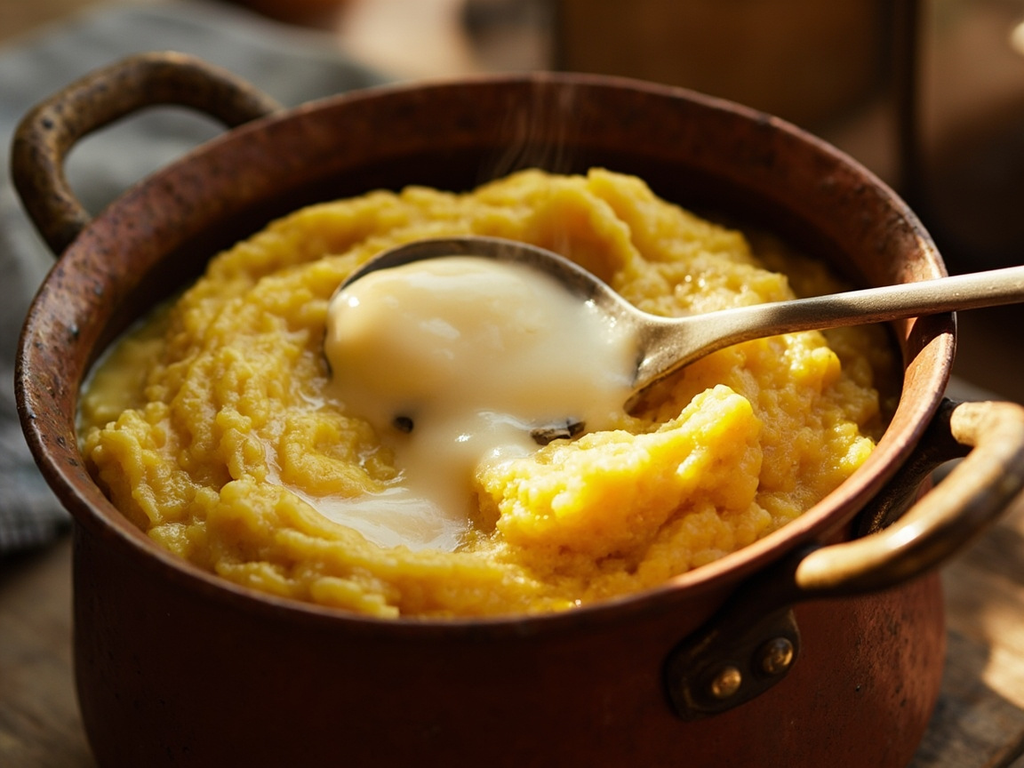
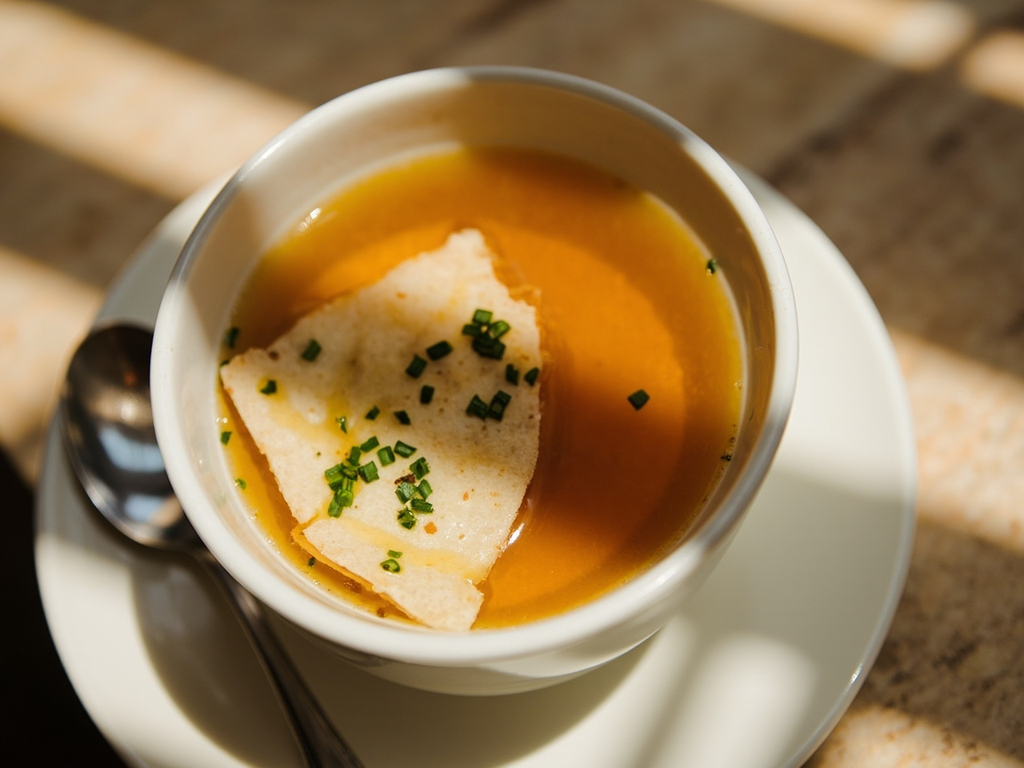
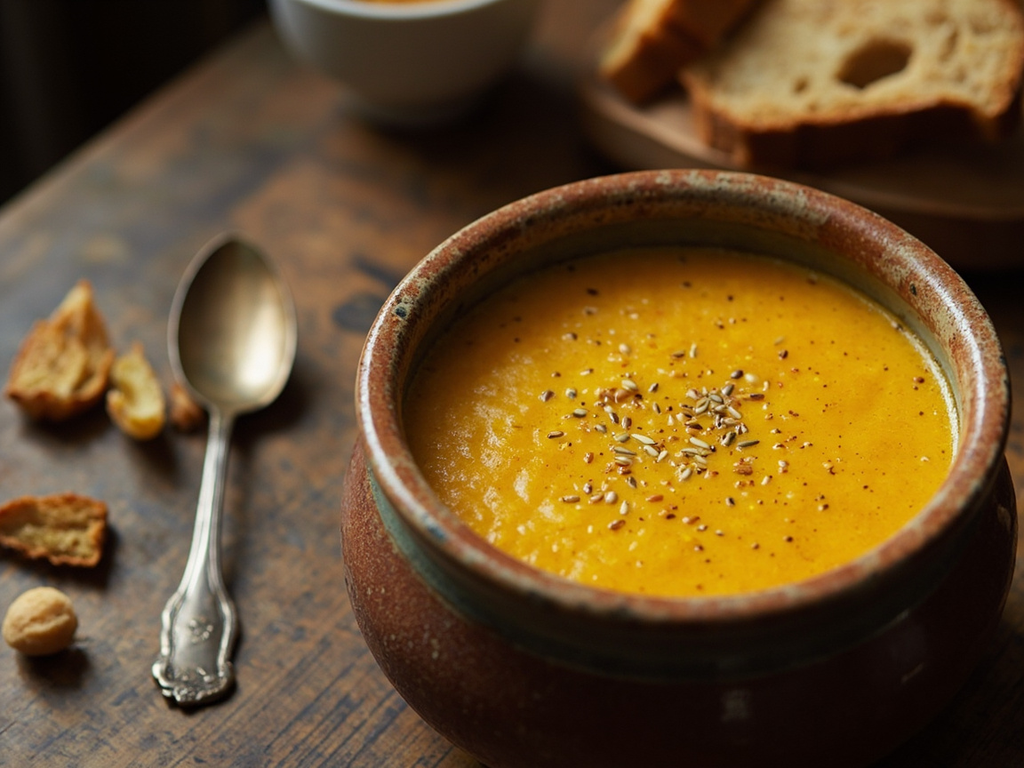
A creamy soup of yellow split peas, thickened with a little lard, flavored with garlic, marjoram, and especially caraway, and topped with small toasted bread croutons. Comforting, golden, deeply nourishing: the dish for grey days in Moravia.
Allow an old monk to lead you to his table. See this pea: I observed it for years in the garden, counting its flowers and pods as one reads a patient book — but before instructing my mind, it nourished my body. Dried and soaked the night before, it is left to soften gently on the fire until it dissolves into a golden cream; a hint of lard, garlic, and that seed of caraway without which no Moravian could digest winter. Eat it slowly: nature reveals its secrets, whether to the scholar or the gourmand, only to those who know how to wait.
- •Yellow split peas (from the garden, dried) — a good bowlful (soup base)
- •Lard or smoked bacon — a piece (fat and smoky flavor)
- •Onion — 1 (aromatic)
- •Garlic — a few cloves (aromatic)
- •Caraway seeds — a generous pinch (signature spice)
- •Dried marjoram — a pinch (herb)
- •Stale bread — a few slices (croutons)
Hrachová polévka — Caraway Yellow Pea Soup
A creamy soup of yellow split peas, thickened with a little lard, flavored with garlic, marjoram, and especially caraway, and topped with small toasted bread croutons. Comforting, golden, deeply nourishing: the dish for grey days in Moravia.
Why this dish? The pea (Pisum sativum) was Mendel's companion throughout his scientific life: between 1856 and 1863, he cultivated tens of thousands in the garden of St. Thomas's Abbey to uncover the laws of heredity. But before being an object of study, the pea was first food: dried, it nourished the community all winter in a thick, economical soup — exactly the kind of austere dish that made up the monk's daily fare.
Allow an old monk to lead you to his table. See this pea: I observed it for years in the garden, counting its flowers and pods as one reads a patient book — but before instructing my mind, it nourished my body. Dried and soaked the night before, it is left to soften gently on the fire until it dissolves into a golden cream; a hint of lard, garlic, and that seed of caraway without which no Moravian could digest winter. Eat it slowly: nature reveals its secrets, whether to the scholar or the gourmand, only to those who know how to wait.
Ingredients (period version)
- Yellow split peas (from the garden, dried) — a good bowlful (soup base)
- Lard or smoked bacon — a piece (fat and smoky flavor)
- Onion — 1 (aromatic)
- Garlic — a few cloves (aromatic)
- Caraway seeds — a generous pinch (signature spice)
- Dried marjoram — a pinch (herb)
- Stale bread — a few slices (croutons)
Ingredients
- Yellow split peas — 250 g (soup base)
- Smoked bacon lardons or lard — 80 g (fat and smoky flavor)
- Onion — 1 large (aromatic)
- Garlic — 3 cloves (aromatic)
- Caraway seeds (kmín) — 1 tsp (signature spice)
- Dried marjoram — 1/2 tsp (herb)
- Broth or water — 1.2 L (liquid)
- Salt, pepper — to taste (seasoning)
- Country bread — 2 slices (croutons)
Method
- The night before, rinse the split peas and soak them in cold water overnight (a quick 2-hour soak works if pressed for time).
- Melt the lard or bacon in a pot, add the chopped onion and cook until golden, then add the garlic and caraway to release their aromas.
- Add the drained peas and broth, bring to a simmer, and cook for 45 minutes to 1 hour until the peas fall apart.
- Blend half (or all, depending on desired texture) to obtain a creamy but still rustic soup; add marjoram, salt, and pepper.
- Cut the bread into cubes and fry them in a little fat until golden.
- Serve hot, sprinkled with croutons and, if you like, an extra pinch of caraway.
How it was made : In the monastic communities and Moravian farms of the 19th century, dried legumes were the winter protein reserve, cooked for hours on the wood stove. Meat was used only sparingly, in the form of smoked bacon. The soup was thickened with bread rather than cream, and caraway was as systematic as salt.
The contemporary twist : Serve the soup in a large deep bowl with a swirl of smoked lard oil, a few fresh pea shoots as a nod to Mendel's experiments, and a crouton planted vertically.
Gregor Mendel · Charactorium