 flip
flipTafelspitz, Vienna's Boiled Beef
Tafelspitz, Vienna's Boiled Beef
Why this dish? Tafelspitz was Freud's favorite dish, served regularly at the family table at Berggasse 19 in Vienna. This boiled beef cut, both hearty and refined, perfectly embodies the bourgeois Viennese taste to which he was attached all his life.
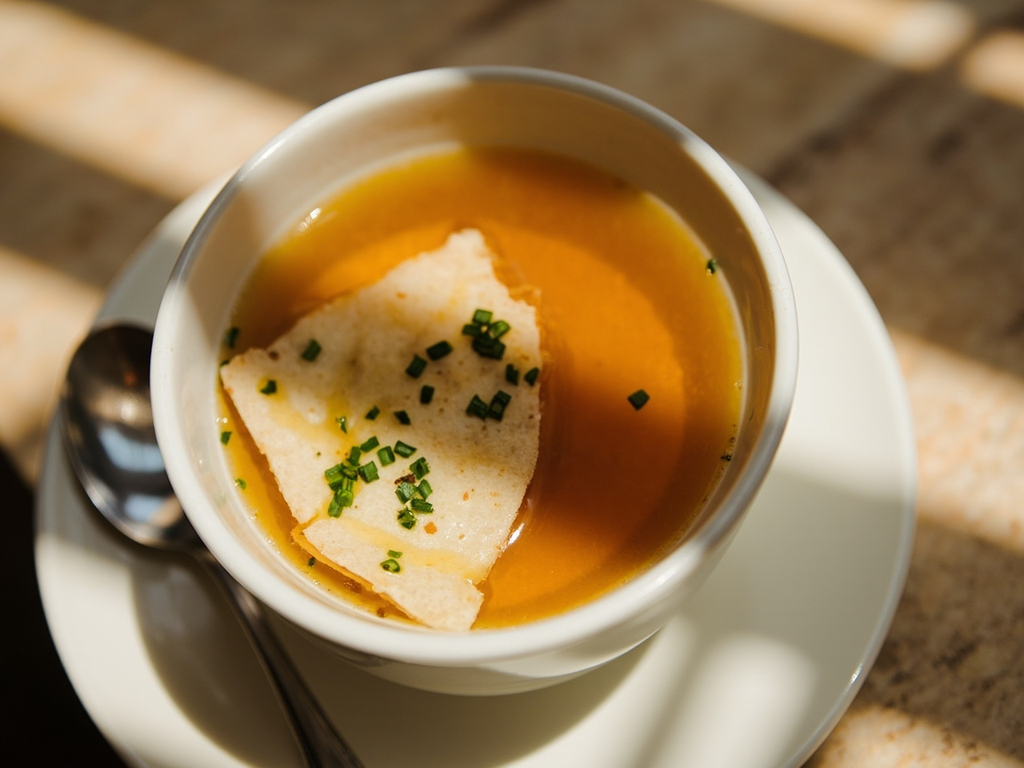
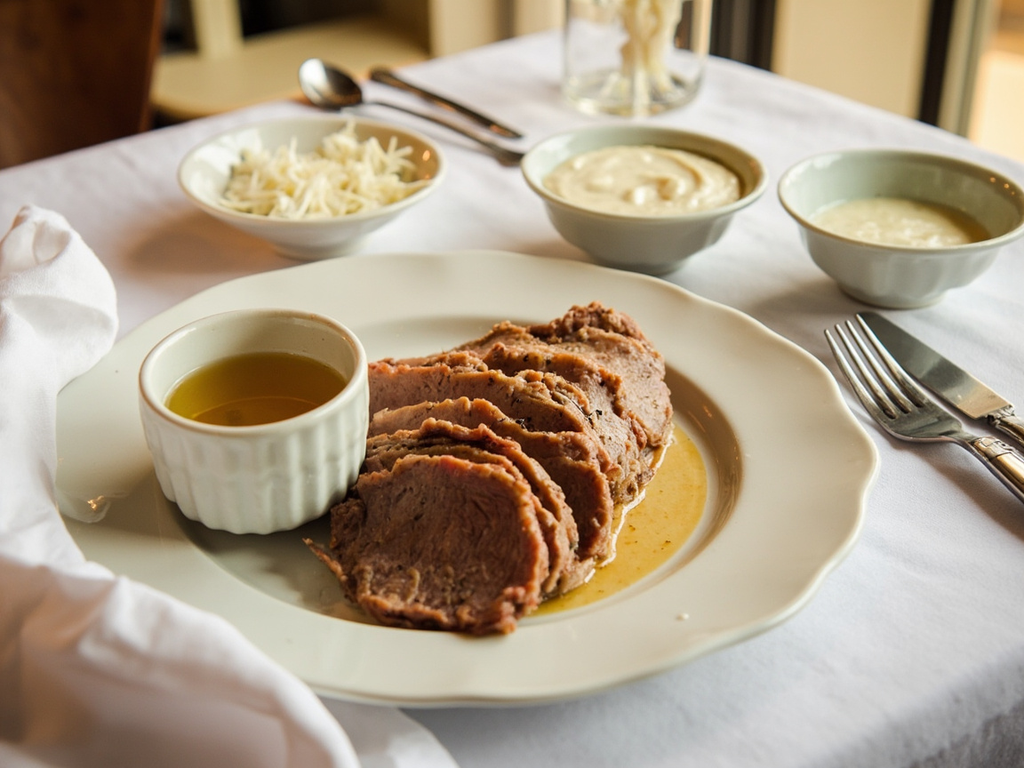
A fine piece of beef gently poached in a broth flavored with root vegetables, served in slices with its clear broth, fresh horseradish, and a chive sauce. First you drink the broth, then you eat the meat: two courses in one.
You see, in Vienna, one cannot imagine a Sunday dinner without Tafelspitz. My wife saw to it: the piece of beef must simmer, never boil vigorously, otherwise the flesh tightens and loses its tenderness. One begins with the broth, golden as amber, then comes the meat, which I like enlivened with a good spoonful of sharp Kren — a horseradish that awakens, believe me, the mind more than any of my cigars. It is a simple dish, but one that requires patience; and patience, my friend, is the first virtue of anyone who wishes to understand something.
- •Fatty cut of beef (Tafelspitz) — one fine piece (main meat, poached)
- •Marrow bones — a few (richness of the broth)
- •Carrots, celeriac, leek, onion — a bouquet of root vegetables (broth aromatics)
- •Peppercorns, juniper berries, bay leaf — a pinch (flavoring)
- •Fresh horseradish (Kren) — one root (condiment, signature)
- •Chives — one bunch (accompanying sauce)
Tafelspitz, Vienna's Boiled Beef
A fine piece of beef gently poached in a broth flavored with root vegetables, served in slices with its clear broth, fresh horseradish, and a chive sauce. First you drink the broth, then you eat the meat: two courses in one.
Why this dish? Tafelspitz was Freud's favorite dish, served regularly at the family table at Berggasse 19 in Vienna. This boiled beef cut, both hearty and refined, perfectly embodies the bourgeois Viennese taste to which he was attached all his life.
You see, in Vienna, one cannot imagine a Sunday dinner without Tafelspitz. My wife saw to it: the piece of beef must simmer, never boil vigorously, otherwise the flesh tightens and loses its tenderness. One begins with the broth, golden as amber, then comes the meat, which I like enlivened with a good spoonful of sharp Kren — a horseradish that awakens, believe me, the mind more than any of my cigars. It is a simple dish, but one that requires patience; and patience, my friend, is the first virtue of anyone who wishes to understand something.
Ingredients (period version)
- Fatty cut of beef (Tafelspitz) — one fine piece (main meat, poached)
- Marrow bones — a few (richness of the broth)
- Carrots, celeriac, leek, onion — a bouquet of root vegetables (broth aromatics)
- Peppercorns, juniper berries, bay leaf — a pinch (flavoring)
- Fresh horseradish (Kren) — one root (condiment, signature)
- Chives — one bunch (accompanying sauce)
Ingredients
- Tafelspitz (top rump or thick flank of beef) — 1.2 kg (main meat)
- Marrow bones — 2 pieces (broth)
- Carrots — 3 (broth)
- Celeriac — 1/4 (broth)
- Leek — 1 white part (broth)
- Onion — 1, cut in half and dry-roasted (color and flavor)
- Peppercorns, 3 juniper berries, 1 bay leaf — 1 tsp (aromatics)
- Fresh horseradish — 1 piece about 10 cm (condiment to grate)
- Chives + 2 tbsp crème fraîche + 1 tbsp oil — for the sauce (green sauce)
- Coarse salt — to taste (seasoning)
Method
- Dry-roast the halved onions cut-side down in a pot until browned: this gives the broth its beautiful color.
- Cover the meat and bones with cold water, gently bring to a simmer, and carefully skim off the gray foam that rises.
- Add vegetables and aromatics, lightly salt, then poach at the barest simmer for 2.5 to 3 hours: the meat should be fork-tender.
- Meanwhile, combine minced chives, cream, and oil for the sauce; grate the fresh horseradish just before serving to keep its pungency.
- First serve the strained broth in cups, then slice the meat against the grain and spoon over a ladle of broth, with horseradish and chive sauce.
How it was made : In Viennese households of the 19th century, the beef pot-au-feu simmered for hours on a coal or wood stove. The broth served as a first course, sometimes enriched with thin sliced pancakes (Frittatensuppe) or small marrow dumplings. Horseradish, grated by hand and stored in the cellar, was the king of condiments, for want of costly spices.
The contemporary twist : Serve the meat shredded on a slice of toasted rye bread, with a dab of horseradish and pickled onions: a "Tafelspitz toast" for a modern Jause.
Sigmund Freud · Charactorium