 flip
flipDoucet with Eggs, Honey and Apples
Doucet with Eggs, Honey and Apples
Why this dish? Normandy is a land of apple trees, and honey was used to sweeten (cane sugar being extremely rare in the 11th century). A golden sweet to close the feasts of the ducal court, in this land of cider and orchards.
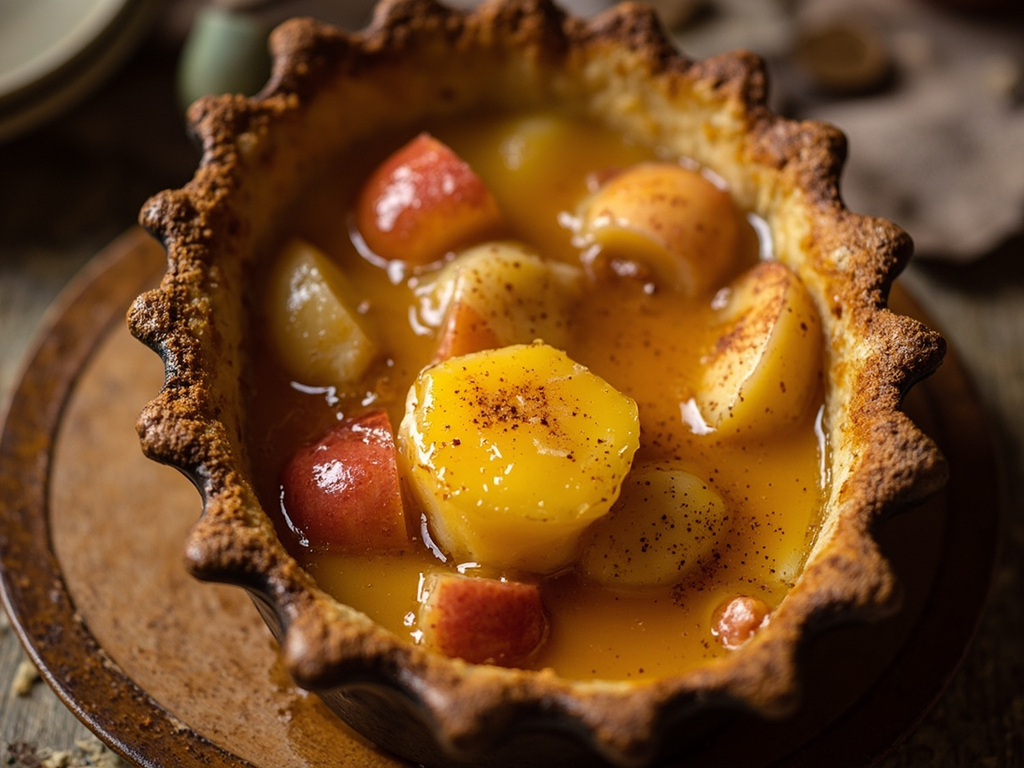
A baked custard of eggs and honey, golden from the oven, scented with melting apples and a hint of cinnamon — the Norman sweet that ends the feast, in an age when sugar did not yet exist.
Every feast must end with something sweet, even for a warrior. My orchards in Normandy gave apples, my beehives gave honey — for sugar we had none. We beat eggs with honey and milk, threw in the apples, and baked it all until golden. It is tender like a spring morning; taste it, and forget the battles for a while.
- •Eggs — several (custard binder)
- •Honey — as desired (period sweetener)
- •Milk — a pitcher (creamy base)
- •Apples — two or three (orchard fruit)
- •Cinnamon — a pinch (sweet spice)
Doucet with Eggs, Honey and Apples
A baked custard of eggs and honey, golden from the oven, scented with melting apples and a hint of cinnamon — the Norman sweet that ends the feast, in an age when sugar did not yet exist.
Why this dish? Normandy is a land of apple trees, and honey was used to sweeten (cane sugar being extremely rare in the 11th century). A golden sweet to close the feasts of the ducal court, in this land of cider and orchards.
Every feast must end with something sweet, even for a warrior. My orchards in Normandy gave apples, my beehives gave honey — for sugar we had none. We beat eggs with honey and milk, threw in the apples, and baked it all until golden. It is tender like a spring morning; taste it, and forget the battles for a while.
Ingredients (period version)
- Eggs — several (custard binder)
- Honey — as desired (period sweetener)
- Milk — a pitcher (creamy base)
- Apples — two or three (orchard fruit)
- Cinnamon — a pinch (sweet spice)
Ingredients
- Eggs — 4 (binder)
- Honey — 5 tbsp (sweetener)
- Whole milk — 40 cl (base)
- Apples (Reinette) — 2 (fruit)
- Cinnamon — 1/2 tsp (spice)
- Butter — 20 g (for cooking apples)
Method
- Peel and slice the apples, gently cook in butter for a few minutes.
- Beat the eggs with honey, add warm milk and cinnamon.
- Spread the apples in a buttered dish and pour the egg mixture over.
- Bake in a water bath at 160°C for about 40 minutes, until the custard is set and golden.
- Let cool slightly before serving, drizzled with a little honey.
How it was made : In the 11th century, cane sugar was a luxury spice almost unknown in the North: sweetening was done with honey. ‘Doucets’ and other egg custards are medieval ancestors of flan, often enriched with local fruits and costly spices for noble tables.
The contemporary twist : Serve in small individual pots, caramelised with a blowtorch like a honey crème brûlée — the ancestor meets the bistro.
William the Conqueror · Charactorium