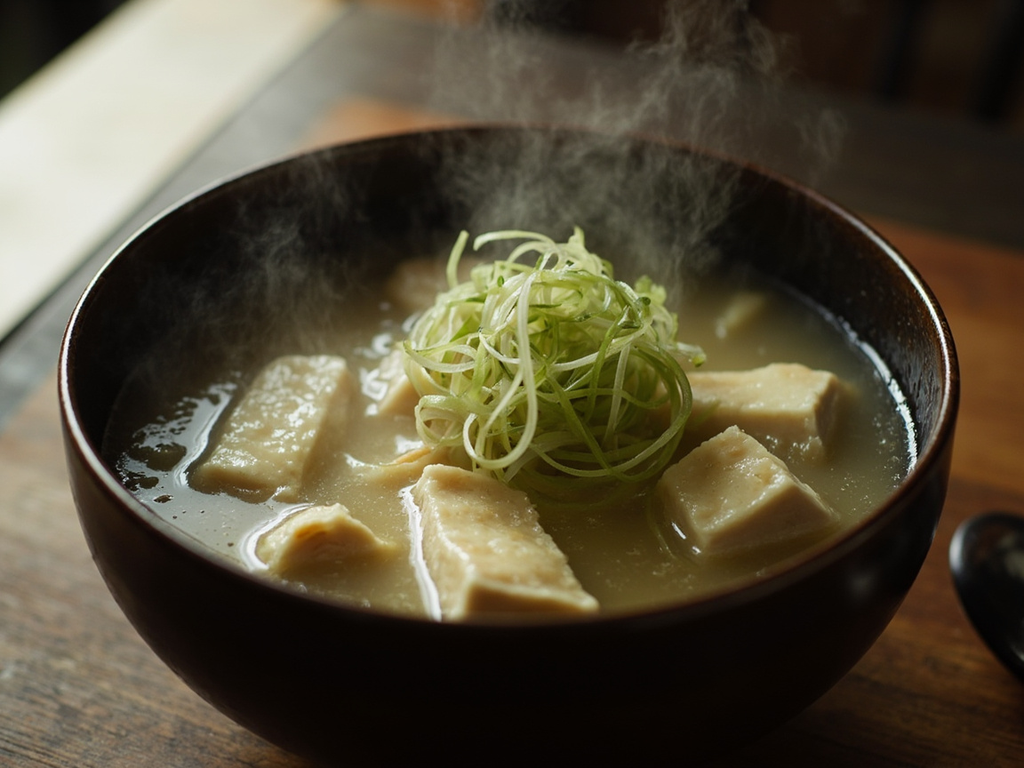
 flip
flipKimchi-jjigae (kimchi stew)
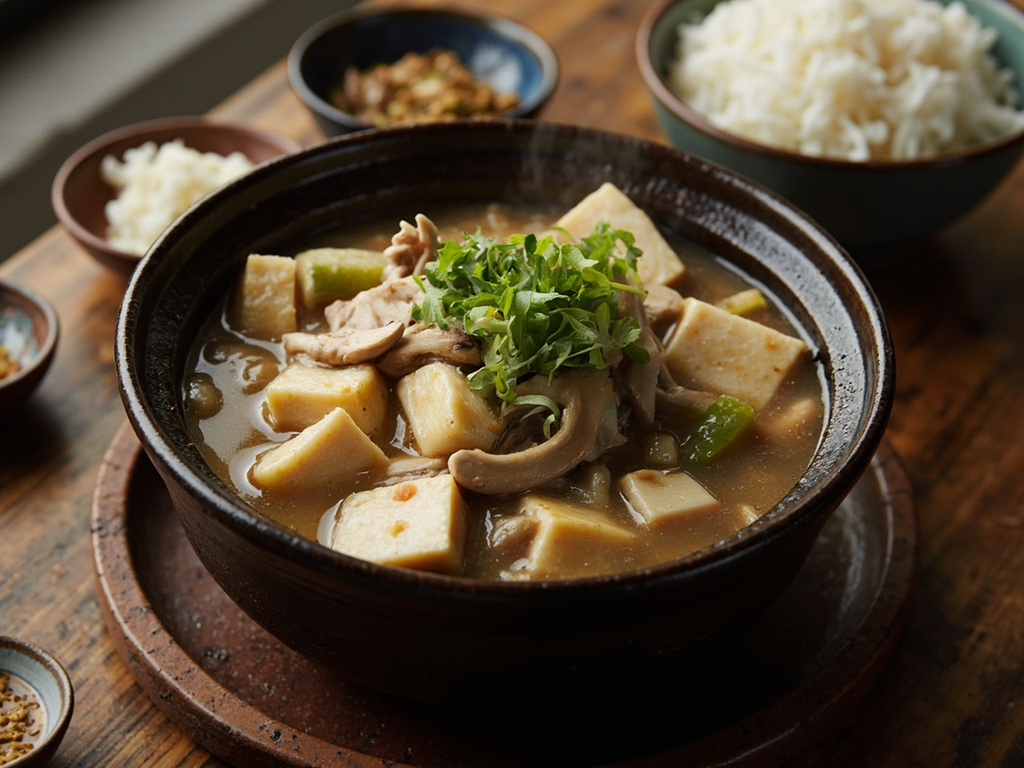
Kimchi-jjigae (kimchi stew)
Why this dish? This is the reflex dish of daily Korean life, the one you simmer with kimchi that has become too sour so as not to waste anything. For Bong Joon-ho, raised in Daegu then a student in Seoul in the 1980s-90s, this cheap and comforting stew is the very definition of an everyday meal — the kind of modest table he films with such tenderness.
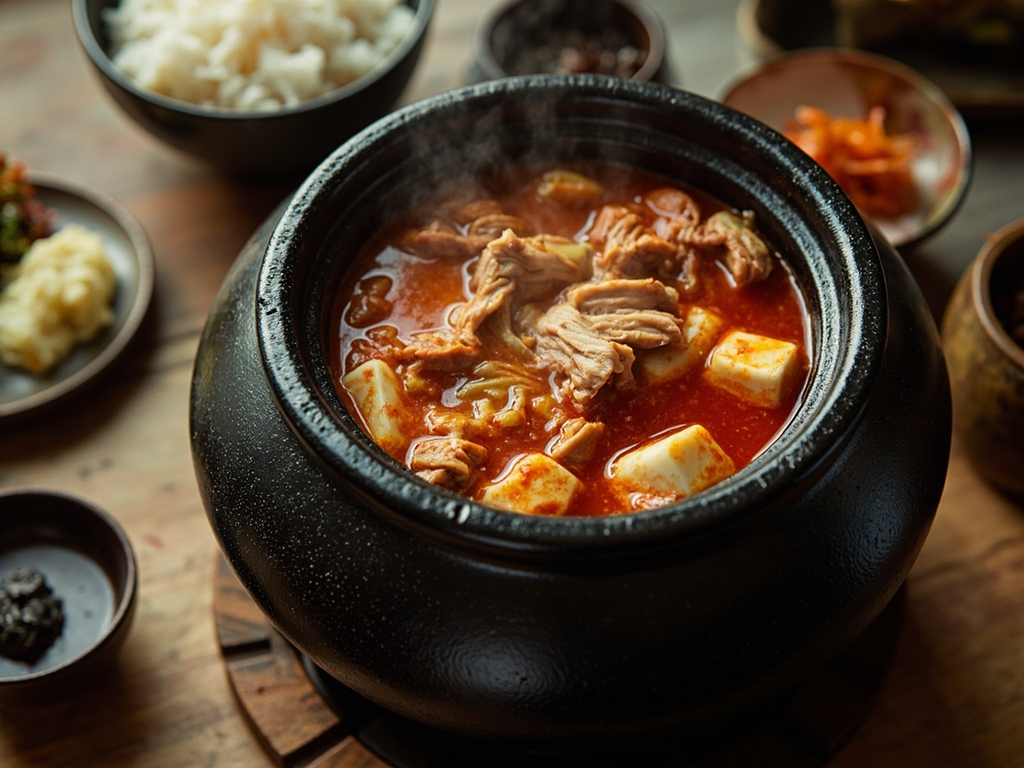
A red, bubbling stew where old melted kimchi releases all its acidity, simmered with a bit of pork and tofu, served boiling in its stone pot to share at the center of the table, with a large bowl of white rice for each person.
You know, the best kimchi-jjigae is never made with fresh kimchi — it has to be old, almost too sour, the kind no one wants to eat as is anymore. That's the whole beauty: you turn what you were about to throw away into something profound. On my film sets, when the crew is exhausted at three in the morning, that's what we order, and believe me, that steaming bowl tells you more about Korea than many speeches.
- •Well-fermented old cabbage kimchi — two big handfuls (sour and fermented base)
- •Pork belly — one piece (fat and umami)
- •Tofu — half a block (softness, contrast)
- •Gochugaru (Korean chili flakes) — to taste (heat, color)
- •Green onion — a few stalks (final freshness)
- •White rice — one bowl per person (base of the meal)
Kimchi-jjigae (kimchi stew)
A red, bubbling stew where old melted kimchi releases all its acidity, simmered with a bit of pork and tofu, served boiling in its stone pot to share at the center of the table, with a large bowl of white rice for each person.
Why this dish? This is the reflex dish of daily Korean life, the one you simmer with kimchi that has become too sour so as not to waste anything. For Bong Joon-ho, raised in Daegu then a student in Seoul in the 1980s-90s, this cheap and comforting stew is the very definition of an everyday meal — the kind of modest table he films with such tenderness.
You know, the best kimchi-jjigae is never made with fresh kimchi — it has to be old, almost too sour, the kind no one wants to eat as is anymore. That's the whole beauty: you turn what you were about to throw away into something profound. On my film sets, when the crew is exhausted at three in the morning, that's what we order, and believe me, that steaming bowl tells you more about Korea than many speeches.
Ingredients (period version)
- Well-fermented old cabbage kimchi — two big handfuls (sour and fermented base)
- Pork belly — one piece (fat and umami)
- Tofu — half a block (softness, contrast)
- Gochugaru (Korean chili flakes) — to taste (heat, color)
- Green onion — a few stalks (final freshness)
- White rice — one bowl per person (base of the meal)
Ingredients
- Well-aged cabbage kimchi (preferably sour) — 300 g, with its juice (sour and fermented base)
- Pork belly, sliced — 150 g (fat and umami)
- Firm tofu — 200 g, sliced (softness, contrast)
- Gochugaru — 1 tbsp (heat, color)
- Fermented soybean paste (doenjang) — 1 tsp (umami depth)
- Green onions — 2 stalks (final freshness)
- Water or broth — 500 ml (stew liquid)
- Cooked white rice — 1 bowl per person (base of the meal)
Method
- Sauté the pork slices in a heavy-bottomed pot until golden.
- Add the drained kimchi (reserve the juice) and stir-fry for 5 minutes to concentrate its flavor.
- Pour in the water and kimchi juice, add gochugaru and doenjang, bring to a simmer.
- Let it simmer for 20 to 25 minutes until the kimchi is tender and the flavors meld.
- Gently slide in the tofu slices and cook for 5 more minutes without stirring too much.
- Garnish with green onion and serve boiling hot at the center of the table, with a bowl of rice per person.
How it was made : Born from the Korean art of wasting nothing, kimchi-jjigae valorizes over-fermented kimchi. Before refrigerators, families buried onggi jars to store kimchi all winter; when it became too sour, the stew gave it a second life.
The contemporary twist : Some Seoul chefs add a slice of melted cheese on top — a nod to 'budae jjigae', born from the encounter between Korean cuisine and post-war American rations.
Sources : Maangchi, Real Korean Cooking (2015) · Korean Food Foundation, Korean Cuisine
Bong Joon-ho · Charactorium