 flip
flipMaza with mint and fresh cheese
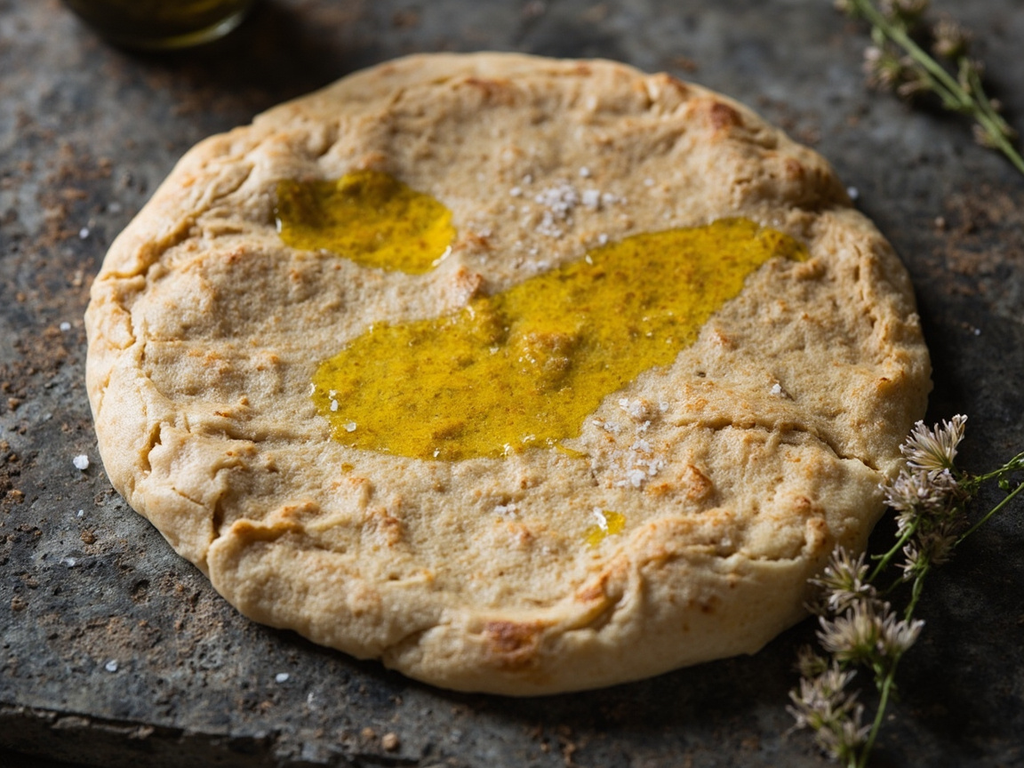
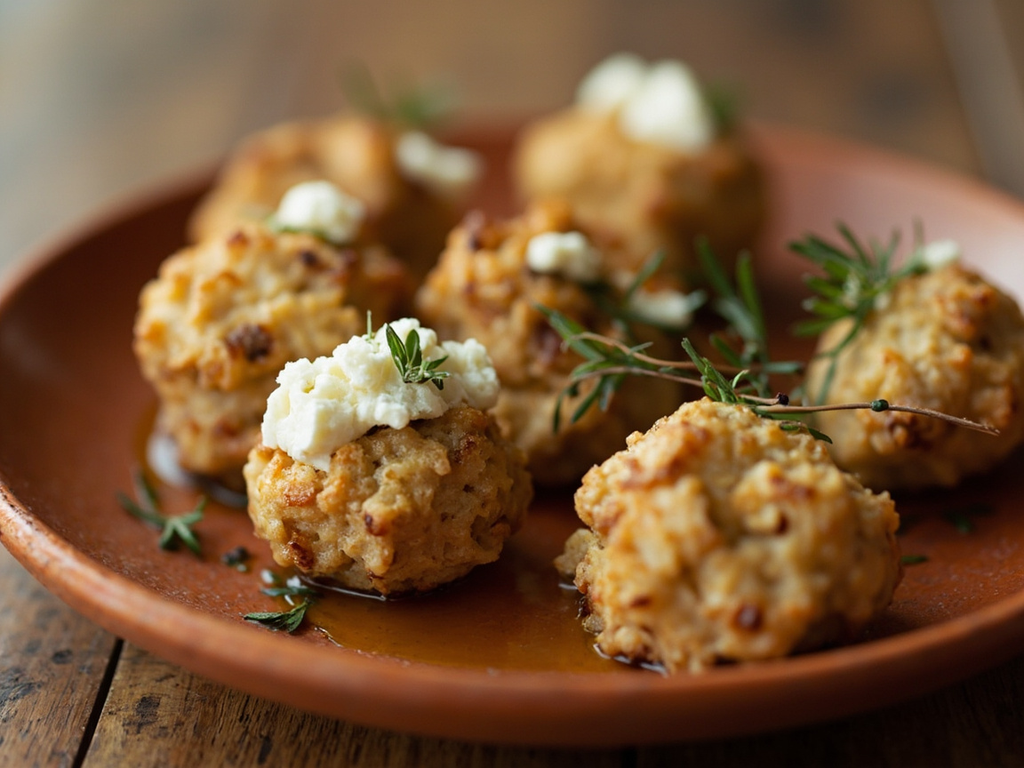
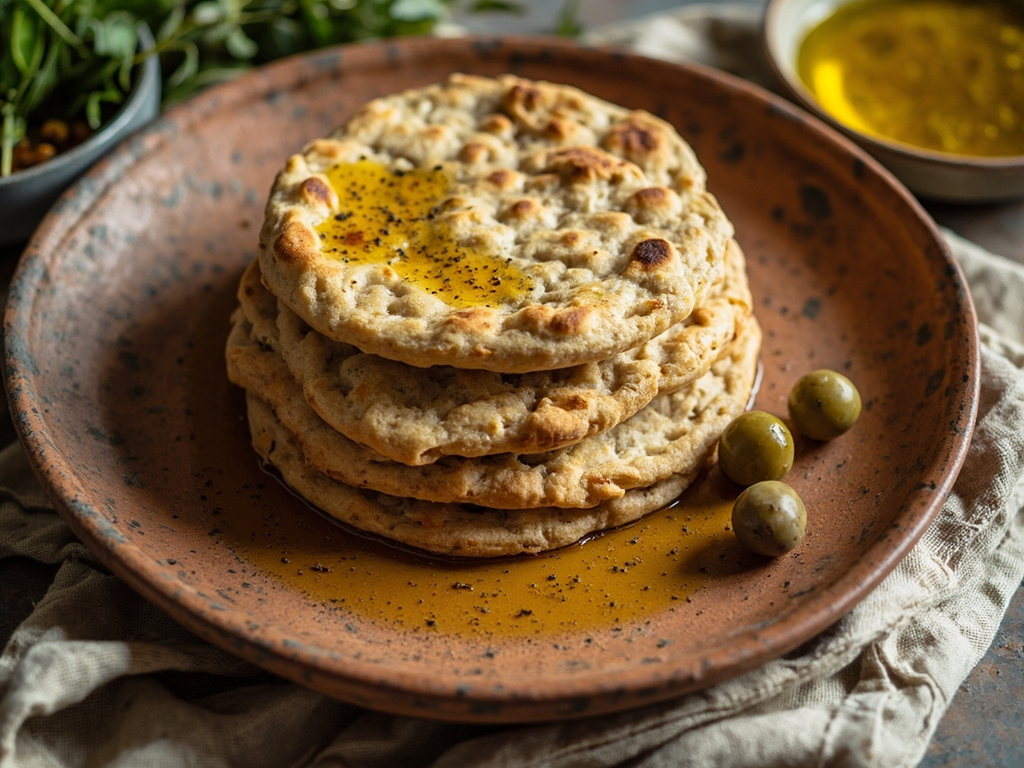
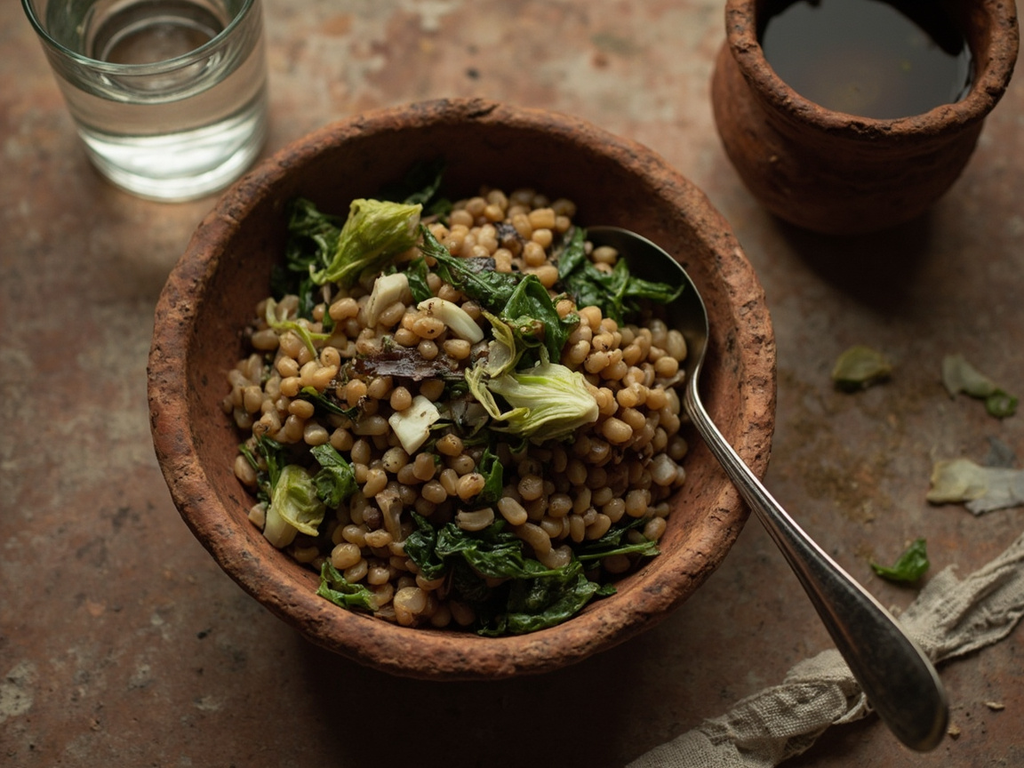
Maza with mint and fresh cheese
Why this dish? Mint was born from a nymph, Minthe, loved by Hades then turned into a plant by jealous Persephone: the god, unable to save her, gave her this fresh scent released when trodden upon. On the sober table of the lord of the Underworld, the barley *maza* seasoned with this herb-memory is the daily bread.
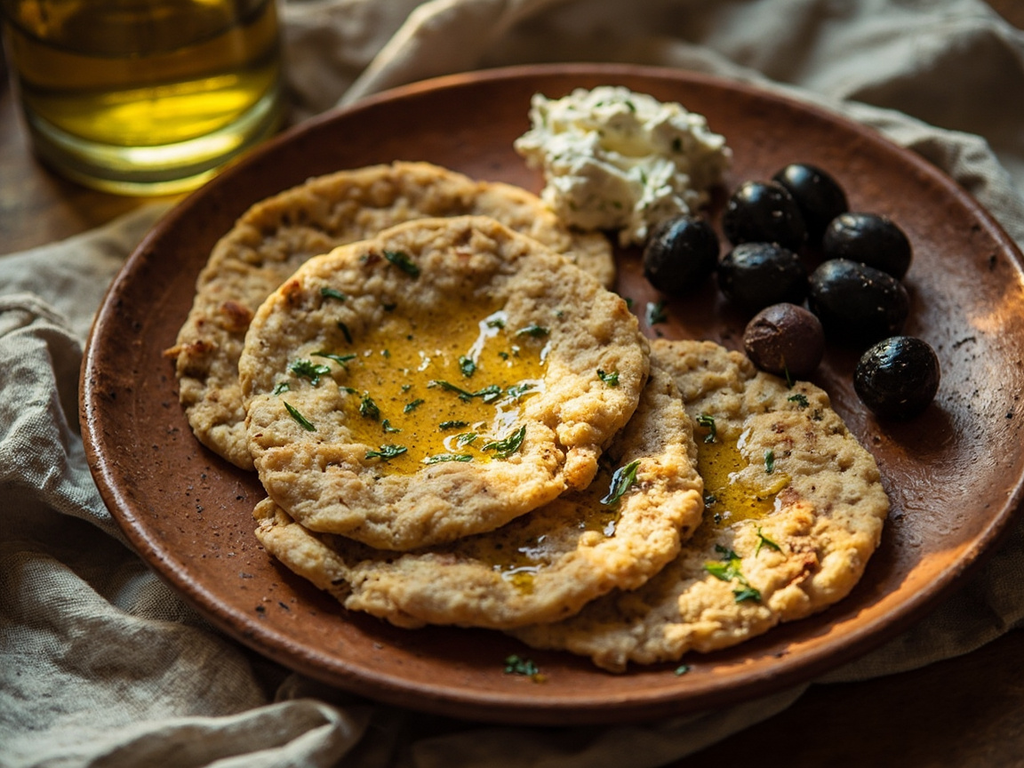
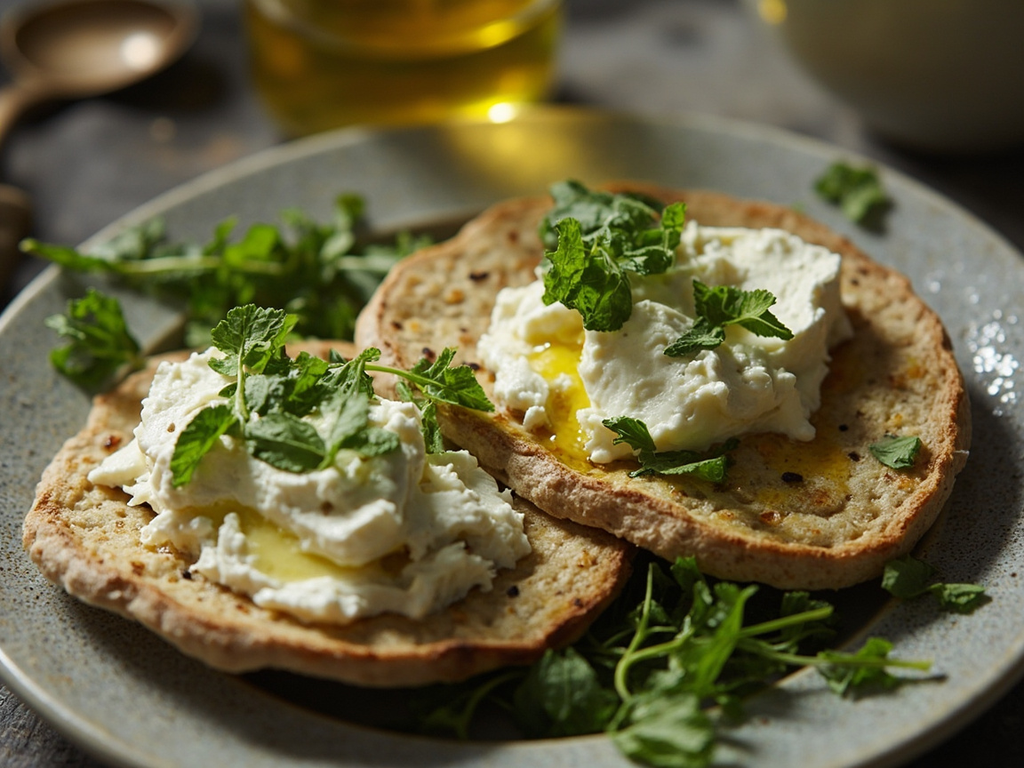
The unleavened barley flatbread, the basis of ordinary Greek diet, here flavored with fresh mint and spread with goat cheese. Rustic, slightly bitter from the barley, bright with mint — the everyday incarnate.
They call me dark, they believe me without tenderness — but I have loved. Minthe, my nymph, was crushed by my wife's wrath; I could only give her this scent that rises under the foot that tramples her. So, on my table, I want my barley flatbread rubbed with her leaves. Knead the toasted flour, roll it thin, eat it with a little goat cheese: you will taste the bitterness of barley and the freshness of her whom I could not keep.
- •Toasted barley flour (alphita) — one measure (staple grain)
- •Water — as needed (binder)
- •Olive oil — a drizzle (pliability)
- •Fresh mint — a few leaves (signature aroma)
- •Fresh goat cheese — as desired (opson (accompaniment))
- •Salt — a pinch (seasoning)
Maza with mint and fresh cheese
The unleavened barley flatbread, the basis of ordinary Greek diet, here flavored with fresh mint and spread with goat cheese. Rustic, slightly bitter from the barley, bright with mint — the everyday incarnate.
Why this dish? Mint was born from a nymph, Minthe, loved by Hades then turned into a plant by jealous Persephone: the god, unable to save her, gave her this fresh scent released when trodden upon. On the sober table of the lord of the Underworld, the barley *maza* seasoned with this herb-memory is the daily bread.
They call me dark, they believe me without tenderness — but I have loved. Minthe, my nymph, was crushed by my wife's wrath; I could only give her this scent that rises under the foot that tramples her. So, on my table, I want my barley flatbread rubbed with her leaves. Knead the toasted flour, roll it thin, eat it with a little goat cheese: you will taste the bitterness of barley and the freshness of her whom I could not keep.
Ingredients (period version)
- Toasted barley flour (alphita) — one measure (staple grain)
- Water — as needed (binder)
- Olive oil — a drizzle (pliability)
- Fresh mint — a few leaves (signature aroma)
- Fresh goat cheese — as desired (opson (accompaniment))
- Salt — a pinch (seasoning)
Ingredients
- Barley flour — 200 g (staple grain)
- Warm water — 120 to 140 ml (binder)
- Olive oil — 2 tbsp plus a drizzle for serving (pliability)
- Fresh mint, chopped — 2 tbsp (signature aroma)
- Fresh goat cheese (soft type) — 150 g (accompaniment)
- Salt — 1/2 tsp (seasoning)
Method
- Mix barley flour, salt and half the chopped mint.
- Add olive oil then warm water gradually, knead until a soft, non-sticky dough forms.
- Let rest 15 minutes under a cloth.
- Divide into balls, roll out thinly (about 3 mm) into flatbreads.
- Cook 2-3 minutes per side in a pan or on a hot griddle, without fat, until golden spots appear.
- Spread with goat cheese, sprinkle with remaining mint, drizzle with olive oil. Serve immediately.
How it was made : The *maza* — flatbread or porridge of toasted then ground barley (*alphita*) — was the staple food of the ordinary Greek, far more common than leavened wheat bread (*artos*). Often eaten uncooked or barely cooked, simply kneaded. Mint (*hêdyosmon*) and fresh goat cheeses were among the most common *opsa*.
The contemporary twist : Rolled into an ancient wrap: warm barley flatbread filled with goat cheese, mint and pomegranate arils, eaten by hand.
Sources : Strabo & Ovid, Metamorphoses (myth of Minthe) · Andrew Dalby, Food in the Ancient World from A to Z (2003), entries 'barley' and 'maza' · James Davidson, Courtesans and Fishcakes (Greek diet, sitos/opson)
Hades · Charactorium