 flip
flipTej — Ethiopian Honey Wine with Gesho
Tej — Ethiopian Honey Wine with Gesho
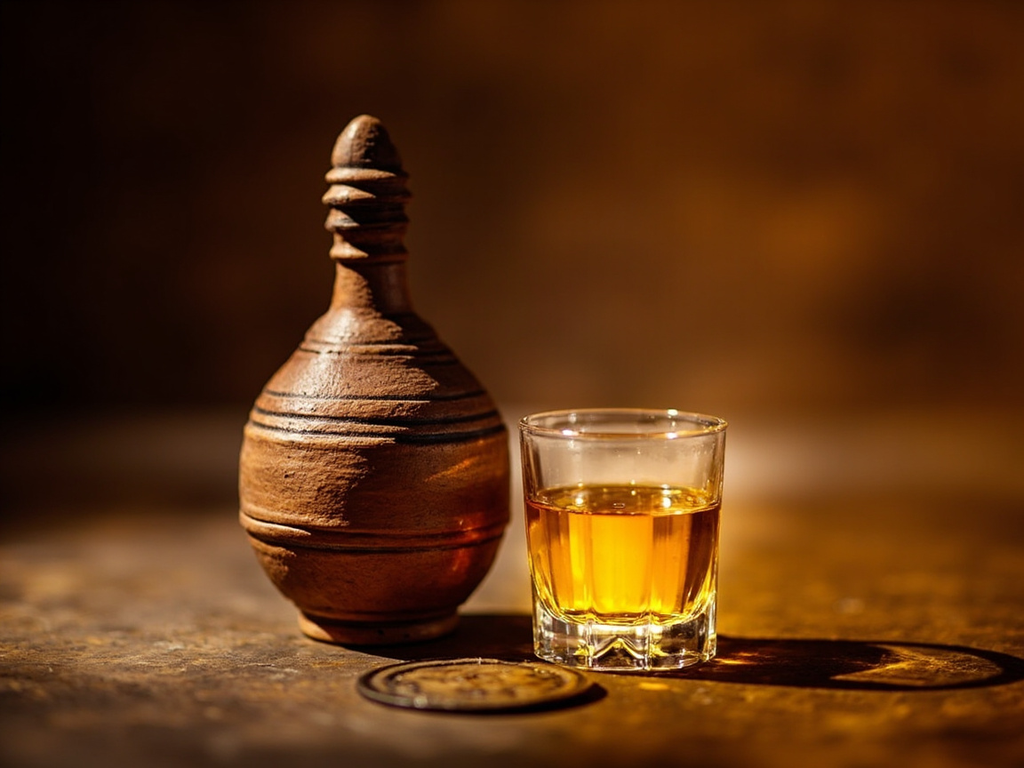
Why this dish? Tej, fermented honey wine, has been the ceremonial drink of Ethiopians for centuries, served at court as well as at weddings. A showpiece drink offered to dignitaries in its round-necked flask (the berele), it accompanied the imperial banquets of Haile Selassie I — a gesture of hospitality and prestige, even though the emperor himself was of temperate nature.
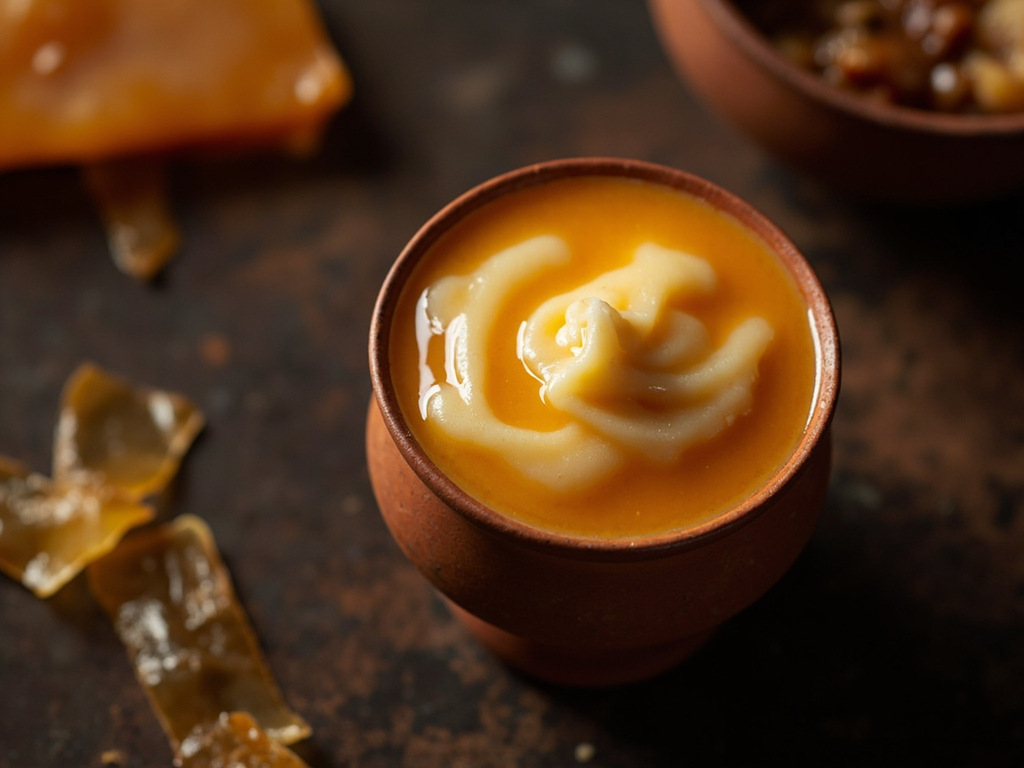
A golden drink, sweet and slightly tangy, made from fermented honey and bittered with gesho (Ethiopian 'hops'). Honeyed on the palate, lively, refreshing.
When a distinguished guest passes through Our gates, tej is presented in the berele, that long-necked flask where the golden liquor catches the light. It is the honey of Our mountains, married to pure water and gesho, whose bitterness keeps the brew from becoming too sweet. It must be left to mature for several days, skimmed, tasted, and waited upon — the impatient obtains only syrup, the wise obtains tej. Raise it little and with measure, for hospitality honors the guest without ever leading him astray.
- •Mountain honey — one part (fermentable sugar)
- •Spring water — three to four parts (dilution)
- •Gesho (Rhamnus prinoides twigs) — a few branches (bittering agent and natural preservative)
Tej — Ethiopian Honey Wine with Gesho
A golden drink, sweet and slightly tangy, made from fermented honey and bittered with gesho (Ethiopian 'hops'). Honeyed on the palate, lively, refreshing.
Why this dish? Tej, fermented honey wine, has been the ceremonial drink of Ethiopians for centuries, served at court as well as at weddings. A showpiece drink offered to dignitaries in its round-necked flask (the berele), it accompanied the imperial banquets of Haile Selassie I — a gesture of hospitality and prestige, even though the emperor himself was of temperate nature.
When a distinguished guest passes through Our gates, tej is presented in the berele, that long-necked flask where the golden liquor catches the light. It is the honey of Our mountains, married to pure water and gesho, whose bitterness keeps the brew from becoming too sweet. It must be left to mature for several days, skimmed, tasted, and waited upon — the impatient obtains only syrup, the wise obtains tej. Raise it little and with measure, for hospitality honors the guest without ever leading him astray.
Ingredients (period version)
- Mountain honey — one part (fermentable sugar)
- Spring water — three to four parts (dilution)
- Gesho (Rhamnus prinoides twigs) — a few branches (bittering agent and natural preservative)
Ingredients
- Honey — 500 g (sweet base)
- Non-chlorinated water — 1.5 to 2 L (dilution)
- Dried gesho (or substitute mild hop flakes) — 30 g (bitterness)
Method
- Dissolve honey in warm (not boiling) water in a large clean jar.
- Add gesho, cover with a cloth, and let ferment at room temperature.
- Stir once daily; after 3 to 5 days, fermentation becomes frothy and bubbly.
- Remove gesho after about a week; let clarify for a few more days, tasting regularly.
- Filter and serve chilled in a berele or small glass. (Non-alcoholic version: stop early, refrigerate, consume like a honey lemonade.)
How it was made : Tej was prepared in every household of any importance, using honey from family beehives and locally grown gesho. Its strength varied with fermentation time; court tej was prized for its clarity. Tej bet (tej houses) remain social gathering places in Ethiopia.
The contemporary twist : Serve a young, non-alcoholic version well chilled, like a honey kombucha, so the whole table — children included — can share the berele ritual.
Haile Selassie · Charactorium