 flip
flipTakuan-zuke, daikon pickled in rice bran
Takuan-zuke, daikon pickled in rice bran
Why this dish? This radish pickle takes its name from Takuan Sōhō, a Rinzai Zen monk from the century before Hakuin — the same school that Hakuin later greatly revived. It is THE pickle of Japanese Zen: it preserves daikon all winter, crunches under the tooth, and cleanses the palate. At the end of the ōryōki meal, one uses it to wipe one's bowl with a little hot water.
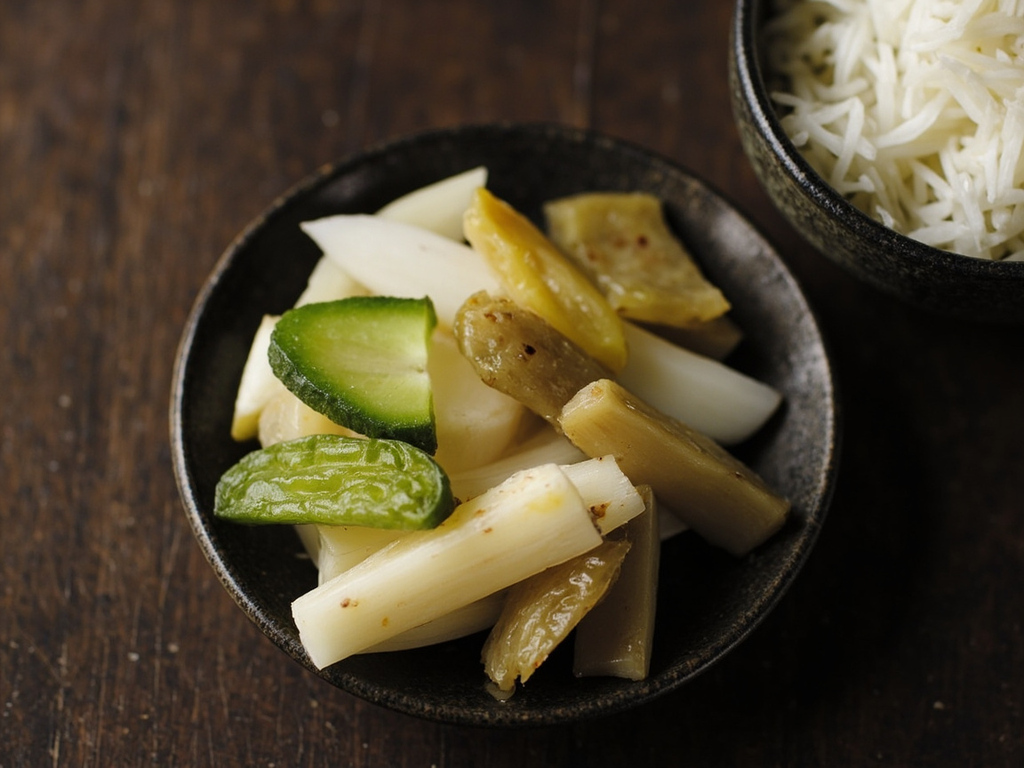
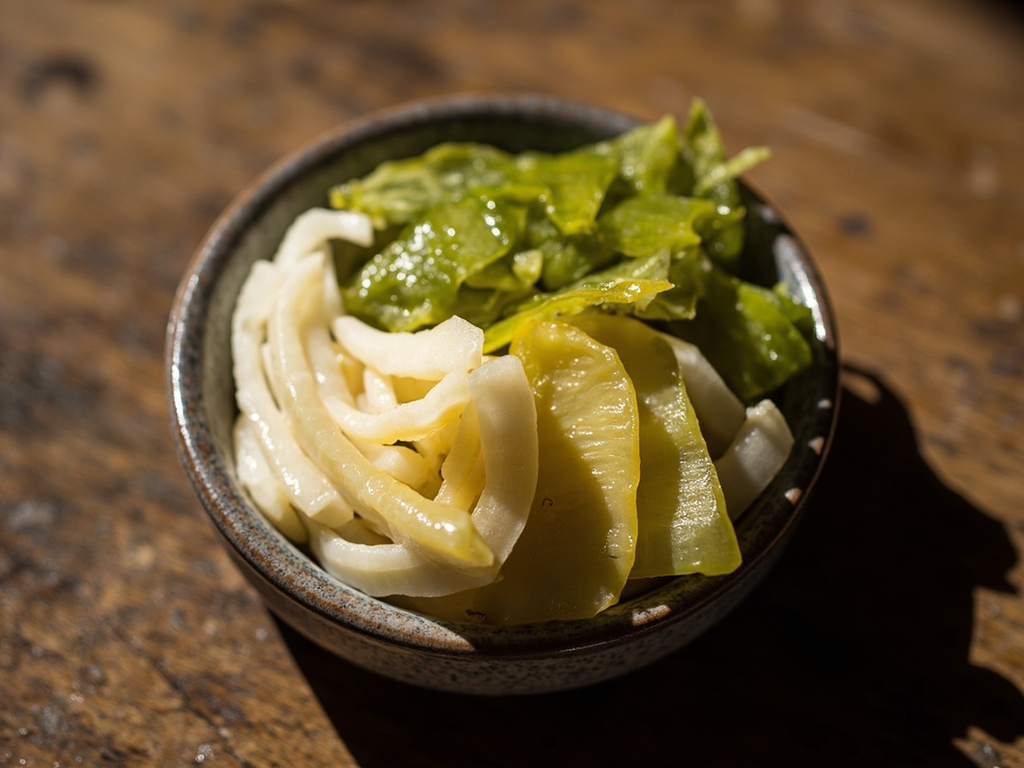
Daikon radishes dried in the sun then buried for weeks in a bed of rice bran, salt, and a little kombu seaweed, where they ferment and take on their golden color, crunchiness, and sharp acidity.
Do you know where the name of this takuan comes from? From a monk of my own school, dead long before me — that's what transmission is: a pickle bears your name centuries later! We hang the daikon in the wind and sun of Suruga until they bend like an old back, then we lay them in rice bran with salt, and we wait. Patience does everything. When your bowl is empty, rub it with a slice of takuan and a little hot water, drink, and let nothing remain — not even a grain for the ants.
- •Whole daikon radishes — several (vegetable to preserve)
- •Rice bran (nuka) — enough to bury (fermentation medium)
- •Sea salt — generously (preservation, brine)
- •Kombu seaweed — a few strips (umami)
- •Dried persimmon peels — a handful (sweetness and color (traditional))
Takuan-zuke, daikon pickled in rice bran
Daikon radishes dried in the sun then buried for weeks in a bed of rice bran, salt, and a little kombu seaweed, where they ferment and take on their golden color, crunchiness, and sharp acidity.
Why this dish? This radish pickle takes its name from Takuan Sōhō, a Rinzai Zen monk from the century before Hakuin — the same school that Hakuin later greatly revived. It is THE pickle of Japanese Zen: it preserves daikon all winter, crunches under the tooth, and cleanses the palate. At the end of the ōryōki meal, one uses it to wipe one's bowl with a little hot water.
Do you know where the name of this takuan comes from? From a monk of my own school, dead long before me — that's what transmission is: a pickle bears your name centuries later! We hang the daikon in the wind and sun of Suruga until they bend like an old back, then we lay them in rice bran with salt, and we wait. Patience does everything. When your bowl is empty, rub it with a slice of takuan and a little hot water, drink, and let nothing remain — not even a grain for the ants.
Ingredients (period version)
- Whole daikon radishes — several (vegetable to preserve)
- Rice bran (nuka) — enough to bury (fermentation medium)
- Sea salt — generously (preservation, brine)
- Kombu seaweed — a few strips (umami)
- Dried persimmon peels — a handful (sweetness and color (traditional))
Ingredients
- Daikon — 2 large (vegetable)
- Rice bran (nuka) — 400 g (ferment)
- Salt — 80 g (brine)
- Kombu — 1 strip, cut into pieces (umami)
- Brown sugar — 40 g (replaces persimmon peels, balance)
Method
- Hang daikon in an airy, sunny spot for 1 to 2 weeks, until they bend without breaking.
- Mix rice bran, salt, sugar, and chopped kombu.
- In a deep container, alternate layers of the bran mixture and tightly packed daikon.
- Cover with a disc and a weight (a clean stone), close.
- Let ferment in a cool place for 3 to 6 weeks, checking periodically.
- Rinse, slice thinly, and serve at the end of the meal.
How it was made : Before refrigeration, nuka fermentation (nukazuke) was the way to get through the Japanese winter. Every house and temple maintained its rice bran bed, sometimes for generations. Sun-drying concentrates the sugars and enables long storage.
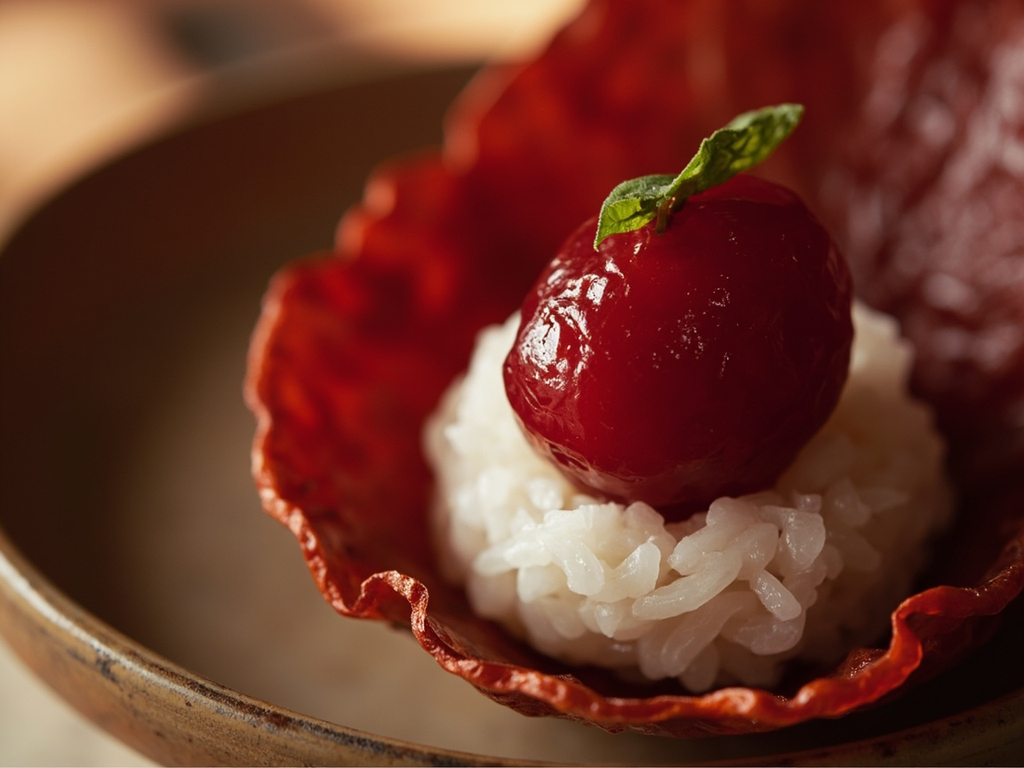
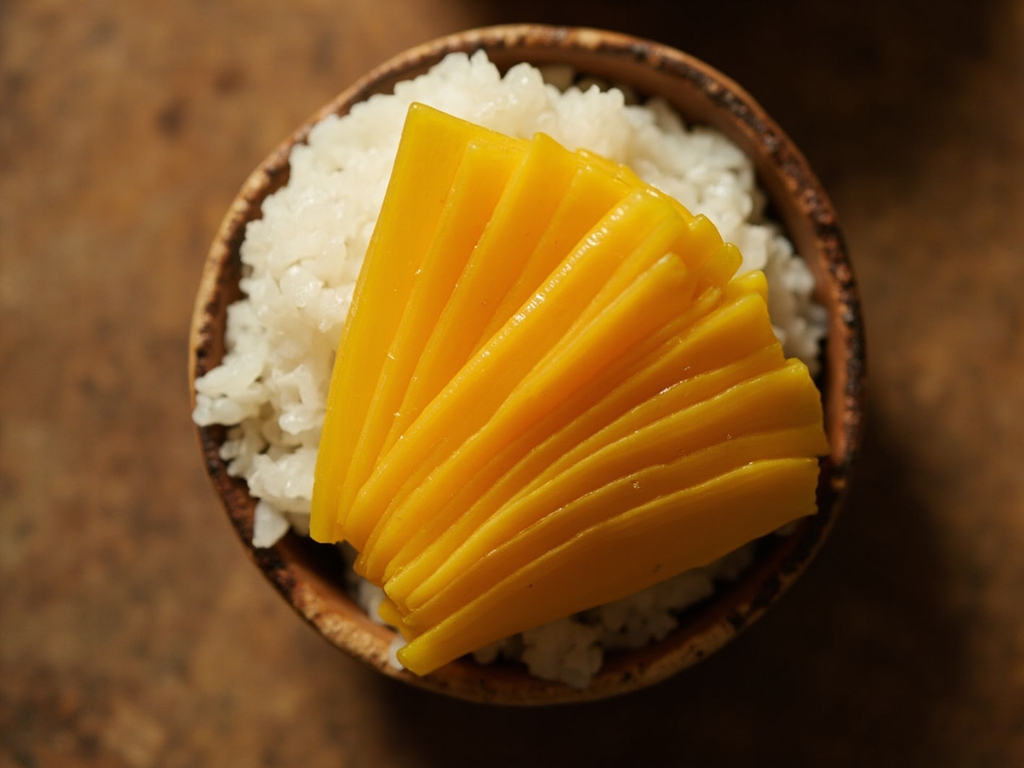
The contemporary twist : Slice very thinly and roll the slices into golden fans beside a mound of pearly white rice — the color contrast does all the work.
Hakuin · Charactorium