 flip
flipSalt-Cured Tuna with Herbs from Lixus
Salt-Cured Tuna with Herbs from Lixus
Why this dish? At Lixus, Hanno's stopover on the Atlantic coast of Morocco, the Phoenician-Punic people operated fish-salting workshops. Salted tuna, rich and durable, was the king protein of the holds: it fed the crews and was traded at trading posts.
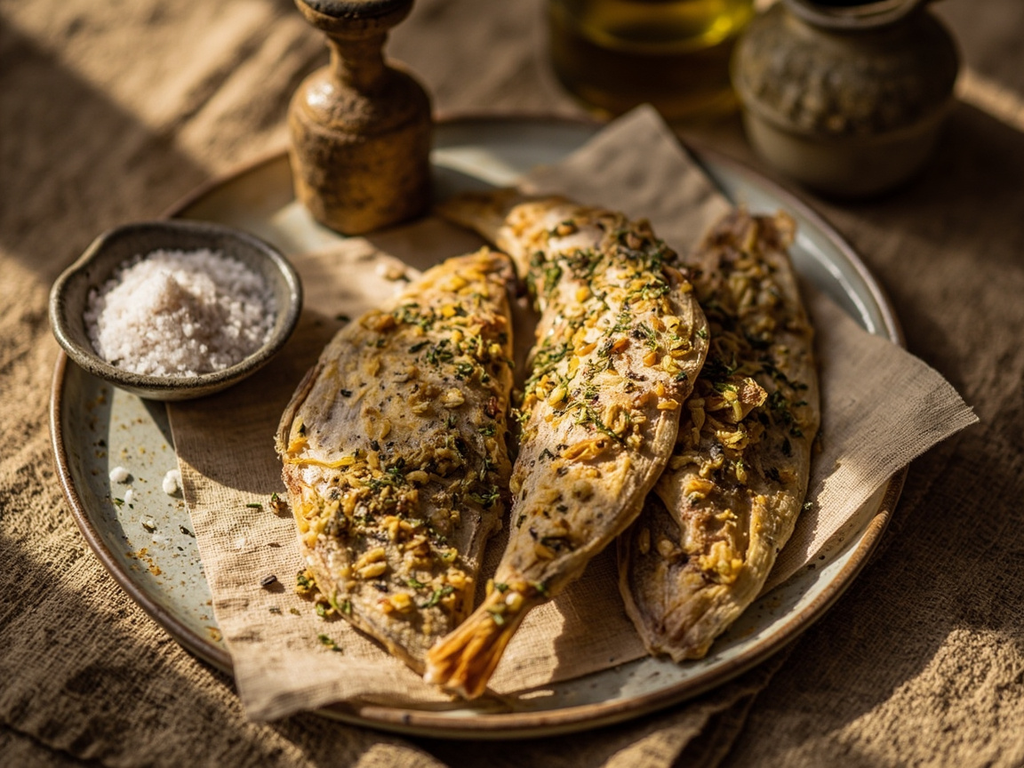
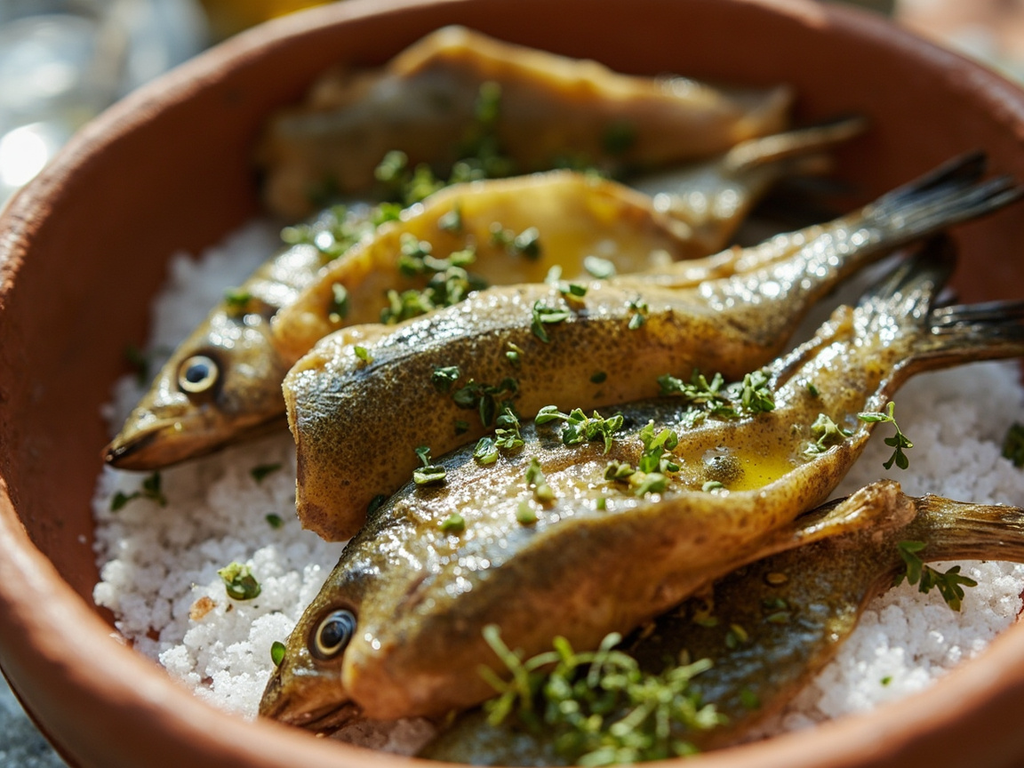
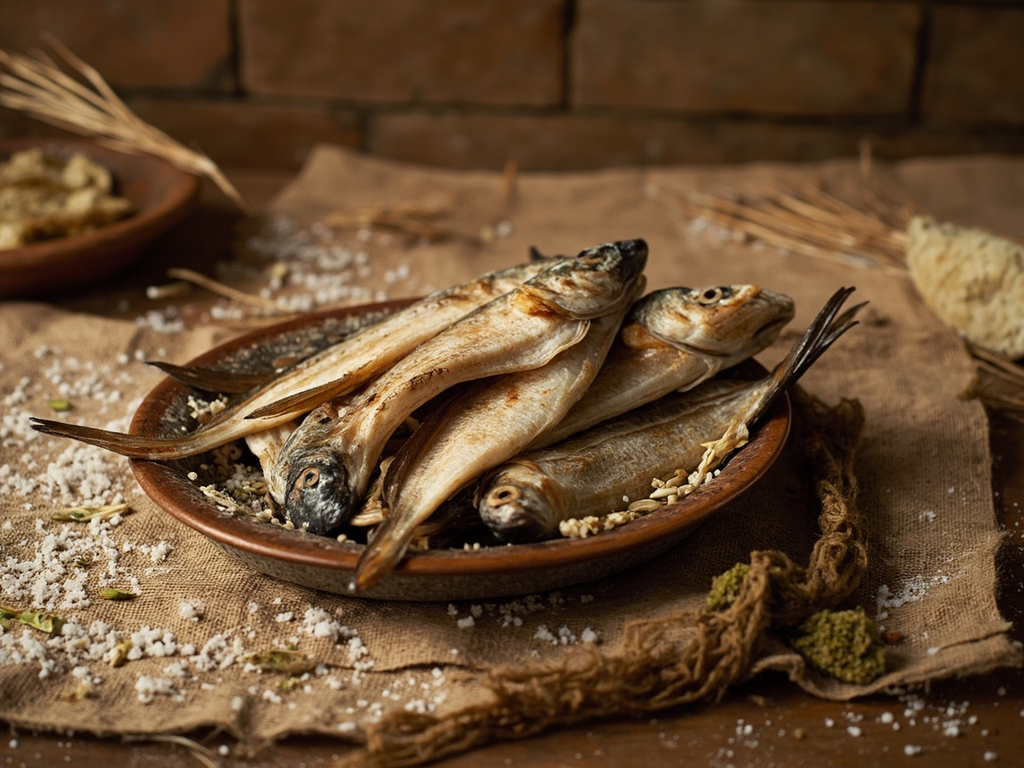
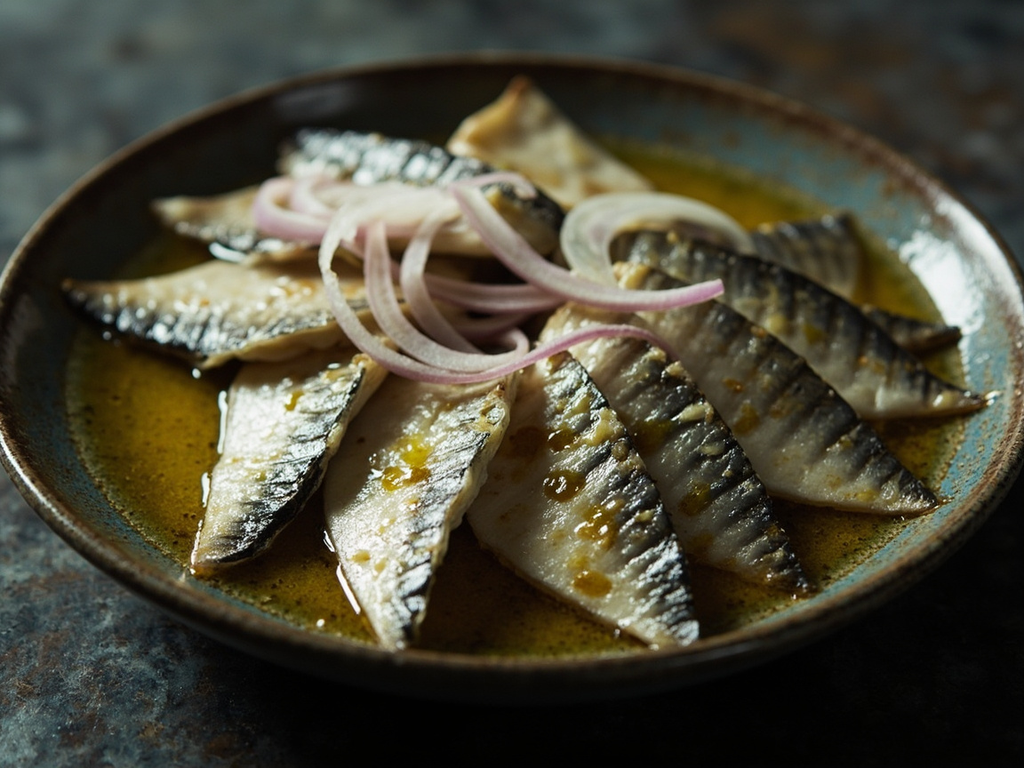
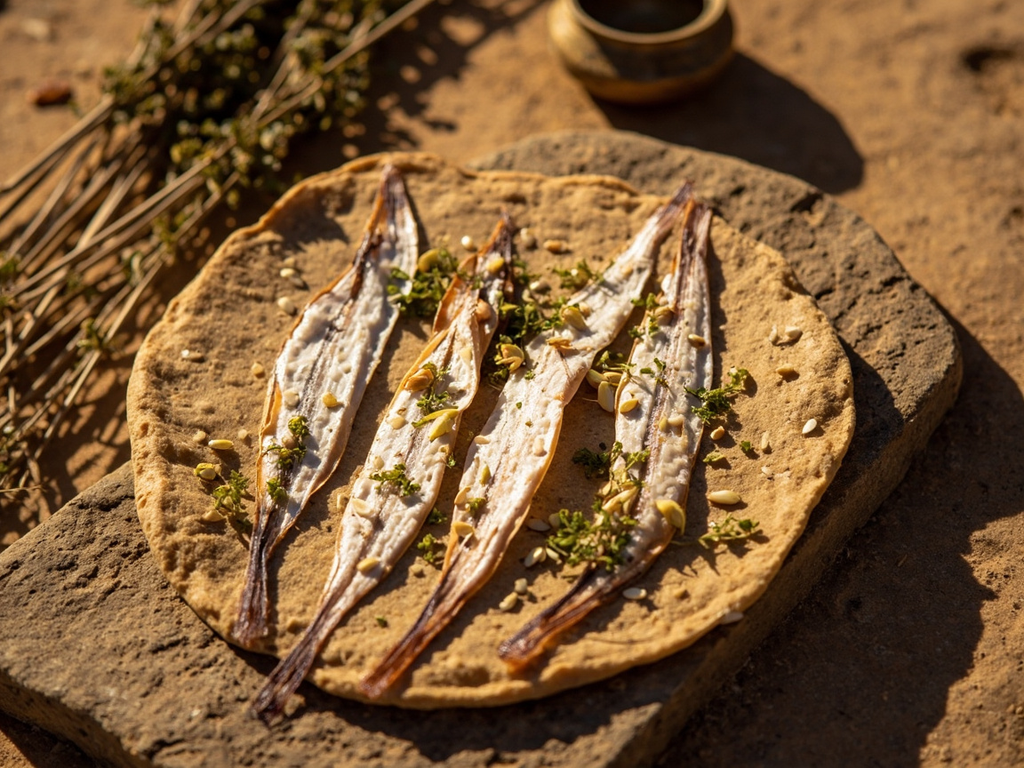
Pieces of tuna long brined in sea salt, perfumed with fennel and coriander, dried until dense and flavorful. They are desalted and sliced onto the flatbread or into the porridge.
At Lixus, near the mouth of the river, I saw the basins where they lay the tuna in salt as one lays a dead man in his dignity. The salt drinks the water from the flesh, and what remains defies time and the sea. Rub the piece with salt until it hardens, hang it in the salty wind, and you will have enough to last until the next trading post. A sliver on your flatbread, and you are chewing the whole ocean.
- •Fresh tuna — a fine piece (fatty and durable flesh)
- •Sea salt — enough to cover entirely (dehydration and preservation)
- •Fennel seeds — a handful (aroma)
- •Coriander seeds — a handful (aroma)
Salt-Cured Tuna with Herbs from Lixus
Pieces of tuna long brined in sea salt, perfumed with fennel and coriander, dried until dense and flavorful. They are desalted and sliced onto the flatbread or into the porridge.
Why this dish? At Lixus, Hanno's stopover on the Atlantic coast of Morocco, the Phoenician-Punic people operated fish-salting workshops. Salted tuna, rich and durable, was the king protein of the holds: it fed the crews and was traded at trading posts.
At Lixus, near the mouth of the river, I saw the basins where they lay the tuna in salt as one lays a dead man in his dignity. The salt drinks the water from the flesh, and what remains defies time and the sea. Rub the piece with salt until it hardens, hang it in the salty wind, and you will have enough to last until the next trading post. A sliver on your flatbread, and you are chewing the whole ocean.
Ingredients (period version)
- Fresh tuna — a fine piece (fatty and durable flesh)
- Sea salt — enough to cover entirely (dehydration and preservation)
- Fennel seeds — a handful (aroma)
- Coriander seeds — a handful (aroma)
Ingredients
- Very fresh tuna steak — 400 g (base)
- Coarse sea salt — 800 g to 1 kg (dry brine)
- Fennel seeds — 1 tbsp (aromatic)
- Cracked coriander seeds — 1 tbsp (aromatic)
- Olive oil — for preserving (finishing after desalting)
Method
- Mix the coarse salt with the cracked fennel and coriander.
- In a dish, spread a layer of salt, place the tuna, and cover it completely with the remaining seasoned salt.
- Cover and refrigerate for 24 to 36 hours: the salt will draw out water and firm the flesh.
- Rinse the tuna, pat dry, then let it air-dry (or in the refrigerator on a rack) for 1 to 2 days until firm.
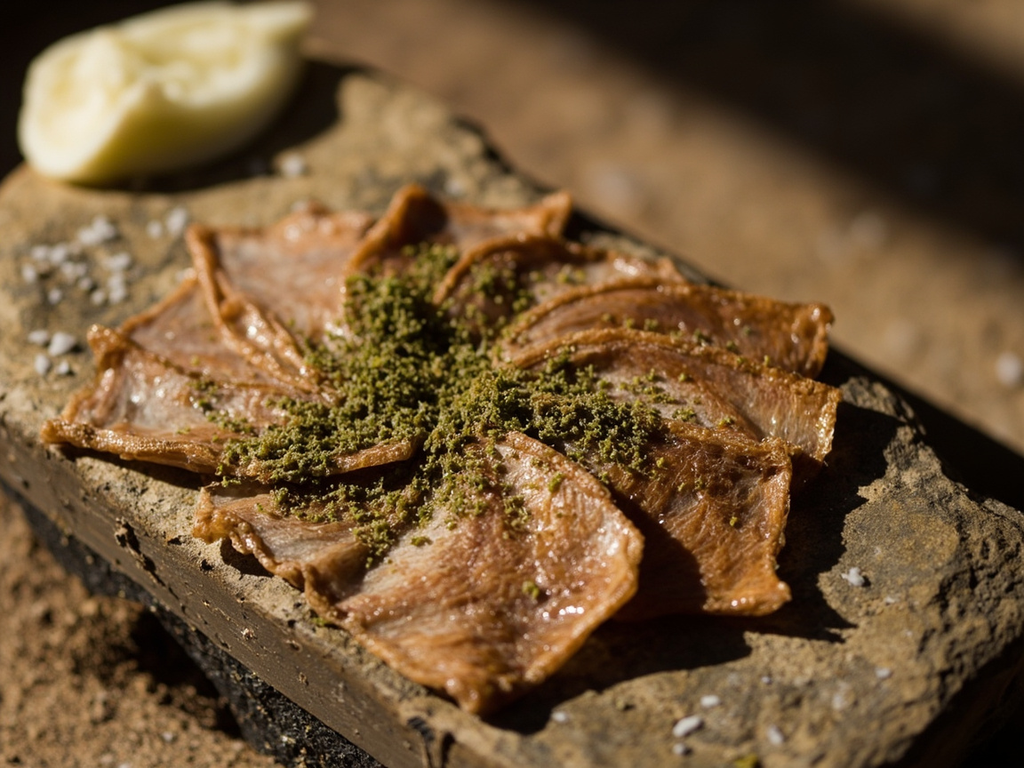
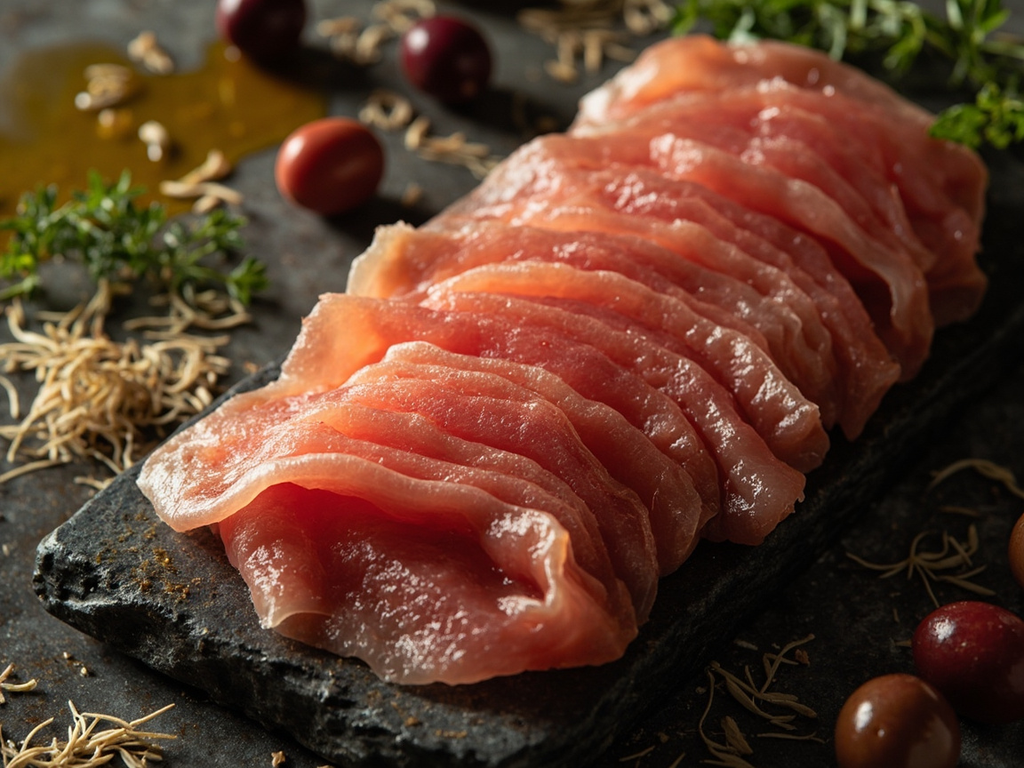
- Slice into thin strips; desalt in water for 10 minutes if needed, then drizzle with olive oil.
- Serve on the barley flatbread or as strips with olives.
How it was made : The Phoenician-Punic cities of the Atlantic (Lixus, Gades) were major centers of fish salting, ancestors of the Roman *garum* factories. Salt, extracted from salt marshes, transformed migratory tuna into a trade and travel provision. Without refrigeration, salting, drying, and fermenting were the only ways to preserve flesh for weeks.
The contemporary twist : Served in the style of Andalusian *mojama* (direct heir of these Punic salt-cured fish), in thin translucent slices with almonds and olive oil: an appetizer board from the depths of time.
Sources : Strabo, Geography, Book III (fish salting on the Atlantic coasts)
Hanno the Navigator · Charactorium