 flip
flipSkyr with honey and berries, late-summer offering
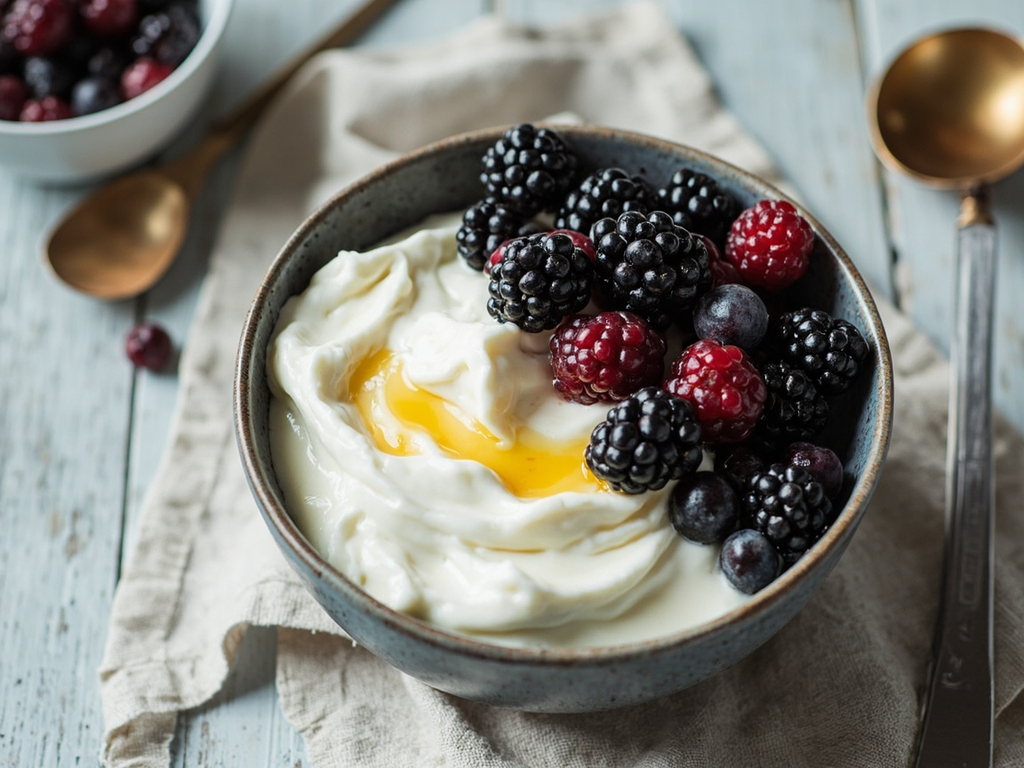
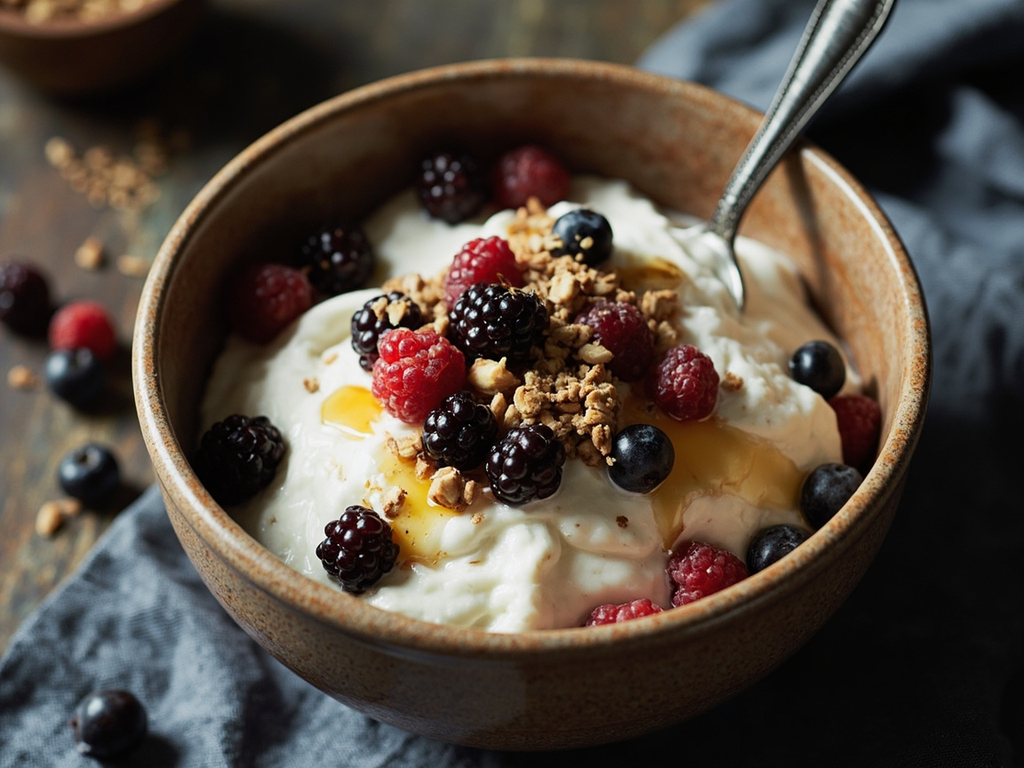
Skyr with honey and berries, late-summer offering
Why this dish? Fermented milk, a precious product of herds, was part of the gifts offered to the powers and shared during great seasonal feasts (blót). For a figure linked to the cycle of the gods and destiny like Brynhildr, this sweet-sour dairy evokes an offering of thanks, inspired by northern feasts — never a reproduction of a sacred ritual.
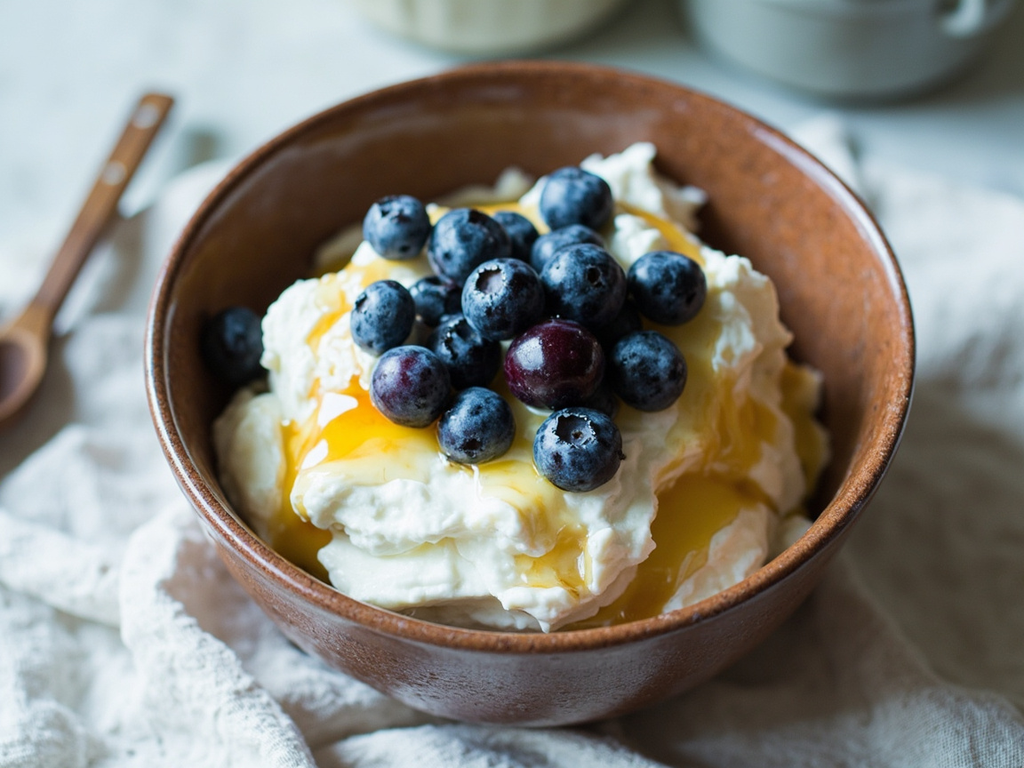
A thick, fermented dairy, halfway between fresh cheese and yogurt, with a sharp acidity, sweetened with honey and crowned with wild berries. Fresh, lively, and nourishing — the end of the meal and the gift one sets down.
Milk, you see, is a gift from the beasts, and the beasts are a gift from the gods — so we give back a portion of what we receive. This thick curd is left to set in the warmth, then drained on cloth until it holds under the spoon. I pour honey over it and toss in the berries of the last warm days, and the first bowl I do not eat: I set it on the threshold, for those we do not see but who watch. The rest is for the living — taste it, it is sharp and sweet at once, like everything that matters.
- •Cow or sheep milk — a bucket (base)
- •Ferment from previous curd — a ladleful (fermentation)
- •Rennet — a pinch (coagulation)
- •Honey — a drizzle (sweetness)
- •Wild berries — a handful (tart garnish)
Skyr with honey and berries, late-summer offering
A thick, fermented dairy, halfway between fresh cheese and yogurt, with a sharp acidity, sweetened with honey and crowned with wild berries. Fresh, lively, and nourishing — the end of the meal and the gift one sets down.
Why this dish? Fermented milk, a precious product of herds, was part of the gifts offered to the powers and shared during great seasonal feasts (blót). For a figure linked to the cycle of the gods and destiny like Brynhildr, this sweet-sour dairy evokes an offering of thanks, inspired by northern feasts — never a reproduction of a sacred ritual.
Milk, you see, is a gift from the beasts, and the beasts are a gift from the gods — so we give back a portion of what we receive. This thick curd is left to set in the warmth, then drained on cloth until it holds under the spoon. I pour honey over it and toss in the berries of the last warm days, and the first bowl I do not eat: I set it on the threshold, for those we do not see but who watch. The rest is for the living — taste it, it is sharp and sweet at once, like everything that matters.
Ingredients (period version)
- Cow or sheep milk — a bucket (base)
- Ferment from previous curd — a ladleful (fermentation)
- Rennet — a pinch (coagulation)
- Honey — a drizzle (sweetness)
- Wild berries — a handful (tart garnish)
Ingredients
- Plain skyr (or very thick Greek yogurt) — 500 g (fermented base)
- Honey — 3 tbsp (sweetness)
- Blueberries, blackberries, lingonberries — 150 g (garnish)
- Flax seeds or crushed hazelnuts — 1 tbsp (texture (optional))
Method
- If using store-bought skyr, whisk to soften; otherwise, drain thick yogurt in a cheesecloth for a few hours.
- Divide the skyr into bowls or small dishes.
- Drizzle with honey and top with wild berries.
- Sprinkle with seeds or crushed hazelnuts for crunch.
- Serve well chilled, at the end of the meal or as a share to offer.
How it was made : Skyr, fermented then drained milk, is attested in Scandinavia and Iceland since the Viking age; sagas mention it as a common food. Precious because it extended the shelf life of milk, it was eaten plain, sweetened with honey, or with berries. Dairy products and first harvests were among offerings at blót, seasonal feasts of thanks.
The contemporary twist : Serve in a glass as a Nordic 'skyr bowl', with a barely heated berry coulis and a crispy honey tuile.
Sources : Mentions of skyr in Icelandic sagas (e.g. Grettis saga) · Studies on Viking food archaeology
Brynhildr · Charactorium