 flip
flipLentil and Fava Bean Stew with Coriander (the River's Shabou)
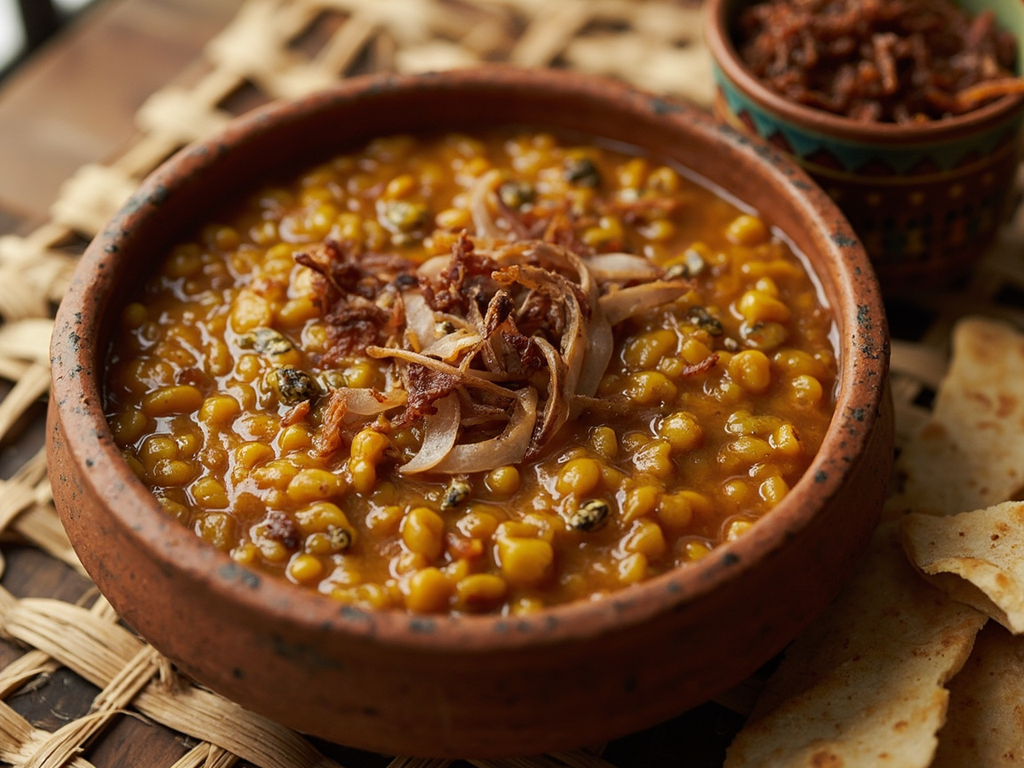
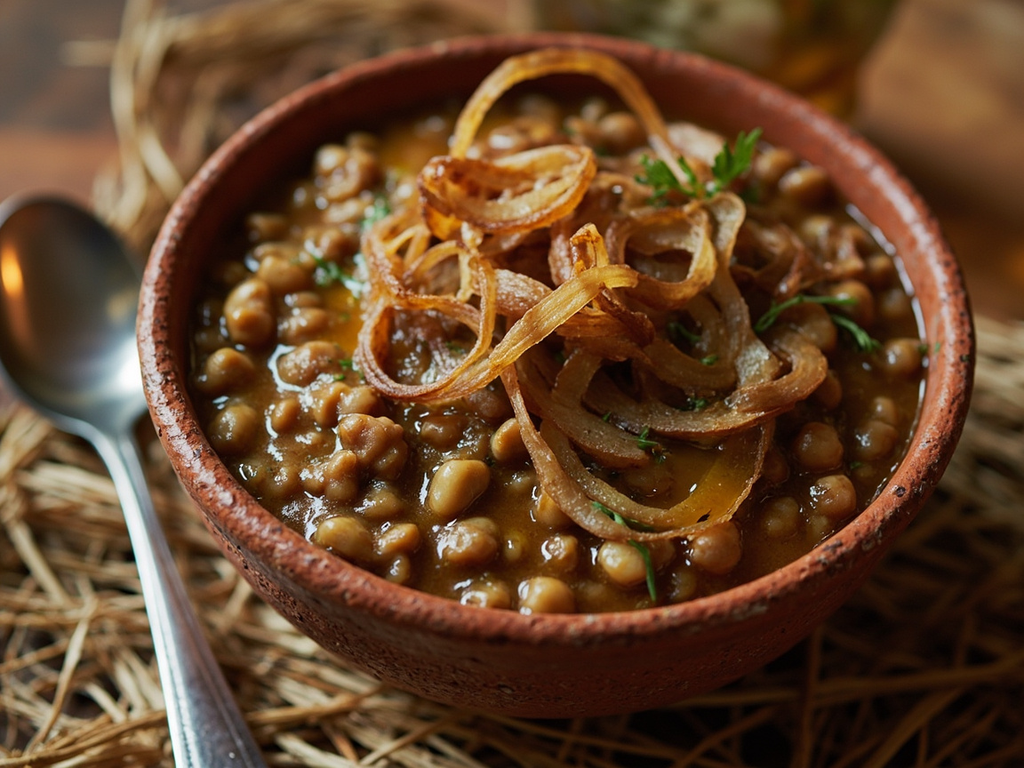
Lentil and Fava Bean Stew with Coriander (the River's Shabou)
Why this dish? Legumes, onions, and coriander formed the core of Egyptian diet, from peasant to pharaoh. For Horemheb, the methodical administrator who reorganized Egypt through his edicts, this nourishing and cheap staple dish embodies the meal that kept the kingdom running: that of the scribes, workers, and soldiers he governed.
A thick stew of lentils and fava beans simmered with onions, garlic, cumin, and plenty of coriander, perfumed with oil. The universal comfort dish of the Nile banks, direct ancestor of today's *foul* and *koshari*.
Do you think gods and pharaohs eat only goose? Know, scribe, that it is lentils and fava beans that keep the army of the Double Crown standing. I signed my edicts with my belly full of this stew, onion and coriander still on my fingers. Let it simmer long, until the bean dissolves like silt after the flood—and pour a stream of oil on top, that is the whole secret of my table of duty.
- •Lentils — a measure (base)
- •Fava beans — a measure (base)
- •Onions — several (aromatic)
- •Garlic — a few cloves (aromatic)
- •Coriander and cumin seeds — a good pinch (spices)
- •Oil (safflower or linseed) — a drizzle (fat)
- •Salt — to taste (seasoning)
Lentil and Fava Bean Stew with Coriander (the River's Shabou)
A thick stew of lentils and fava beans simmered with onions, garlic, cumin, and plenty of coriander, perfumed with oil. The universal comfort dish of the Nile banks, direct ancestor of today's *foul* and *koshari*.
Why this dish? Legumes, onions, and coriander formed the core of Egyptian diet, from peasant to pharaoh. For Horemheb, the methodical administrator who reorganized Egypt through his edicts, this nourishing and cheap staple dish embodies the meal that kept the kingdom running: that of the scribes, workers, and soldiers he governed.
Do you think gods and pharaohs eat only goose? Know, scribe, that it is lentils and fava beans that keep the army of the Double Crown standing. I signed my edicts with my belly full of this stew, onion and coriander still on my fingers. Let it simmer long, until the bean dissolves like silt after the flood—and pour a stream of oil on top, that is the whole secret of my table of duty.
Ingredients (period version)
- Lentils — a measure (base)
- Fava beans — a measure (base)
- Onions — several (aromatic)
- Garlic — a few cloves (aromatic)
- Coriander and cumin seeds — a good pinch (spices)
- Oil (safflower or linseed) — a drizzle (fat)
- Salt — to taste (seasoning)
Ingredients
- Brown lentils — 150 g (base)
- Dried fava beans (or split fava / foul) — 150 g (soaked overnight) (base)
- Onions — 2 large (aromatic)
- Garlic — 3 cloves (aromatic)
- Ground coriander and cumin — 1 tsp each (spices)
- Olive oil — 3 tbsp (fat)
- Salt — to taste (seasoning)
Method
- Soak the fava beans overnight. Slice and sweat the onions in oil until golden.
- Add crushed garlic, cumin, and coriander, fry for 1 minute.
- Add drained lentils and fava beans, cover with water, and simmer 45 minutes to 1 hour until everything is tender.
- Roughly mash part of the stew to thicken, season with salt.
- Serve with a generous drizzle of oil and sliced fresh onions on top.
How it was made : Fava beans and lentils were staple foods attested by archaeological remains and funerary offerings. They were stored dry, perfect for state granaries. Chili and tomato of modern *foul* are post-1492 additions: the ancient version relied entirely on onion, garlic, cumin, and coriander.
The contemporary twist : Served in a bowl with a soft-boiled egg and a drizzle of coriander-infused oil, it becomes an 'ancestral koshari' that would be a hit in a plant-based canteen.
Sources : Mary Anne Murray, 'Cereal production and processing' in Ancient Egyptian Materials and Technology · Pierre Tallet, Histoire de la cuisine et de la gastronomie égyptiennes
Horemheb · Charactorium