 flip
flipWarm roasted kūmara salad with toasted seeds and mānuka honey dressing
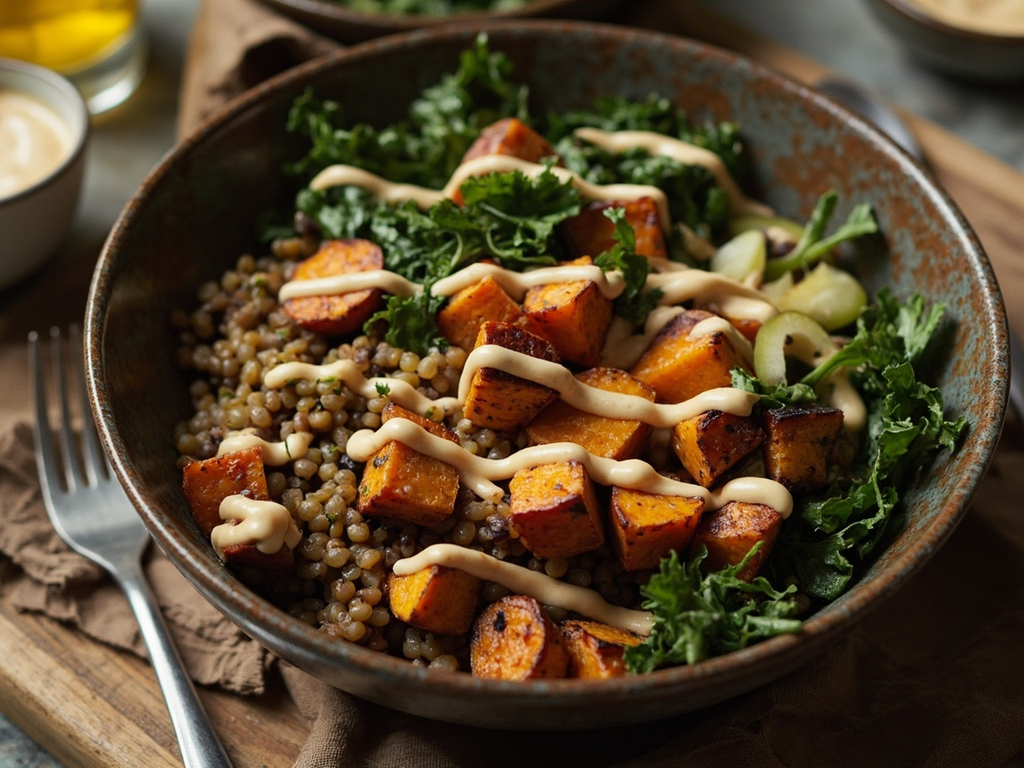
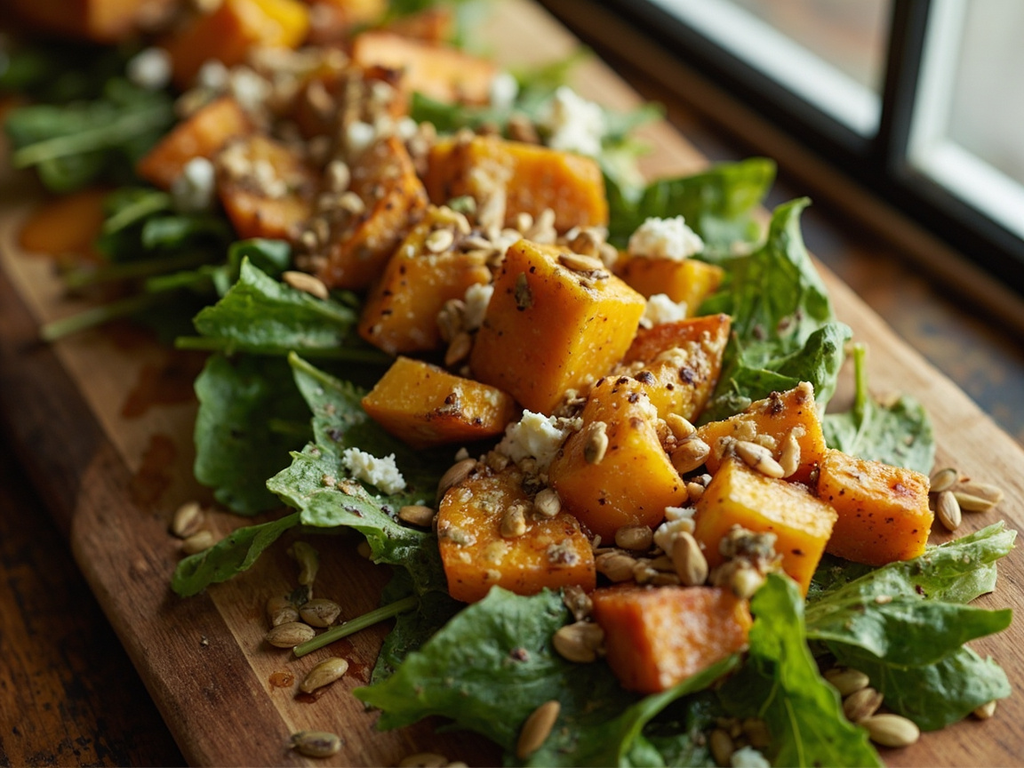
Warm roasted kūmara salad with toasted seeds and mānuka honey dressing
Why this dish? Jacinda Ardern has been vegetarian for years out of ethical conviction. This kind of dish — kūmara as the local star, no meat, full of fresh vegetables — is exactly the kind of evening meal for a New Zealand family keen to eat well without wasting, in the spirit of the Wellbeing Budget she championed.
Caramelized roasted sweet potato wedges on a bed of young greens, sprinkled with toasted seeds and crumbled feta, all lifted by a mānuka honey and lemon dressing. A gentle, nourishing, deeply New Zealand dish.
Kia ora. You know, when you get home late from Parliament and Neve needs to be put to bed, you don't want to complicate things — but you still want to eat well. Kūmara is our comfort food: you roast it until the edges caramelize, add whatever's fresh from the garden, a drizzle of mānuka honey, and that's it. No meat in my house, that's a choice I've made for a long time, and honestly, we're not missing out. Be kind to the planet, be kind to yourself — it starts on the plate.
- •Kūmara (orange sweet potato) — several large roots (sweet caramelized base)
- •Local vegetable oil — a drizzle (roasting)
- •Young greens and garden herbs — a generous handful per person (freshness)
- •Pumpkin and sunflower seeds — a handful (crunch and roasted umami)
- •Feta — to taste (creamy saltiness)
- •Mānuka honey — a spoonful (sweet binder for dressing)
- •Lemon — one (acidity)
Warm roasted kūmara salad with toasted seeds and mānuka honey dressing
Caramelized roasted sweet potato wedges on a bed of young greens, sprinkled with toasted seeds and crumbled feta, all lifted by a mānuka honey and lemon dressing. A gentle, nourishing, deeply New Zealand dish.
Why this dish? Jacinda Ardern has been vegetarian for years out of ethical conviction. This kind of dish — kūmara as the local star, no meat, full of fresh vegetables — is exactly the kind of evening meal for a New Zealand family keen to eat well without wasting, in the spirit of the Wellbeing Budget she championed.
Kia ora. You know, when you get home late from Parliament and Neve needs to be put to bed, you don't want to complicate things — but you still want to eat well. Kūmara is our comfort food: you roast it until the edges caramelize, add whatever's fresh from the garden, a drizzle of mānuka honey, and that's it. No meat in my house, that's a choice I've made for a long time, and honestly, we're not missing out. Be kind to the planet, be kind to yourself — it starts on the plate.
Ingredients (period version)
- Kūmara (orange sweet potato) — several large roots (sweet caramelized base)
- Local vegetable oil — a drizzle (roasting)
- Young greens and garden herbs — a generous handful per person (freshness)
- Pumpkin and sunflower seeds — a handful (crunch and roasted umami)
- Feta — to taste (creamy saltiness)
- Mānuka honey — a spoonful (sweet binder for dressing)
- Lemon — one (acidity)
Ingredients
- Orange sweet potato — 800 g (sweet caramelized base)
- Olive oil — 3 tbsp (roasting and dressing)
- Young greens (spinach, rocket) — 120 g (freshness)
- Pumpkin and sunflower seeds — 60 g (toasted crunch)
- Feta — 120 g (creamy saltiness)
- Mānuka honey (or robust honey) — 1 tbsp (dressing)
- Lemon juice — 1/2 lemon (acidity)
- Salt, pepper — to taste (seasoning)
Method
- Preheat the oven to 200°C. Cut the sweet potato into 2-3 cm wedges or cubes, leaving the skin on if thin.
- Toss with 2 tbsp oil, salt and pepper, spread on a baking tray and roast for 30-35 min, stirring halfway, until edges caramelize.
- Toast the seeds in a dry pan for 3-4 min until golden and fragrant.
- Make the dressing: whisk together honey, lemon juice, 1 tbsp oil, salt and pepper.
- Arrange the young greens on a large platter, top with warm kūmara, scatter feta and seeds, drizzle with dressing, and serve immediately.
How it was made : Kūmara was one of the few cultivated plants that Māori ancestors managed to acclimatize in New Zealand's temperate climate after their great migration from Polynesia. Stored over winter in pits (rua kūmara), it was a pillar of survival. Today it remains the country's signature ingredient, adapted in countless ways.
The contemporary twist : Serve on a long sharing board to pick at in the center of the table — communal kai style rather than individual plates.
Jacinda Ardern · Charactorium