 flip
flipAsh-e jow (Khanqah Barley Soup)
Ash-e jow (Khanqah Barley Soup)
Why this dish? Jami lived most of his life at the Naqshbandi khanqah in Herat, where thick barley soup (ash-e jow) was the dervishes' daily meal. Barley, the grain of the humble and the mystical, nourished the body without weighing down the spirit—a fundamental principle of Sufi discipline that Jami defended in his writings.
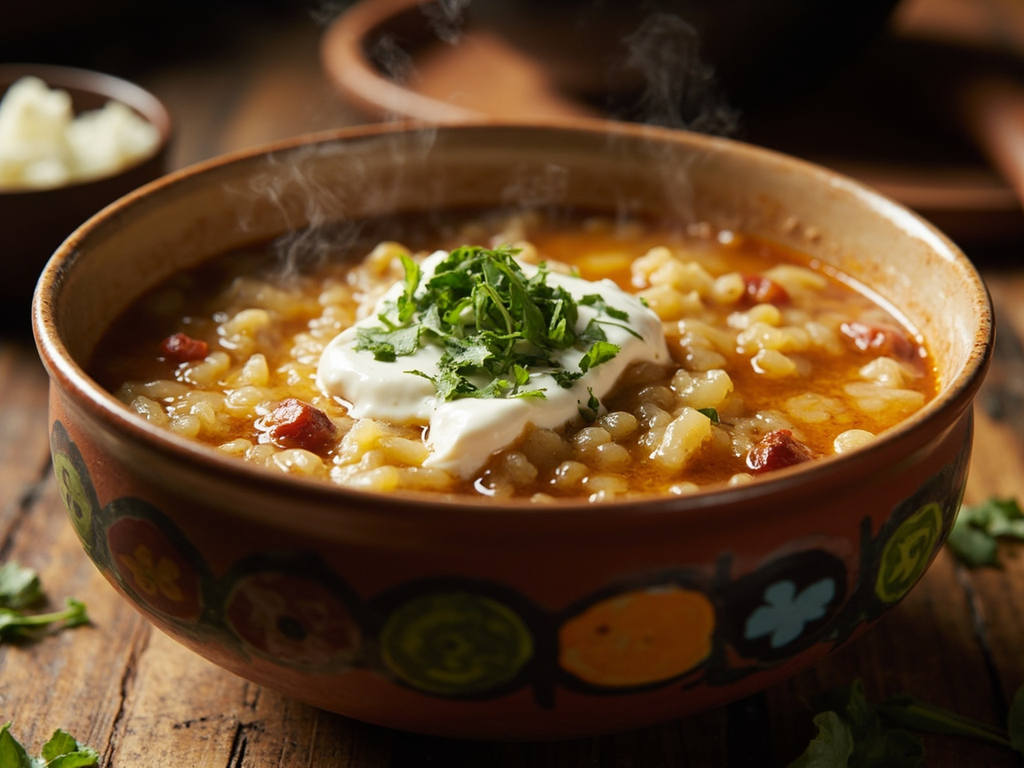
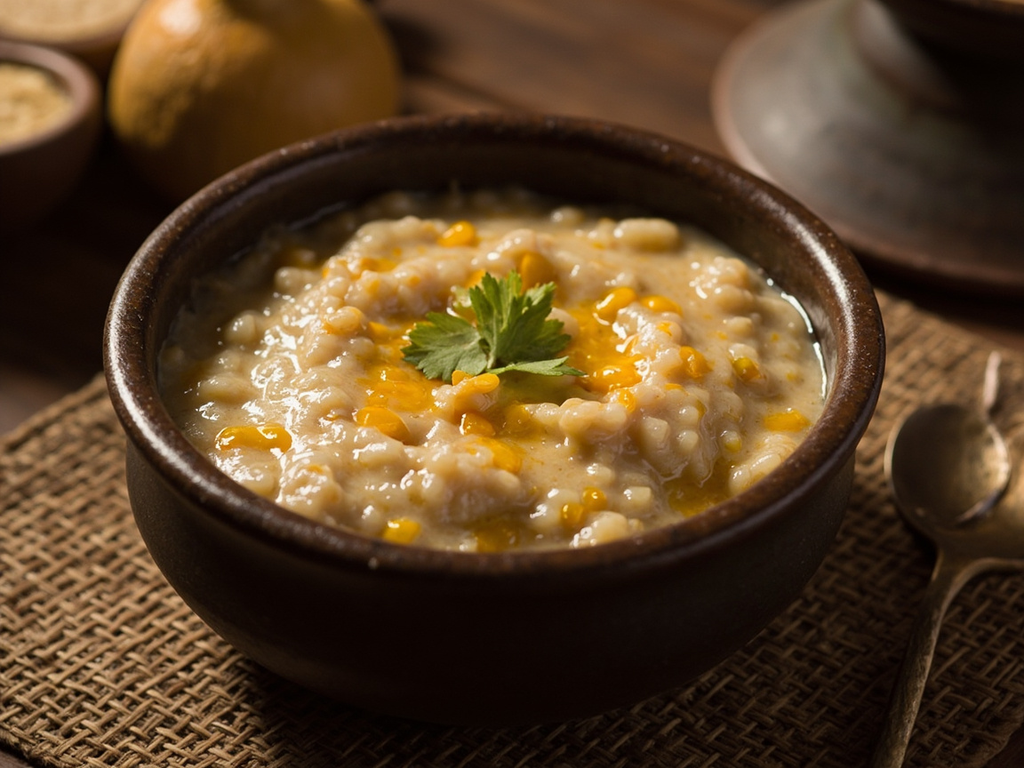
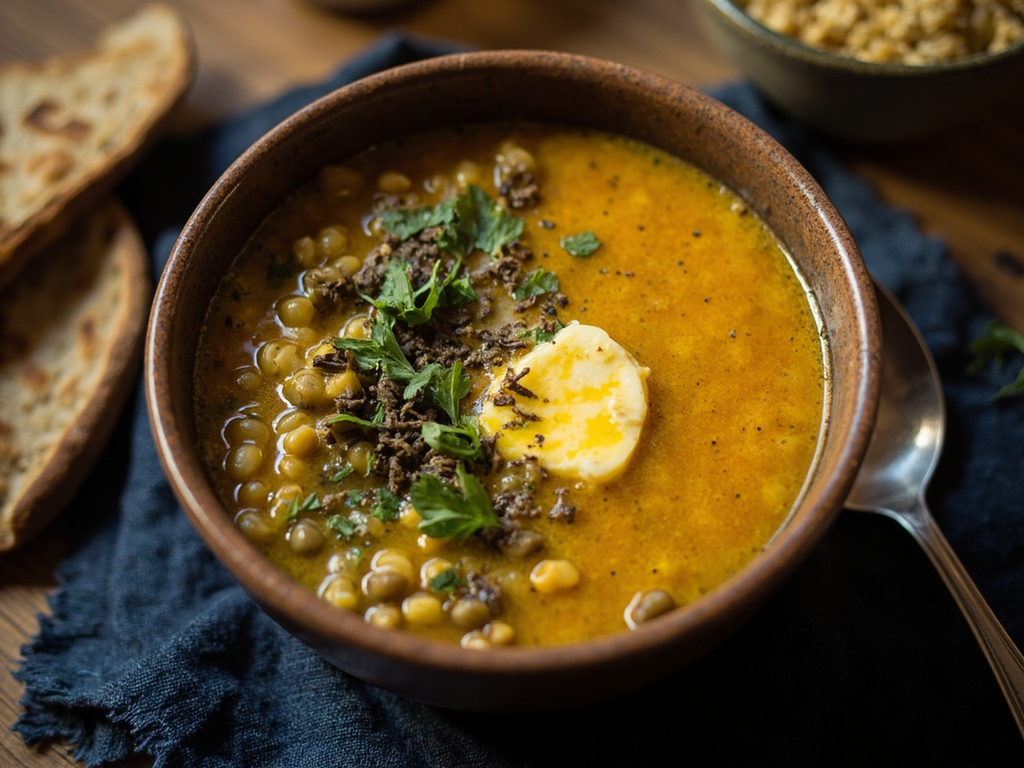
A thick soup of hulled barley, lentils, and aromatic herbs, perfumed with turmeric and dried mint. It was the staple dish of Khorasan's Sufi convents: nourishing, economical, and cooked in a single cauldron for the whole community. The texture is dense, almost a savory porridge, with fresh herbs added at the last moment for freshness and color.
See, friend, this soup you might disdain—it has fed more saints than all the sultan's feasts. At the khanqah, when the cook pours the barley into the copper cauldron, he performs a prayer. Each grain that swells in the broth is like the seeker's heart opening to grace. We add turmeric for the soul's warmth, mint for the mind's clarity. A bowl of this, some bread, and I am ready to write until dawn.
- •Hulled barley — Two generous handfuls (Soup base)
- •Green lentils — One handful (Protein addition)
- •Onion — One, finely chopped (Aromatic base)
- •Turmeric powder — A pinch (Color and warmth)
- •Dried mint (na'na) — A pinch (Final fragrance)
- •Fresh parsley and cilantro — A handful (Fresh herbs)
- •Sheep's tail fat (dombe) — One piece (Cooking fat)
- •Salt — To taste (Seasoning)
- •Water — Enough to cover (Broth)
Ash-e jow (Khanqah Barley Soup)
A thick soup of hulled barley, lentils, and aromatic herbs, perfumed with turmeric and dried mint. It was the staple dish of Khorasan's Sufi convents: nourishing, economical, and cooked in a single cauldron for the whole community. The texture is dense, almost a savory porridge, with fresh herbs added at the last moment for freshness and color.
Why this dish? Jami lived most of his life at the Naqshbandi khanqah in Herat, where thick barley soup (ash-e jow) was the dervishes' daily meal. Barley, the grain of the humble and the mystical, nourished the body without weighing down the spirit—a fundamental principle of Sufi discipline that Jami defended in his writings.
See, friend, this soup you might disdain—it has fed more saints than all the sultan's feasts. At the khanqah, when the cook pours the barley into the copper cauldron, he performs a prayer. Each grain that swells in the broth is like the seeker's heart opening to grace. We add turmeric for the soul's warmth, mint for the mind's clarity. A bowl of this, some bread, and I am ready to write until dawn.
Ingredients (period version)
- Hulled barley — Two generous handfuls (Soup base)
- Green lentils — One handful (Protein addition)
- Onion — One, finely chopped (Aromatic base)
- Turmeric powder — A pinch (Color and warmth)
- Dried mint (na'na) — A pinch (Final fragrance)
- Fresh parsley and cilantro — A handful (Fresh herbs)
- Sheep's tail fat (dombe) — One piece (Cooking fat)
- Salt — To taste (Seasoning)
- Water — Enough to cover (Broth)
Ingredients
- Hulled (or pearl) barley — 150 g (Soup base)
- Green lentils — 80 g (Protein addition)
- Yellow onion — 1 medium, sliced (Aromatic base)
- Turmeric powder — 1 tsp (Color and warmth)
- Dried mint — 1 tbsp (Final fragrance)
- Fresh flat-leaf parsley — 1 bunch (30 g) (Fresh herbs)
- Fresh cilantro — 1/2 bunch (15 g) (Fresh herbs)
- Olive oil or clarified butter (ghee) — 2 tbsp (Fat)
- Salt — 1 tsp (Seasoning)
- Water — 1.5 liters (Broth)
Method
- Rinse the barley and lentils in cold water. Soak for 30 minutes if using hulled barley (not necessary for pearl barley).
- In a large pot, heat the ghee or oil. Sauté the sliced onion until golden (5-7 minutes).
- Add the turmeric, stir for 30 seconds to release the aroma.
- Pour in the drained barley and lentils, cover with water. Bring to a boil, then reduce heat and simmer covered for 45–60 minutes, until the barley is tender and the soup is thick.
- Stir occasionally to prevent the barley from sticking to the bottom. Add water if the soup becomes too dense.
- Season with salt at the end of cooking. Coarsely chop the parsley and cilantro.
- Serve in bowls, garnish with fresh herbs and a generous pinch of dried mint crumbled between your fingers. A drizzle of melted ghee on top is welcome.
How it was made : Ash (thick soup) is one of the oldest dishes in Persian cuisine, mentioned as early as Sassanid texts. In Timurid khanqahs, a dedicated cook (tabbakh) prepared a large cauldron of ash daily for the community. Barley was preferred over wheat for its nourishing value and low cost. Sheep's tail fat (dombe), melted and clarified, served as the main cooking fat—it was considered healthier than butter by Galenic-Islamic medicine (tibb).
The contemporary twist : Serve in a terracotta bowl with a swirl of yogurt and a few pomegranate seeds for color—a reminder of the gardens of Herat.
Sources : Charles Perry, « A Baghdad Cookery Book » (translation of al-Baghdadi's Kitāb al-Ṭabīkh, 13th c.) · Najaf Daryabandari, « Ketāb-e mostaṭāb-e āšpazi » (collection of traditional Persian cooking)
Jami · Charactorium