 flip
flipHoney and Ginger Pear Tart
Honey and Ginger Pear Tart
Why this dish? Even a table as sober as Calvin's knew rare days of measured rejoicing — a baptism, a wedding, the welcome of a distinguished guest. The honey pear tart, sweet but not excessive, is the kind of modest festive dish that could be served in Geneva without falling into the debauchery of banquets condemned by the Reformed.
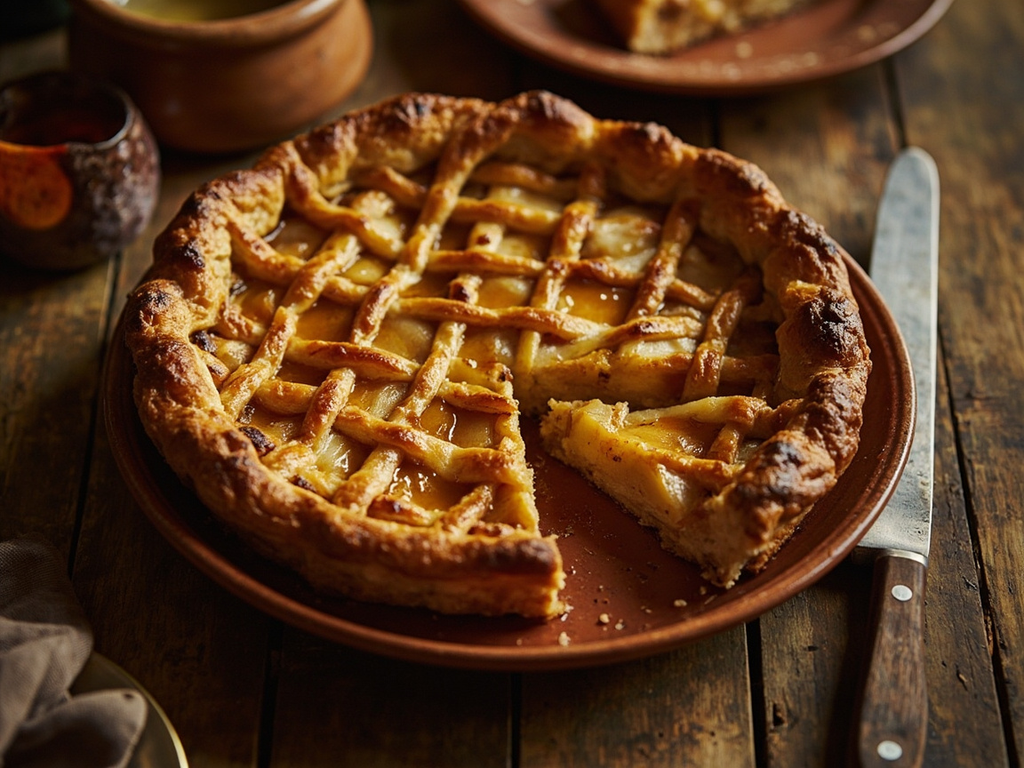
A tart of melting pears flavored with honey, ginger, and cinnamon, in a golden crust — a touch of sweetness for special occasions, kept within measure.
There are days when joy is permitted, provided it remains honest and measured: a wedding, the arrival of a brother from afar. Then we bake a pear tart, which we melt in honey with a little ginger and cinnamon, and enclose in a crust that we brown in the oven. But beware of excess, for the Christian's feast is not that of the belly. One slice suffices to gladden the heart without weighing down the soul; eat it with thanksgiving, not with greed.
- •Pears — four or five (filling)
- •Honey — a good spoonful (sweetness)
- •Ground ginger — a pinch (spice)
- •Cinnamon — a pinch (spice)
- •Pastry (flour, butter, water) — enough to line the tart pan (envelope)
Honey and Ginger Pear Tart
A tart of melting pears flavored with honey, ginger, and cinnamon, in a golden crust — a touch of sweetness for special occasions, kept within measure.
Why this dish? Even a table as sober as Calvin's knew rare days of measured rejoicing — a baptism, a wedding, the welcome of a distinguished guest. The honey pear tart, sweet but not excessive, is the kind of modest festive dish that could be served in Geneva without falling into the debauchery of banquets condemned by the Reformed.
There are days when joy is permitted, provided it remains honest and measured: a wedding, the arrival of a brother from afar. Then we bake a pear tart, which we melt in honey with a little ginger and cinnamon, and enclose in a crust that we brown in the oven. But beware of excess, for the Christian's feast is not that of the belly. One slice suffices to gladden the heart without weighing down the soul; eat it with thanksgiving, not with greed.
Ingredients (period version)
- Pears — four or five (filling)
- Honey — a good spoonful (sweetness)
- Ground ginger — a pinch (spice)
- Cinnamon — a pinch (spice)
- Pastry (flour, butter, water) — enough to line the tart pan (envelope)
Ingredients
- Firm pears (Conference or Williams) — 5 (filling)
- Honey — 3 tbsp (sweetness)
- Ground ginger — 1/2 tsp (spice)
- Cinnamon — 1/2 tsp (spice)
- Shortcrust pastry (250 g flour, 125 g butter, water, pinch of salt) — 1 bottom + 1 top (envelope)
- Egg yolk — 1 (glaze)
Method
- Prepare (or take out) the shortcrust pastry and let it rest in the fridge for 30 min.
- Peel and cut the pears into quarters; sauté them over low heat with the honey, ginger, and cinnamon for 10 min until tender and the juice is syrupy.
- Line a tart pan with half the pastry, fill with the drained pears, cover with the remaining pastry, and seal the edges.
- Brush with egg yolk, cut a steam vent, and bake at 180°C for 35 min until golden.
- Let cool slightly before serving: the tart is best enjoyed warm.
How it was made : Fruit tarts with honey and mild spices (ginger, cinnamon, sometimes saffron) were common festive dishes in Renaissance European cuisine. Refined sugar existed but remained expensive; honey was the sweetener for the majority.
The contemporary twist : Served warm with a cloud of barely sweetened whipped cream and a dusting of freshly grated ginger, it would grace a contemporary festive table without embarrassment.
Jean Calvin · Charactorium