 flip
flipTakuan (Pickled Daikon Radish, Winter Preserve)
Takuan (Pickled Daikon Radish, Winter Preserve)
Why this dish? Tsukemono, lacto-fermented vegetables, are the Japanese art of preserving the harvest for winter — essential in a cold rural region like Tabei's native Fukushima. Light, crunchy, and fortifying, they were also the ideal complement to mountain rations: a handful of takuan revives a tired appetite and provides the salt the body craves during exertion.
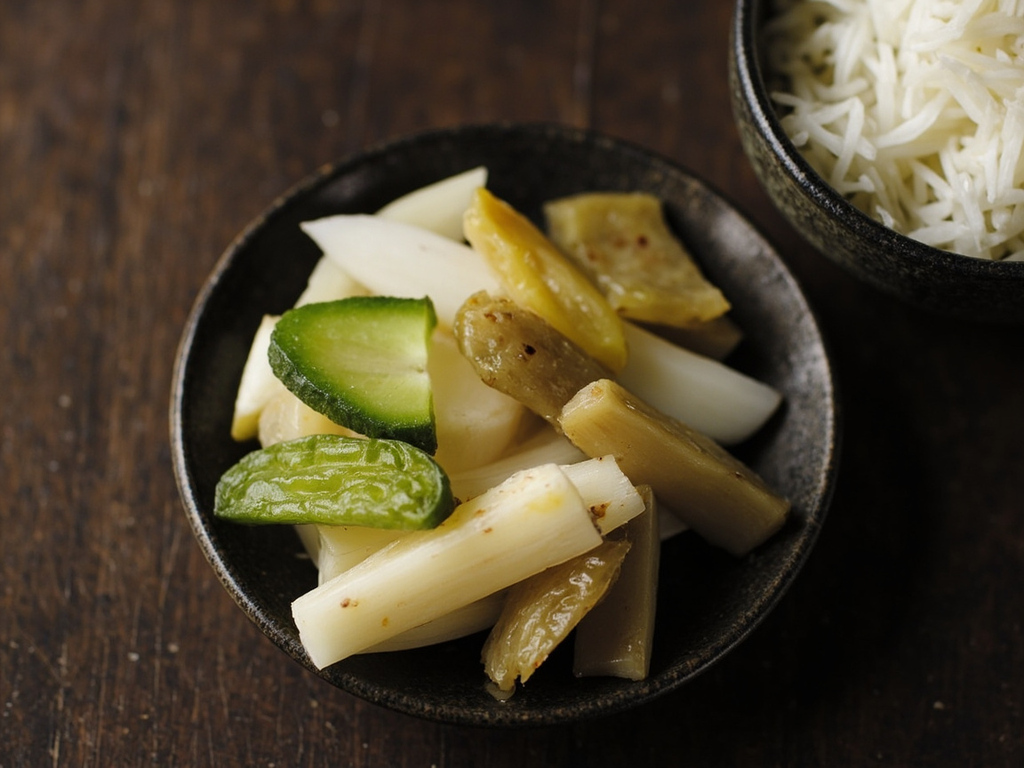
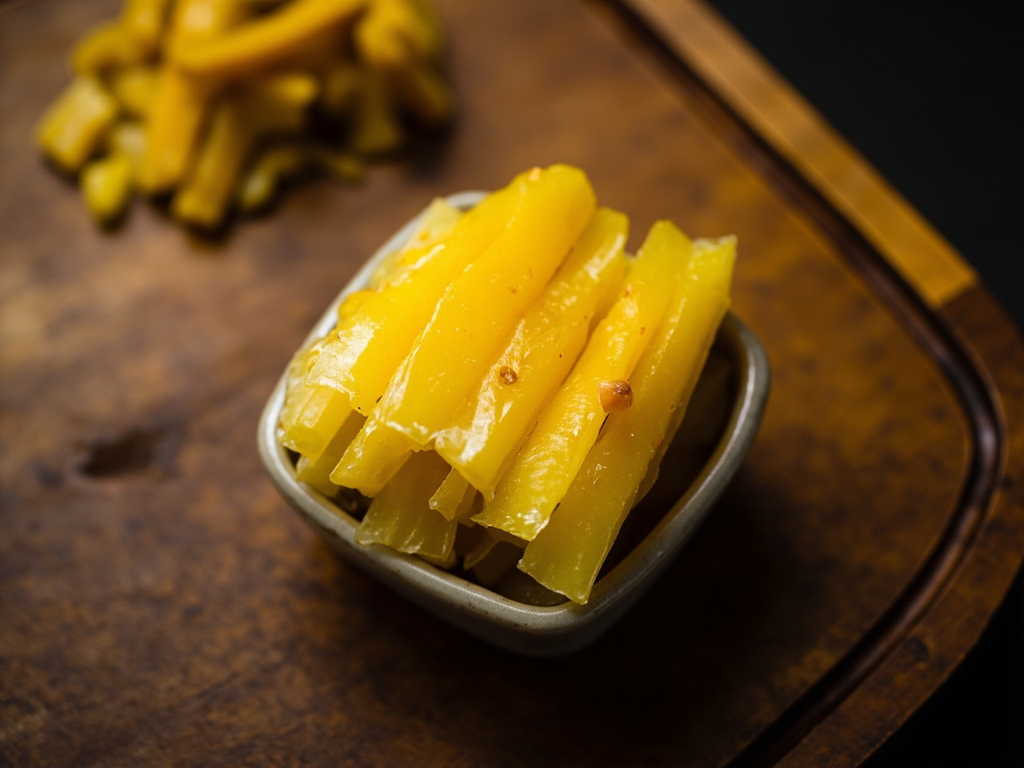
Sticks of daikon radish dried then fermented, golden yellow, with a crisp texture and the typical sour-salty taste of fermentation. The small dish that enlivens any bowl of rice.
At home, when autumn came, we hung the daikon to dry before burying them in rice bran and salt. It was the children's task to watch the jar. All winter, we would pull out these golden sticks, crunchy and tangy, that made the rice disappear on its own. Later, I understood that a bit of that saltiness is precious when the body has sweated and labored: never disdain the small things that keep a long time.
- •Daikon (white radish) — several (base vegetable)
- •Rice bran (nuka) — as much as needed (fermentation medium)
- •Salt — generous (preservation)
Takuan (Pickled Daikon Radish, Winter Preserve)
Sticks of daikon radish dried then fermented, golden yellow, with a crisp texture and the typical sour-salty taste of fermentation. The small dish that enlivens any bowl of rice.
Why this dish? Tsukemono, lacto-fermented vegetables, are the Japanese art of preserving the harvest for winter — essential in a cold rural region like Tabei's native Fukushima. Light, crunchy, and fortifying, they were also the ideal complement to mountain rations: a handful of takuan revives a tired appetite and provides the salt the body craves during exertion.
At home, when autumn came, we hung the daikon to dry before burying them in rice bran and salt. It was the children's task to watch the jar. All winter, we would pull out these golden sticks, crunchy and tangy, that made the rice disappear on its own. Later, I understood that a bit of that saltiness is precious when the body has sweated and labored: never disdain the small things that keep a long time.
Ingredients (period version)
- Daikon (white radish) — several (base vegetable)
- Rice bran (nuka) — as much as needed (fermentation medium)
- Salt — generous (preservation)
Ingredients
- Daikon — 1 large (about 700 g) (base)
- Salt — 3 tbsp (preservation)
- Rice bran (nuka) or sugar — 2 tbsp (fermentation / sweetness)
- Piece of kombu — 1 (umami)
Method
- Cut daikon into sticks and air-dry for 1 to 2 days (they should wilt and become pliable).
- Massage with salt and rice bran (or a little sugar), add kombu cut into strips.
- Pack everything tightly in a clean jar, press to expel air and draw out liquid.
- Cover, place a weight on top, and let ferment at a cool temperature for 1 to 2 weeks.
- Rinse quickly, slice thinly, and serve in a small pile alongside rice.
How it was made : Takuan is said to be named after the monk Takuan Sōhō. Traditionally, daikon were hung in rows to dry in the autumn wind, then fermented for months in rice bran and salt: a vitamin reserve to last the winter before the era of refrigeration.
The contemporary twist : Slice very thinly and serve fan-shaped with a splash of rice vinegar: the 'crunchy ration' to slip into a lunchbox.
Junko Tabei · Charactorium