 flip
flipʻAwa (ceremonial kava drink)
ʻAwa (ceremonial kava drink)
Why this dish? ʻAwa (kava) was inseparable from Hawaiian royal power. Kamehameha drank it at every war council, before major decisions, and during offerings to the god Kū — his tutelary deity, to whom he dedicated the heiau (temple) of Puʻukoholā at Kawaihae. The ʻawa ceremony also opened every ʻahaʻaina. Here, we offer a preparation inspired by the ritual, without reproducing the sacred ceremony itself.
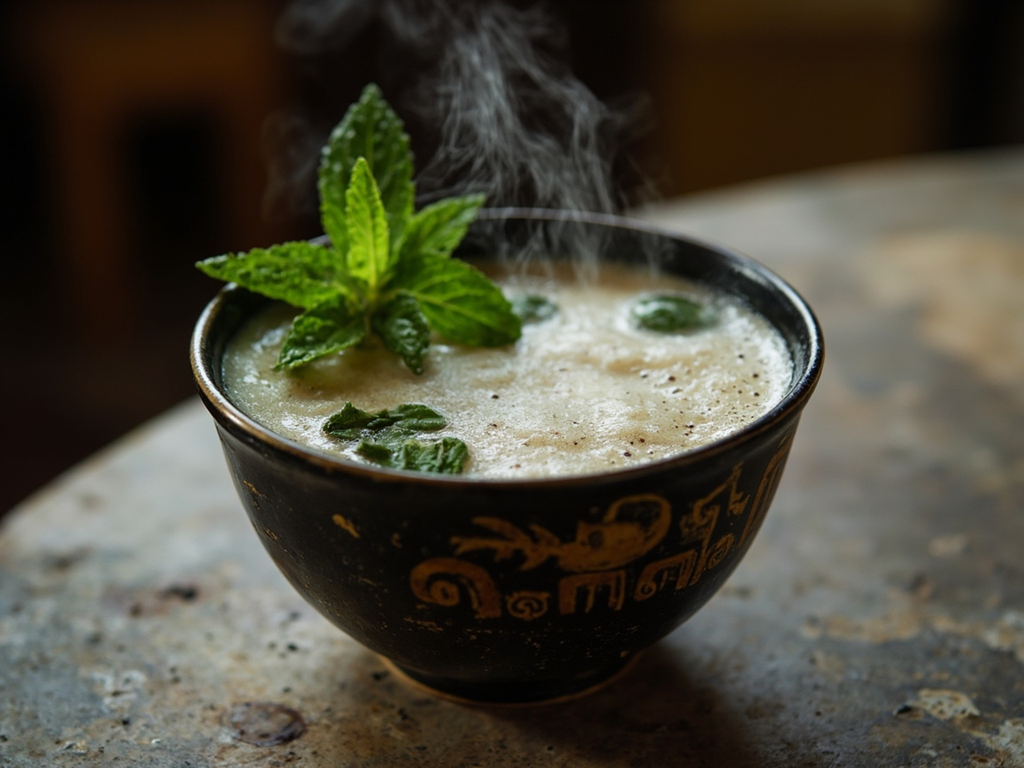
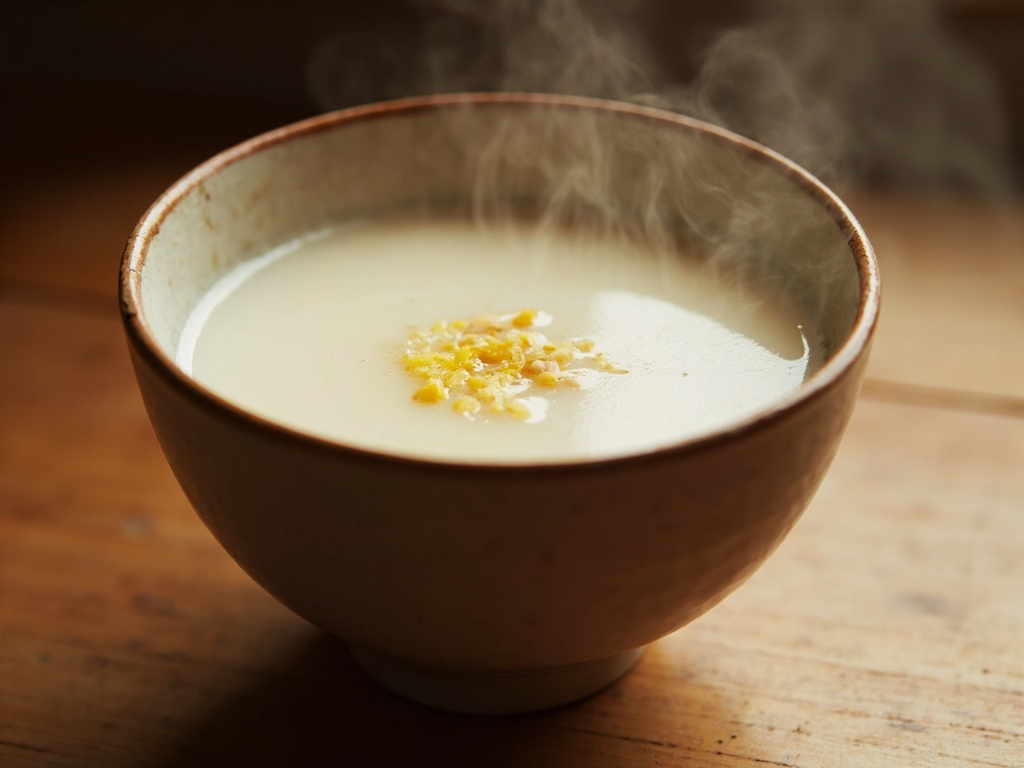
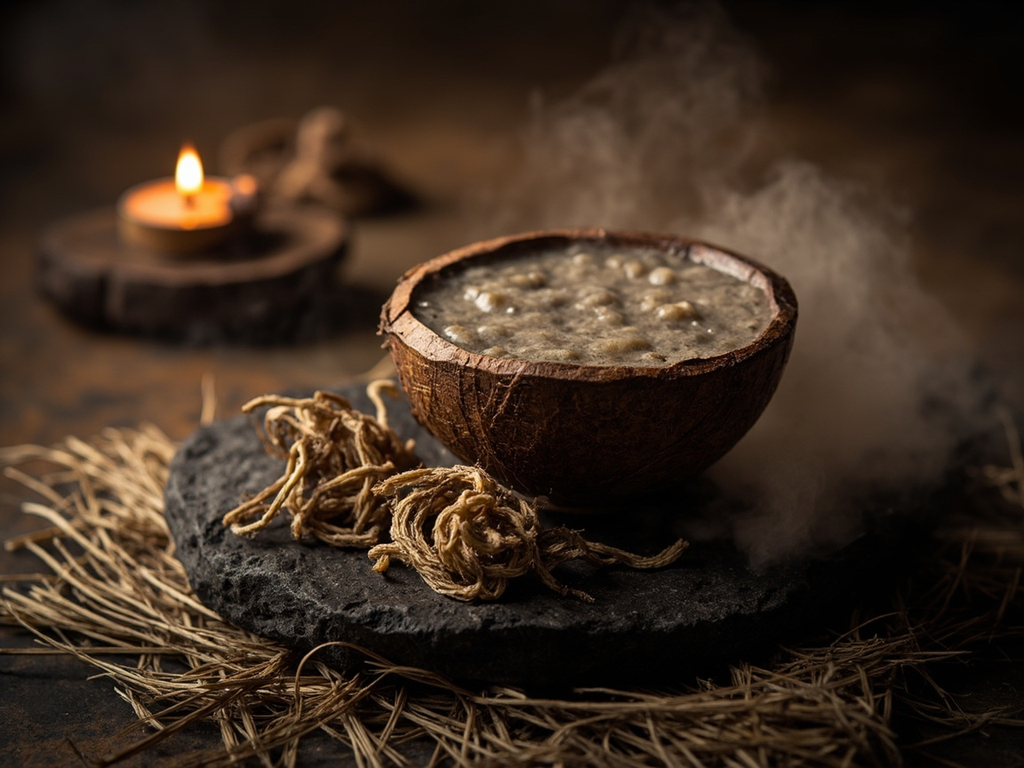
An earthy, slightly numbing beverage prepared from the root of ʻawa (Piper methysticum), chewed or pounded, then mixed with water and strained. Bitter and peppery in taste, it induces gentle relaxation. A prestige drink, it was served in coconut cups or carved calabashes.
Before speaking of war, I drink ʻawa. It is the custom of chiefs since the ancestors. The root is chewed by those with healthy teeth, then spat into the bowl — I know this surprises the foreigner, but that is how the juice is released. Water is poured, it is filtered through hau bark, and the drink flows, earthy and cloudy. It numbs the tongue, then the mind clears. It was before the cup of ʻawa that I decided to build the heiau of Puʻukoholā for Kū, and with it I sealed peace with the subdued chiefs.
- •Fresh ʻawa (kava) root — One piece of good size (Base of the drink)
- •Fresh water — As needed for desired strength (Dilution)
- •Hau (hibiscus) bark — One piece for straining (Natural filter)
ʻAwa (ceremonial kava drink)
An earthy, slightly numbing beverage prepared from the root of ʻawa (Piper methysticum), chewed or pounded, then mixed with water and strained. Bitter and peppery in taste, it induces gentle relaxation. A prestige drink, it was served in coconut cups or carved calabashes.
Why this dish? ʻAwa (kava) was inseparable from Hawaiian royal power. Kamehameha drank it at every war council, before major decisions, and during offerings to the god Kū — his tutelary deity, to whom he dedicated the heiau (temple) of Puʻukoholā at Kawaihae. The ʻawa ceremony also opened every ʻahaʻaina. Here, we offer a preparation inspired by the ritual, without reproducing the sacred ceremony itself.
Before speaking of war, I drink ʻawa. It is the custom of chiefs since the ancestors. The root is chewed by those with healthy teeth, then spat into the bowl — I know this surprises the foreigner, but that is how the juice is released. Water is poured, it is filtered through hau bark, and the drink flows, earthy and cloudy. It numbs the tongue, then the mind clears. It was before the cup of ʻawa that I decided to build the heiau of Puʻukoholā for Kū, and with it I sealed peace with the subdued chiefs.
Ingredients (period version)
- Fresh ʻawa (kava) root — One piece of good size (Base of the drink)
- Fresh water — As needed for desired strength (Dilution)
- Hau (hibiscus) bark — One piece for straining (Natural filter)
Ingredients
- Kava root powder (noble variety) — 30 g (about 3 tbsp) (Base of the drink)
- Warm water (not hot) — 500 ml (Extraction of kavalactones)
- Muslin bag or fine cloth strainer — 1 (Straining)
Method
- Place the kava powder in a muslin bag or fine cloth strainer.
- Submerge the bag in a bowl containing 500 ml of warm water (about 35 °C — never boiling).
- Knead and squeeze the bag in the water for 10 to 15 minutes, pressing regularly to extract the active compounds. The water should become cloudy and gray-brown.
- Remove the bag and squeeze one last time to extract all the liquid.
- Serve immediately in small cups or bowls. ʻAwa does not keep: drink it fresh.
- Note: ʻawa slightly numbs the mouth; this is normal. Drink slowly, in small quantities.
How it was made : Traditional preparation involved young men or women with healthy teeth chewing the fresh root to release kavalactones through the enzymatic action of saliva — a more effective method than simple pounding. The liquid filtered through hau (Hibiscus tiliaceus) bark was served in coconut cups (ʻapu). The ʻawa ceremony followed strict protocol: the king was served first, then the chiefs in order of rank. ʻAwa was also poured as an offering to the gods.
The contemporary twist : Serve in a polished half coconut with a thin slice of lime on the rim — lime is not traditional but its hint of acidity softens the bitterness for uninitiated palates.
Sources : Patrick V. Kirch, Feathered Gods and Fishhooks: An Introduction to Hawaiian Archaeology and Prehistory, University of Hawaii Press, 1985 · Vincent Lebot, Mark Merlin & Lamont Lindstrom, Kava: The Pacific Elixir, Yale University Press, 1992
Kamehameha I · Charactorium