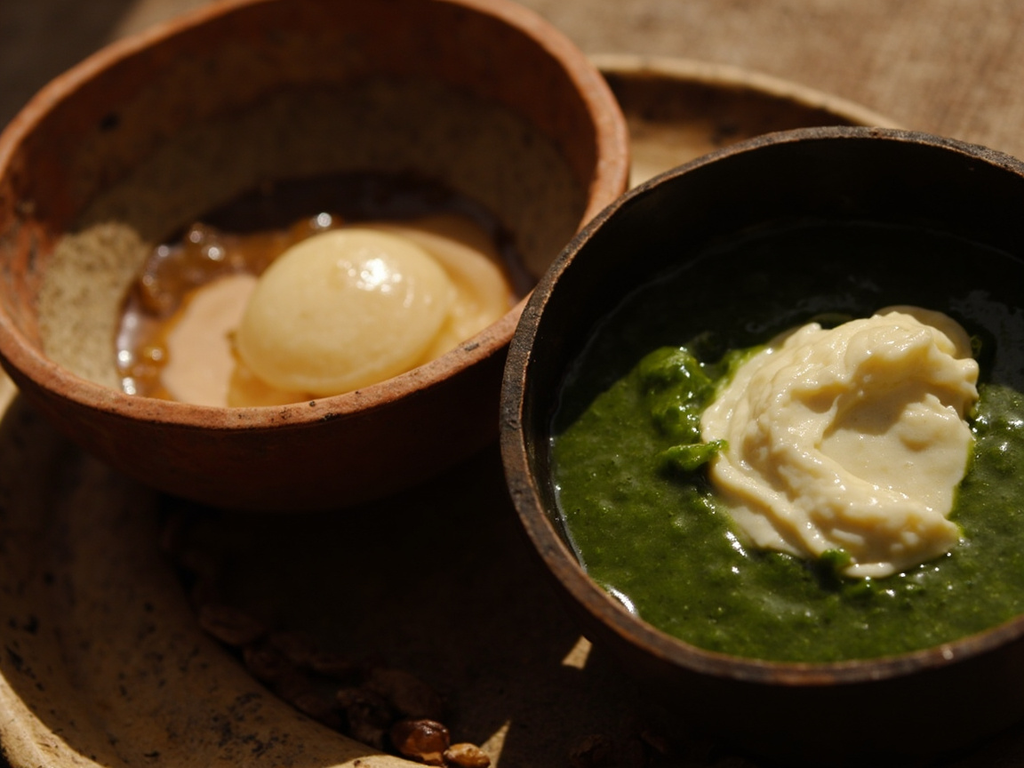
Poi (fermented taro paste)
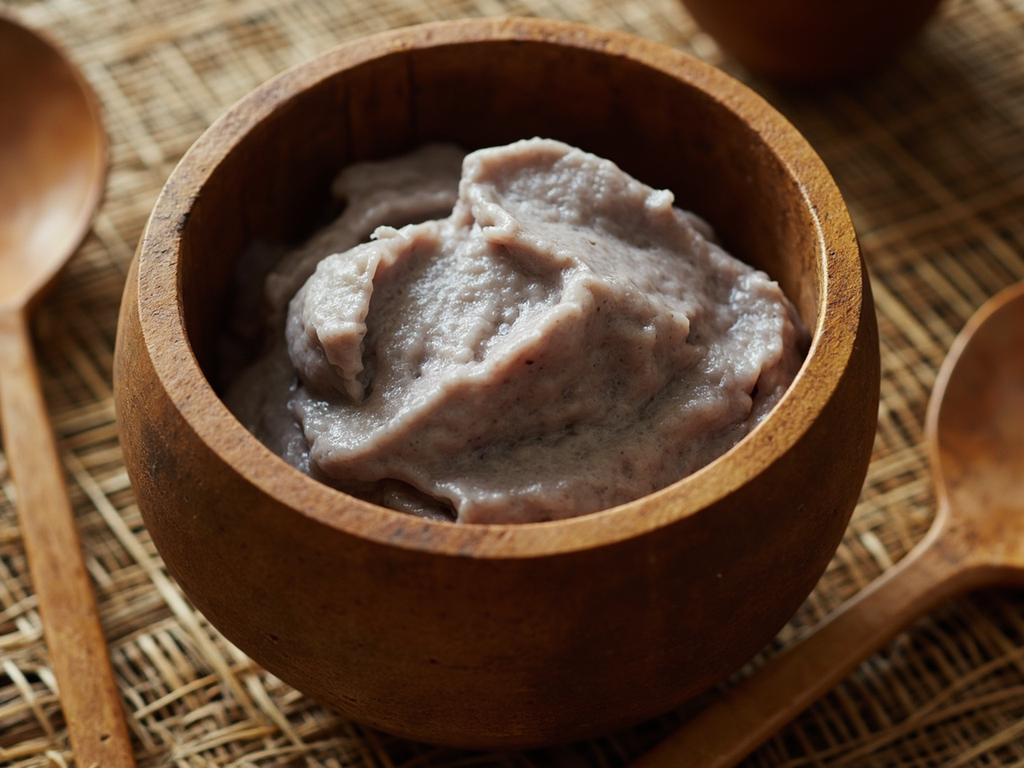
A smooth, purplish paste obtained by cooking taro corms and then pounding them on a wooden board (papa kuʻi ʻai) with a volcanic stone pestle (pohaku kuʻi ʻai). Eaten fresh (poi "one-finger" or "two-finger," depending on thickness), it develops a subtle acidity as it ferments, accompanying all dishes.
A smooth, purplish paste obtained by cooking taro corms and then pounding them on a wooden board (papa kuʻi ʻai) with a volcanic stone pestle (pohaku kuʻi ʻai). Eaten fresh (poi "one-finger" or "two-finger," depending on thickness), it develops a subtle acidity as it ferments, accompanying all dishes.
The kalo is the eldest, it is Hāloa — the one who feeds all his younger siblings, us humans. At my table, poi is never missing. I watch my servants pound it on the great koa board, long, until it is without the slightest lump, smooth as the morning sea. Fresh, it is sweet; on the second day, it stings the tongue a little, and that is how I prefer it. You dip your fingers in — one finger for thick poi, two for fluid. King though I am, before poi I am first a child of this land.
- •Taro corm (kalo) — Several well-ripened corms (Sole base of poi)
- •Fresh water — As needed for desired consistency (To thin the paste)
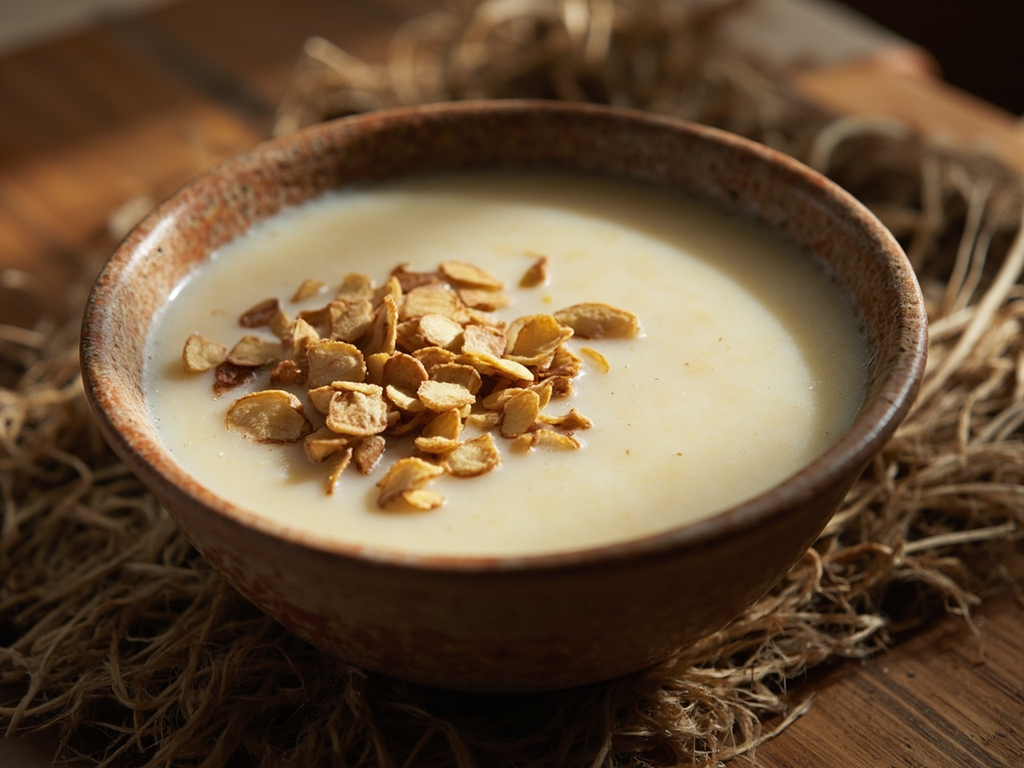
Poi (fermented taro paste)
A smooth, purplish paste obtained by cooking taro corms and then pounding them on a wooden board (papa kuʻi ʻai) with a volcanic stone pestle (pohaku kuʻi ʻai). Eaten fresh (poi "one-finger" or "two-finger," depending on thickness), it develops a subtle acidity as it ferments, accompanying all dishes.
Why this dish? Poi was Kamehameha's sacred and daily staple. Made from taro (kalo), it embodied Hāloa, the mythical ancestor of Hawaiians. No royal meal at Kailua-Kona was conceivable without poi, and its quality reflected the chief's status. Kamehameha personally oversaw the vast loʻi kalo (irrigated taro terraces) of his lands in Kohala.
The kalo is the eldest, it is Hāloa — the one who feeds all his younger siblings, us humans. At my table, poi is never missing. I watch my servants pound it on the great koa board, long, until it is without the slightest lump, smooth as the morning sea. Fresh, it is sweet; on the second day, it stings the tongue a little, and that is how I prefer it. You dip your fingers in — one finger for thick poi, two for fluid. King though I am, before poi I am first a child of this land.
Ingredients (period version)
- Taro corm (kalo) — Several well-ripened corms (Sole base of poi)
- Fresh water — As needed for desired consistency (To thin the paste)
Ingredients
- Fresh (or frozen) taro — 500 g (Base of poi)
- Water — 120 to 200 ml (Adjust texture)
Method
- Peel the taro while wearing gloves (raw sap may irritate the skin). Cut into 5 cm pieces.
- Steam or boil in a large pot of boiling water for 45 minutes to 1 hour, until a knife slides in without resistance.
- Drain and let cool for 10 minutes.
- Mash the taro with a pestle or in a food processor, adding water little by little, until a smooth, elastic, and homogeneous paste forms.
- For fresh poi: serve immediately at room temperature. For fermented poi (paʻi ʻai): cover with a cloth and let ferment 24 to 48 hours at room temperature until slightly sour.
How it was made : Taro was cultivated in sophisticated loʻi (irrigated terraces), true feats of agricultural engineering. Pounding was done on a hardwood board (papa kuʻi ʻai), often of koa, with a polished basalt pestle. It was physical work assigned to men. Poi was so central that the Hawaiian language had over fifteen words to describe its different textures and stages of fermentation.
The contemporary twist : Serve fresh poi in a small turned wooden bowl, accompanied by a pinch of Hawaiian black sea salt to bring out its natural sweetness.
Sources : E.S. Craighill Handy & Elizabeth Green Handy, Native Planters in Old Hawaii: Their Life, Lore, and Environment, Bishop Museum Press, 1972 · Samuel M. Kamakau, Ka Poʻe Kahiko: The People of Old, Bishop Museum Press, 1964
Kamehameha I · Charactorium