 flip
flipGänsebraten mit Äpfeln (Prussian Table Roast Goose with Apples)
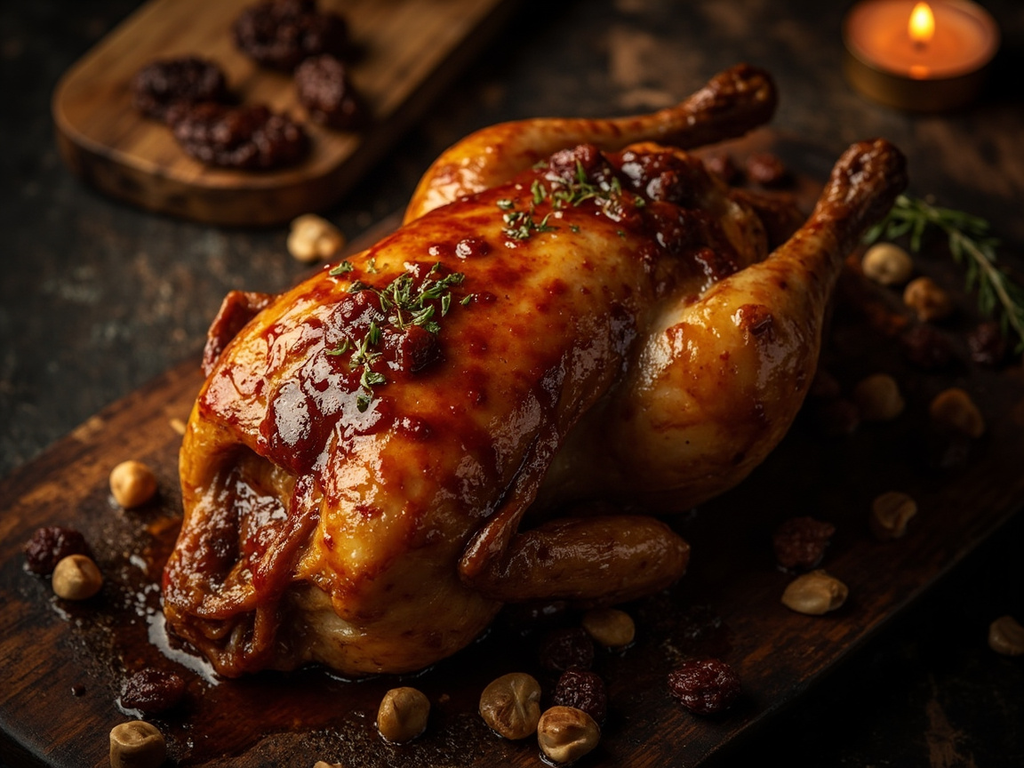
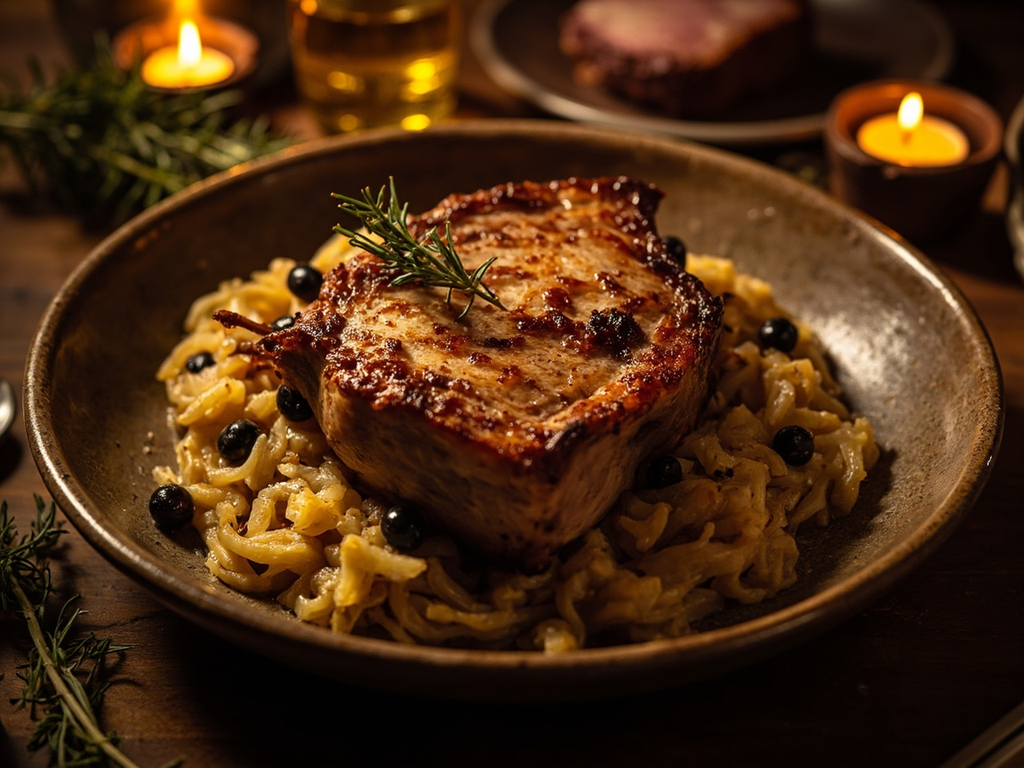
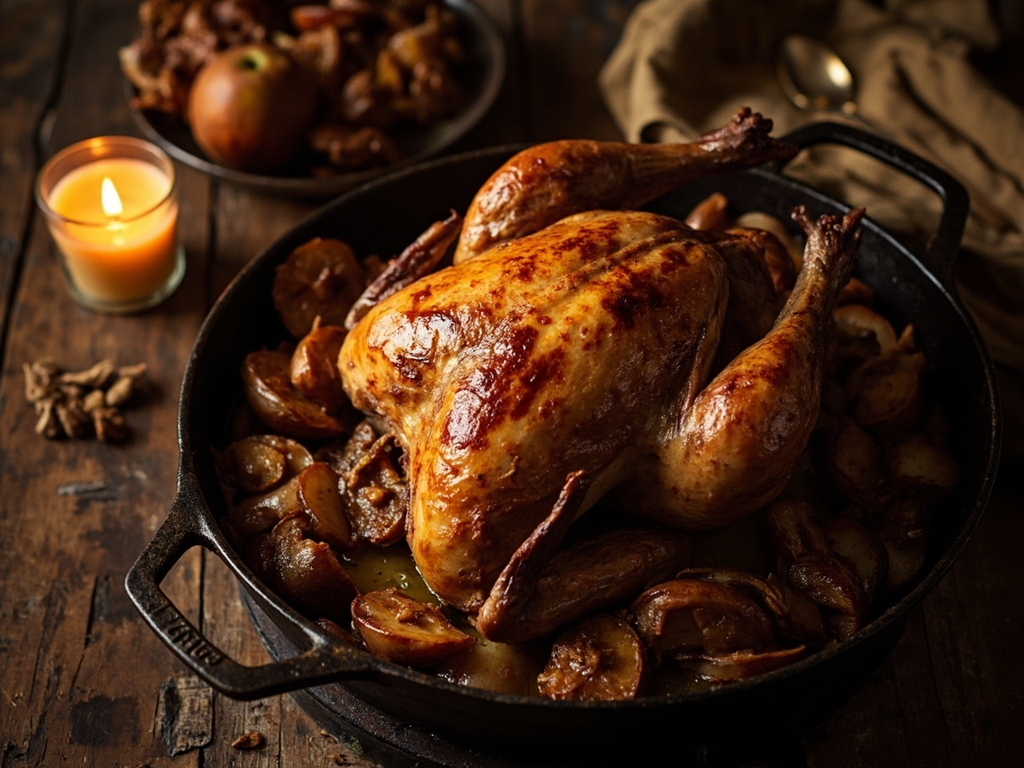
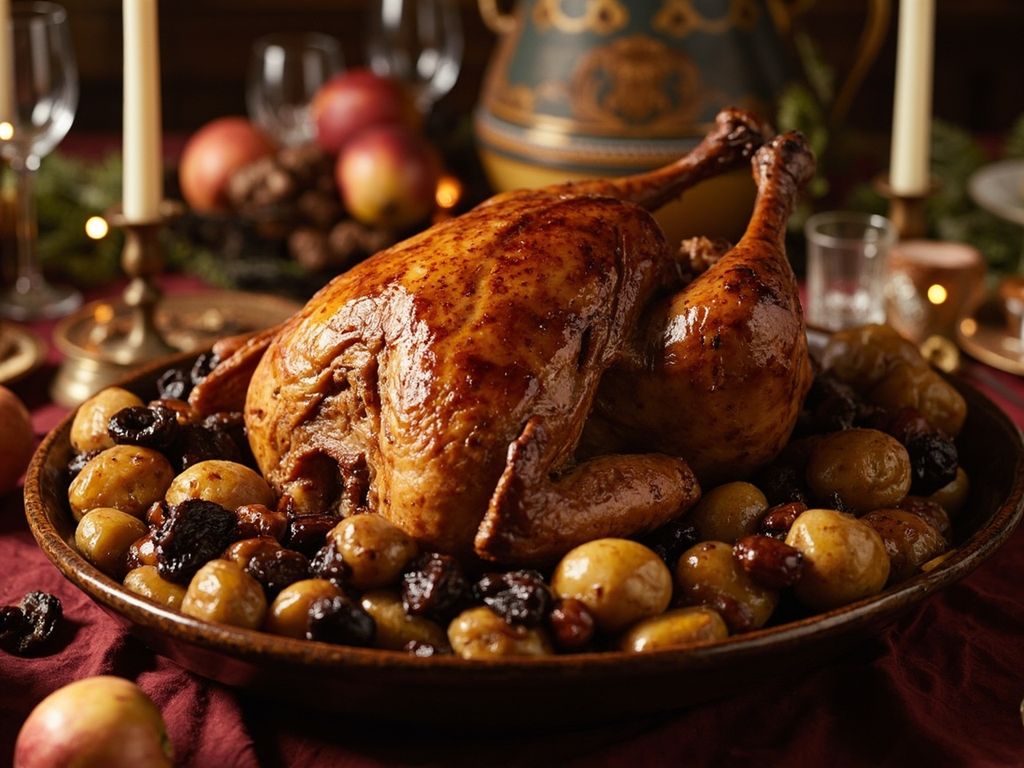
Gänsebraten mit Äpfeln (Prussian Table Roast Goose with Apples)
Why this dish? Euler lived and worked in Berlin from 1741 to 1766 at Frederick II's Academy of Sciences. Roast goose, an autumn and St. Martin's Day festive dish in Prussia, is exactly the kind of meal served at a large family dinner like his (thirteen children) or for entertaining a fellow academician.
A golden, crispy goose stuffed with tart apples and prunes, whose fat flavors the potatoes — a vegetable that Frederick II was just then promoting throughout Prussia.
In Berlin, when the late season came, we would roast a fat goose to gather the whole household — and God knows how many that was around my table! I liked it stuffed with apples from the orchard and a few prunes, for their sweet-sour juice pleasantly tempers the richness of the flesh. Our King, who wished well for his people, urged us then to cultivate that tuber from afar, the potato; I assure you, basted with goose drippings, it is worth any discourse. You baste, and baste again, and wait until the skin sings under the knife.
- •Goose — one, drawn (centrepiece)
- •Tart apples — a few (sweet-sour stuffing)
- •Prunes — a handful (sweet softness)
- •Marjoram and mugwort — a bouquet (roast aromatics)
- •Salt — generously (seasoning)
- •Potatoes — according to guests (garnish cooked in fat)
Gänsebraten mit Äpfeln (Prussian Table Roast Goose with Apples)
A golden, crispy goose stuffed with tart apples and prunes, whose fat flavors the potatoes — a vegetable that Frederick II was just then promoting throughout Prussia.
Why this dish? Euler lived and worked in Berlin from 1741 to 1766 at Frederick II's Academy of Sciences. Roast goose, an autumn and St. Martin's Day festive dish in Prussia, is exactly the kind of meal served at a large family dinner like his (thirteen children) or for entertaining a fellow academician.
In Berlin, when the late season came, we would roast a fat goose to gather the whole household — and God knows how many that was around my table! I liked it stuffed with apples from the orchard and a few prunes, for their sweet-sour juice pleasantly tempers the richness of the flesh. Our King, who wished well for his people, urged us then to cultivate that tuber from afar, the potato; I assure you, basted with goose drippings, it is worth any discourse. You baste, and baste again, and wait until the skin sings under the knife.
Ingredients (period version)
- Goose — one, drawn (centrepiece)
- Tart apples — a few (sweet-sour stuffing)
- Prunes — a handful (sweet softness)
- Marjoram and mugwort — a bouquet (roast aromatics)
- Salt — generously (seasoning)
- Potatoes — according to guests (garnish cooked in fat)
Ingredients
- Goose (or large duck as substitute) — 1 of 4 to 5 kg (centrepiece)
- Apples (e.g., Reinette) — 4 (sweet-sour stuffing)
- Pitted prunes — 150 g (sweet softness)
- Dried marjoram — 2 tsp (aromatic)
- Salt and pepper — to taste (seasoning)
- Potatoes — 1 kg (roasted garnish)
Method
- Salt the goose inside and out, rub with marjoram.
- Stuff the cavity with apple wedges and prunes, close it.
- Roast in the oven at 160 °C, breast side down first, allowing about 40 minutes per kg.
- Regularly collect the melted fat and baste the goose; halfway through, arrange the potatoes around so they confit in the fat.
- Increase the oven to 220 °C for the last 20 minutes for crispy skin; let rest before carving, serve with its juices.
How it was made : The St. Martin's Day goose (November 11) is an ancient Germanic tradition. The potato, long regarded with suspicion, was imposed in Prussia by Frederick II's edicts from the 1740s-1750s: Euler thus saw this vegetable enter Berlin kitchens with his own eyes.
The contemporary twist : Serve the crispy skin broken into shards as "goose chips" with an apple compote flavored with cider vinegar.
Leonhard Euler · Charactorium