 flip
flipLamb Qovurma with Quinces
Lamb Qovurma with Quinces
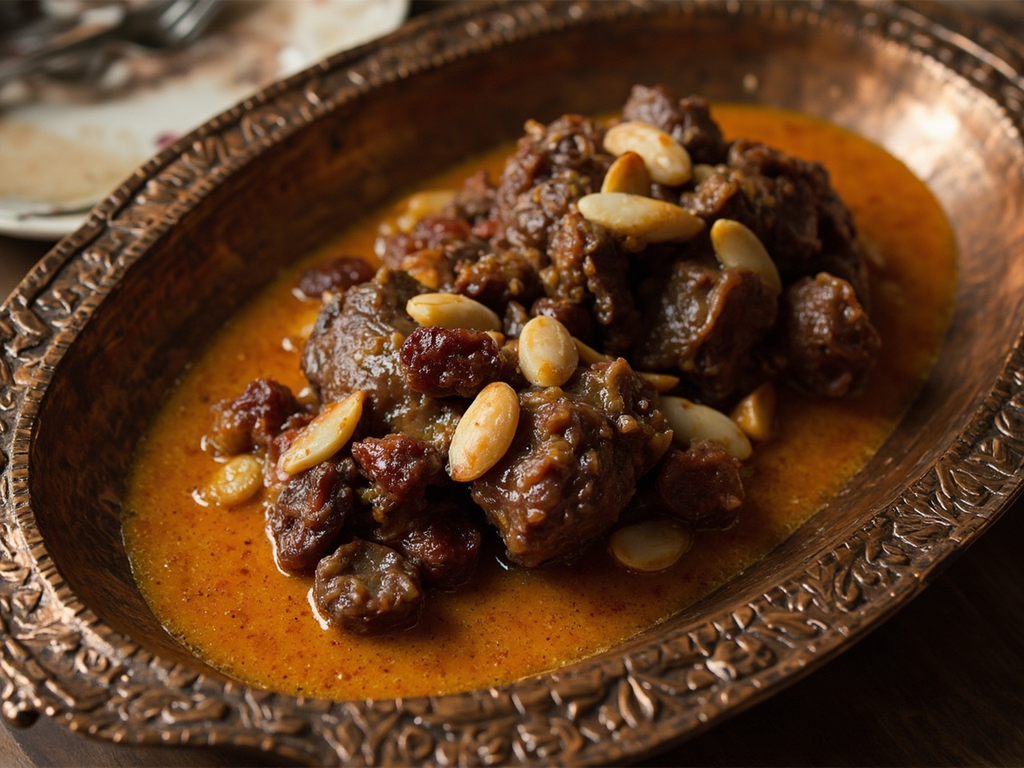
Why this dish? Al-Kashgari stayed in Baghdad to write his Dîwân, and there encountered Abbasid court cuisine where fruit-based meat stews were prized. Qovurma — meat seared then braised — is a Turkish term he recorded. This festive dish blends the Turkish tradition of roasted mutton with the fruity refinements of the Perso-Islamic world that the scholar traveled through from Kashgar to Baghdad.
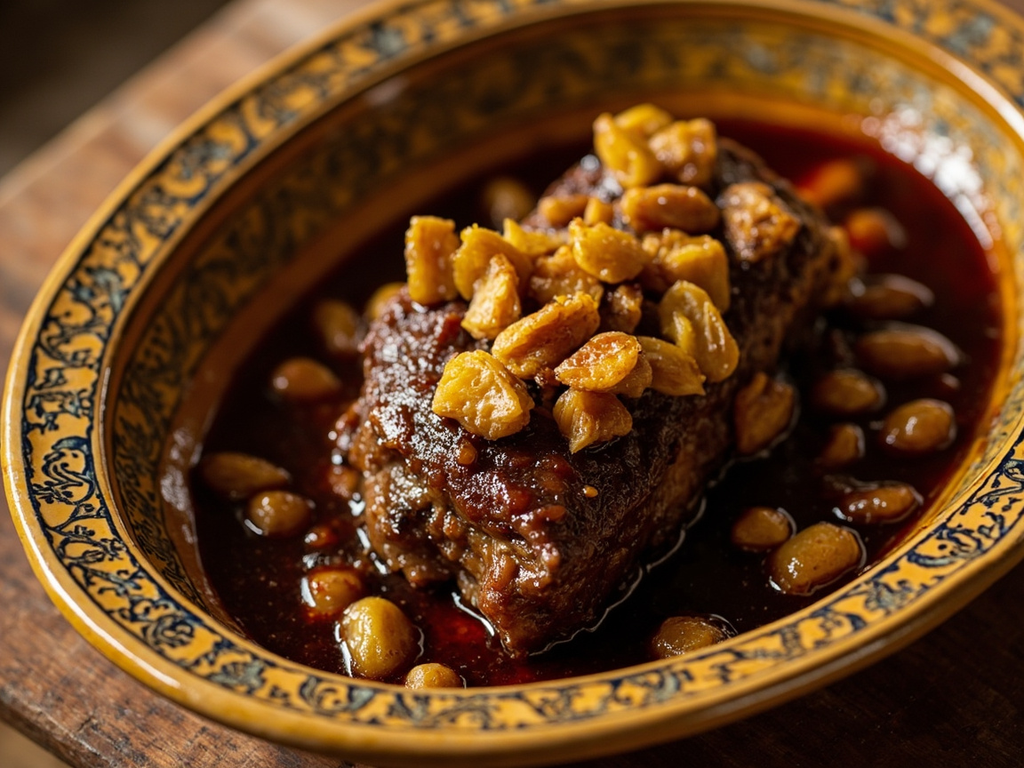
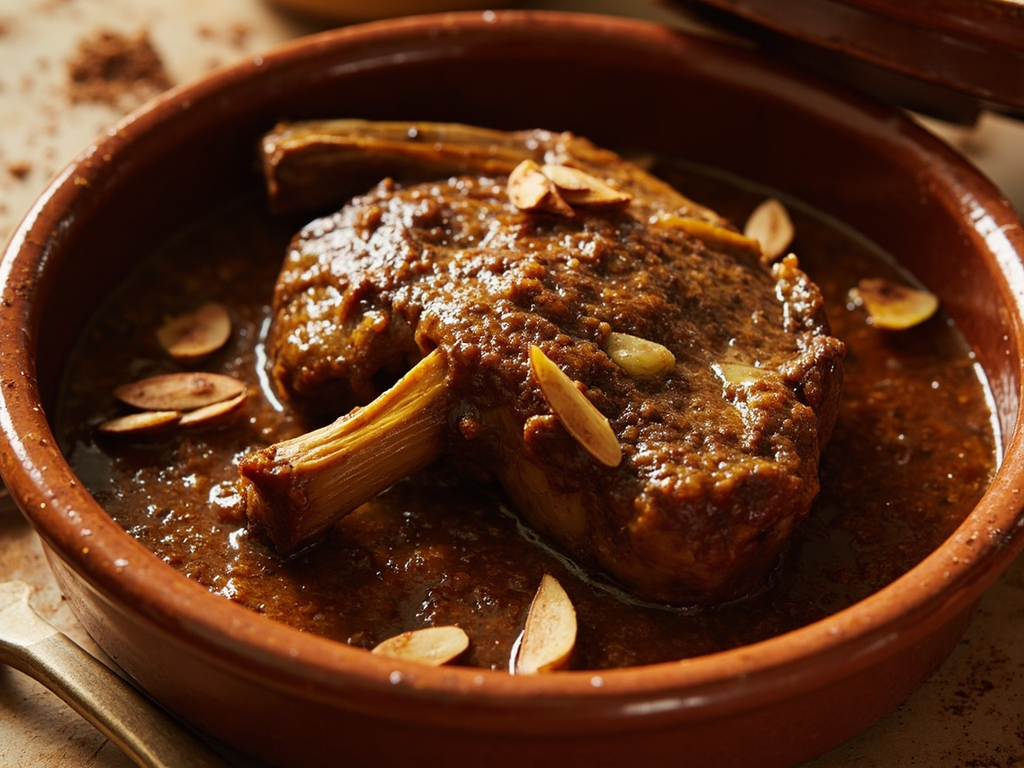
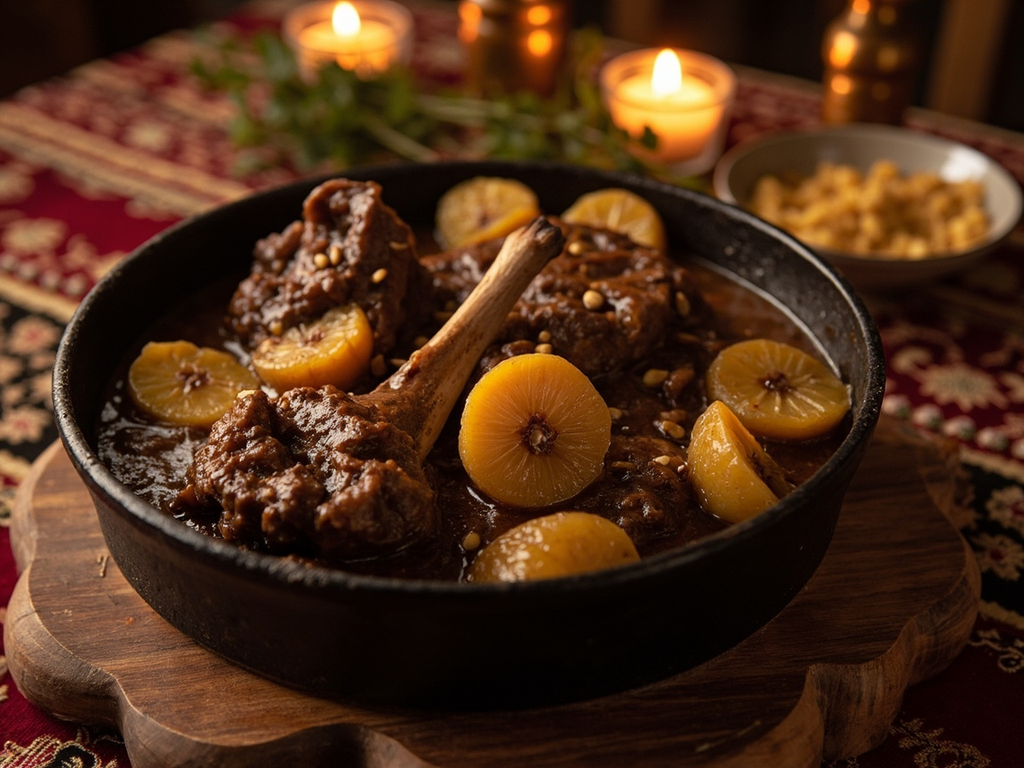
Lamb pieces seared in tail fat then slowly braised with golden quinces, perfumed with cumin and coriander. A festive dish served at receptions and banquets in Karakhanid cities, where roasted mutton marked the host's generosity.
When the master of the house receives guests in Bukhara or Samarkand, he has a fat sheep slaughtered and orders qovurma. I recorded this word in my collection because it is common to all Turks, from Kashgar to the land of the Oghuz. The meat is seared in tail fat until it sings, then quinces cut into quarters are added — those golden fruits that merchants bring from the orchards of Fergana. Cumin and coriander, ground in a mortar, perfume the pot. It is a dish worthy of a learned man receiving his peers, and I have eaten it more than once at the homes of the emirs who protected me.
- •Mutton shoulder — one shoulder, cut up (main meat)
- •Fat-tailed sheep tail fat — a fist-sized piece (cooking fat)
- •Quinces — two or three (braised fruit)
- •Onion — two, sliced (aromatic base)
- •Cumin seeds — a good pinch (main spice)
- •Coriander seeds — a pinch (secondary spice)
- •Salt — to taste (seasoning)
- •Water — a little (braising)
Lamb Qovurma with Quinces
Lamb pieces seared in tail fat then slowly braised with golden quinces, perfumed with cumin and coriander. A festive dish served at receptions and banquets in Karakhanid cities, where roasted mutton marked the host's generosity.
Why this dish? Al-Kashgari stayed in Baghdad to write his Dîwân, and there encountered Abbasid court cuisine where fruit-based meat stews were prized. Qovurma — meat seared then braised — is a Turkish term he recorded. This festive dish blends the Turkish tradition of roasted mutton with the fruity refinements of the Perso-Islamic world that the scholar traveled through from Kashgar to Baghdad.
When the master of the house receives guests in Bukhara or Samarkand, he has a fat sheep slaughtered and orders qovurma. I recorded this word in my collection because it is common to all Turks, from Kashgar to the land of the Oghuz. The meat is seared in tail fat until it sings, then quinces cut into quarters are added — those golden fruits that merchants bring from the orchards of Fergana. Cumin and coriander, ground in a mortar, perfume the pot. It is a dish worthy of a learned man receiving his peers, and I have eaten it more than once at the homes of the emirs who protected me.
Ingredients (period version)
- Mutton shoulder — one shoulder, cut up (main meat)
- Fat-tailed sheep tail fat — a fist-sized piece (cooking fat)
- Quinces — two or three (braised fruit)
- Onion — two, sliced (aromatic base)
- Cumin seeds — a good pinch (main spice)
- Coriander seeds — a pinch (secondary spice)
- Salt — to taste (seasoning)
- Water — a little (braising)
Ingredients
- Boneless lamb shoulder — 800 g (main meat)
- Lamb fat or clarified butter — 3 tbsp (cooking fat)
- Quinces — 2 medium (braised fruit)
- Yellow onions — 2 medium (aromatic base)
- Cumin seeds — 1 tbsp (main spice)
- Coriander seeds — 1 tsp (secondary spice)
- Salt — 1.5 tsp (seasoning)
- Hot water — 250 ml (braising liquid)
- Flat-leaf parsley — a few sprigs (garnish)
Method
- Cut the lamb into 4 cm pieces. Salt and let rest 15 minutes.
- Peel the quinces, cut into thick wedges, remove the core.
- Melt the fat in a heavy pot over high heat. Sear the lamb pieces in batches until well browned. Set aside.
- In the same pot, sauté the sliced onions for 5 minutes until golden.
- Toast the cumin and coriander in the pot for 30 seconds until fragrant.
- Return the lamb, add hot water. Bring to a simmer, cover, and braise on low heat for 45 minutes.
- Add the quince wedges, cover again, and continue cooking for 30 minutes until quinces are tender and golden.
- Adjust seasoning. Serve in a deep dish, sprinkled with parsley.
How it was made : The term qovurma (seared/sautéed meat) is attested in the medieval Turkish lexicon. Fruit-based meat stews (quince, apricot, pomegranate) are well documented in medieval Islamic cuisine, notably in al-Baghdadi's Kitâb al-Tabîkh (13th century), geographically and culturally close to Baghdad where al-Kashgari stayed. The quince, native to the Caucasus and Central Asia, was a prestigious fruit in the region.
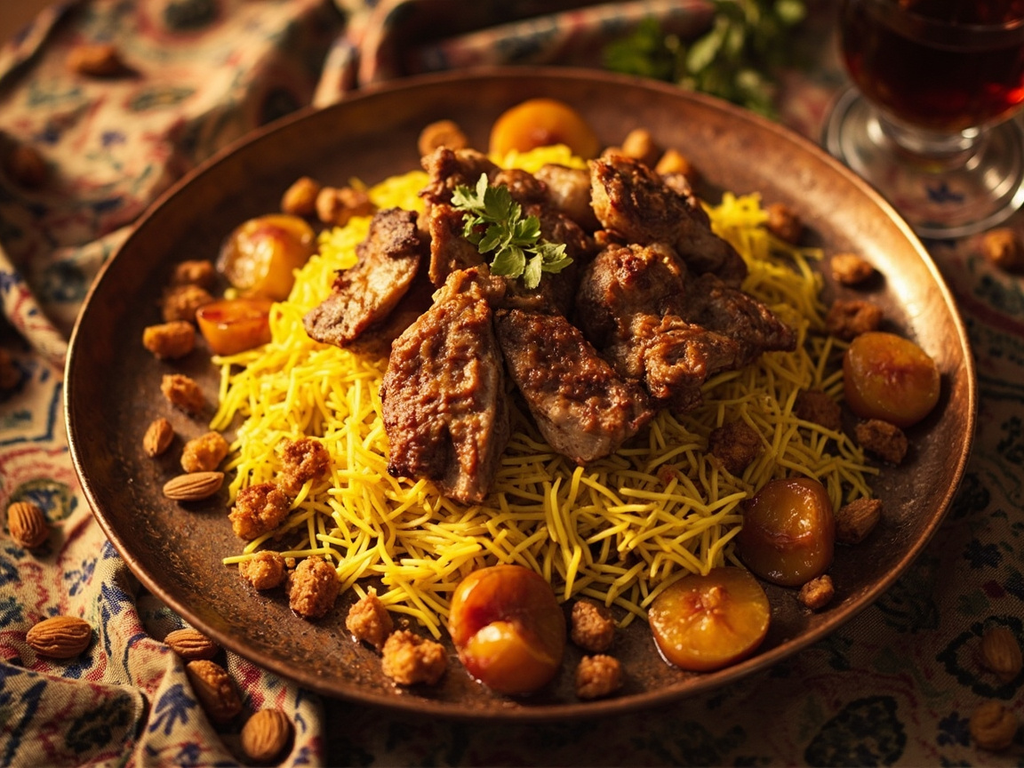
The contemporary twist : Serve the caramelized quince wedges fanned out around the meat, with a drizzle of reduced pomegranate juice to evoke the orchards of the Silk Road.
Sources : Mahmoud al-Kashgari, Dîwân Lughât al-Turk (1072-1074) · Charles Perry, "The Taste for Layered Bread among the Nomadic Turks and the Central Asian Origins of Baklava", in A Soup for the Qan, Brill, 2010 · Muhammad ibn al-Hasan al-Baghdadi, Kitâb al-Tabîkh (13th c.), trans. A.J. Arberry
Mahmoud al-Kashgari · Charactorium