 flip
Puls, the Spelt Porridge of the Romans
Puls, the Spelt Porridge of the Romans
Why this dish? Before bread, puls was the belly of Rome: the Romans were called 'porridge-eaters' (pultiphagi). For an emperor who ate little and shunned banquets, this rustic spelt porridge perfectly embodied the Stoic ideal of frugality.
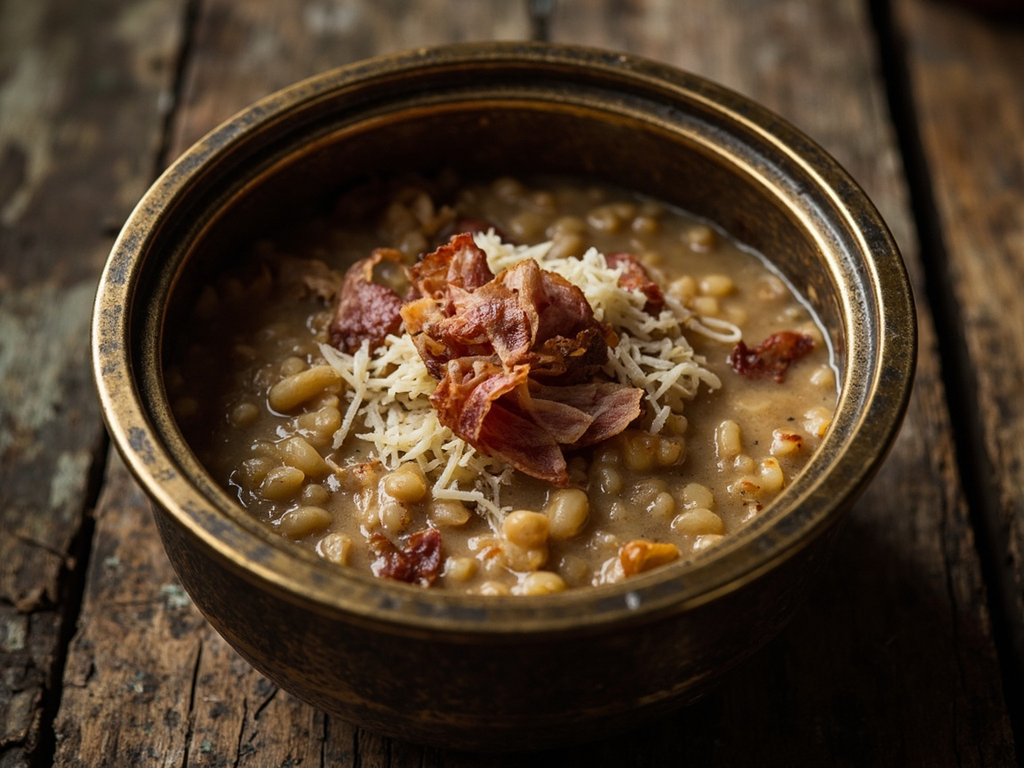
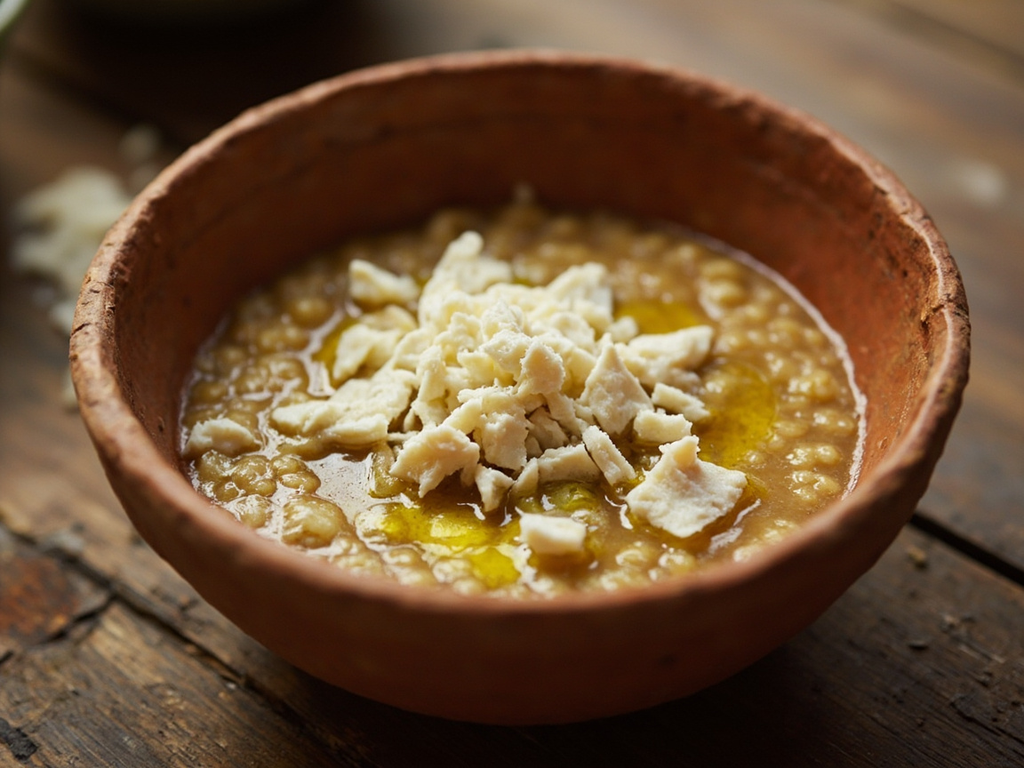
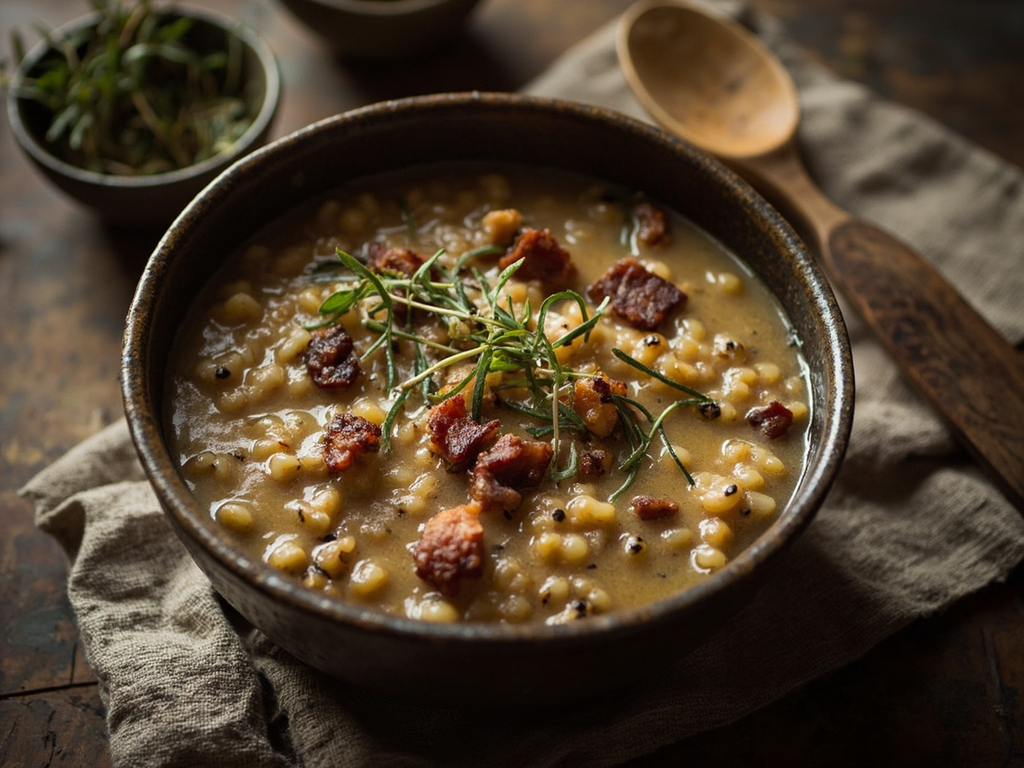
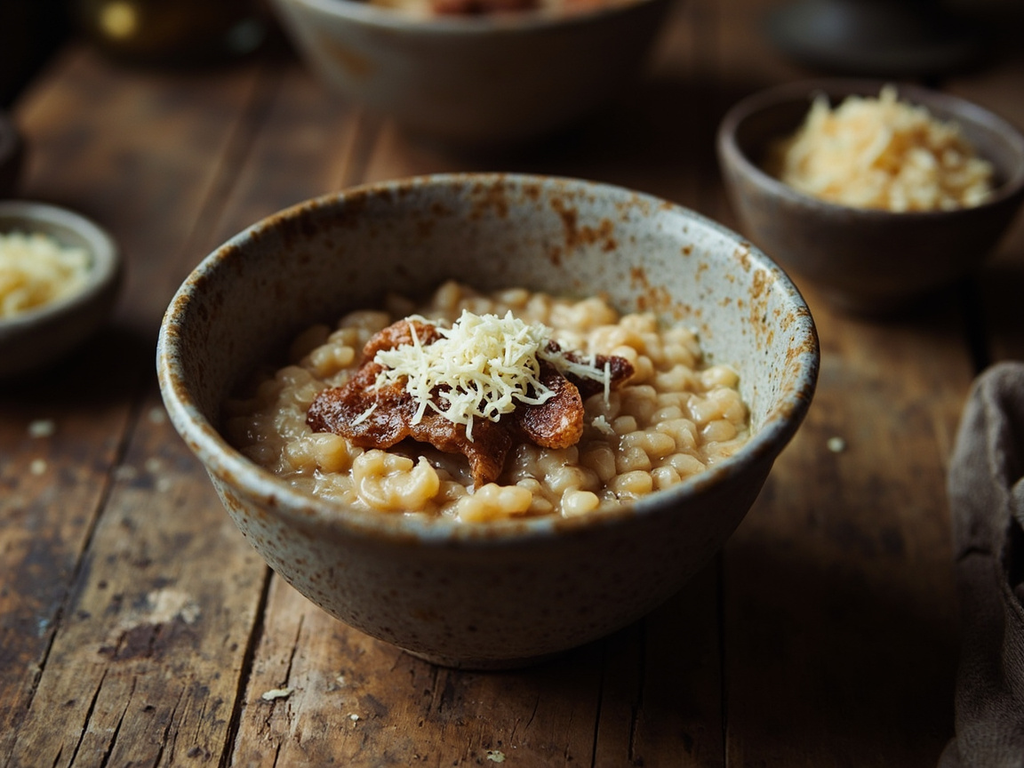
A thick porridge of far (crushed spelt) cooked in water, seasoned with a dash of garum and olive oil. The oldest and humblest dish of Rome, eaten by legionary and senator alike.
Do not despise this dish because it is poor. Remember: you need only a little to live according to nature. At my table they serve me what my ancestors ate before Rome knew luxury — a little boiled far, a drop of garum, the oil from our olive trees. Eat slowly, without asking for more, and you will be satisfied in your soul before you are in your body.
- •Far (crushed spelt) — two handfuls per person (base grain)
- •Spring water — as needed for desired thickness (cooking liquid)
- •Garum — a drizzle (umami seasoning)
- •Olive oil — a drizzle (binding and flavor)
- •Salt — a pinch (seasoning)
Puls, the Spelt Porridge of the Romans
A thick porridge of far (crushed spelt) cooked in water, seasoned with a dash of garum and olive oil. The oldest and humblest dish of Rome, eaten by legionary and senator alike.
Why this dish? Before bread, puls was the belly of Rome: the Romans were called 'porridge-eaters' (pultiphagi). For an emperor who ate little and shunned banquets, this rustic spelt porridge perfectly embodied the Stoic ideal of frugality.
Do not despise this dish because it is poor. Remember: you need only a little to live according to nature. At my table they serve me what my ancestors ate before Rome knew luxury — a little boiled far, a drop of garum, the oil from our olive trees. Eat slowly, without asking for more, and you will be satisfied in your soul before you are in your body.
Ingredients (period version)
- Far (crushed spelt) — two handfuls per person (base grain)
- Spring water — as needed for desired thickness (cooking liquid)
- Garum — a drizzle (umami seasoning)
- Olive oil — a drizzle (binding and flavor)
- Salt — a pinch (seasoning)
Ingredients
- Crushed spelt (or spelt semolina) — 200 g (base grain)
- Water — 1 liter (cooking liquid)
- Fish sauce (nuoc mam, substitute for garum) — 1 tsp (umami seasoning)
- Extra virgin olive oil — 2 tbsp (binding and flavor)
- Salt — 1 pinch (seasoning)
Method
- Bring the salted water to a simmer in a heavy-bottomed pot.
- Pour in the crushed spelt in a steady stream, stirring constantly, like polenta.
- Cook over low heat for 30 to 40 minutes, stirring often, until creamy.
- Remove from heat and stir in olive oil and fish sauce.
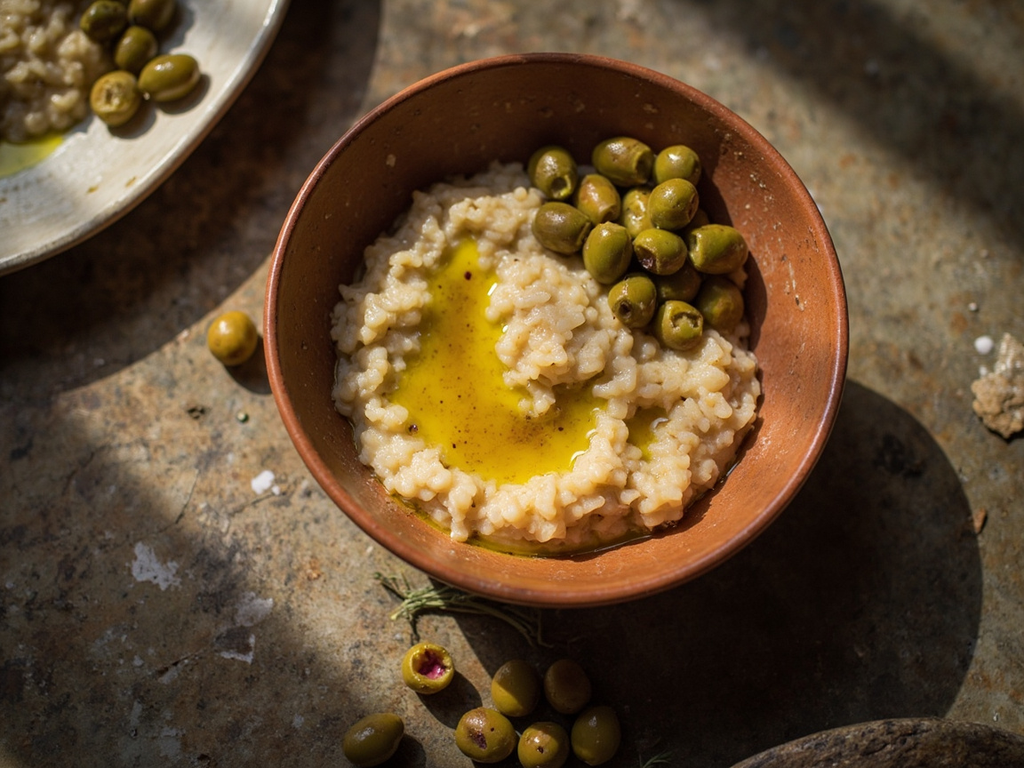
- Serve hot in a bowl, optionally with a few olives.
How it was made : Far was the quintessential ancient Roman cereal, predating common wheat. Cato, in his De agricultura, already gives the basis for these porridges. It was simply cooked in water in a cauldron; the wealthier added cheese, eggs, or honey, but the frugal version remained that of the people and soldiers.
The contemporary twist : Served as a savory breakfast porridge with a poached egg and some herbs: the 'Stoic Emperor's Porridge' reimagined for brunch.
Sources : Cato the Elder, De agricultura · Apicius, De re coquinaria
Marcus Aurelius · Charactorium