 flip
flipChildhood Rice with Fish and Nuoc-mâm
Childhood Rice with Fish and Nuoc-mâm
Why this dish? Duras grew up poor in French Indochina (Gia Dinh, Vinh Long), among the Vietnamese flavors she evokes in *Un barrage contre le Pacifique* and *L'Amant*. White rice, fish, and nuoc-mâm are the foundational tastes of her modest colonial childhood.
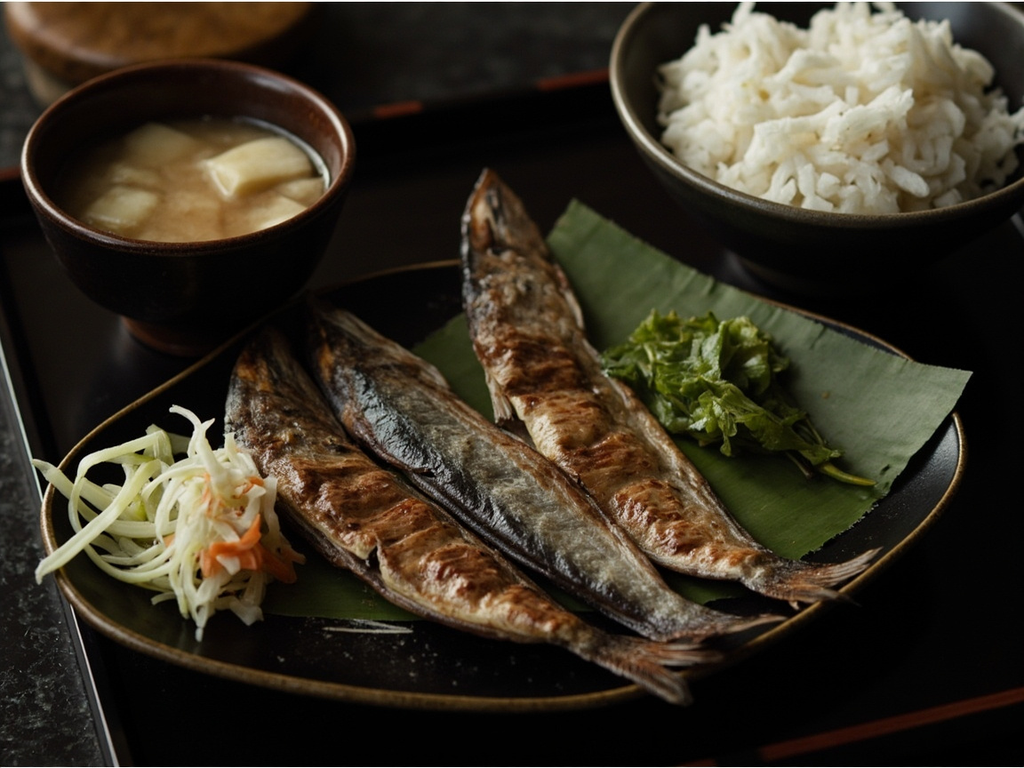
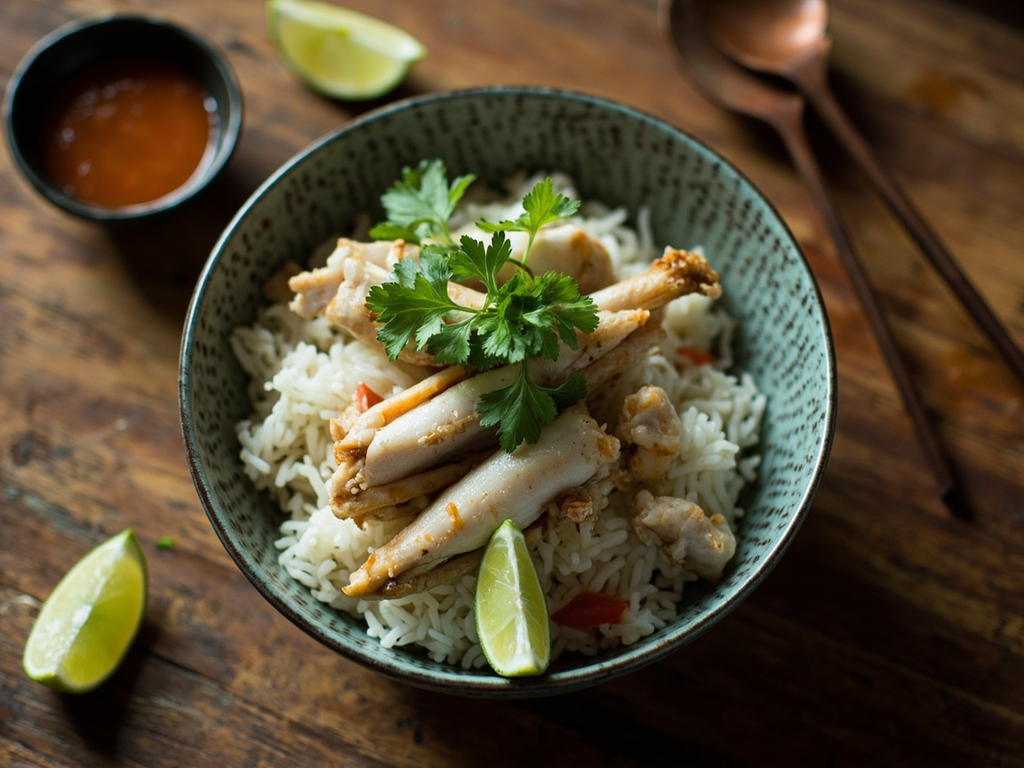
A bowl of steaming white rice, grilled or braised fish, and above all nuoc-mâm — that fermented fish sauce that defines all of southern Vietnamese cuisine. The simplest and most persistent dish in Duras's memory.
Rice, over there, was every day. As a child in Gia Dinh, I ate like the Vietnamese children: white rice, a little fish, and that brown sauce that smelled strong, nuoc-mâm. We were poor, my mother ruined by the dyke. But that taste, salty, deep, I kept it in my mouth all my life, more faithful than many faces.
- •White rice — one bowl per person (base of the meal)
- •River or sea fish — one, fresh (protein)
- •Nuoc-mâm (fermented fish sauce) — to taste (signature seasoning)
- •Lime — one (acidity)
- •Garlic, shallot — a little (aromatics)
- •Fresh herbs (cilantro) — a handful (freshness)
Childhood Rice with Fish and Nuoc-mâm
A bowl of steaming white rice, grilled or braised fish, and above all nuoc-mâm — that fermented fish sauce that defines all of southern Vietnamese cuisine. The simplest and most persistent dish in Duras's memory.
Why this dish? Duras grew up poor in French Indochina (Gia Dinh, Vinh Long), among the Vietnamese flavors she evokes in *Un barrage contre le Pacifique* and *L'Amant*. White rice, fish, and nuoc-mâm are the foundational tastes of her modest colonial childhood.
Rice, over there, was every day. As a child in Gia Dinh, I ate like the Vietnamese children: white rice, a little fish, and that brown sauce that smelled strong, nuoc-mâm. We were poor, my mother ruined by the dyke. But that taste, salty, deep, I kept it in my mouth all my life, more faithful than many faces.
Ingredients (period version)
- White rice — one bowl per person (base of the meal)
- River or sea fish — one, fresh (protein)
- Nuoc-mâm (fermented fish sauce) — to taste (signature seasoning)
- Lime — one (acidity)
- Garlic, shallot — a little (aromatics)
- Fresh herbs (cilantro) — a handful (freshness)
Ingredients
- Jasmine rice — 200 g (base of the meal)
- White fish fillets (sea bream, sea bass) — 2 (protein)
- Nuoc-mâm — 3 tablespoons (signature seasoning)
- Lime — 1 (acidity)
- Garlic — 2 cloves (aromatic)
- Shallot — 1 (aromatic)
- Sugar — 1 teaspoon (balance for nuoc-cham sauce)
- Fresh cilantro — a few sprigs (freshness)
Method
- Rinse the rice until the water runs clear, then cook in water (1 volume rice, 1.5 water) covered for 12 minutes, and let rest off the heat.
- Make the nuoc-cham sauce: mix nuoc-mâm, lime juice, sugar, minced garlic, and a little water until balanced salty-sour-sweet.
- Season the fish fillets, pan-fry for 3 minutes per side in a little hot oil with sliced shallot.
- Plate the rice in a bowl, place the fish on top.
- Drizzle with nuoc-cham sauce, sprinkle with cilantro, and serve immediately with lime wedges on the side.
How it was made : In southern Indochina, meals revolved around the rice bowl, accompanied by small portions of fish and a dipping dish of nuoc-mâm. Nuoc-mâm, made by long fermentation of salted fish, was (and remains) the soul of Mekong Delta cuisine.
The contemporary twist : Serve family-style, each diner composing their own bite in their bowl — a way of eating that alone tells the story of Duras's childhood between two worlds.
Sources : Marguerite Duras, *Un barrage contre le Pacifique*, Gallimard, 1950 · Marguerite Duras, *L'Amant*, Éditions de Minuit, 1984
Marguerite Duras · Charactorium