 flip
flipFruits confits au sucre candi
Fruits confits au sucre candi
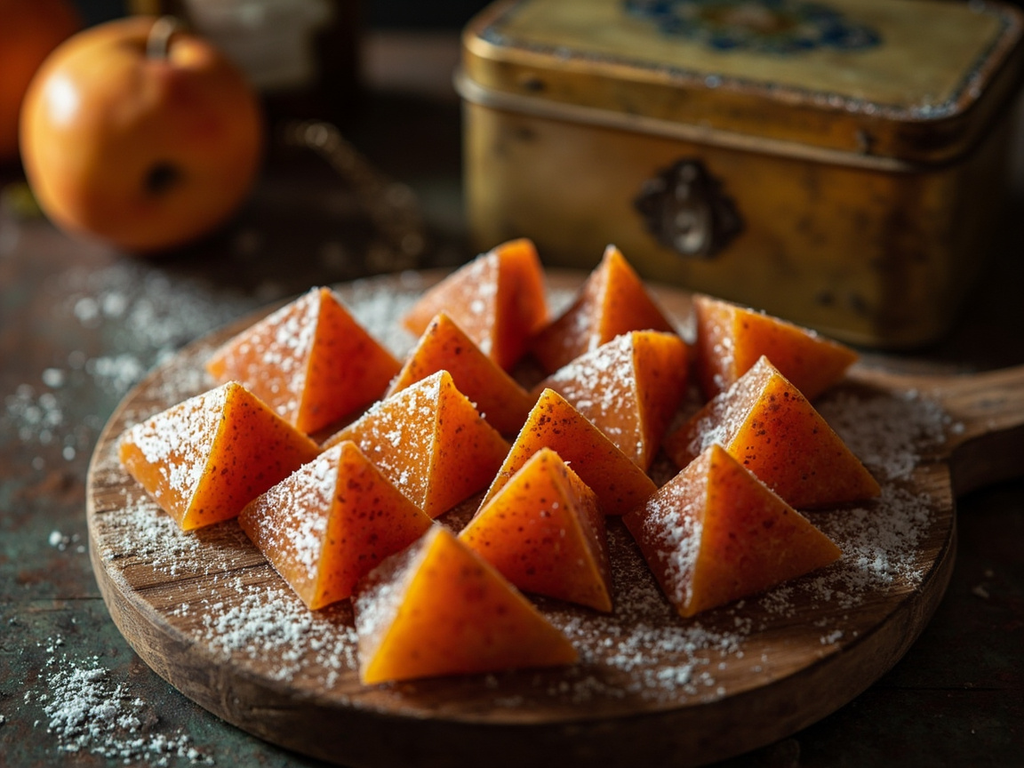
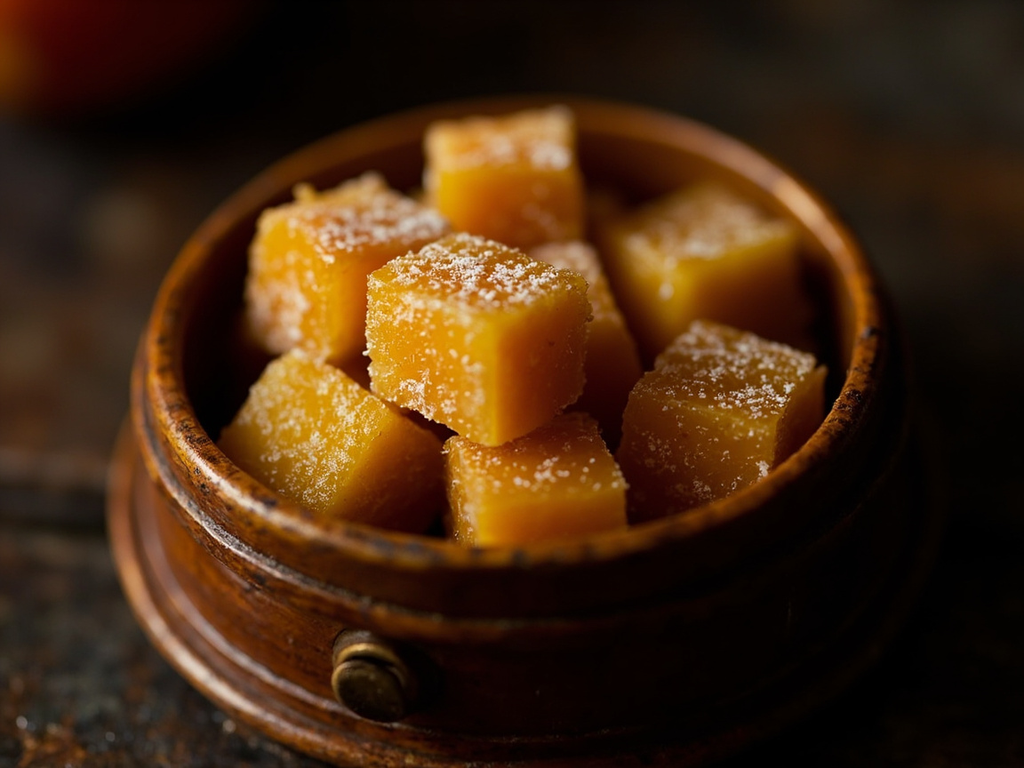
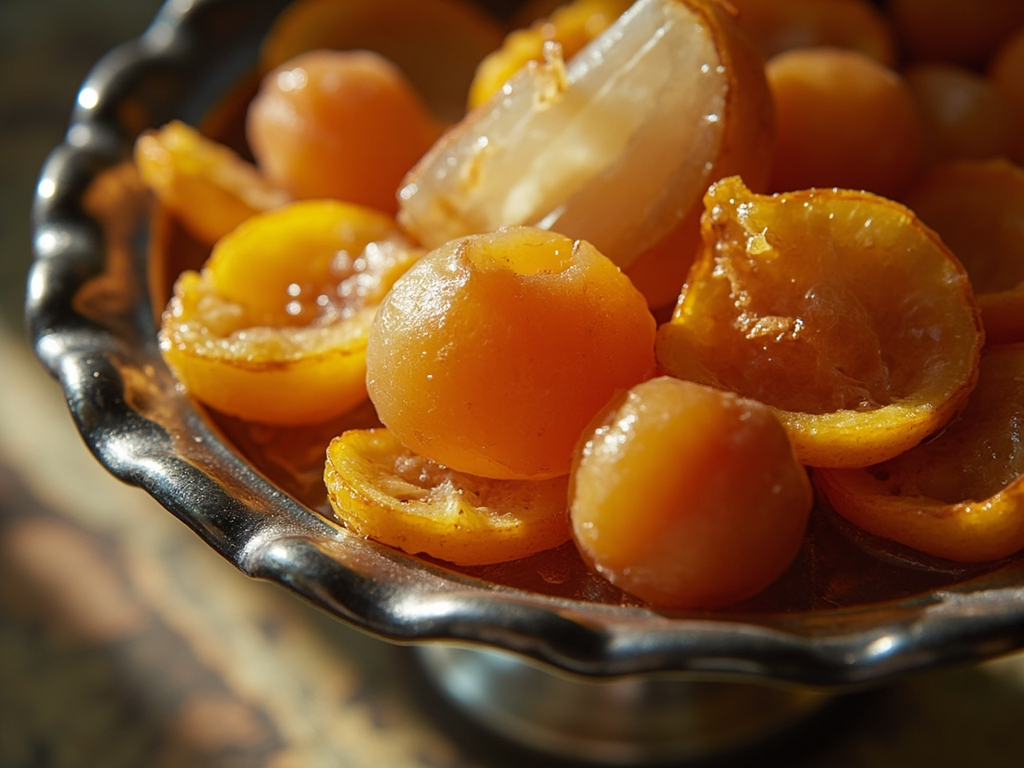
Why this dish? The queen showed a clear preference for candied fruits, a typical sweetness of her Viennese taste. Candying with sugar preserved fruits out of season and filled the pyramids of confections that closed court meals.
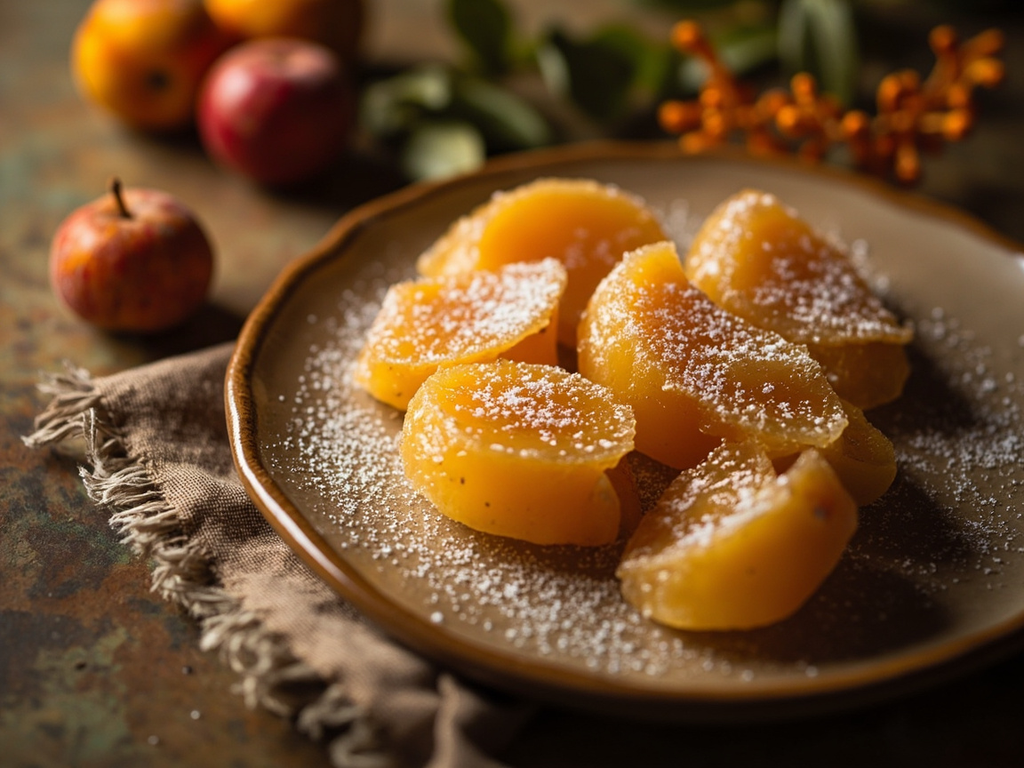
Fruits slowly saturated with sugar syrup then dried, glossy and translucent — the art of court confectionery to keep summer all year round.
Of all the sweets on my table, it is candied fruits that I prefer, and I make no secret of it. See how the sugar, day after day, takes the place of the fruit's water until it becomes clear as a jewel — patience is needed, nothing is rushed in confectionery. My confectioners build pyramids of them for the last service: apricots, pears, orange peel. Taste one; beneath the sugar, it keeps all the perfume of the orchard.
- •Fruits fermes (abricots, poires, écorces d'orange) — as many as desired (base)
- •Sucre — large quantity (conservation)
- •Eau — as needed (sirop)
Fruits confits au sucre candi
Fruits slowly saturated with sugar syrup then dried, glossy and translucent — the art of court confectionery to keep summer all year round.
Why this dish? The queen showed a clear preference for candied fruits, a typical sweetness of her Viennese taste. Candying with sugar preserved fruits out of season and filled the pyramids of confections that closed court meals.
Of all the sweets on my table, it is candied fruits that I prefer, and I make no secret of it. See how the sugar, day after day, takes the place of the fruit's water until it becomes clear as a jewel — patience is needed, nothing is rushed in confectionery. My confectioners build pyramids of them for the last service: apricots, pears, orange peel. Taste one; beneath the sugar, it keeps all the perfume of the orchard.
Ingredients (period version)
- Fruits fermes (abricots, poires, écorces d'orange) — as many as desired (base)
- Sucre — large quantity (conservation)
- Eau — as needed (sirop)
Ingredients
- Firm fruits (apricots, pears, orange peel) — 500 g (base)
- Sugar — 600 g (in stages) (conservation)
- Water — 400 ml (sirop)
- Lemon juice — a dash (équilibre)
Method
- Briefly blanch the fruits (or peels) in boiling water to soften, then drain.
- Prepare a light syrup (water + part of the sugar) and immerse the fruits; bring to a simmer, then let rest 24 hours.
- Each day, remove the fruits, add more sugar to the syrup, bring to a boil, and re-immerse the fruits: repeat for 5 to 7 days, the syrup becoming increasingly concentrated.
- When the fruits are translucent, drain them on a rack.
- Let air-dry (or in a very low oven) until no longer sticky.
How it was made : Stepwise candying is an ancient skill: by increasing the sugar content daily, the fruit's water is replaced without bursting it, preserving it for months. Court confectioners built spectacular showpieces from them. Sugar, still expensive, came from the West Indies and signaled the luxury of the royal table.
The contemporary twist : Half-dip a candied orange peel in dark chocolate — a marriage of Viennese taste (chocolate) and court confectionery.
Marie-Antoinette · Charactorium