 flip
flipBarley maza with olive oil and thyme
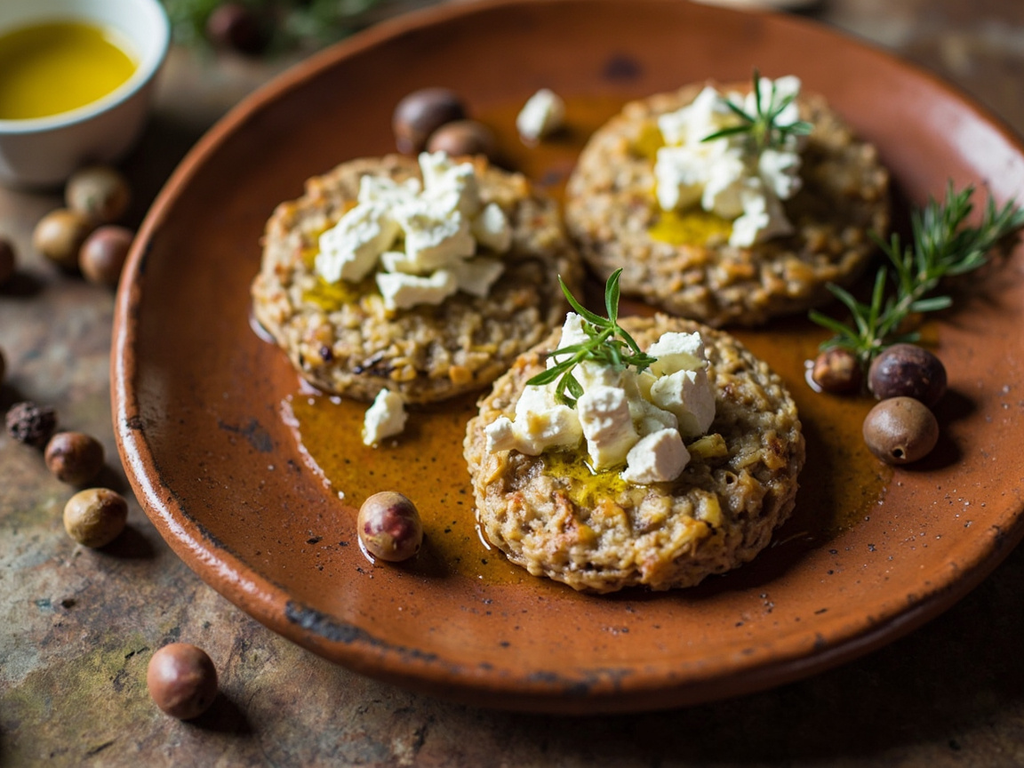
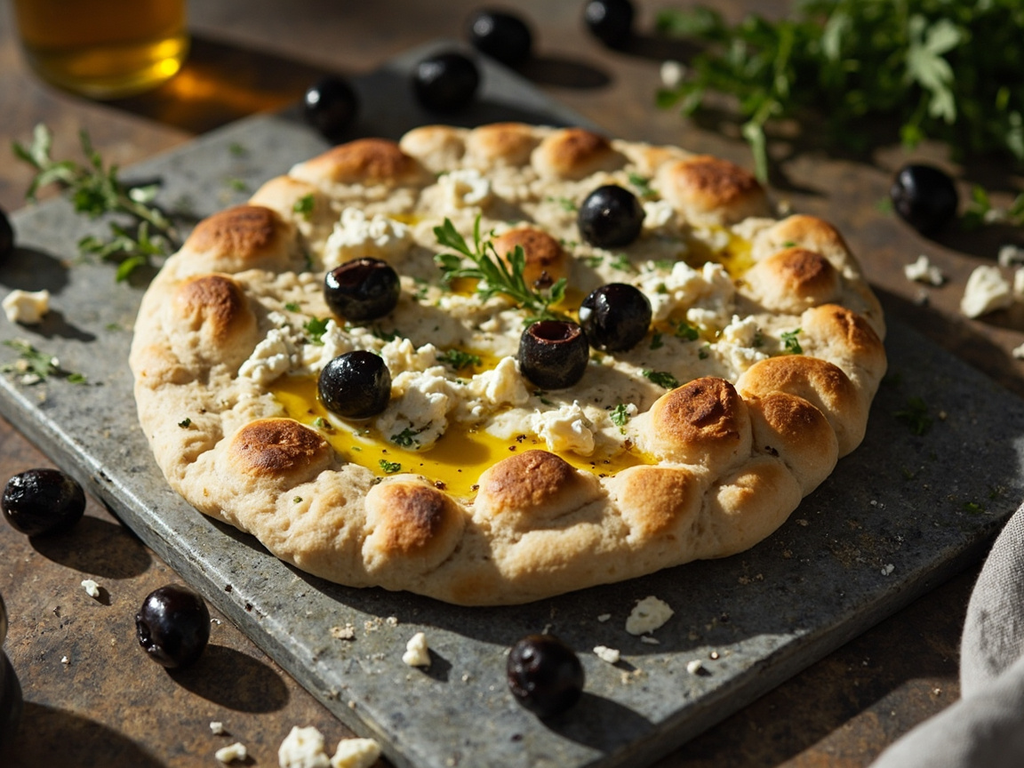
Barley maza with olive oil and thyme
Why this dish? Metis embodies mêtis, the cunning and patient intelligence of the Greek peasant. Nothing suits her better than maza, an unleavened barley flatbread that every household kneaded by hand — humble, provident, nourishing: wisdom made daily bread, far from the splendor of the gods she would eventually engender.
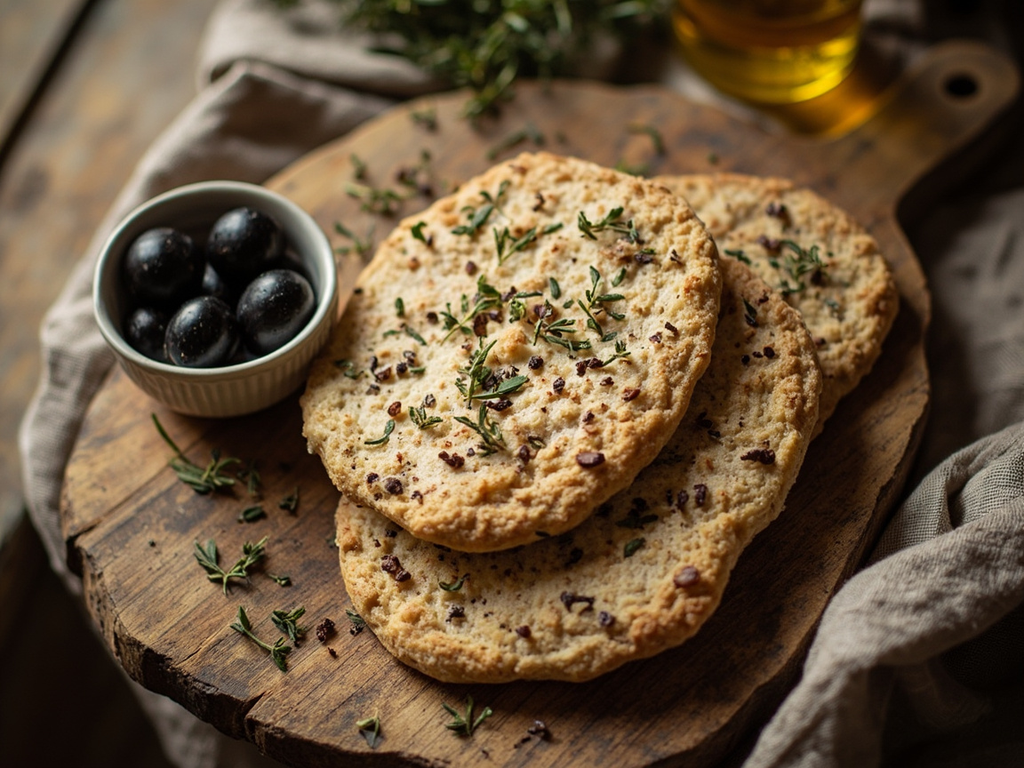
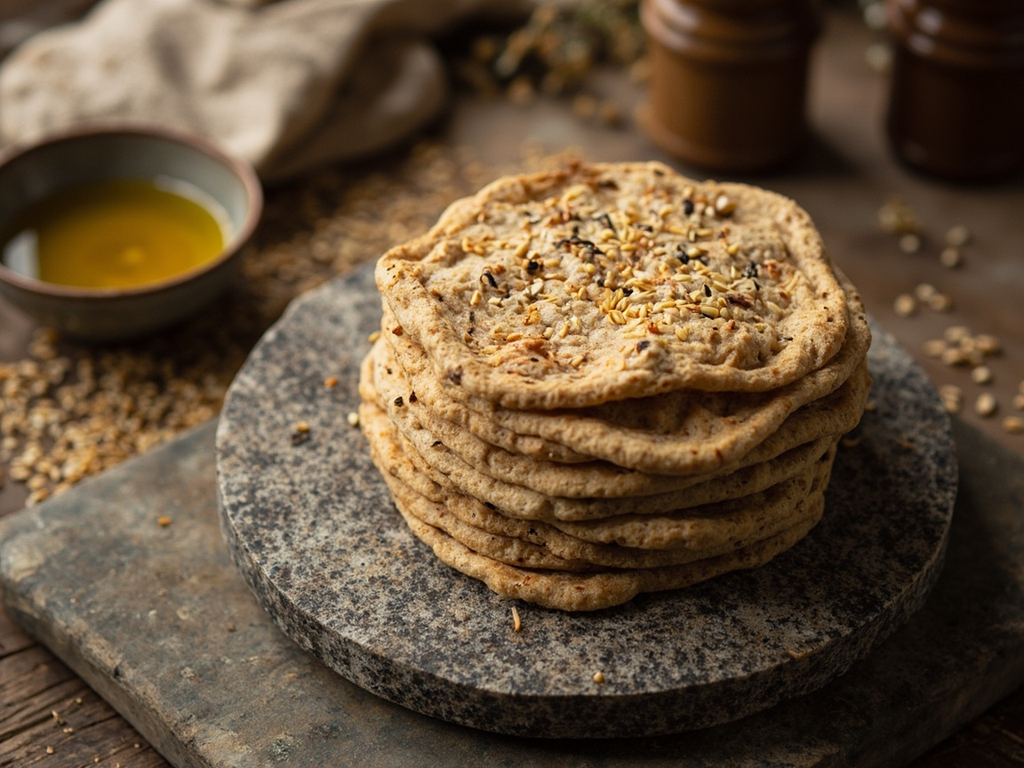
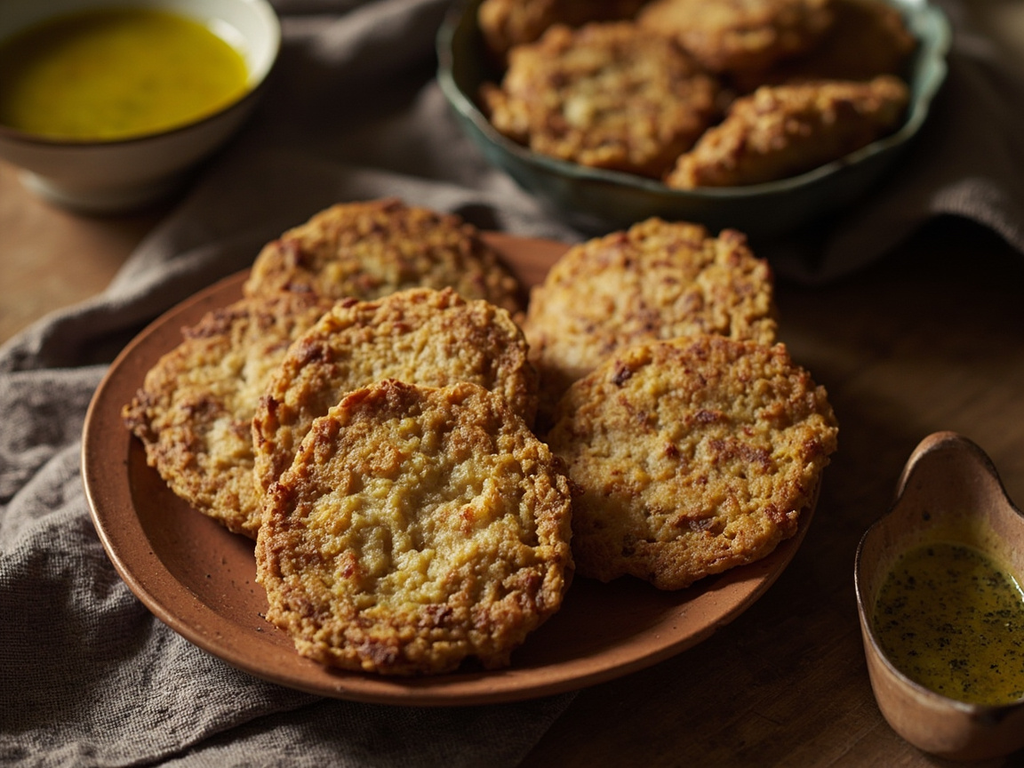
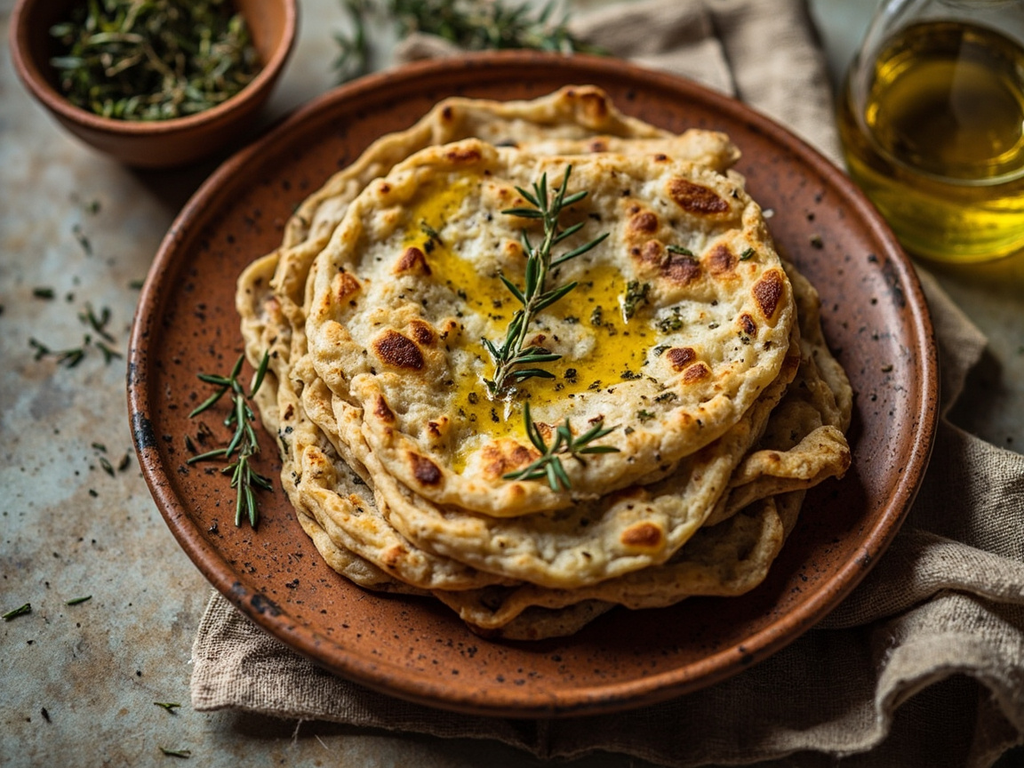
Flat barley cake roasted then kneaded with a drizzle of olive oil, salt, and thyme. This is the everyday bread of ancient Greece, dense and rustic, eaten as is or dipped in wine and oil.
Approach, mortal, and expect no gold-laden table from me. Before the feasts of Olympus, I already knew the barley that you roast on the hot stone and knead with the flat of your hand, like a thought you turn over and over before acting. Taste this bitter cake with thyme from the hills: it is the food of the prudent, of those who know that cunning is better than force. I who made old Cronos vomit the children he had swallowed, I tell you — patience is chewed slowly.
- •Roasted barley flour (alphita) — two full handfuls (grain base)
- •Olive oil — a drizzle (binder and fat)
- •Warm water — as needed (hydration)
- •Sea salt — a pinch (seasoning)
- •Fresh thyme — a few sprigs (flavor)
Barley maza with olive oil and thyme
Flat barley cake roasted then kneaded with a drizzle of olive oil, salt, and thyme. This is the everyday bread of ancient Greece, dense and rustic, eaten as is or dipped in wine and oil.
Why this dish? Metis embodies mêtis, the cunning and patient intelligence of the Greek peasant. Nothing suits her better than maza, an unleavened barley flatbread that every household kneaded by hand — humble, provident, nourishing: wisdom made daily bread, far from the splendor of the gods she would eventually engender.
Approach, mortal, and expect no gold-laden table from me. Before the feasts of Olympus, I already knew the barley that you roast on the hot stone and knead with the flat of your hand, like a thought you turn over and over before acting. Taste this bitter cake with thyme from the hills: it is the food of the prudent, of those who know that cunning is better than force. I who made old Cronos vomit the children he had swallowed, I tell you — patience is chewed slowly.
Ingredients (period version)
- Roasted barley flour (alphita) — two full handfuls (grain base)
- Olive oil — a drizzle (binder and fat)
- Warm water — as needed (hydration)
- Sea salt — a pinch (seasoning)
- Fresh thyme — a few sprigs (flavor)
Ingredients
- Barley flour — 200 g (grain base)
- Extra virgin olive oil — 3 tbsp (binder and fat)
- Warm water — about 120 ml (hydration)
- Salt — 1/2 tsp (seasoning)
- Dried or fresh thyme — 1 tsp (flavor)
Method
- Lightly toast the barley flour in a dry pan for 2-3 minutes until nutty and fragrant, then let cool slightly.
- Mix the flour with salt and thyme in a bowl.
- Add the oil, then gradually add warm water while kneading until you get a soft, non-sticky dough.
- Shape into flat cakes about half a centimeter thick.
- Cook on a hot griddle or pan for 3-4 minutes per side until golden.
- Serve warm, drizzled with a little olive oil.
How it was made : Maza, made from roasted barley (barley does not rise well with leavening), was the staple food of the ordinary Greek, far more than wheat bread, which was reserved for feast days or the wealthy. It was eaten raw (simple paste) or cooked, and often kneaded with water, wine, milk, or oil depending on the household's means.
The contemporary twist : Serve as 'wisdom crackers' cut into diamonds, with a bowl of olive oil and thyme for dipping, Mediterranean apéritif style.
Sources : Athenaeus of Naucratis, The Deipnosophists (The Banquet of the Learned), Book III · Andrew Dalby, Siren Feasts: A History of Food and Gastronomy in Greece (1996)
Metis · Charactorium