 flip
flipMinestra di fave secche (dried fava bean soup)
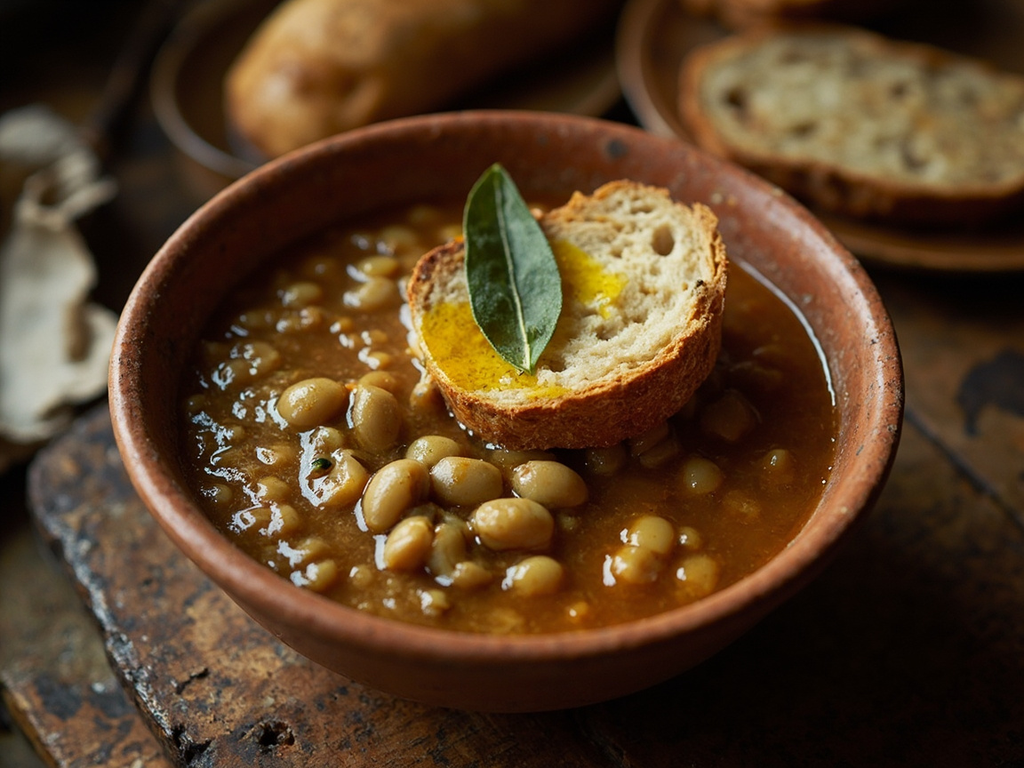
Minestra di fave secche (dried fava bean soup)
Why this dish? Michelangelo's anchor says it: bread, wine, cheese and dried legumes made up the bulk of his table. The dried fava bean, an Old World legume cultivated in Tuscany since antiquity, was the food of the poor and the busy artisan — exactly the food of a man who ate standing up to return to his marble.
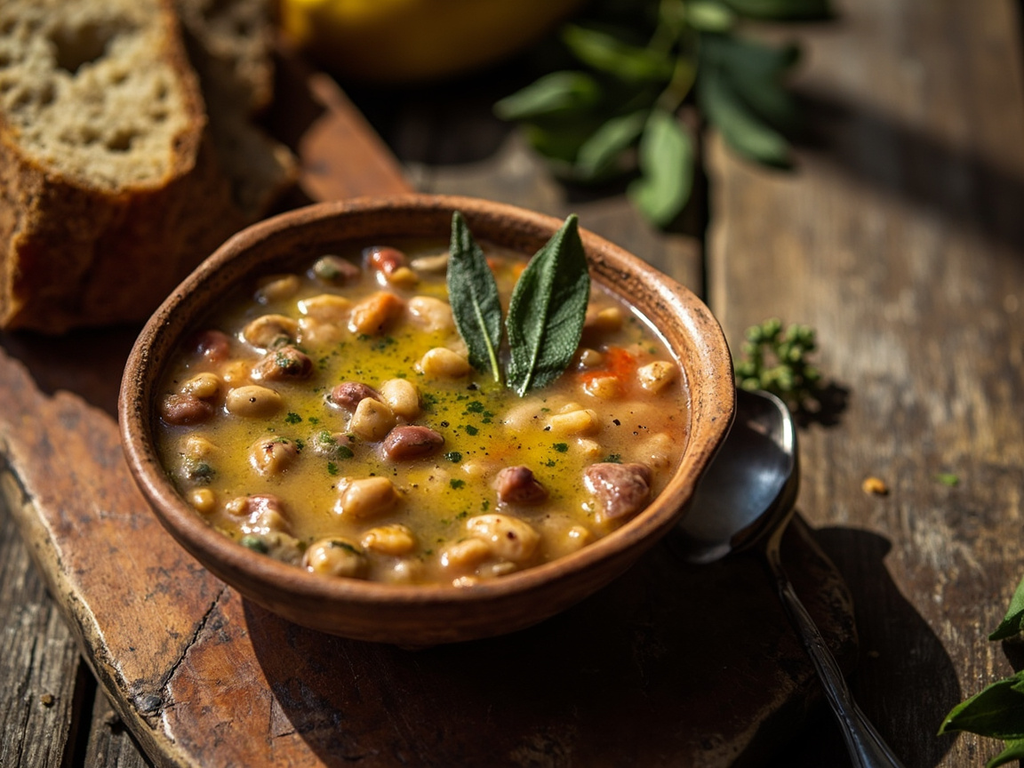
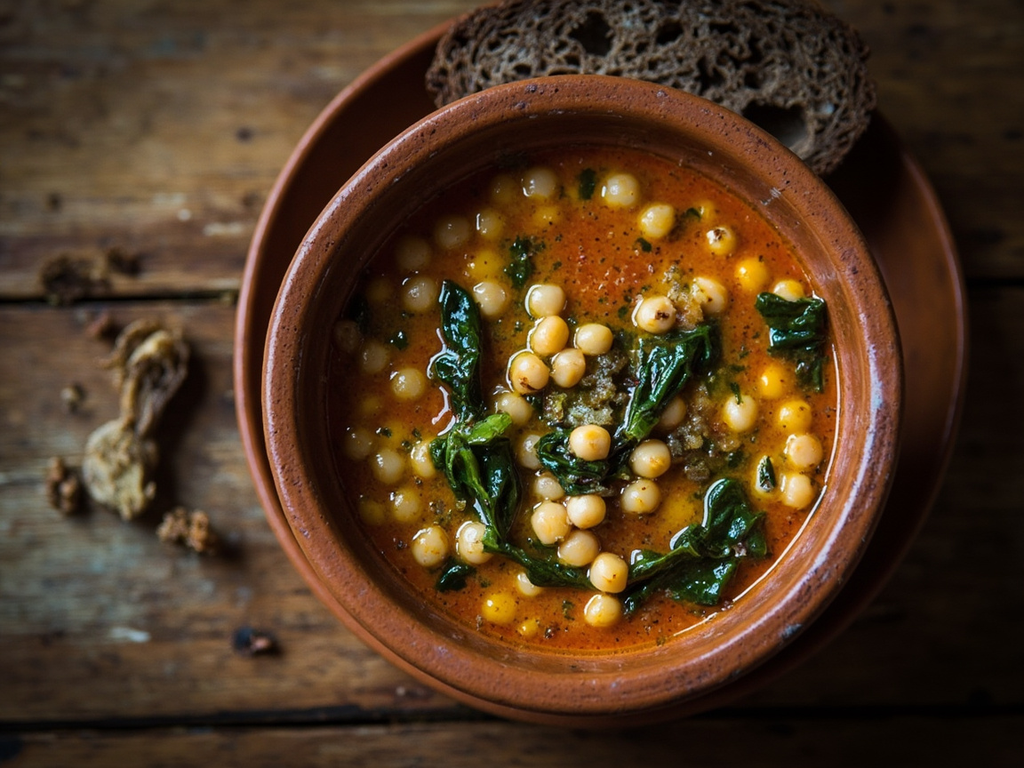
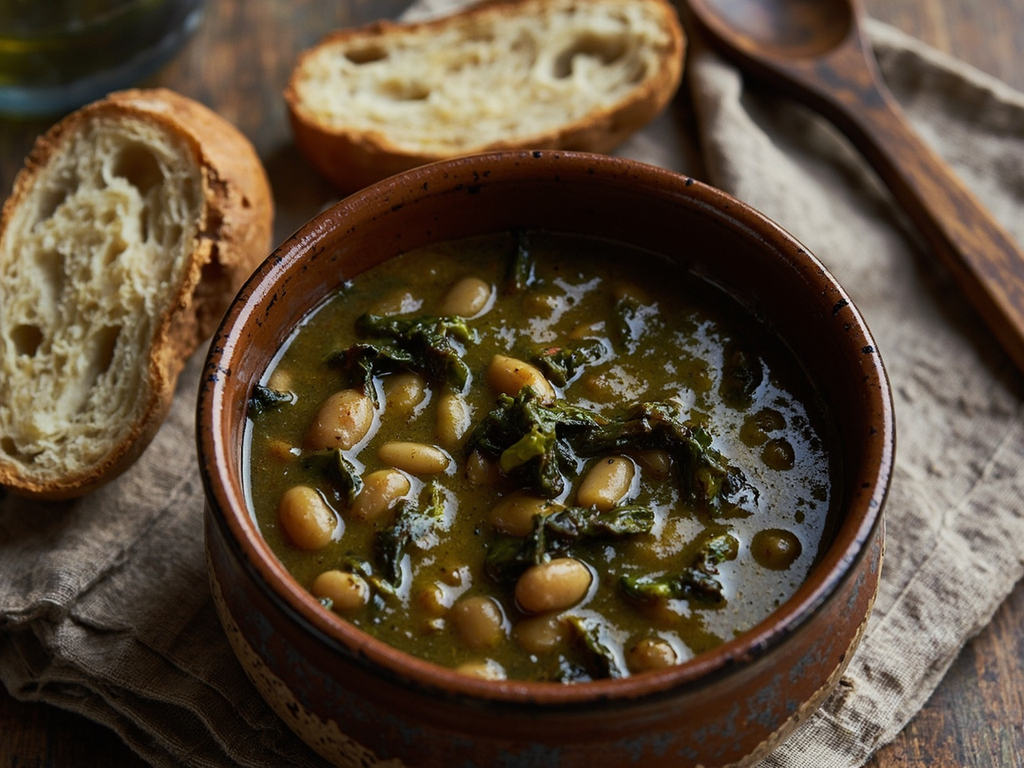
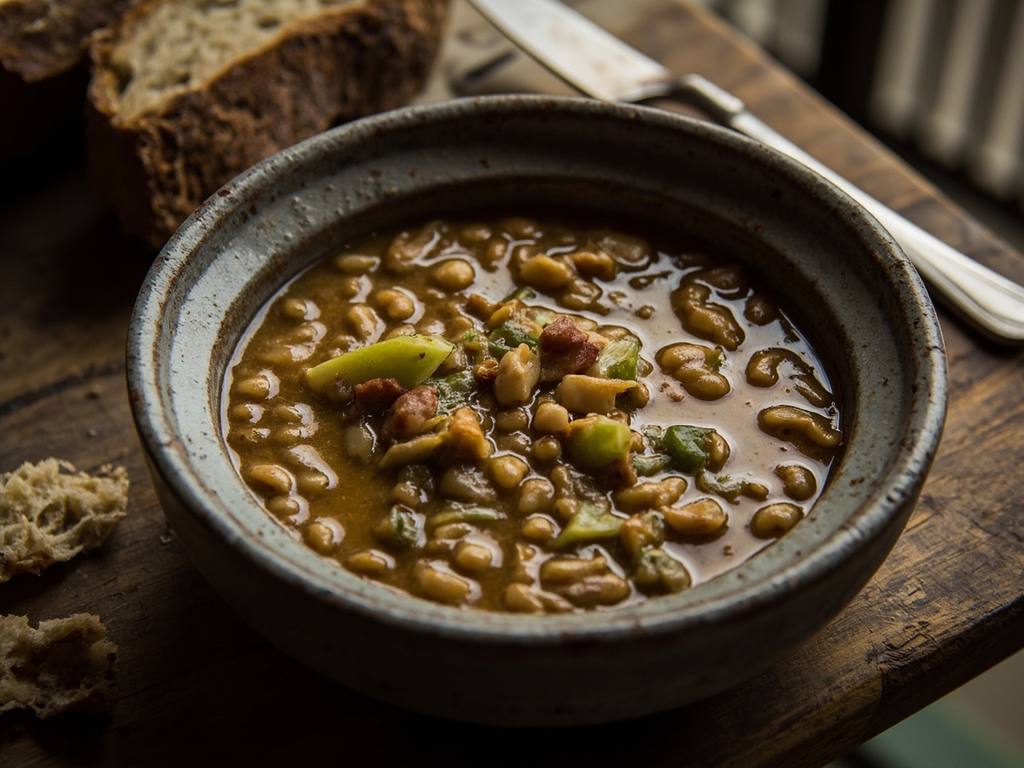
A thick soup of dried fava beans slowly simmered with a drizzle of oil, poured over a slice of stale bread. Nourishing, unpretentious, ready to be eaten quickly.
What, you think I'd waste my time at table? The stone awaits me, and the Holy Father too. You soak the beans the night before, then let them simmer all day with an onion, a sage leaf, and the oil from our hills. You pour this mush over a heel of hard bread, add a dash of raw oil, and eat standing, spoon in one hand — I hold the chisel in the other. It's little, but it's what a man needs who works from dawn to night.
- •Dried shelled fava beans — two handfuls per person (nourishing base)
- •Onion — one small (aromatic base)
- •Fresh sage — a few leaves (flavor)
- •Tuscan olive oil — as desired (binding and finish)
- •Stale Tuscan bread — one slice per bowl (base)
- •Salt — a pinch (seasoning)
Minestra di fave secche (dried fava bean soup)
A thick soup of dried fava beans slowly simmered with a drizzle of oil, poured over a slice of stale bread. Nourishing, unpretentious, ready to be eaten quickly.
Why this dish? Michelangelo's anchor says it: bread, wine, cheese and dried legumes made up the bulk of his table. The dried fava bean, an Old World legume cultivated in Tuscany since antiquity, was the food of the poor and the busy artisan — exactly the food of a man who ate standing up to return to his marble.
What, you think I'd waste my time at table? The stone awaits me, and the Holy Father too. You soak the beans the night before, then let them simmer all day with an onion, a sage leaf, and the oil from our hills. You pour this mush over a heel of hard bread, add a dash of raw oil, and eat standing, spoon in one hand — I hold the chisel in the other. It's little, but it's what a man needs who works from dawn to night.
Ingredients (period version)
- Dried shelled fava beans — two handfuls per person (nourishing base)
- Onion — one small (aromatic base)
- Fresh sage — a few leaves (flavor)
- Tuscan olive oil — as desired (binding and finish)
- Stale Tuscan bread — one slice per bowl (base)
- Salt — a pinch (seasoning)
Ingredients
- Dried split fava beans (or whole, soaked) — 250 g (base)
- Onion — 1 (base)
- Sage — 4 leaves (flavor)
- Extra virgin olive oil — 4 tbsp (binding and finish)
- Stale country bread — 4 slices (base)
- Salt — to taste (seasoning)
- Water — 1.2 L (cooking)
Method
- The night before, soak the dried fava beans in cold water overnight (skip if using split beans).
- Drain, cover with fresh water, add the chopped onion and sage.
- Simmer over low heat for 1.5 to 2 hours, until the beans break down into a coarse purée. Salt at the end of cooking.
- Mash with a fork for a thick texture. Add a little water if needed.
- Place a slice of stale bread in each bowl, pour the hot soup over.
- Drizzle generously with raw olive oil and serve immediately.
How it was made : Dried legumes (fava beans, chickpeas, lentils) were the protein pillar of the Tuscan lower classes, as the common bean did not yet exist in Europe before the Americas. These soups were cooked in an earthenware pot by the fire, sometimes all day, and the hard bread served both as thickener and support — nothing was wasted.
The contemporary twist : Blended into a smooth velouté with an immersion blender, topped with a few whole fava beans and a drizzle of new oil, it moves effortlessly from a workshop meal to a bistro plate.
Michelangelo · Charactorium