 flip
flipNam phrik kapi (น้ำพริกกะปิ) — fermented shrimp relish
Nam phrik kapi (น้ำพริกกะปิ) — fermented shrimp relish
Why this dish? On military campaigns against the Burmese, Naresuan's soldiers carried dried kapi and salted fish — fermented foods that keep without refrigeration under tropical heat. Nam phrik, pounded in a mortar in minutes, was the survival condiment of Siamese armies, capable of making any cold rice edible.
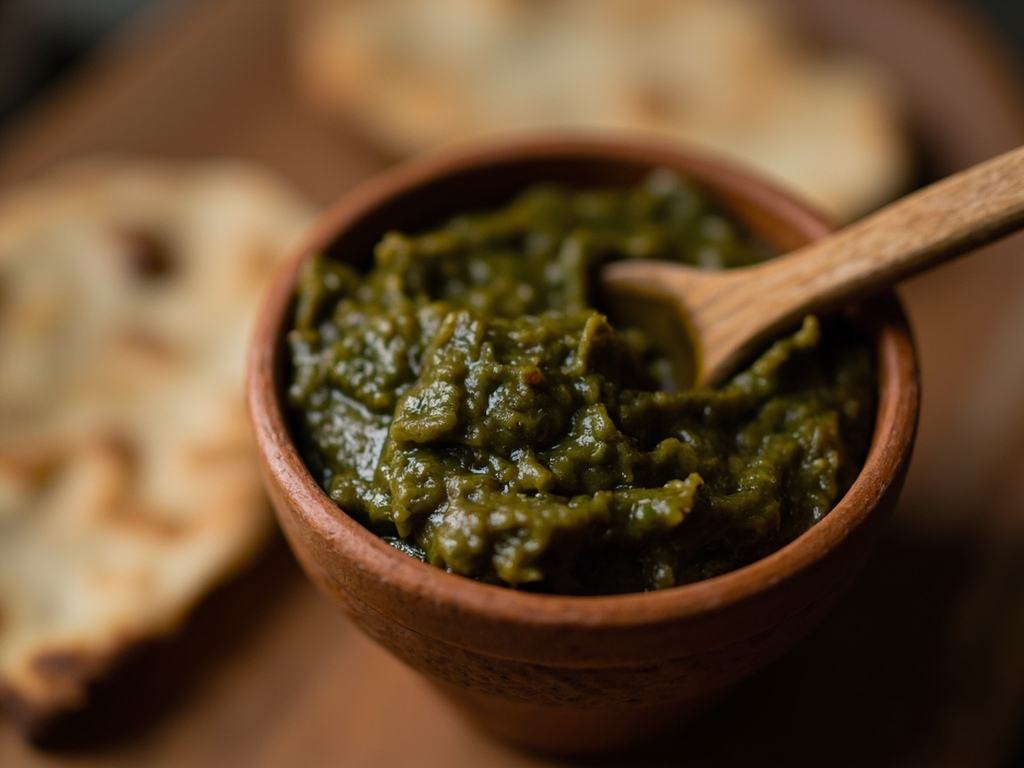
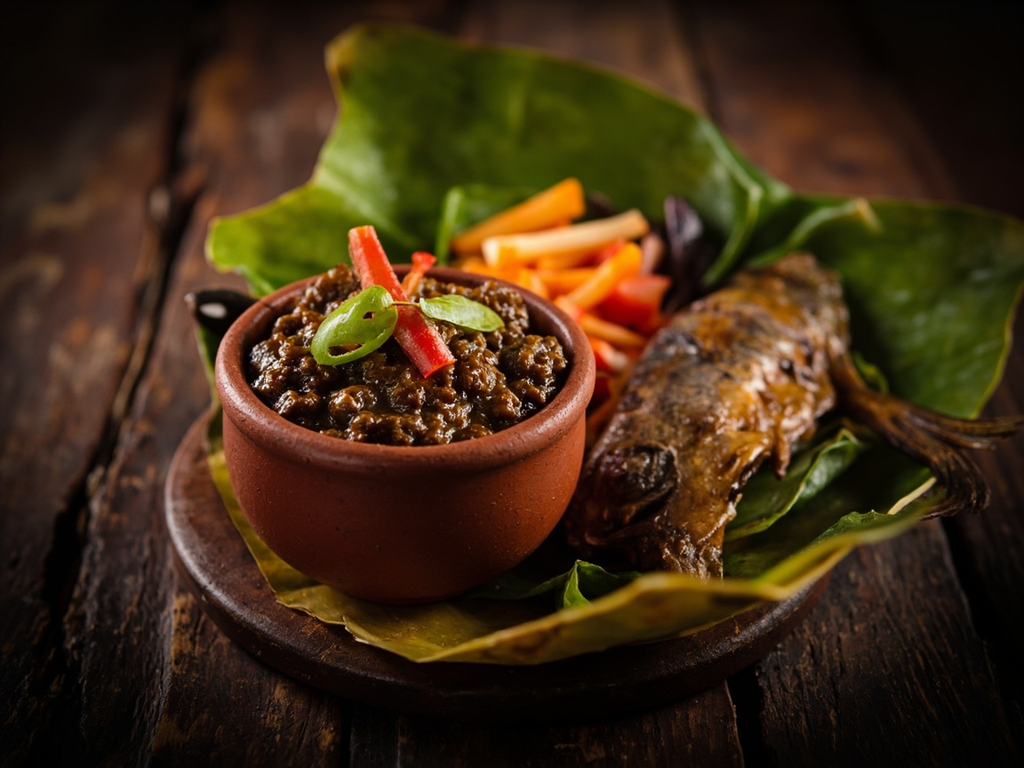
A thick condiment paste made from grilled kapi, garlic, shallots, and lime juice, served with raw or blanched vegetables and fried dried fish. Pounded in a mortar, it is prepared in minutes and keeps for several days.
When we march on Pegu with twenty thousand men, we do not drag royal kitchens along. Each soldier carries his kapi in a leaf, a little dry rice, and that is all. We pound the relish right on the ground, on a stone, with what we find — a little wild garlic, a lime stolen from a tree along the way. This is no banquet dish; it is the taste that keeps you standing one more day's march. My generals eat the same as the last spear carrier. That is how we win.
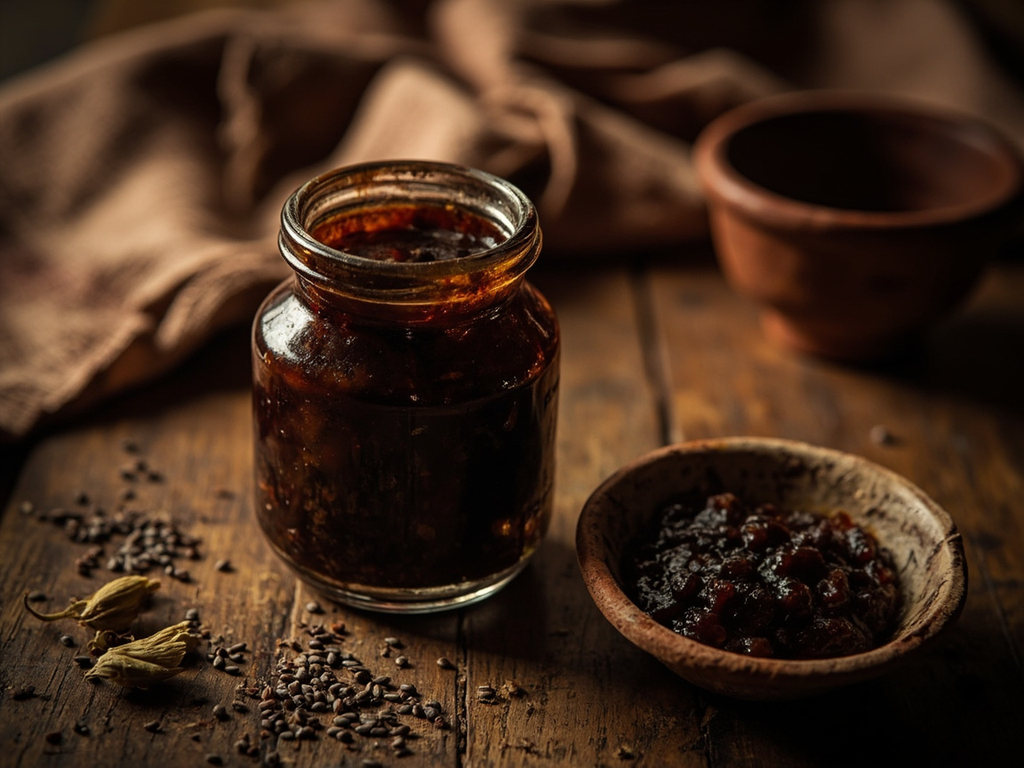
- •Fermented shrimp paste (kapi) — a good piece (fermented base)
- •Shallots — three, grilled over embers (sweetness)
- •Garlic — one head, grilled (aromatic)
- •Lime juice (manao) — a few fruits squeezed (sourness)
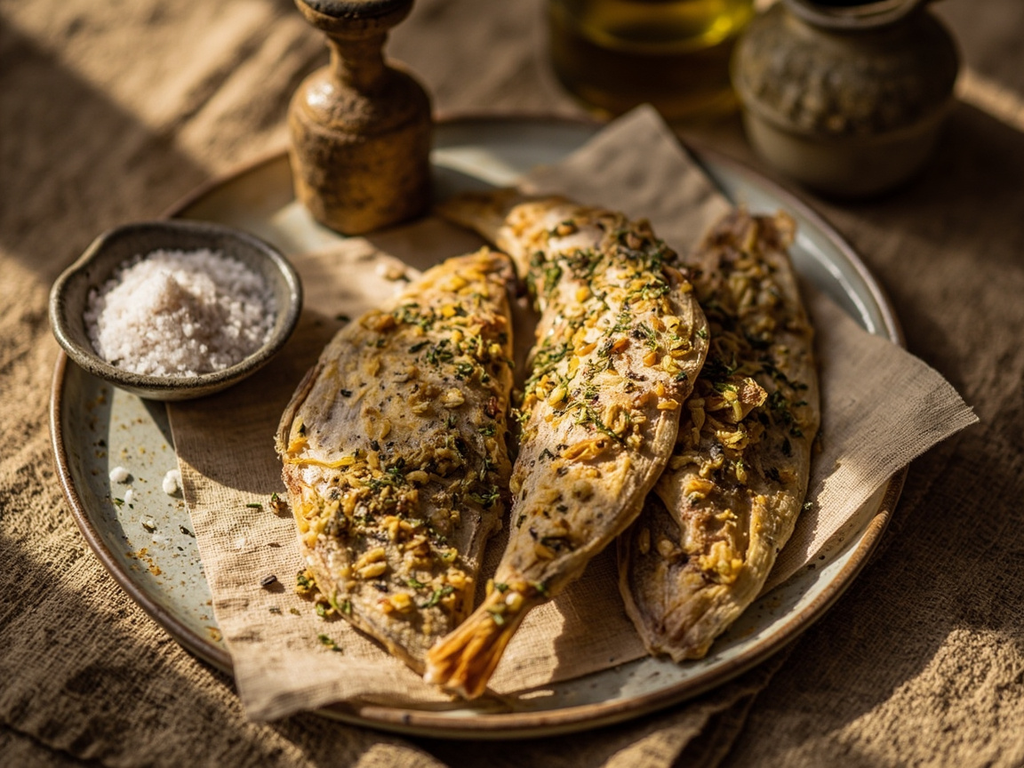
- •Dried fish — a few pieces, fried (protein accompaniment)
- •Seasonal vegetables (round eggplants, beans, gourd) — as desired (accompanying crudités)
- •Pepper — a pinch (heat)
Nam phrik kapi (น้ำพริกกะปิ) — fermented shrimp relish
A thick condiment paste made from grilled kapi, garlic, shallots, and lime juice, served with raw or blanched vegetables and fried dried fish. Pounded in a mortar, it is prepared in minutes and keeps for several days.
Why this dish? On military campaigns against the Burmese, Naresuan's soldiers carried dried kapi and salted fish — fermented foods that keep without refrigeration under tropical heat. Nam phrik, pounded in a mortar in minutes, was the survival condiment of Siamese armies, capable of making any cold rice edible.
When we march on Pegu with twenty thousand men, we do not drag royal kitchens along. Each soldier carries his kapi in a leaf, a little dry rice, and that is all. We pound the relish right on the ground, on a stone, with what we find — a little wild garlic, a lime stolen from a tree along the way. This is no banquet dish; it is the taste that keeps you standing one more day's march. My generals eat the same as the last spear carrier. That is how we win.
Ingredients (period version)
- Fermented shrimp paste (kapi) — a good piece (fermented base)
- Shallots — three, grilled over embers (sweetness)
- Garlic — one head, grilled (aromatic)
- Lime juice (manao) — a few fruits squeezed (sourness)
- Dried fish — a few pieces, fried (protein accompaniment)
- Seasonal vegetables (round eggplants, beans, gourd) — as desired (accompanying crudités)
- Pepper — a pinch (heat)
Ingredients
- Shrimp paste (kapi) — 2 tbsp (fermented base)
- Shallots — 3, grilled or roasted in oven (sweetness)
- Garlic — 4 cloves, grilled (aromatic)
- Lime juice — 3 tbsp (sourness)
- Ground black pepper — 1/2 tsp (heat)
- Palm sugar (optional) — 1 tsp (balance)
- Small dried fish or dried shrimp — 50 g, fried (accompaniment)
- Thai round eggplants, green beans, white cabbage — 200 g assorted (crudités)
Method
- Wrap kapi in aluminum foil and dry-grill in a pan for 2 minutes each side (or in oven at 200°C for 5 min) — the smell should become toasted and less raw.
- Grill whole shallots and garlic (with skin) in a dry pan or oven until soft and blackened on the surface. Peel.
- In a mortar, pound grilled garlic with a pinch of salt, then add shallots and pound again.
- Add grilled kapi and pound into a thick, smooth paste.
- Stir in lime juice, pepper, and optionally palm sugar. Taste: the balance should be salty-sour-umami.
- Fry small dried fish in a little oil until crispy.
- Place nam phrik in the center of a plate, surround with raw or blanched vegetables and fried fish. Serve with rice.
How it was made : Nam phrik is considered the oldest and most fundamental dish of Siamese cuisine. Before chili arrived via the Portuguese in the 16th century, the original version contained none — pepper and grilled aromatics provided the flavor. Kapi, produced in coastal villages of the Gulf of Siam, traveled upriver by boat to Ayutthaya. For armies on campaign, its long shelf life made it an ideal ration.
The contemporary twist : Present the nam phrik in a hollowed-out half coconut, with vegetables cut into sticks arranged in a fan around it, for a shareable appetizer-style serving.
Sources : David Thompson, “Thai Food”, 2002, Penguin — section on nam phrik as ancestors of Thai cuisine · Phia Sing (ed. Alan Davidson), “Traditional Recipes of Laos”, 1981 — regional comparisons of fermented relishes in Southeast Asia
Naresuan · Charactorium