 flip
flipTonnina sotto sale (salted preserved tuna from Naples)
Tonnina sotto sale (salted preserved tuna from Naples)
Why this dish? De Beatis is a son of the Kingdom of Naples, whose coasts lived by the tonnare (tuna traps) and salted tuna. This durable provision, emblem of his native land and allowed on meatless days, is the taste of home that a Mediterranean traveler willingly carried northward.
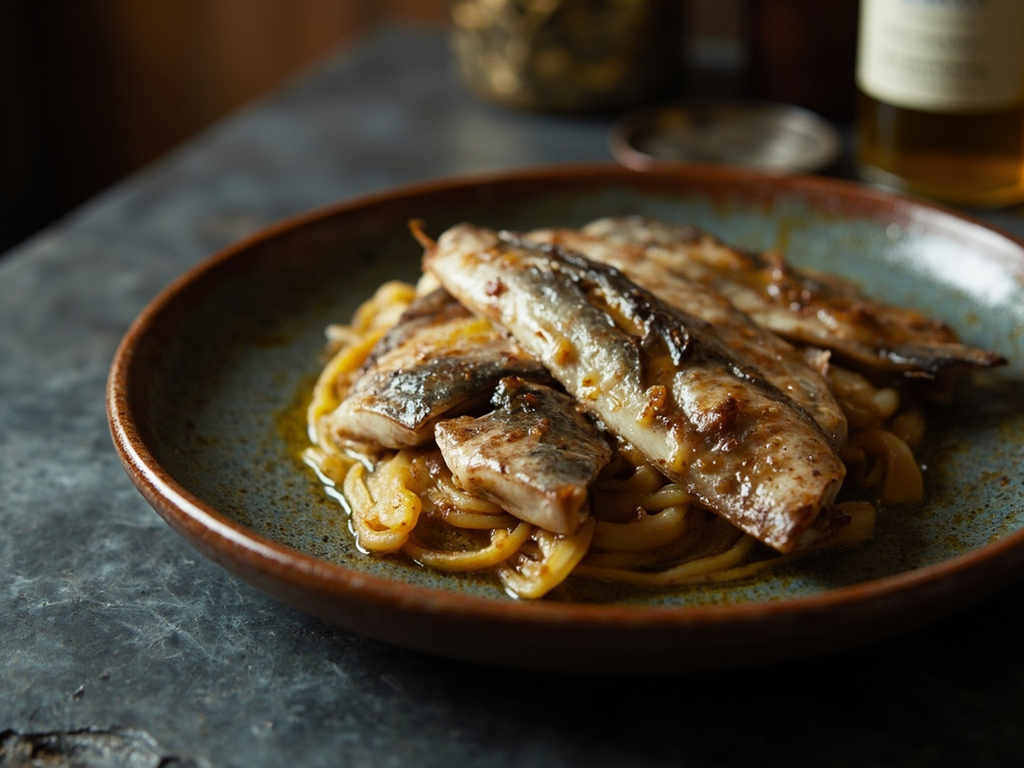
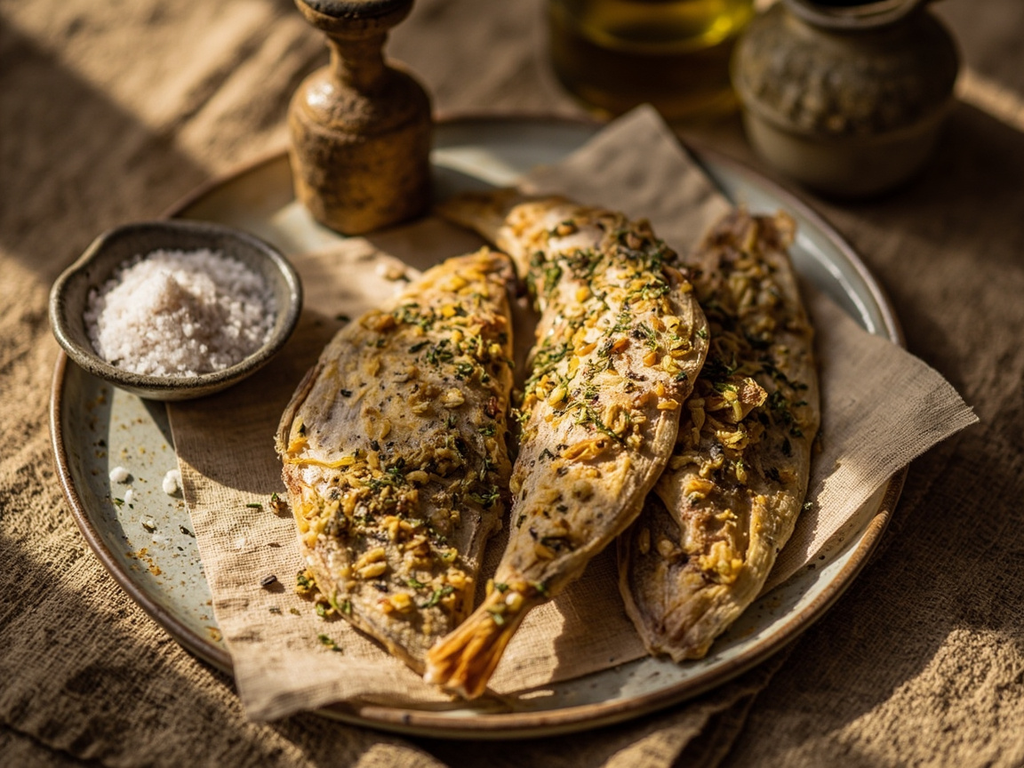
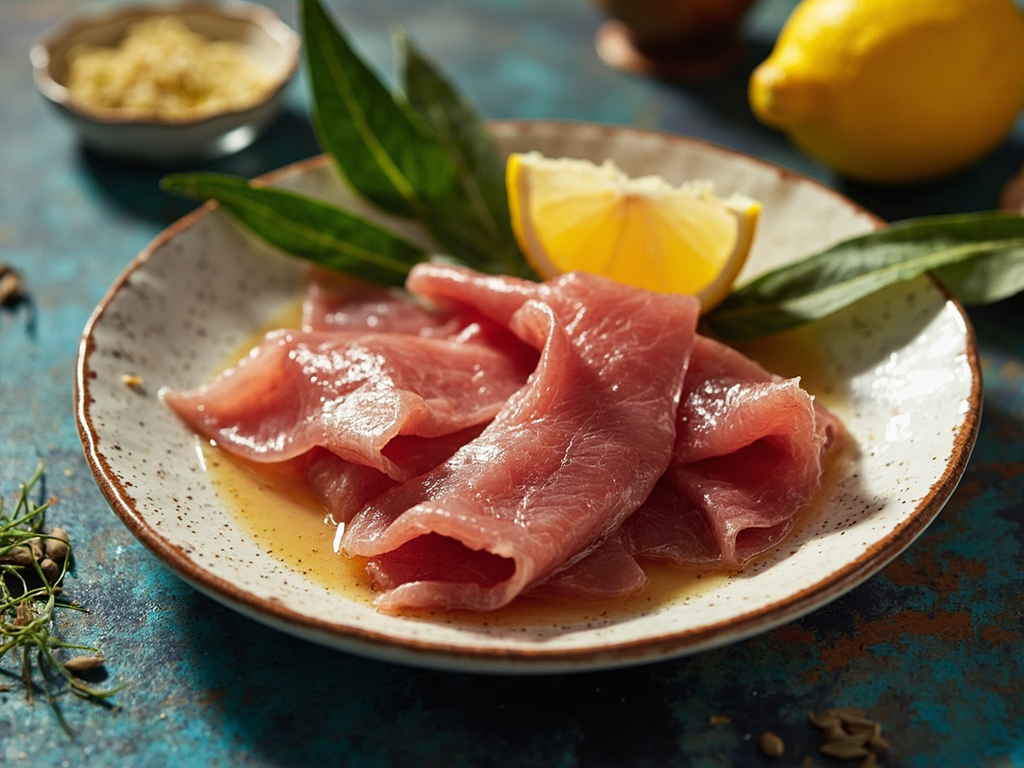
Tuna salted then preserved in oil, in the Neapolitan coastal style: a dense, flavorful flesh that keeps long and is eaten cold, thinly sliced, with a little oil and herbs. A millennia-old Mediterranean preservation technique.
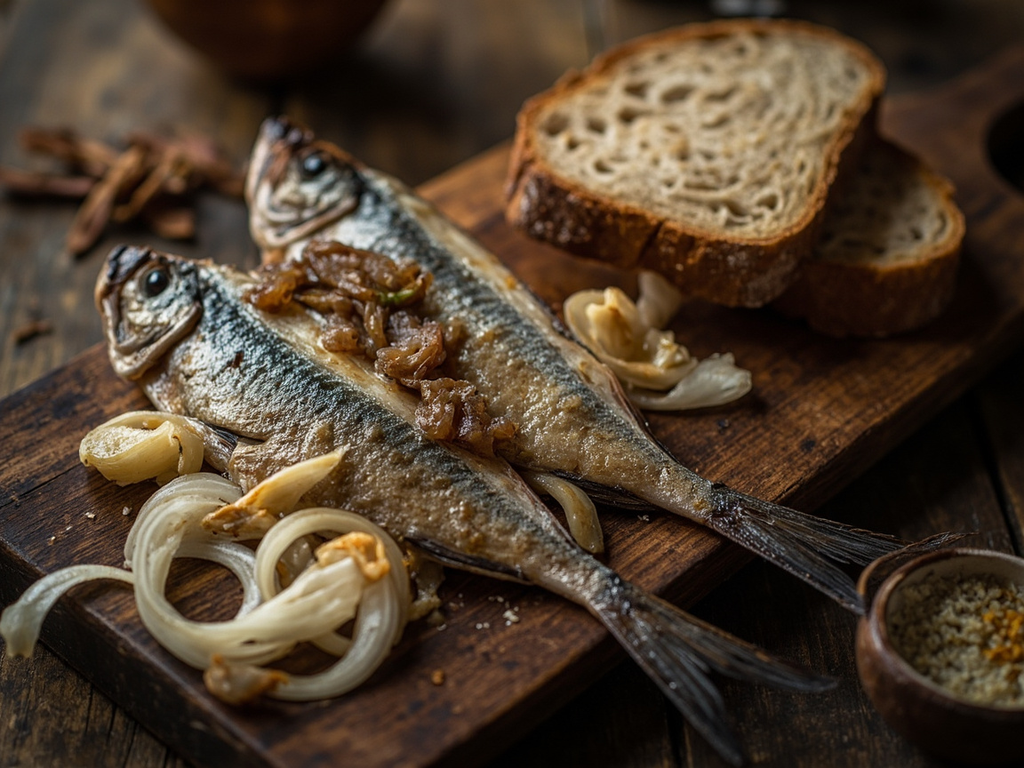
You who read me beyond the mountains, know that on the coasts of my kingdom of Naples, they catch tuna in great numbers and salt it to make it last. The flesh, well pressed in salt then kept under oil, lasts from one season to the next and makes a most esteemed meatless dish. More than once, far from my homeland, a slice of tonnina on a hunk of bread brought me back in thought to the blue of our sea — a modest consolation for a churchman in foreign lands.
- •Tuna (firm flesh) — a good piece (item to preserve)
- •Sea salt — in abundance (salting and preservation)
- •Olive oil — enough to cover (protection and preservation)
- •Herbs (bay, wild fennel) — a few branches (flavor)
Tonnina sotto sale (salted preserved tuna from Naples)
Tuna salted then preserved in oil, in the Neapolitan coastal style: a dense, flavorful flesh that keeps long and is eaten cold, thinly sliced, with a little oil and herbs. A millennia-old Mediterranean preservation technique.
Why this dish? De Beatis is a son of the Kingdom of Naples, whose coasts lived by the tonnare (tuna traps) and salted tuna. This durable provision, emblem of his native land and allowed on meatless days, is the taste of home that a Mediterranean traveler willingly carried northward.
You who read me beyond the mountains, know that on the coasts of my kingdom of Naples, they catch tuna in great numbers and salt it to make it last. The flesh, well pressed in salt then kept under oil, lasts from one season to the next and makes a most esteemed meatless dish. More than once, far from my homeland, a slice of tonnina on a hunk of bread brought me back in thought to the blue of our sea — a modest consolation for a churchman in foreign lands.
Ingredients (period version)
- Tuna (firm flesh) — a good piece (item to preserve)
- Sea salt — in abundance (salting and preservation)
- Olive oil — enough to cover (protection and preservation)
- Herbs (bay, wild fennel) — a few branches (flavor)
Ingredients
- Fresh tuna steak (albacore or bluefin) — 400 g (item to preserve)
- Coarse sea salt — about 500 g (to cover) (salting)
- Extra virgin olive oil — enough to submerge the fish (oil preservation)
- Bay leaves + fennel (seeds or fronds) — 2 leaves + 1 tsp seeds (flavor)
- Black peppercorns — a few (seasoning)
Method
- Completely bury the tuna steak in coarse salt in a dish, and refrigerate for 24 to 36 h (the salt draws out water and firms the flesh).
- Quickly rinse the tuna under cold water to remove excess salt, then pat dry thoroughly.
- Poach the tuna for 8-10 min in simmering water flavored with bay and fennel, until just cooked; let cool.
- Cut into pieces, pack into a clean jar with bay, fennel, and pepper, then completely cover with olive oil.
- Seal and refrigerate: let the flavors develop for 2-3 days before eating, thinly sliced, on bread. (Refrigerate and consume within 2-3 weeks, as a modern safety measure.)
How it was made : Tuna salting is attested in the Mediterranean since antiquity (the Romans traded it extensively, down to the famous garum). In the 15th-16th centuries, the tonnare of Sicily, Sardinia, and southern Italy supplied salted tuna exported throughout Europe, a prized meatless food. It was preserved under salt then oil, without refrigeration, to last through the seasons.
The contemporary twist : Flaked on toasted bread slices with a squeeze of lemon and a few capers, this "homemade" tuna becomes a chic antipasto, far more flavorful than commercial canned tuna.
Sources : Maestro Martino da Como, Libro de arte coquinaria, c. 1465 · Bartolomeo Platina, De honesta voluptate et valetudine, 1474
Antonio de Beatis · Charactorium