 flip
flipTarhana Soup
Tarhana Soup
Why this dish? Tarhana is the daily Anatolian soup, made with almost nothing — and that is precisely the heart of the famous story of Nasreddin and the 'soup of the hare's soup'. A neighbor brings a hare, Nasreddin serves soup. The next day, another neighbor shows up as 'the neighbor of the neighbor who brought the hare'. Nasreddin serves him warm water: 'Here is the soup of the hare's soup.' Tarhana, prepared in summer and dried for winter, is that essential soup that you stretch and stretch — but never endlessly.
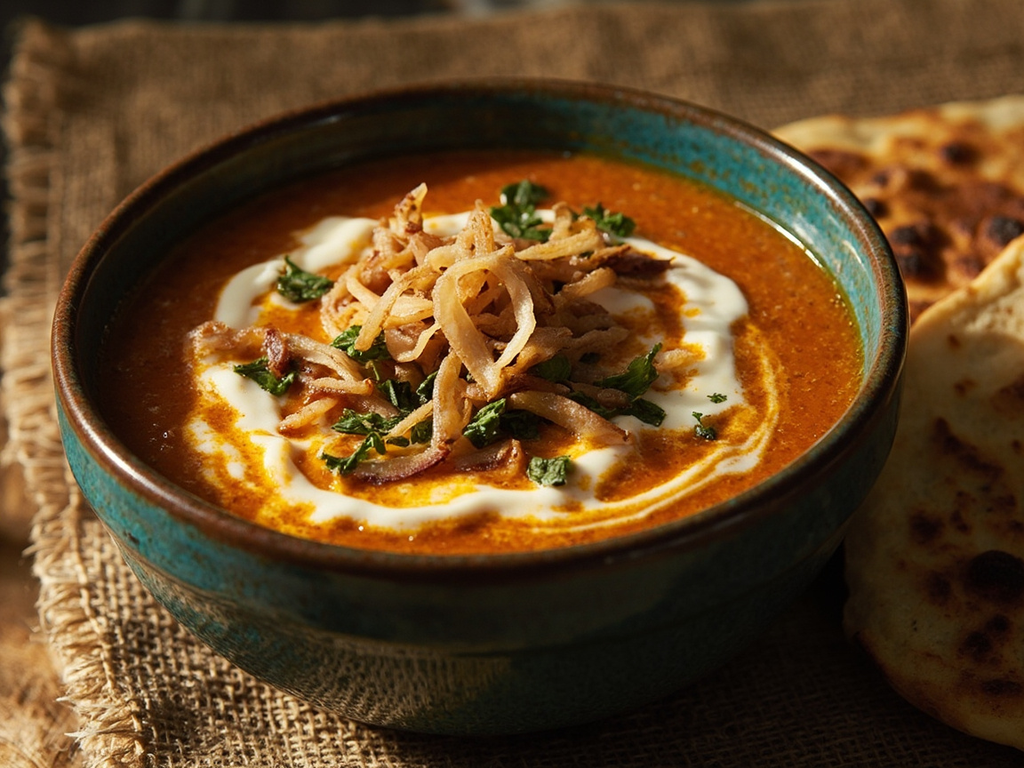
A thick soup made from tarhana, a fermented mixture of yogurt, flour, and vegetables dried then crumbled. Reconstituted in hot water, it yields in minutes a nourishing, tangy, and comforting soup — the staple of every Anatolian household since the Middle Ages.
Listen, my friend, there is soup and soup. This one I'm serving you is tarhana that my wife kneaded in high summer with good yogurt and flour, dried on the roof while the sun beat down on Akşehir. You crumble it into boiling water, wait a little, and there you have it: enough to feed your family all winter. Now, if you come telling me you're the neighbor of the neighbor of the neighbor of the one who gave me a hare last year, I'll serve you the pot water — and lukewarm at that. Tarhana, you see, is proof that patience and yogurt can turn anything into a feast.
- •Dried tarhana — Two good handfuls (Fermented soup base)
- •Water — About one liter (Cooking liquid)
- •Clarified butter (sade yağ) — A generous knob (Fat for finishing)
- •Dried mint — A pinch (Aromatic)
- •Salt — To taste (Seasoning)
Tarhana Soup
A thick soup made from tarhana, a fermented mixture of yogurt, flour, and vegetables dried then crumbled. Reconstituted in hot water, it yields in minutes a nourishing, tangy, and comforting soup — the staple of every Anatolian household since the Middle Ages.
Why this dish? Tarhana is the daily Anatolian soup, made with almost nothing — and that is precisely the heart of the famous story of Nasreddin and the 'soup of the hare's soup'. A neighbor brings a hare, Nasreddin serves soup. The next day, another neighbor shows up as 'the neighbor of the neighbor who brought the hare'. Nasreddin serves him warm water: 'Here is the soup of the hare's soup.' Tarhana, prepared in summer and dried for winter, is that essential soup that you stretch and stretch — but never endlessly.
Listen, my friend, there is soup and soup. This one I'm serving you is tarhana that my wife kneaded in high summer with good yogurt and flour, dried on the roof while the sun beat down on Akşehir. You crumble it into boiling water, wait a little, and there you have it: enough to feed your family all winter. Now, if you come telling me you're the neighbor of the neighbor of the neighbor of the one who gave me a hare last year, I'll serve you the pot water — and lukewarm at that. Tarhana, you see, is proof that patience and yogurt can turn anything into a feast.
Ingredients (period version)
- Dried tarhana — Two good handfuls (Fermented soup base)
- Water — About one liter (Cooking liquid)
- Clarified butter (sade yağ) — A generous knob (Fat for finishing)
- Dried mint — A pinch (Aromatic)
- Salt — To taste (Seasoning)
Ingredients
- Dried tarhana (from Turkish grocery) — 100 g (Fermented base)
- Water — 1 liter (Cooking liquid)
- Butter — 20 g (Finishing)
- Dried mint — 1 tsp (Aromatic)
- Aleppo pepper (pul biber) — 1 tsp (Spicy garnish)
- Salt — To taste (Seasoning)
Method
- Crumble the dried tarhana into a bowl, cover with cold water, and let soak for 15-20 minutes to soften.
- Pour the mixture into a saucepan, add the remaining water, and bring to a boil, stirring regularly to prevent lumps.
- Reduce the heat and simmer for 15 minutes until the soup is thick and smooth.
- In a small pan, melt the butter, add the dried mint and pul biber, and sizzle for 30 seconds.
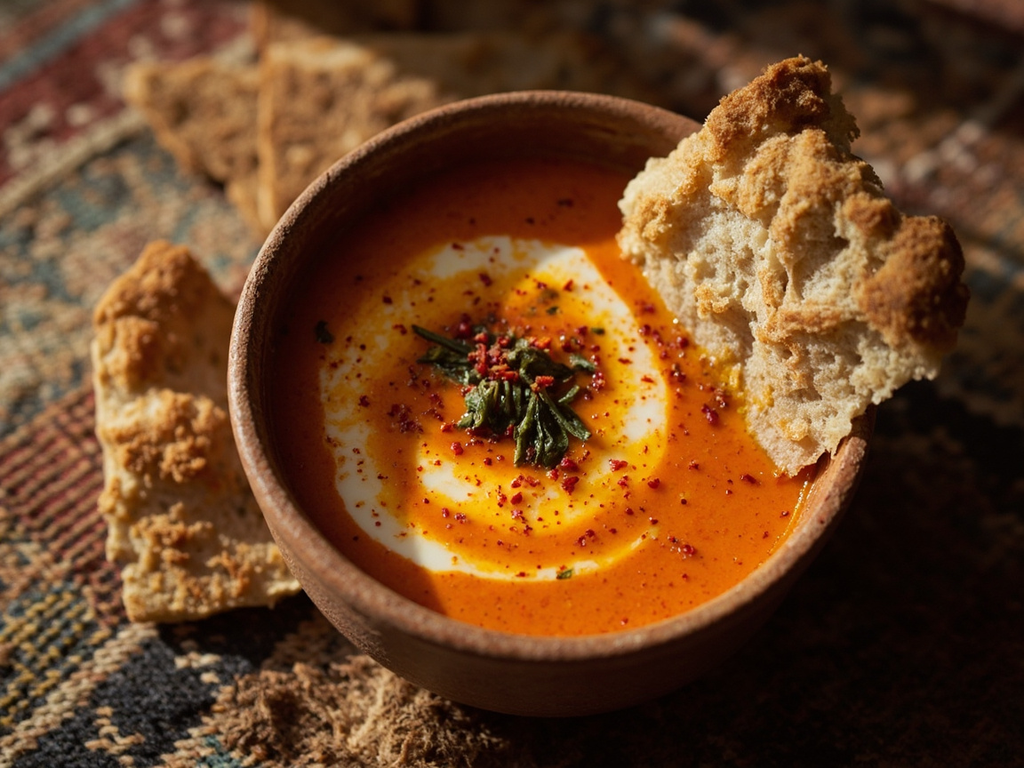
- Serve the soup in bowls, drizzle the flavored butter on top. Serve with bread.
How it was made : Tarhana is attested in Turkish culinary sources since at least the 13th century. It was prepared in summer: yogurt, wheat flour, and sometimes vegetables (onion; tomato was absent before 1492) were mixed, left to ferment for several days, then the dough was dried in the sun and crumbled or ground. This lacto-fermentation process preserved the benefits of yogurt throughout winter. Each family had its own recipe, passed from mother to daughter.
The contemporary twist : Serve in a terracotta bowl with a drizzle of fresh mint-infused olive oil and a few crumbles of tulum cheese on top — a 'Hodja's tarhana' for busy winter evenings.
Sources : Marianna Yerasimos, 500 ans de cuisine ottomane, éditions Anahtar, 2005 · Priscilla Mary Işın, Bountiful Empire: A History of Ottoman Cuisine, Reaktion Books, 2018
Nasreddin Hodja · Charactorium