 flip
flipRoast Goose with Honey, Prunes and Spices
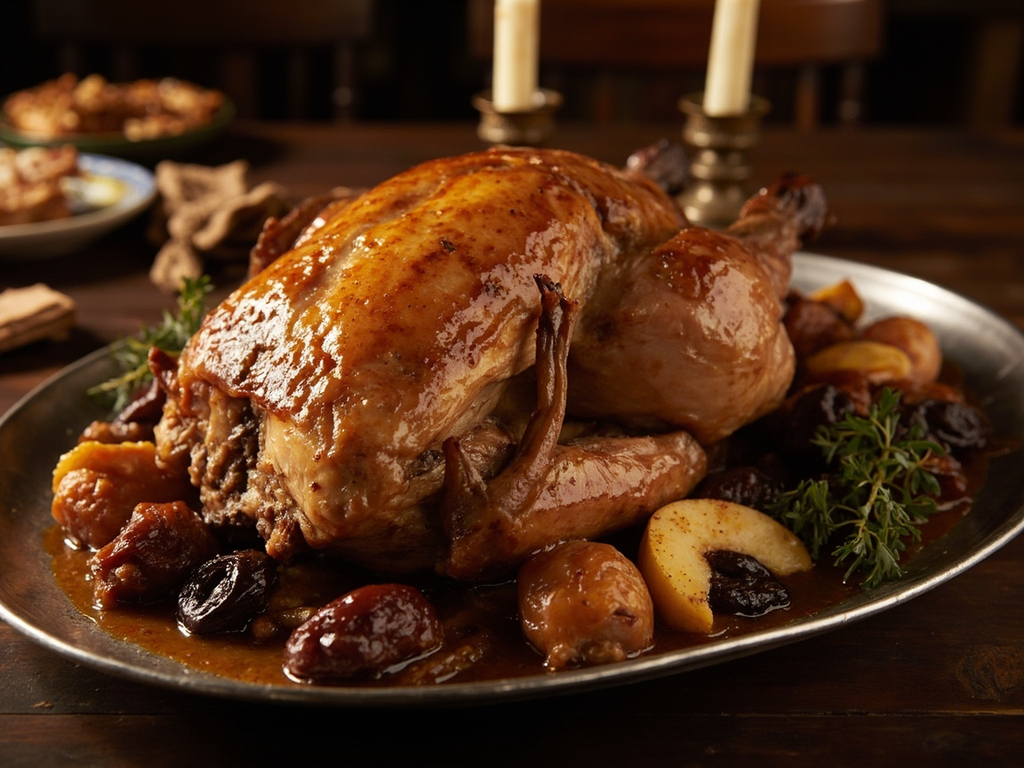
Roast Goose with Honey, Prunes and Spices
Why this dish? On meat days, outside of fasts, a canon's table opened to poultry and game. Roast goose with Hanseatic spices was a festive dish in Poland, where the goose has held an ancient and symbolic place in autumn.
Slow-roasted goose, glazed with honey, stuffed with prunes and apples, scented with ginger, cinnamon and saffron. The dish for great occasions.
On days when the Church restores meat to us, my table knows how to rejoice as well. Take a fine fat goose from our ponds, prick it with prunes and apple quarters, and rub it with the spices that the Hanseatic merchants bring up to us: ginger, cinnamon, a little of that precious saffron that gilds the flesh as the Sun gilds the morning. Let it roast slowly, basting it with its honey. Patience, my friend: what ripens slowly, in the oven as in the firmament, is all the more perfect.
- •Fat goose — 1 (centrepiece)
- •Prunes — a handful (sweet garnish)
- •Apples — a few (tart garnish)
- •Honey — enough (glaze)
- •Ginger, cinnamon, clove — korzenie (Hanseatic spices)
- •Saffron — a few threads (color and fragrance)
Roast Goose with Honey, Prunes and Spices
Slow-roasted goose, glazed with honey, stuffed with prunes and apples, scented with ginger, cinnamon and saffron. The dish for great occasions.
Why this dish? On meat days, outside of fasts, a canon's table opened to poultry and game. Roast goose with Hanseatic spices was a festive dish in Poland, where the goose has held an ancient and symbolic place in autumn.
On days when the Church restores meat to us, my table knows how to rejoice as well. Take a fine fat goose from our ponds, prick it with prunes and apple quarters, and rub it with the spices that the Hanseatic merchants bring up to us: ginger, cinnamon, a little of that precious saffron that gilds the flesh as the Sun gilds the morning. Let it roast slowly, basting it with its honey. Patience, my friend: what ripens slowly, in the oven as in the firmament, is all the more perfect.
Ingredients (period version)
- Fat goose — 1 (centrepiece)
- Prunes — a handful (sweet garnish)
- Apples — a few (tart garnish)
- Honey — enough (glaze)
- Ginger, cinnamon, clove — korzenie (Hanseatic spices)
- Saffron — a few threads (color and fragrance)
Ingredients
- Goose legs and breasts (or 1 small goose / duck) — for 4 (centrepiece)
- Pitted prunes — 12 (sweet garnish)
- Cooking apples — 2 (garnish)
- Honey — 3 tbsp (glaze)
- Ground ginger — 1 tsp (spice)
- Cinnamon — 1 tsp (spice)
- Ground clove — 1 pinch (spice)
- Saffron — 1 pinch (color)
- Salt — to taste (seasoning)
Method
- Infuse saffron in a little hot water. Mix honey, ginger, cinnamon, clove, saffron and a pinch of salt.
- Season the goose meat, place in a dish with quartered apples and prunes.
- Brush with the honey-spice mixture.
- Roast in the oven at 160°C for 1h30 to 2h (for pieces), basting regularly with the juices, until the skin is golden and lacquered.
- Let rest 10 minutes before serving with the confit prunes and apples.
How it was made : In medieval and Renaissance Central European cuisine, it was common to pair meat with sweet (honey, dried fruits) and expensive spices, signs of prestige. Saffron, brought by long-distance trade, colored festive dishes with symbolic gold. Goose was a traditional festive poultry in Poland, especially around St. Martin's Day.
The contemporary twist : Name the dish 'Golden Sun Goose' and serve it surrounded by prunes arranged in concentric orbits around the golden meat.
Nicolas Copernicus · Charactorium