 flip
flipMaza, harvest barley cake
Maza, harvest barley cake
Why this dish? Daughter of Demeter, goddess of grain, Persephone was born in the wheat and barley fields of Sicily. Maza—barely kneaded barley paste—was the daily bread of the Greek world, the humblest gift of her mother to humanity.
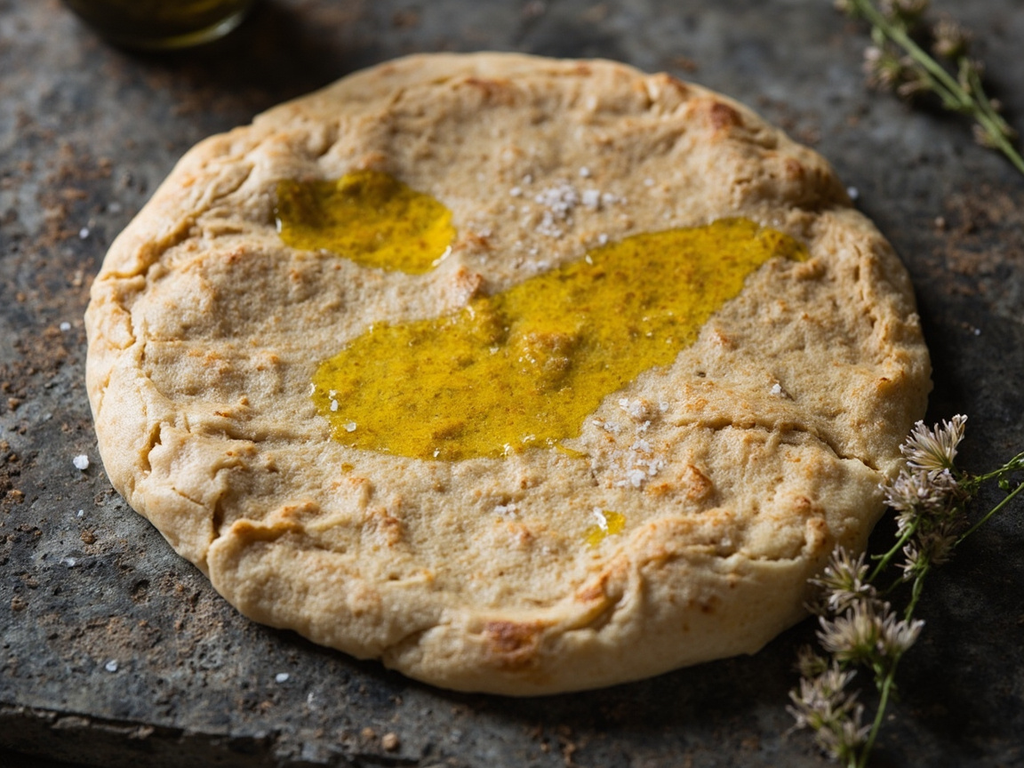
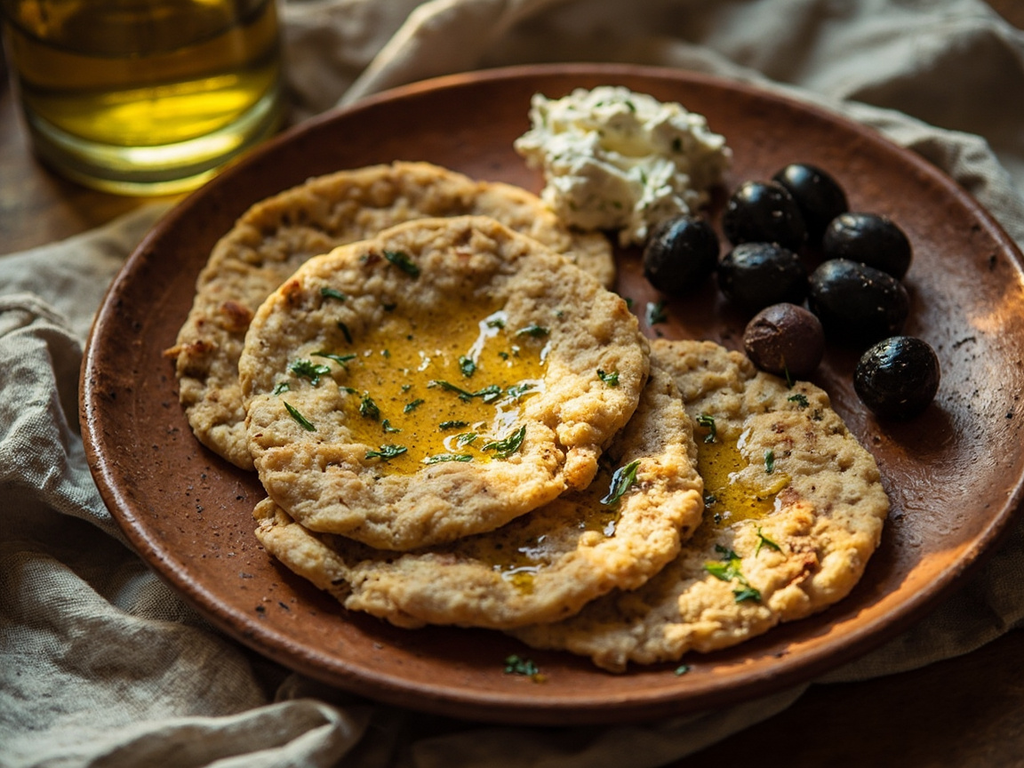
A dense cake of roasted barley, kneaded without leaven or oven, sometimes cooked on a hot stone, sometimes eaten raw and soft. Earthy and rustic flavor, enhanced with olive oil and salt: it is the bread of the people, reapers, and athletes.
Before I was queen of shadows, I was the child of the fields, and barley was my daily bread. They roast it, grind it, knead it barely—no need for an oven, a hand and a little water suffice. The reapers of Sicily filled their satchels with it before dawn, and my mother blessed each cake as a fragment of the nurturing earth. Eat it simply, rubbed with oil and salt: it is the taste of life that always begins again.
- •Roasted barley flour (alphita) — two good handfuls (base)
- •Water — just enough to bind (binder)
- •Olive oil — a drizzle (flavor and binder)
- •Sea salt — a pinch (seasoning)
Maza, harvest barley cake
A dense cake of roasted barley, kneaded without leaven or oven, sometimes cooked on a hot stone, sometimes eaten raw and soft. Earthy and rustic flavor, enhanced with olive oil and salt: it is the bread of the people, reapers, and athletes.
Why this dish? Daughter of Demeter, goddess of grain, Persephone was born in the wheat and barley fields of Sicily. Maza—barely kneaded barley paste—was the daily bread of the Greek world, the humblest gift of her mother to humanity.
Before I was queen of shadows, I was the child of the fields, and barley was my daily bread. They roast it, grind it, knead it barely—no need for an oven, a hand and a little water suffice. The reapers of Sicily filled their satchels with it before dawn, and my mother blessed each cake as a fragment of the nurturing earth. Eat it simply, rubbed with oil and salt: it is the taste of life that always begins again.
Ingredients (period version)
- Roasted barley flour (alphita) — two good handfuls (base)
- Water — just enough to bind (binder)
- Olive oil — a drizzle (flavor and binder)
- Sea salt — a pinch (seasoning)
Ingredients
- Barley flour — 200 g (base)
- Warm water — about 120 ml (binder)
- Olive oil — 2 tbsp (flavor)
- Salt — 1 tsp (seasoning)
- Dried oregano (optional) — 1 pinch (flavor)
Method
- Briefly toast the barley flour in a dry pan to develop its nutty flavor, then let cool slightly.
- Mix the flour, salt, and oregano, add the oil then water gradually until a soft, compact dough forms.
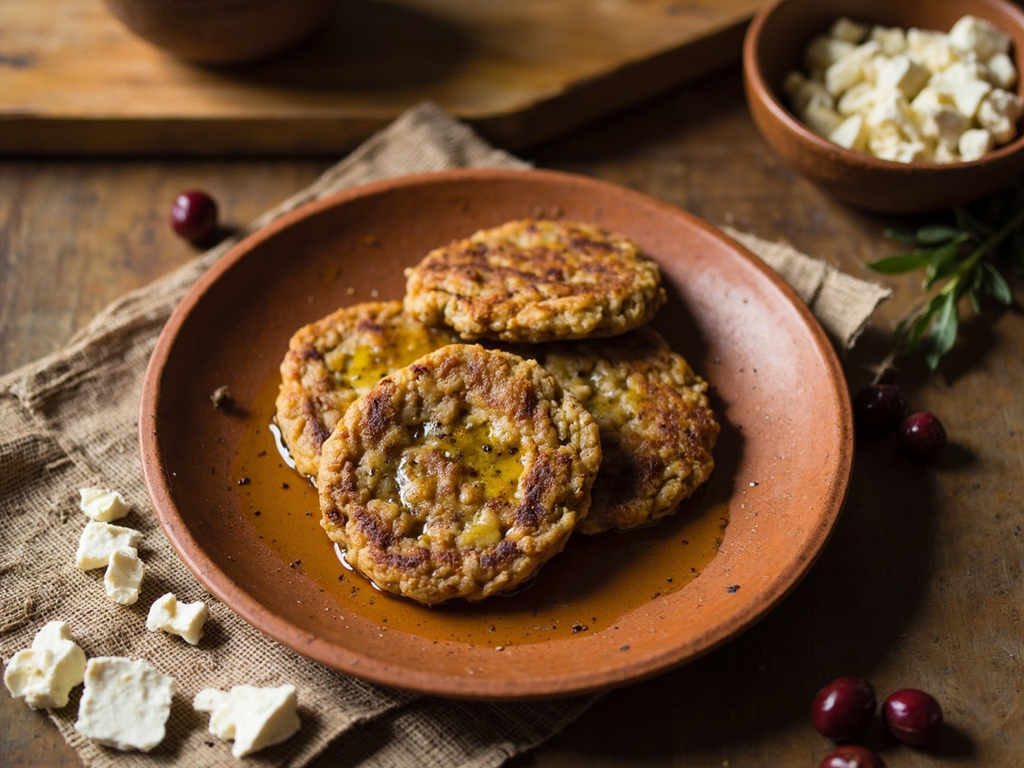
- Shape into flat cakes about half a centimeter thick.
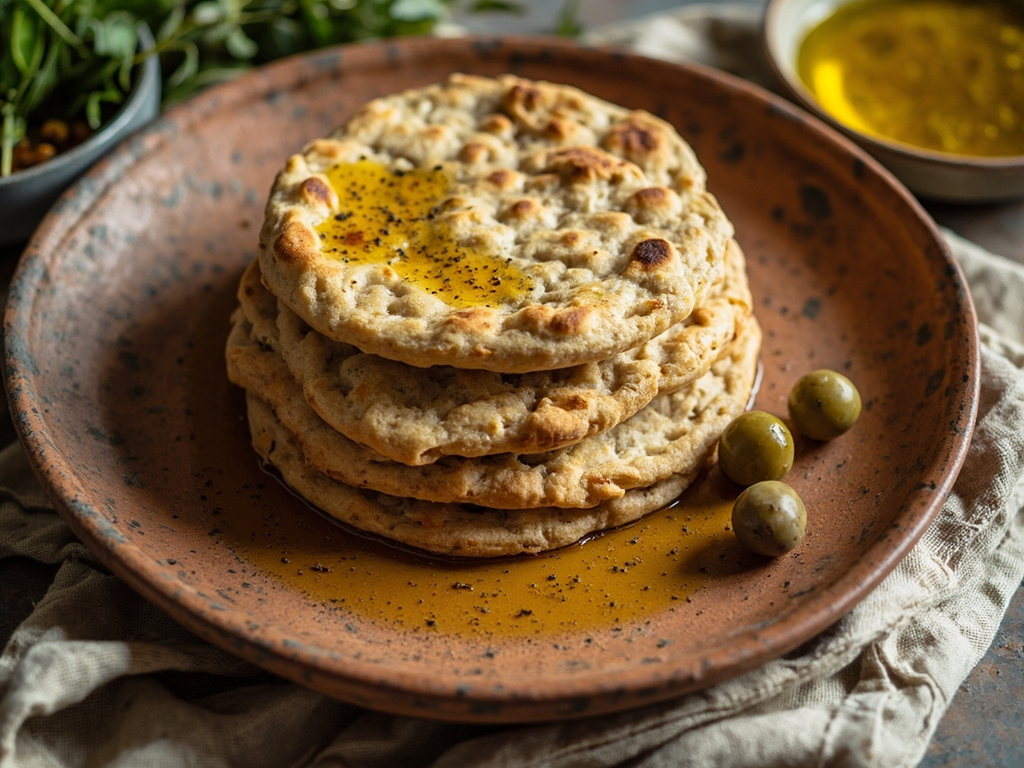
- Cook for 3-4 minutes per side on a hot stone or dry pan until lightly golden.
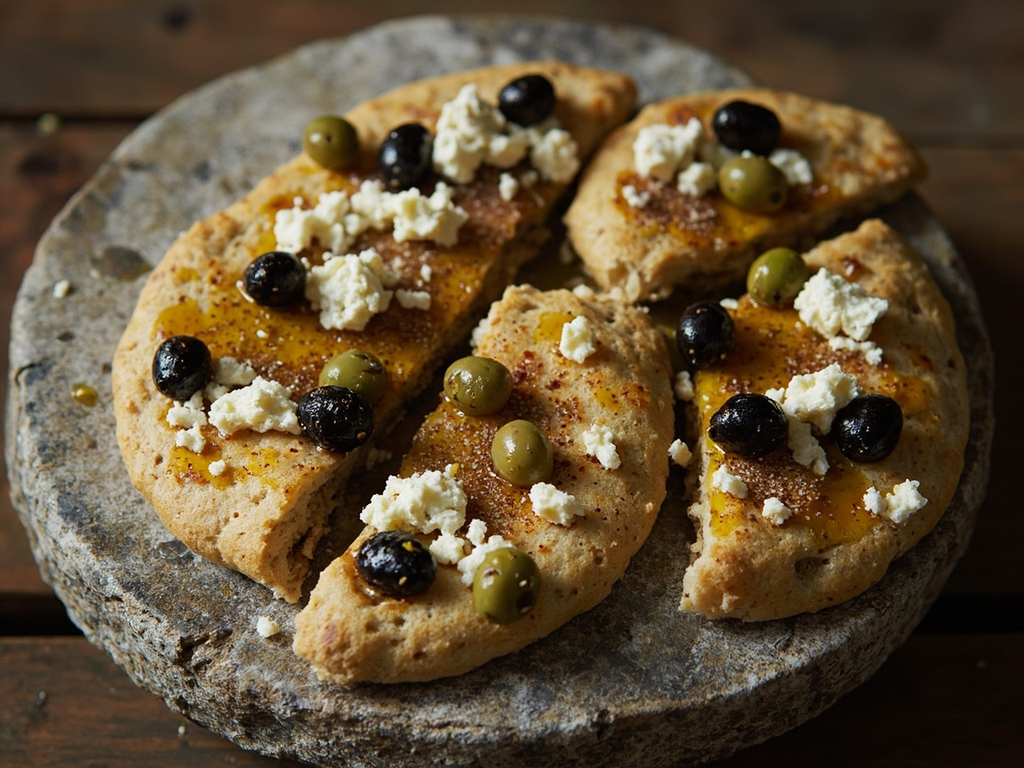
- Serve warm, drizzled with olive oil, with olives and fresh cheese.
How it was made : Maza was distinct from artos (true leavened bread, more expensive): it was often eaten without cooking, as a soft paste, or dried for preservation. It was the staple food of the lower classes and Greek soldiers.
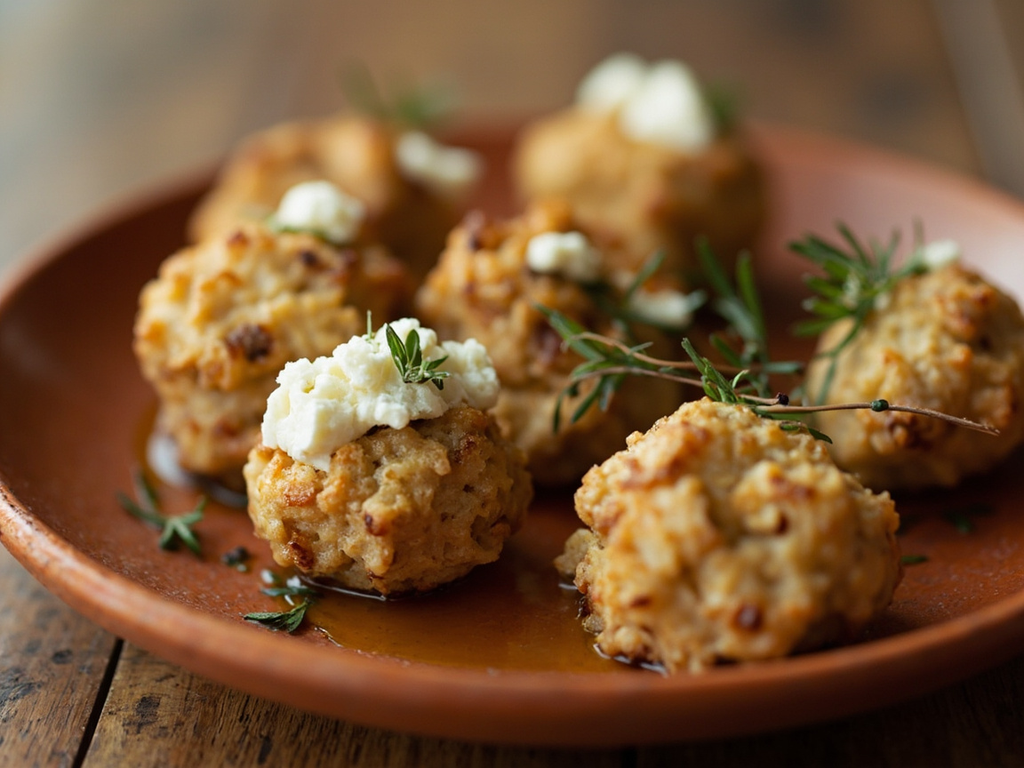
The contemporary twist : Broken into crispy shards and sprinkled over a fresh cheese and pomegranate salad, like a goddess's "cracker bread."
Sources : Athenaeus of Naucratis, The Deipnosophists (Book III) · Andrew Dalby, Food in the Ancient World from A to Z (2003)
Persephone · Charactorium