 flip
flipMaza, the Sailors' Barley Cake
Maza, the Sailors' Barley Cake
Why this dish? This is the bread of the humble, especially of fishermen and sailors who entrust their lives to Poseidon before every crossing. On the shores of Corinth and Cape Sounion, where his temples rise, barley nourishes those who live from the sea and pray to the Earth-Shaker to calm the waves.
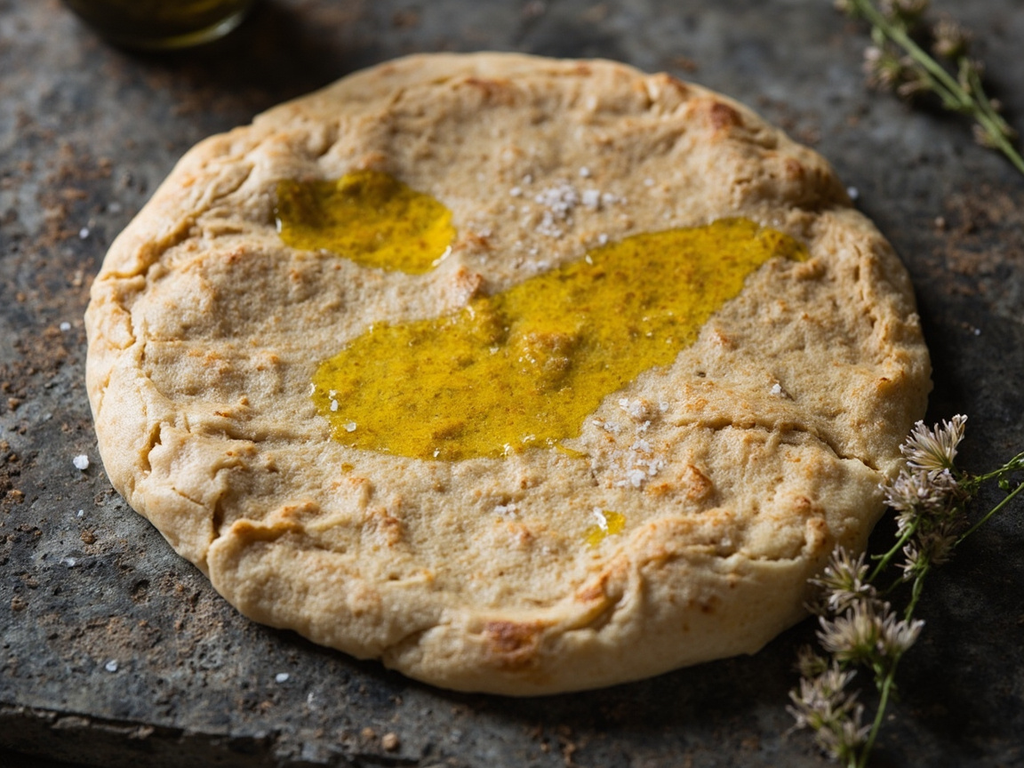
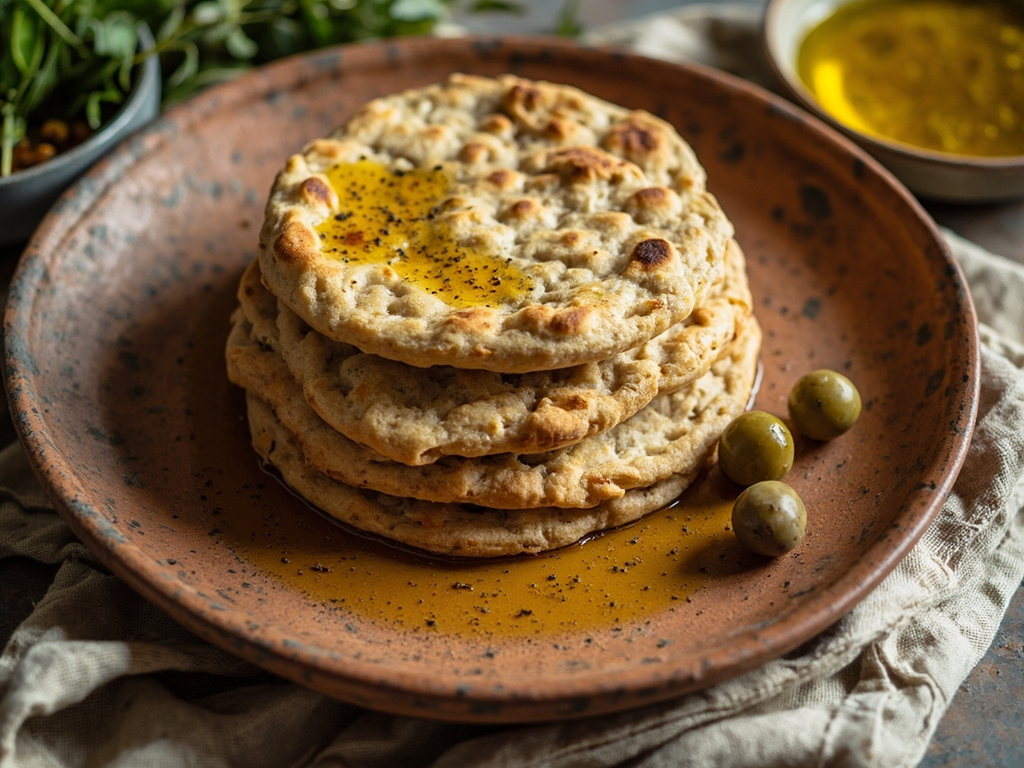
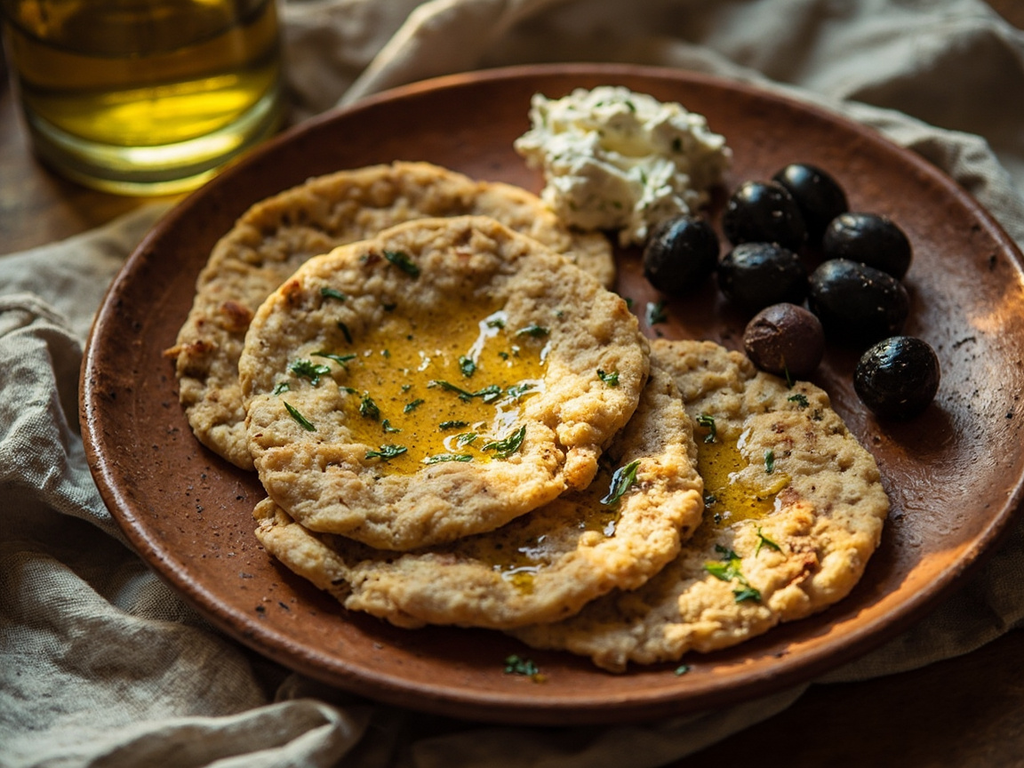
A dense barley cake, toasted and kneaded, sometimes barely cooked, sometimes eaten raw like a firm dough. Invigorating, slightly bitter, seasoned with a pinch of sea salt — the most common daily food in ancient Greece.
Mortal, lend your ear to the Earth-Shaker. This coarse barley bread is what the fishermen of Sounion offer me before pushing their boat onto my waters — poor, yes, but honest like the hand that hauls the net. They toast the grain on a hot stone, crush it in a mortar, knead it with a little water and oil, and chew in silence. Remember: he who eats humbly and pours a drop in my name, I bring him back to port.
- •Toasted barley flour (alphita) — in abundance (base)
- •Spring water — as needed (binder)
- •Olive oil — a drizzle (binder and flavor)
- •Sea salt — a pinch (seasoning)
Maza, the Sailors' Barley Cake
A dense barley cake, toasted and kneaded, sometimes barely cooked, sometimes eaten raw like a firm dough. Invigorating, slightly bitter, seasoned with a pinch of sea salt — the most common daily food in ancient Greece.
Why this dish? This is the bread of the humble, especially of fishermen and sailors who entrust their lives to Poseidon before every crossing. On the shores of Corinth and Cape Sounion, where his temples rise, barley nourishes those who live from the sea and pray to the Earth-Shaker to calm the waves.
Mortal, lend your ear to the Earth-Shaker. This coarse barley bread is what the fishermen of Sounion offer me before pushing their boat onto my waters — poor, yes, but honest like the hand that hauls the net. They toast the grain on a hot stone, crush it in a mortar, knead it with a little water and oil, and chew in silence. Remember: he who eats humbly and pours a drop in my name, I bring him back to port.
Ingredients (period version)
- Toasted barley flour (alphita) — in abundance (base)
- Spring water — as needed (binder)
- Olive oil — a drizzle (binder and flavor)
- Sea salt — a pinch (seasoning)
Ingredients
- Barley flour (or blended barley flakes) — 250 g (base)
- Warm water — about 130 ml (binder)
- Extra virgin olive oil — 2 tbsp (binder and flavor)
- Sea salt — 1/2 tsp (seasoning)
Method
- Dry-toast the barley flour in a pan for a few minutes until it smells nutty, then let it cool slightly.
- Mix flour, salt, olive oil, and add water little by little to obtain a firm but pliable dough.
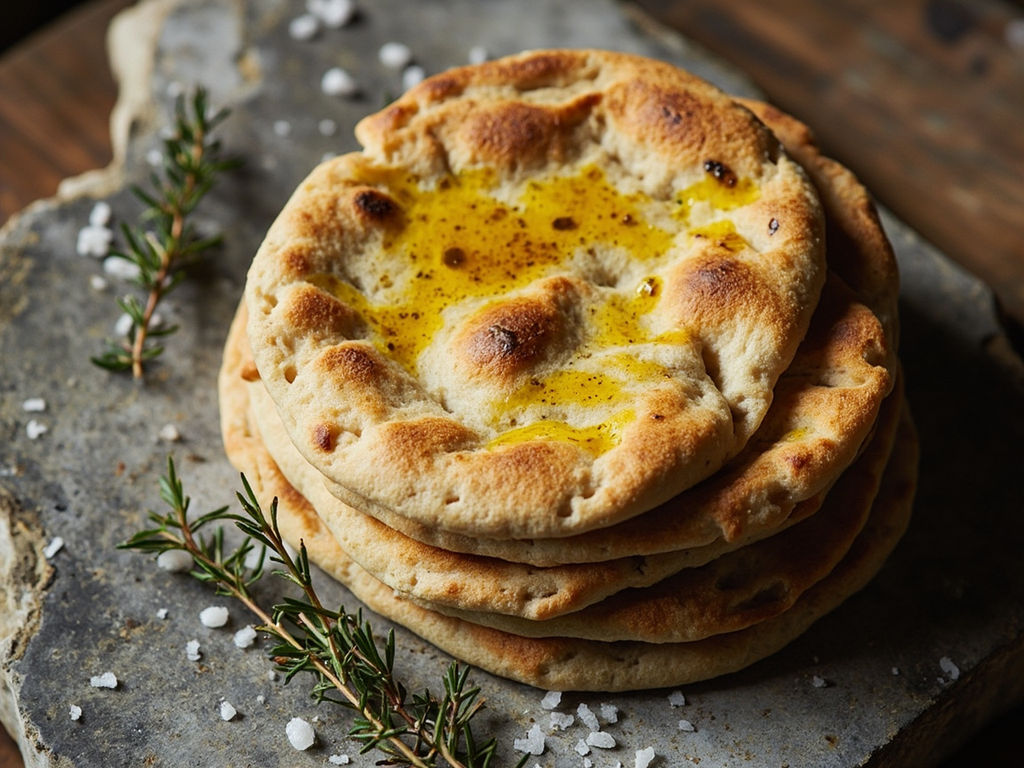
- Knead for 5 minutes, then shape into palm-thick cakes.
- Cook on a hot stone or dry pan for 4 to 5 minutes per side, until browned.
- Serve warm, drizzled with olive oil.
How it was made : Barley grew better than wheat on the poor, dry soils of Greece; maza was therefore the true daily bread of the people, while wheat bread remained a luxury. It was consumed in a thousand forms, sometimes simply kneaded without actual cooking.
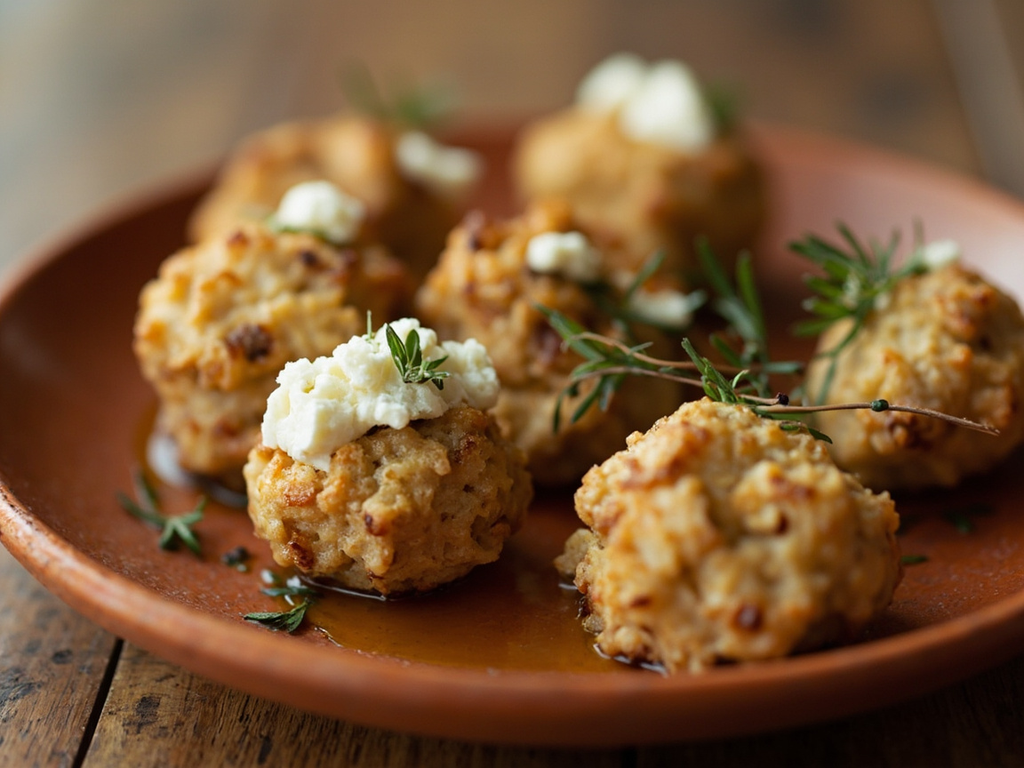
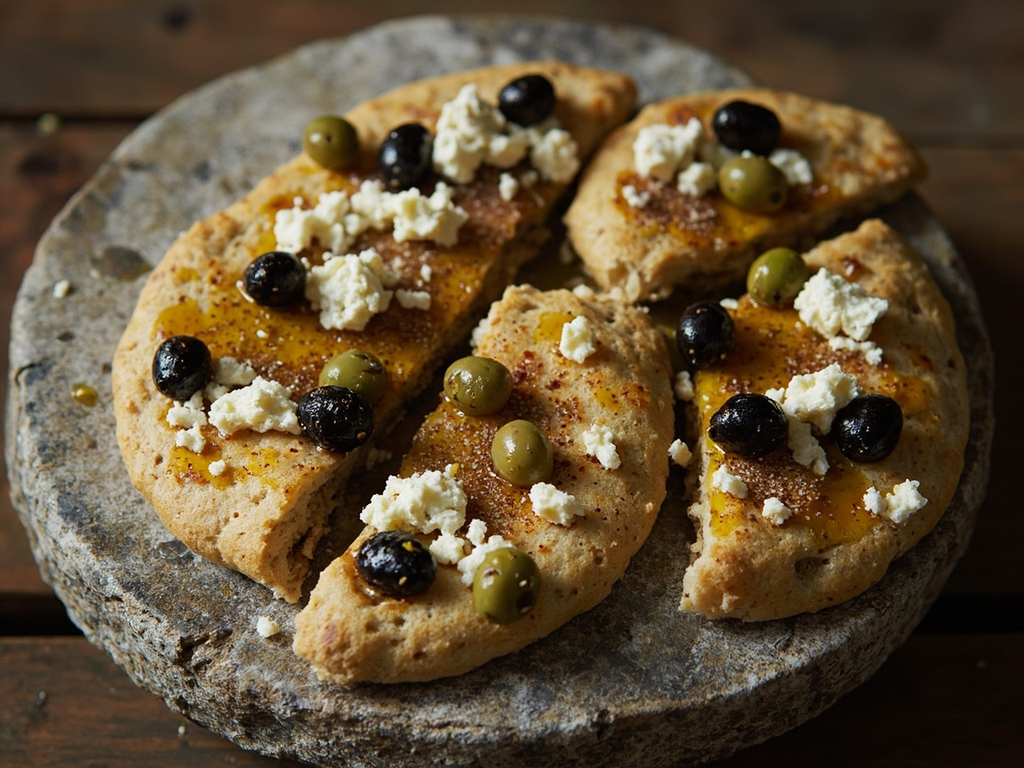
The contemporary twist : Served as mini appetizer cakes, split and filled with tapenade and a shaving of sheep's cheese: a nod to 'street food of Olympus.'
Sources : Andrew Dalby, Siren Feasts: A History of Food and Gastronomy in Greece, Routledge, 1996 · Athenaeus of Naucratis, The Deipnosophists
Poseidon · Charactorium