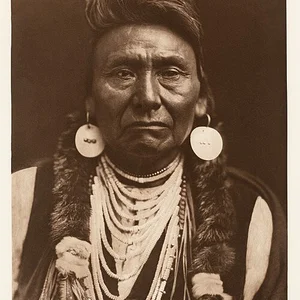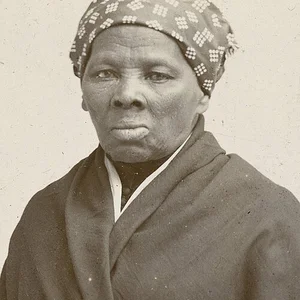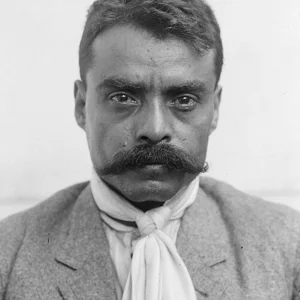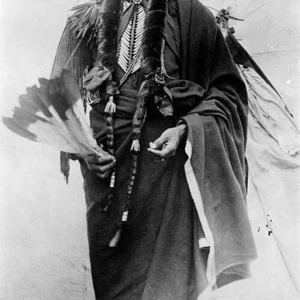

Quanah Parker was the last great chief of the Quahadi Comanches. The son of Chief Peta Nocona and Cynthia Ann Parker, a white captive, he led armed resistance against the advance of settlers and the U.S. Army, before becoming a respected mediator between his people and the United States government.
Quanah Parker(1845 — 1911)
Quanah Parker
États-Unis
6 min read
Frequently asked questions
Key Facts
- Son of Cynthia Ann Parker, a white captive, and the Comanche chief Peta Nocona (born around 1845-1852)
- Led the Quahadi warriors at the Battle of Adobe Walls in 1874 against the buffalo hunters
- Surrendered with his band at Fort Sill in 1875, marking the end of Comanche resistance on the plains
- Became a recognized chief on the reservation, a prosperous rancher, and a promoter of the peyote religion (Native American Church)
- Died in 1911 in Cache, Oklahoma
Works & Achievements
Quanah united the warriors of the fiercest band to resist the American advance, becoming their undisputed war chief.
A major assault he led against the buffalo hunters; a symbol of the desperate struggle to protect the land and the herds.
By leading his people to Fort Sill, Quanah chose survival and began his transformation into a mediator between the Comanches and the government.
Recognized as a judge and spokesman, he defended Comanche interests, negotiated the leasing of the land, and worked for the education of the young.
A promoter of the peyote religion, he helped shape a spiritual movement still alive among many Native Americans today.
A remarkable residence near Cache, a testament to his success and status, where he practiced hospitality toward both whites and Indians.
Anecdotes
Quanah Parker was the son of Cynthia Ann Parker, a white child captured by the Comanches in 1836 at the age of nine. Having become Comanche at heart, she married the chief Peta Nocona. Quanah proudly bore his mother's family name, a rare thing for an Indian chief.
In June 1874, at the Battle of Adobe Walls, Quanah led about 700 warriors against a handful of buffalo hunters who had dug in. The hunters' long-range Sharps rifles broke the assault: one marksman, Billy Dixon, is said to have hit a warrior from nearly a mile away.
After his surrender in 1875, Quanah did not remain a defeated chief: he learned English, invested in ranching and the railroad, and became one of the wealthiest Native Americans of his time. He negotiated directly with white ranchers over the leasing of Comanche lands.
Quanah practiced and championed the peyote religion, which gave rise to the Native American Church. He often said: “The white man goes into his church and talks about Jesus. The Indian goes into his tipi and talks to Jesus.”
In 1905, Quanah Parker was invited to march in the inaugural parade of President Theodore Roosevelt in Washington, alongside other great Indian chiefs. The two men hunted together and maintained a relationship of mutual respect.
Primary Sources
I want my children to learn the good ways of the white man, but I do not want them to forget that they are Comanche.
The Indians charged like a hurricane; never had I seen such a sight, hundreds of horsemen bearing down on our post.
Chief Quanah Parker proves cooperative and exercises great influence over his people in maintaining the peace.
Key Places
Hunting and living territory of the Quahadi Comanches, where Quanah grew up and led his resistance. Vast prairies roamed by herds of bison.
Former trading post where the famous 1874 battle took place, pitting Quanah against the buffalo hunters holed up there.
Deep canyon that sheltered the last Comanche bands, the scene in 1874 of a decisive U.S. Army attack that destroyed their horses and supplies.
Military post where Quanah and the Quahadi surrendered in 1875, marking the end of Comanche resistance. Quanah later lived here as a chief and mediator.
Large residence that Quanah Parker had built near Cache, decorated with stars on the roof. There he received politicians and Indian chiefs.
Typical Objects

A hunting and war weapon, especially deadly when handled on horseback at full gallop. A Comanche warrior could loose several arrows in just a few seconds.

Adopted by the Plains warriors as trade with the white settlers grew, it transformed Indian warfare. Quanah and his men used it during their raids.

A prestige ornament reserved for chiefs and great warriors, each feather recalling an act of bravery. Quanah Parker is often photographed wearing a long headdress.

A conical dwelling made of bison hides stretched over poles, which could be taken down in a few minutes to follow the herds. A symbol of the nomadic way of life on the Plains.

A small cactus with ritual properties, consumed during spiritual ceremonies. Quanah Parker was a great promoter of it and a founder of the Native American Church.

At the heart of Comanche culture, the horse made the Comanches outstanding riders and hunters, nicknamed the “Lords of the Plains.”
School Curriculum
Vocabulary & Tags
Key Vocabulary
Tags
Daily Life
Morning
In his nomadic youth, Quanah would rise at dawn to tend the horses, the Comanches' most precious resource. Mornings might be spent hunting bison or training for mounted combat.
Afternoon
Afternoons were devoted to preparations: making arrows, maintaining weapons, or moving the camp to follow the herds. After his surrender, he spent his days managing his lands and receiving ranchers and government officials.
Evening
Evenings brought the family and the band together around the fire, where the elders recounted stories and tales of warrior deeds. Later in his life, evenings were sometimes given over to the ritual ceremonies of peyote.
Food
The Comanche diet relied above all on bison meat, dried into pemmican for storage. To this were added game, roots, and berries of the Plains; after settling on the reservation, beef and the goods distributed there rounded out this fare.
Clothing
The Comanches wore garments of tanned hide, moccasins, and leggings, adorned with beads and fringes. As a chief, Quanah donned feathered regalia on great occasions, while sometimes adopting Western dress on the reservation.
Housing
As a child and warrior, Quanah lived in a tipi of bison hides, easy to pitch and take down as the band moved about. Once a prosperous chief, he had the Star House built, a large wooden home marked with painted stars.
Historical Timeline
Period Vocabulary
Liens externes & ressources
Références
Œuvres
Unification des bandes comanches Quahadi
années 1870
Bataille d'Adobe Walls
1874
Reddition et passage à la paix
1875
Médiation et leadership à la réserve
années 1880-1900
Fondation de l'Église amérindienne (peyotl)
fin du XIXe siècle
Construction de la Star House
vers 1890