 flip
flipBarley Tharīd with Lamb and Leeks
Barley Tharīd with Lamb and Leeks
Why this dish? Tharīd, bread broken and soaked in meat broth, was the honorary dish shared on great occasions and praised in prophetic tradition. It is precisely this kind of rich dish that the notables of Basra offered to Rābiʿa — and which she often declined, preferring her dry bread. It is presented here as the festive table she encountered without being attached to it.
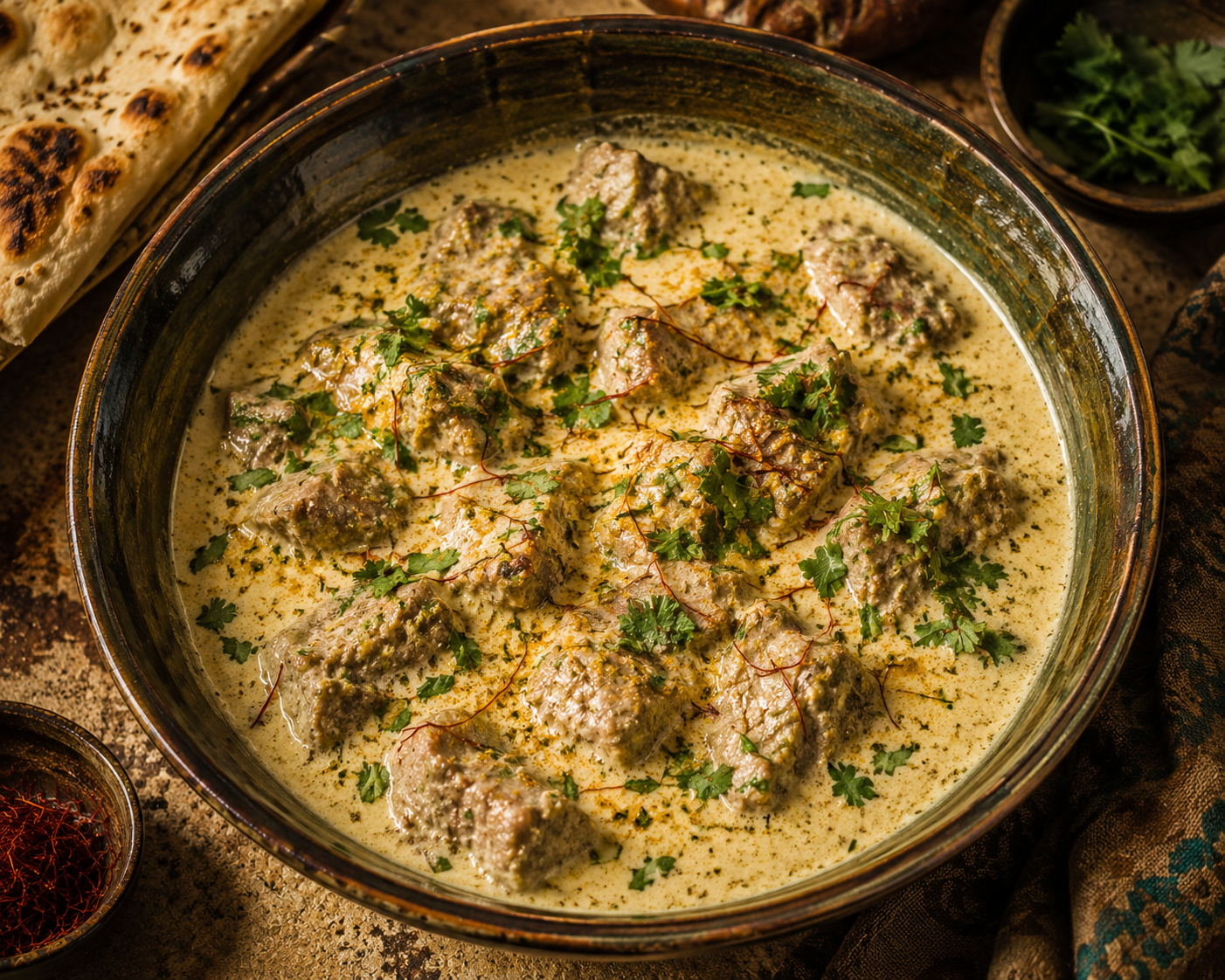
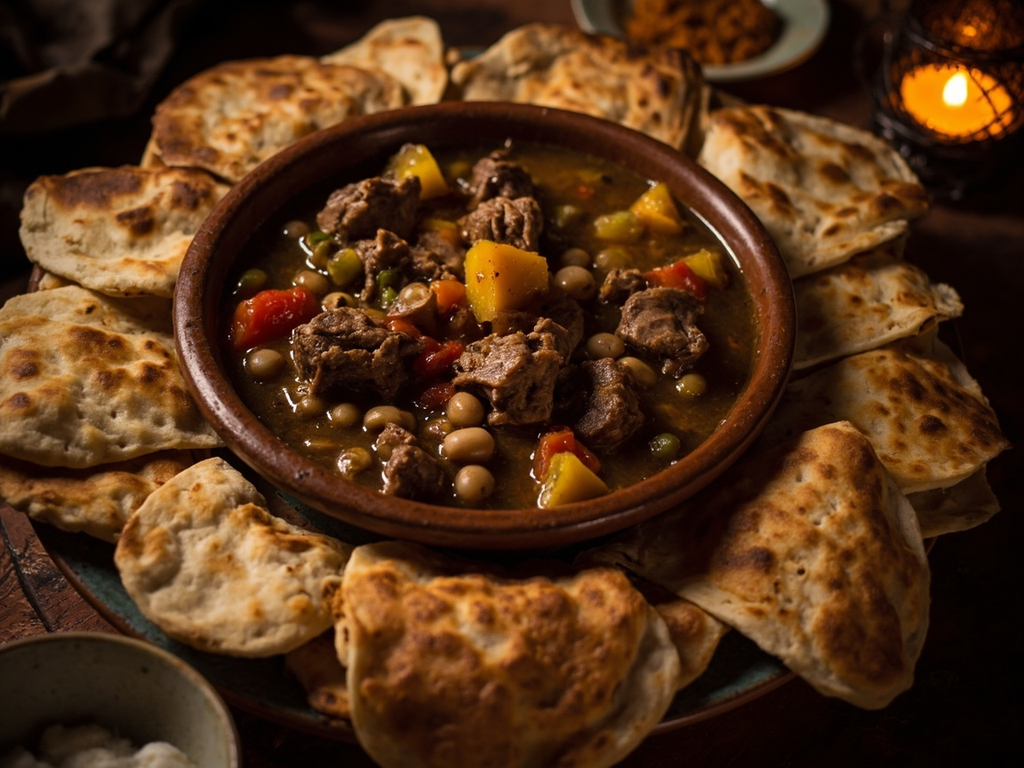
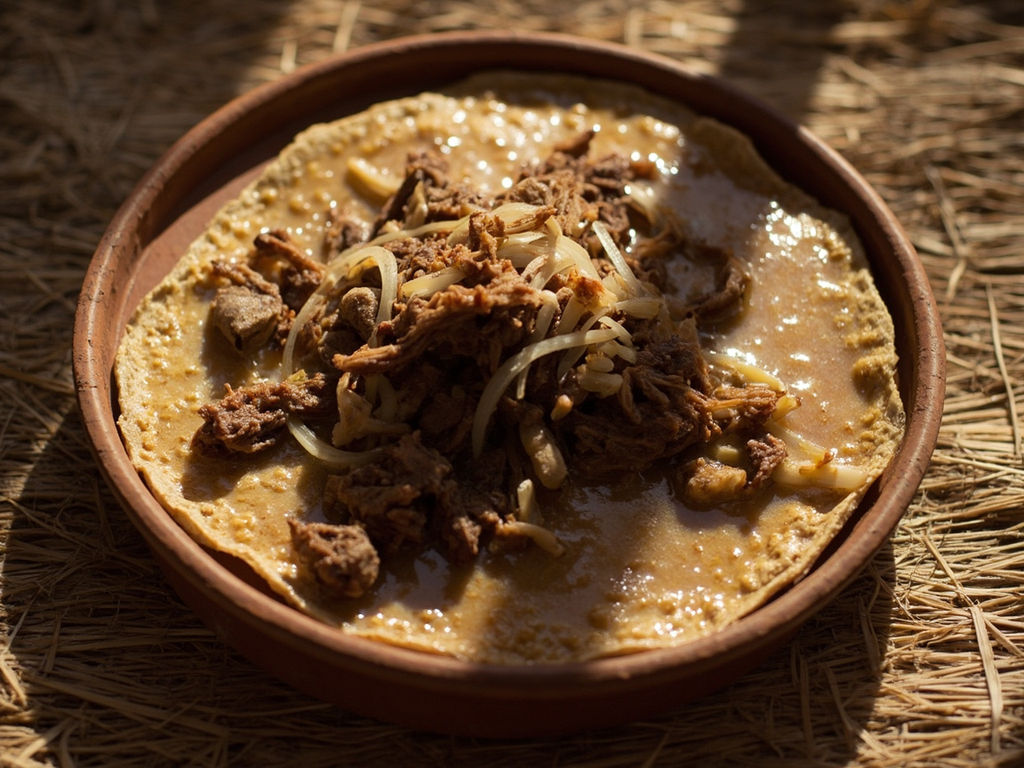
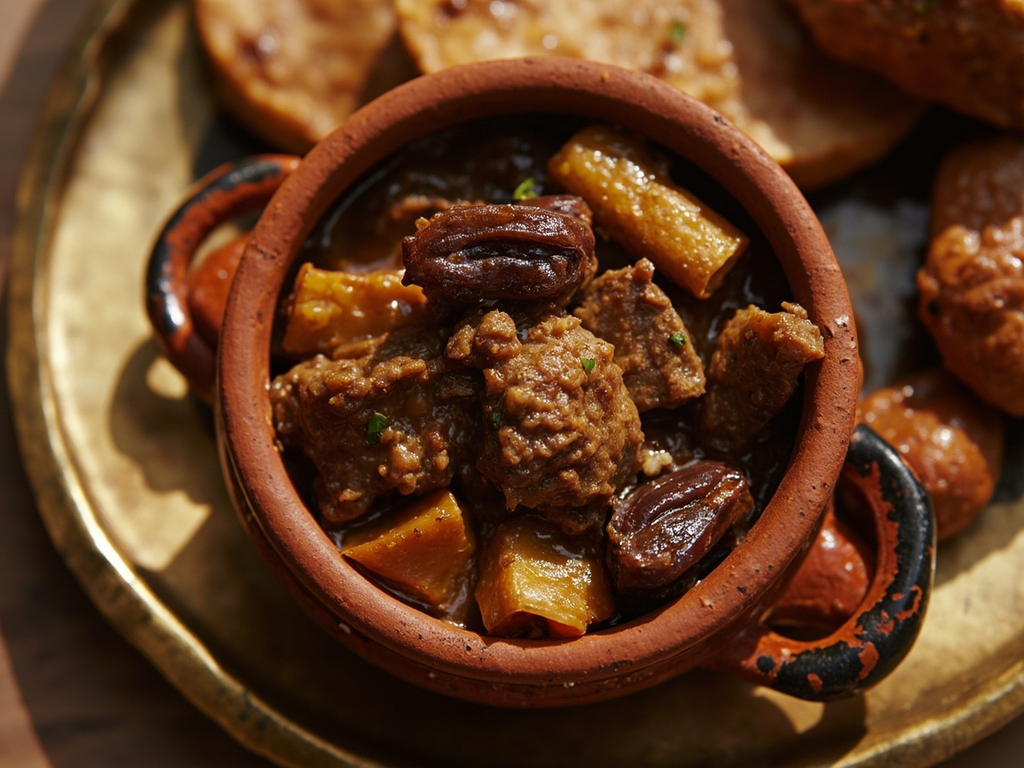
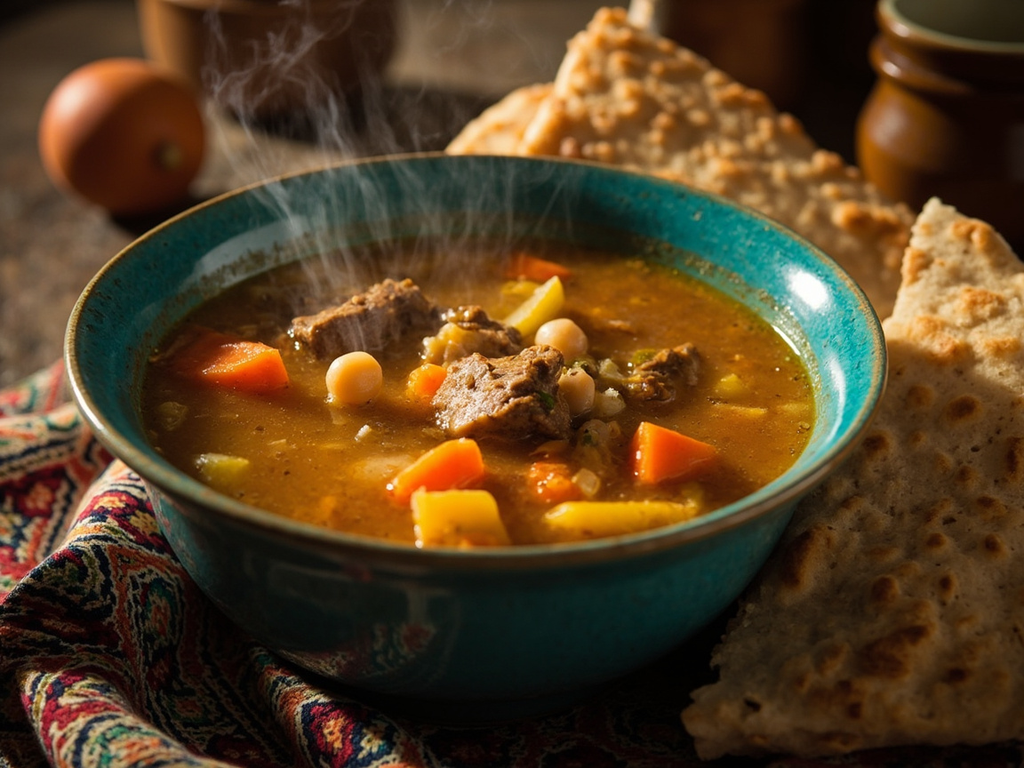
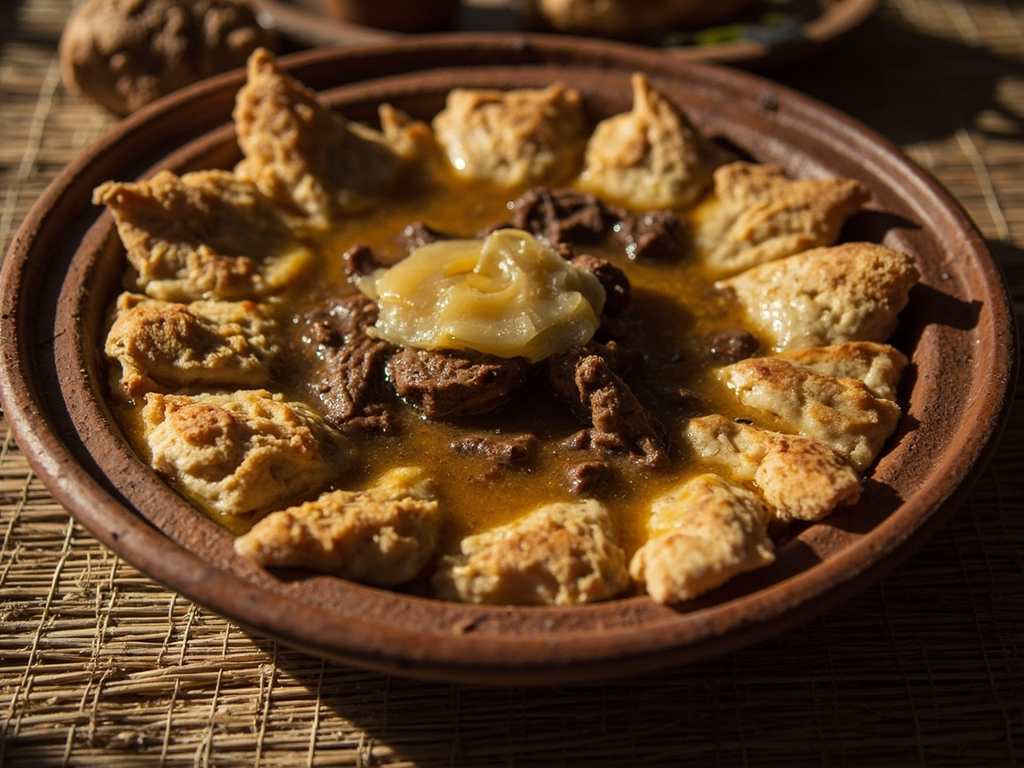
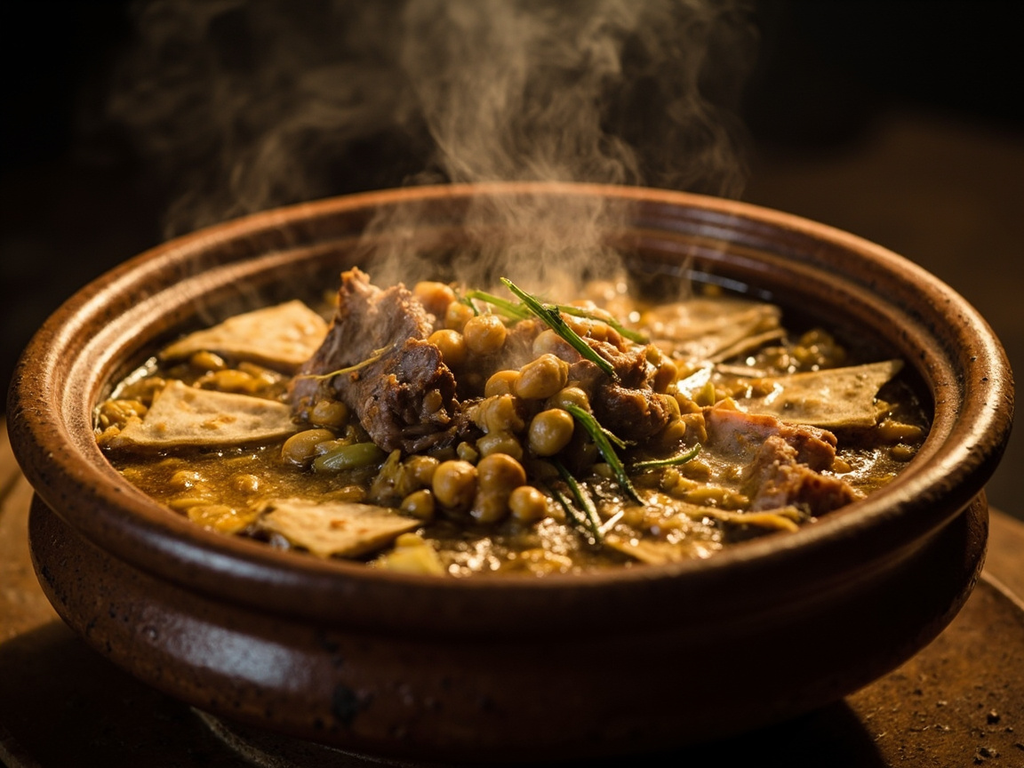
Stale barley bread, broken into pieces at the bottom of a large communal dish, is drenched in a fragrant broth of lamb simmered with leeks, chickpeas, and Eastern spices. The bread soaks up the juice and becomes tender. It is eaten by several hands, from the same dish — the meal of sharing par excellence.
Sometimes they bring me this dish on feast days, steaming, rich with lamb and fragrant with cumin — and people are amazed that I push it back toward them. Eat, you, and be blessed! Here is how it is prepared: the previous day's barley bread is crumbled at the bottom of the large dish, the meat broth in which the leeks and chickpeas have melted is poured over it, and each person reaches their right hand toward the same circle. Sharing is beautiful; but my feast is elsewhere, and a dry crust suffices for me to give thanks.
- •Stale barley bread — several flatbreads (base that soaks up broth)
- •Lamb meat — one piece (richness and umami)
- •Leeks — a few (aromatic vegetable)
- •Chickpeas — one measure, soaked (consistency)
- •Cumin, coriander, cinnamon — to taste (period spices)
- •Olive oil or clarified butter (samn) — a drizzle (fat)
Barley Tharīd with Lamb and Leeks
Stale barley bread, broken into pieces at the bottom of a large communal dish, is drenched in a fragrant broth of lamb simmered with leeks, chickpeas, and Eastern spices. The bread soaks up the juice and becomes tender. It is eaten by several hands, from the same dish — the meal of sharing par excellence.
Why this dish? Tharīd, bread broken and soaked in meat broth, was the honorary dish shared on great occasions and praised in prophetic tradition. It is precisely this kind of rich dish that the notables of Basra offered to Rābiʿa — and which she often declined, preferring her dry bread. It is presented here as the festive table she encountered without being attached to it.
Sometimes they bring me this dish on feast days, steaming, rich with lamb and fragrant with cumin — and people are amazed that I push it back toward them. Eat, you, and be blessed! Here is how it is prepared: the previous day's barley bread is crumbled at the bottom of the large dish, the meat broth in which the leeks and chickpeas have melted is poured over it, and each person reaches their right hand toward the same circle. Sharing is beautiful; but my feast is elsewhere, and a dry crust suffices for me to give thanks.
Ingredients (period version)
- Stale barley bread — several flatbreads (base that soaks up broth)
- Lamb meat — one piece (richness and umami)
- Leeks — a few (aromatic vegetable)
- Chickpeas — one measure, soaked (consistency)
- Cumin, coriander, cinnamon — to taste (period spices)
- Olive oil or clarified butter (samn) — a drizzle (fat)
Ingredients
- Lamb or mutton shoulder — 500 g, in pieces (meat, base of broth)
- Stale barley flatbreads (recipe r1) — 3-4 (base of dish)
- Leeks — 2 (aromatic)
- Cooked chickpeas — 150 g (texture)
- Onion — 1 (aromatic base)
- Ground cumin — 1 tsp (signature spice)
- Ground coriander — 1 tsp (spice)
- Cinnamon — 1 small stick (warm note)
- Clarified butter (samn) or olive oil — 2 tbsp (fat)
- Salt — to taste (seasoning)
Method
- Sauté the chopped onion in clarified butter at the bottom of a pot.
- Add the meat and sear on all sides.
- Add water to cover, cumin, coriander, cinnamon, and salt. Cover and simmer for 1 h 30 over low heat.
- Add the sliced leeks and chickpeas, continue for 30 minutes until the meat is tender.
- Crumble the stale barley flatbreads into the bottom of a large, deep dish.
- Generously pour the hot broth over the bread so it soaks in, then arrange the meat, leeks, and chickpeas on top.
- Serve immediately, at the center of the table, to share.
How it was made : Tharīd is one of the most emblematic dishes of the ancient Arab world: it valorizes stale bread by transforming it into a rich meal. It was prepared in a large communal dish (thurda) and eaten by several people, a sign of hospitality. Abbasid broths commonly combined meat, leafy vegetables (leek, chard) and spices from the East via the trade routes of Basra, the great port of the Empire.
The contemporary twist : Present it in individual portions: a nest of toasted barley bread in a shallow bowl, the broth poured in front of the guest, restaurant-style — tharīd regains its theater of sharing.
Sources : Nawal Nasrallah (trad.), Annals of the Caliphs' Kitchens : Ibn Sayyār al-Warrāq's Kitāb al-Ṭabīkh, Brill, 2007 · Lilia Zaouali, La grande cuisine arabe du Moyen Âge, University of California Press, 2007 · Maxime Rodinson, « Recherches sur les documents arabes relatifs à la cuisine », Revue des études islamiques, 1949
Rābiʿa al-ʿAdawiyya · Charactorium