 flip
flipTuscan Panata with Black Cabbage and Fava Beans
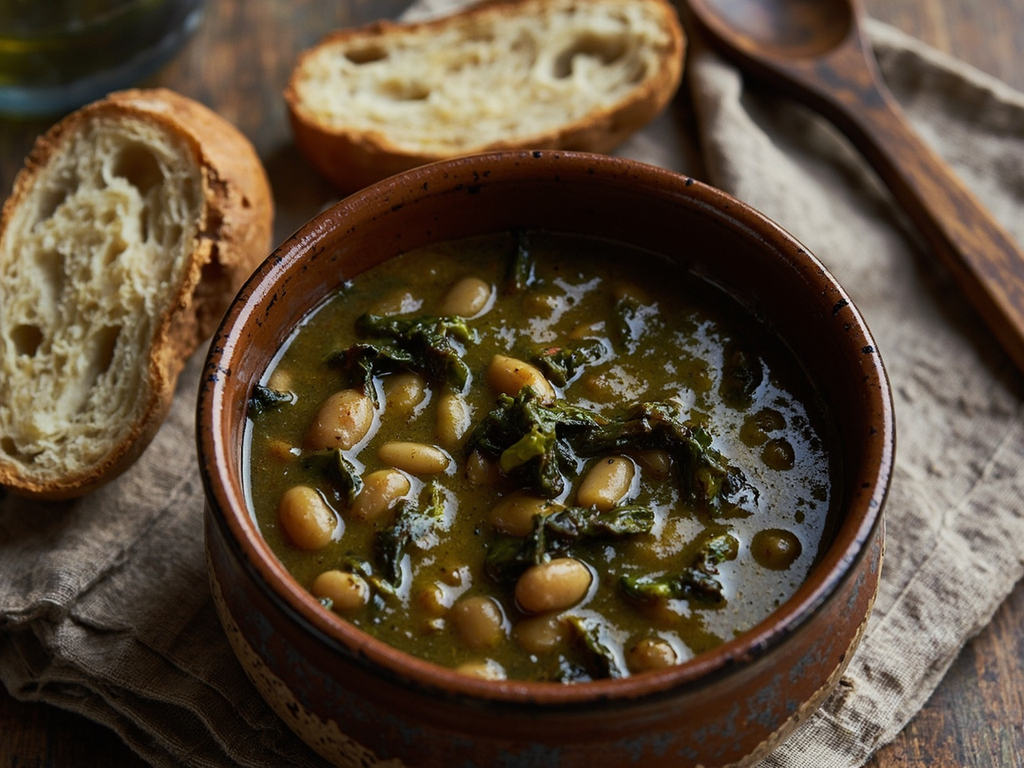
Tuscan Panata with Black Cabbage and Fava Beans
Why this dish? The humble dish of the Florence where Vespucci grew up: a soup of stale bread that transformed leftovers into a meal, as eaten throughout Tuscany before he embarked for Seville.
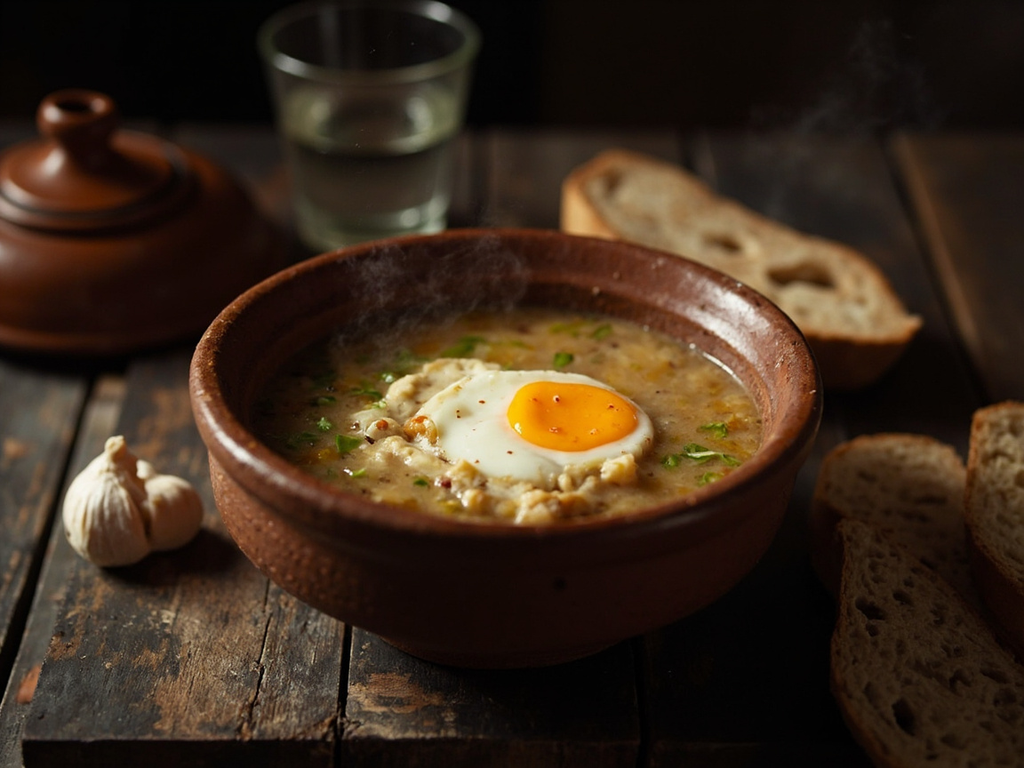
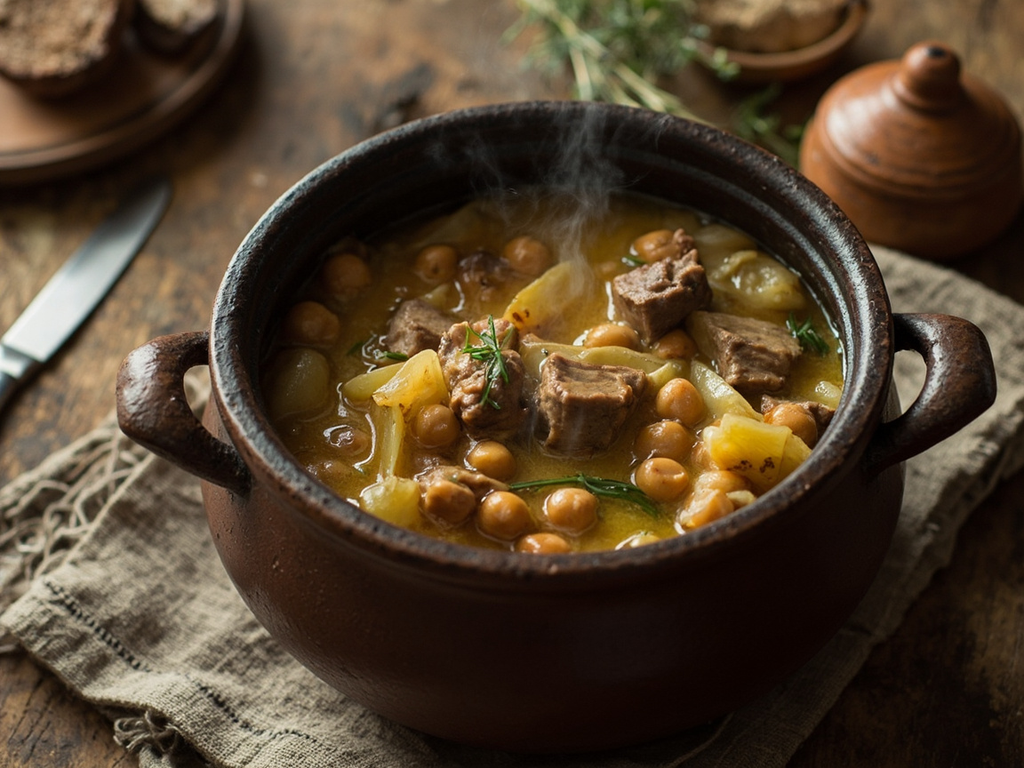
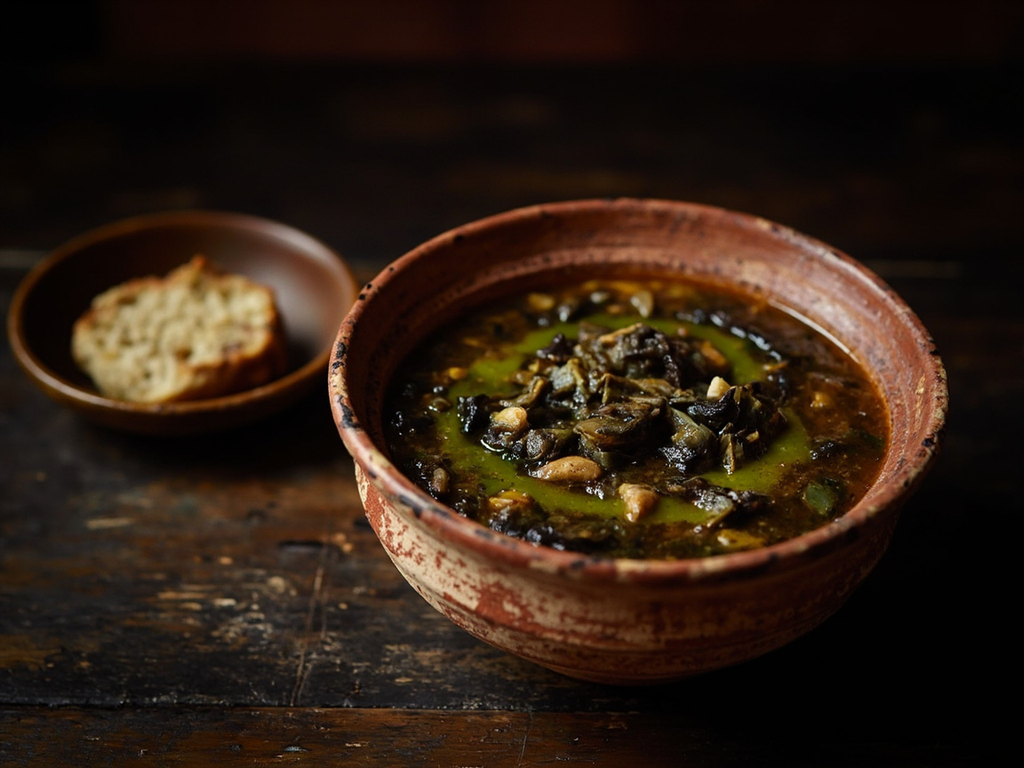
Thick soup of stale bread, Tuscan black cabbage (cavolo nero), and fava beans, simmered in vegetable broth. Typical Florentine peasant recovery cooking, rustic and nourishing.
Before the sea took me, I ate like any Florentine of good house this soup that my nurse made from yesterday's bread. Nothing is thrown away in Florence, you see: the hardened bread is awakened in broth, winter black cabbage and a few fava beans are thrown in, and you stir until the spoon stands upright. A drizzle of green oil on top, and this is a poor man's dish that no prince would be ashamed of.
- •Stale wheat bread — several slices (thickener)
- •Tuscan black cabbage (cavolo nero) — one bunch (bitter vegetable)
- •Dried fava beans — a handful (protein)
- •Onion and garlic — to taste (aromatics)
- •Olive oil — a drizzle (binder and finish)
- •Salt — to taste (seasoning)
Tuscan Panata with Black Cabbage and Fava Beans
Thick soup of stale bread, Tuscan black cabbage (cavolo nero), and fava beans, simmered in vegetable broth. Typical Florentine peasant recovery cooking, rustic and nourishing.
Why this dish? The humble dish of the Florence where Vespucci grew up: a soup of stale bread that transformed leftovers into a meal, as eaten throughout Tuscany before he embarked for Seville.
Before the sea took me, I ate like any Florentine of good house this soup that my nurse made from yesterday's bread. Nothing is thrown away in Florence, you see: the hardened bread is awakened in broth, winter black cabbage and a few fava beans are thrown in, and you stir until the spoon stands upright. A drizzle of green oil on top, and this is a poor man's dish that no prince would be ashamed of.
Ingredients (period version)
- Stale wheat bread — several slices (thickener)
- Tuscan black cabbage (cavolo nero) — one bunch (bitter vegetable)
- Dried fava beans — a handful (protein)
- Onion and garlic — to taste (aromatics)
- Olive oil — a drizzle (binder and finish)
- Salt — to taste (seasoning)
Ingredients
- Stale country bread — 250 g (thickener)
- Cavolo nero (or kale) — 300 g (bitter vegetable)
- Dried shelled fava beans — 150 g (soaked overnight) (protein)
- Onion — 1 (aromatic)
- Garlic cloves — 2 (aromatic)
- Extra virgin olive oil — 4 tbsp (binder and finish)
- Salt — to taste (seasoning)
Method
- Cook the soaked fava beans in 1.5 L water until tender (about 45 min), salt at the end.
- Sauté chopped onion and garlic in olive oil.
- Add shredded black cabbage (ribs removed) and let wilt a few minutes.
- Pour in the fava beans with their cooking water, simmer 20 min.
- Add the stale bread in pieces, mash roughly, and cook another 10 min, stirring: the soup should become thick.
- Let rest, then serve hot with a generous drizzle of raw olive oil.
How it was made : Panata (or pancotto) is the ancestor of Tuscan bread soups. Cavolo nero and fava beans — an Old World legume — were the basis of popular diet; the common bean, from America, would not arrive in Tuscany until after the voyages that Vespucci helped reveal.
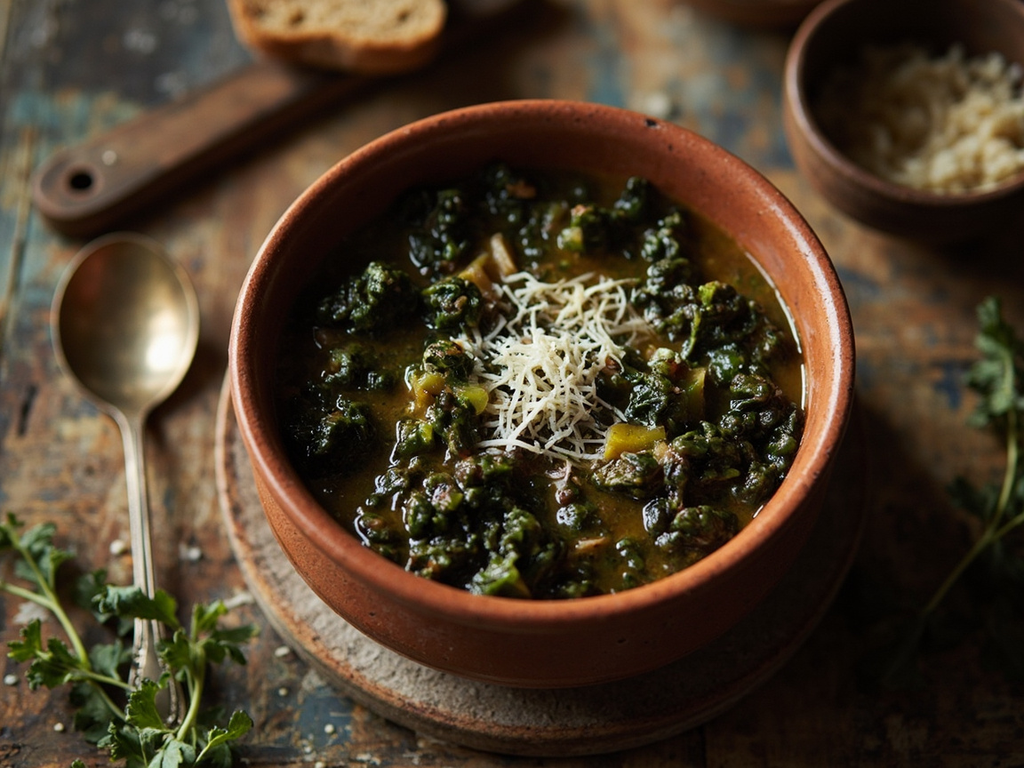
The contemporary twist : Served mounded in a shallow bowl, topped with crispy fried cabbage shards and a tear of new oil.
Amerigo Vespucci · Charactorium