 flip
flipDried Porcini Mushroom Stew (Steinpilzgulasch)
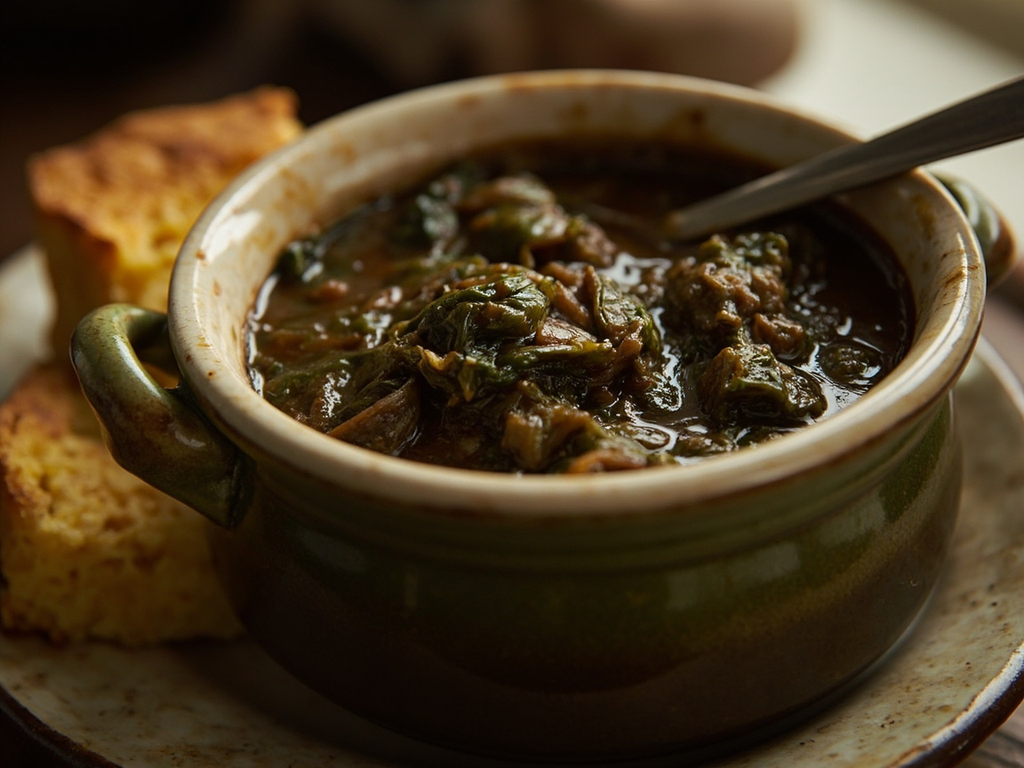
Dried Porcini Mushroom Stew (Steinpilzgulasch)
Why this dish? Freud was a passionate mushroom forager: during summer holidays in the countryside, he would lead his family into the forest, spot porcini with childlike joy, and cover his find with his hat. Drying porcini for winter was the traditional way to extend those excursions into the December plate.
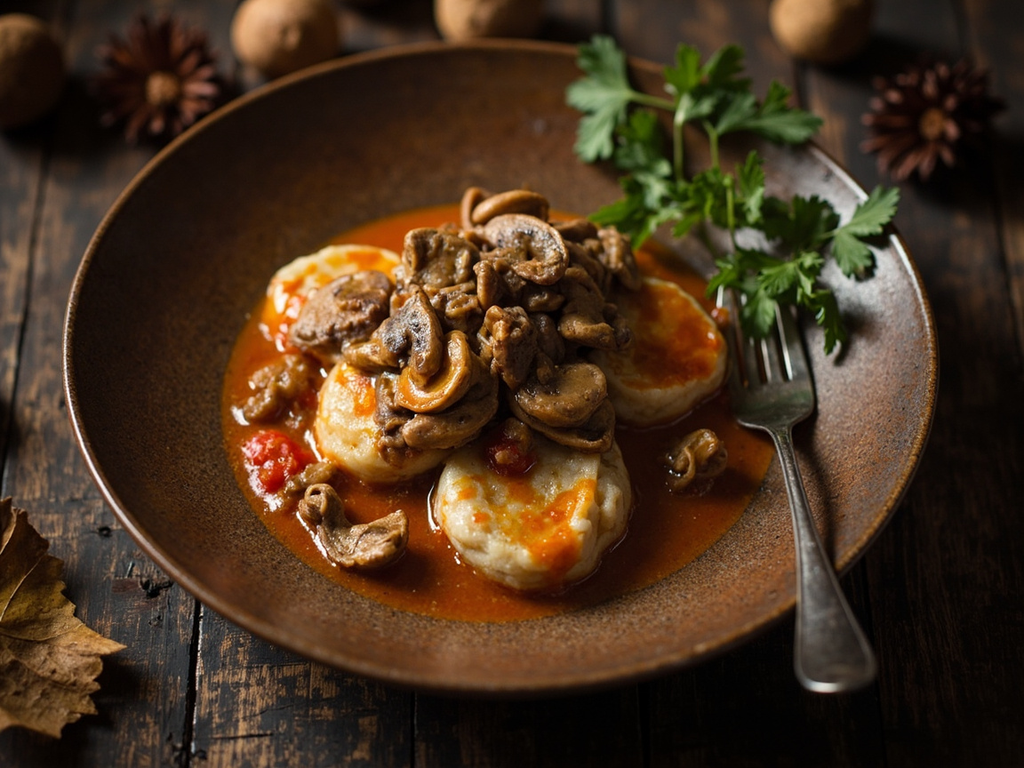
Rehydrated dried porcini, simmered with onion, sweet paprika, and caraway into a fragrant stew served with Knödel (bread dumplings) or noodles. Drying concentrates the mushroom's woody flavor: a winter dish born from a summer forage.
If there is one hunt I prefer above all others, it is that of mushrooms! In summer, as soon as we reach the countryside, I take the children into the forest, and woe to anyone who talks too loud and scares away the game. When I spot a fine porcini, I quickly put my hat on it, as on a butterfly, before calling it out with a whistle — it is mine! What we don't eat fresh, we dry on strings, and when winter comes, a stew of those mushrooms brings back at once the scent of firs and the joy of holidays.
- •Dried porcini mushrooms (Steinpilze) — a good handful (star ingredient)
- •Onion — one large (base)
- •Lard or butter — one spoonful (fat)
- •Sweet paprika — to taste (color and sweetness)
- •Caraway (Kümmel) — a pinch (flavor, regional signature)
- •Sour cream — one spoonful (binding)
Dried Porcini Mushroom Stew (Steinpilzgulasch)
Rehydrated dried porcini, simmered with onion, sweet paprika, and caraway into a fragrant stew served with Knödel (bread dumplings) or noodles. Drying concentrates the mushroom's woody flavor: a winter dish born from a summer forage.
Why this dish? Freud was a passionate mushroom forager: during summer holidays in the countryside, he would lead his family into the forest, spot porcini with childlike joy, and cover his find with his hat. Drying porcini for winter was the traditional way to extend those excursions into the December plate.
If there is one hunt I prefer above all others, it is that of mushrooms! In summer, as soon as we reach the countryside, I take the children into the forest, and woe to anyone who talks too loud and scares away the game. When I spot a fine porcini, I quickly put my hat on it, as on a butterfly, before calling it out with a whistle — it is mine! What we don't eat fresh, we dry on strings, and when winter comes, a stew of those mushrooms brings back at once the scent of firs and the joy of holidays.
Ingredients (period version)
- Dried porcini mushrooms (Steinpilze) — a good handful (star ingredient)
- Onion — one large (base)
- Lard or butter — one spoonful (fat)
- Sweet paprika — to taste (color and sweetness)
- Caraway (Kümmel) — a pinch (flavor, regional signature)
- Sour cream — one spoonful (binding)
Ingredients
- Dried porcini mushrooms — 40 g (star (rehydrated))
- Fresh button mushrooms — 200 g (optional, for volume) (supplement)
- Onion — 1 large (base)
- Butter or lard — 30 g (fat)
- Sweet paprika — 1 tsp (color and flavor)
- Caraway seeds — 1/2 tsp (flavor)
- Thick crème fraîche (or sour cream) — 3 tbsp (binding)
- Flour — 1 tsp (thicken sauce)
- Parsley, salt — to taste (finishing)
Method
- Rehydrate dried porcini in warm water for 30 min; keep the strained soaking water (full of flavor).
- Sweat chopped onion in butter, add caraway, then off the heat add paprika so it doesn't burn.
- Add drained porcini (and sliced fresh mushrooms), sauté, then moisten with the soaking water.
- Simmer for 20 min; dissolve flour in cream and stir in to thicken the sauce, season with salt and pepper.
- Sprinkle with parsley and serve on Knödel (bread dumplings) or wide noodles.
How it was made : Throughout Central Europe, drying mushrooms on strings near the stove was the common way to preserve them all winter, in an era without refrigeration. The porcini (Steinpilz) was especially prized. Rehydrated, they gave body to stews and sauces in the cold months, with onion, paprika from Hungary, and caraway — the basic trio of Austro-Hungarian cuisine.
The contemporary twist : Serve the stew in a half-squash or on creamy polenta for a bistronomic presentation — and keep the porcini soaking water as a "secret broth" for other dishes.
Sigmund Freud · Charactorium