 flip
flipGrilled Lesbos fish with oregano
Grilled Lesbos fish with oregano
Why this dish? Aristotle stayed on the island of Lesbos, where he observed and dissected the marine creatures of the Pyrrha lagoon — research that nourished his History of Animals. Fresh fish, a festive dish prized by the Greeks, was literally under his eyes as both object of study and table pleasure.
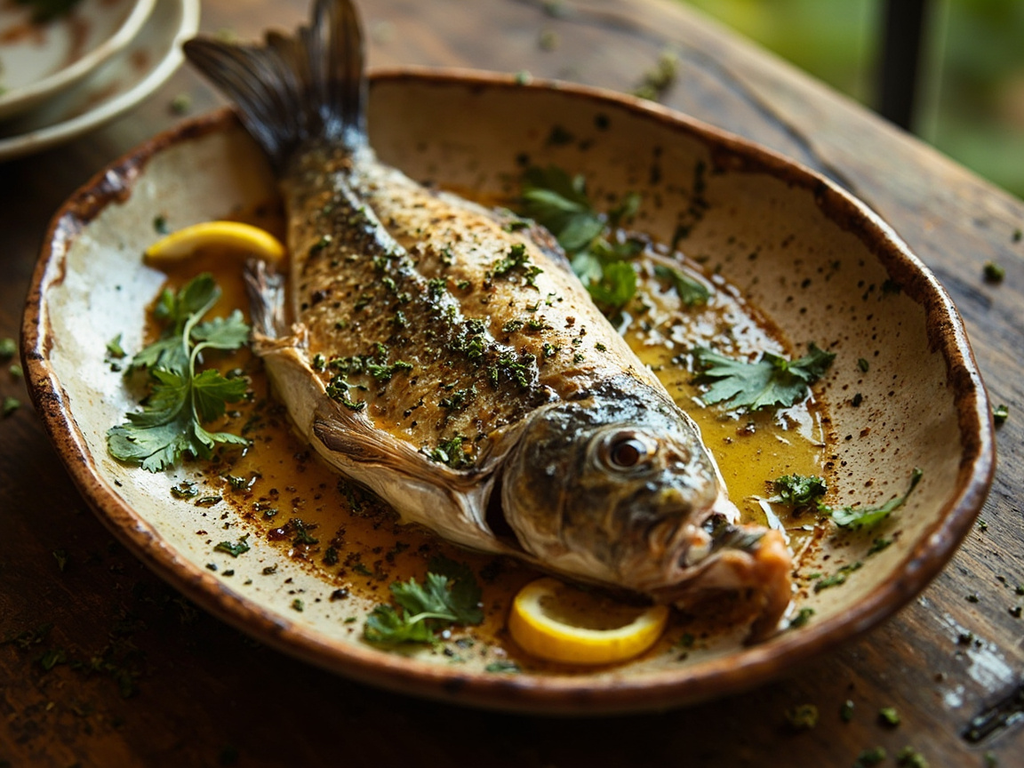
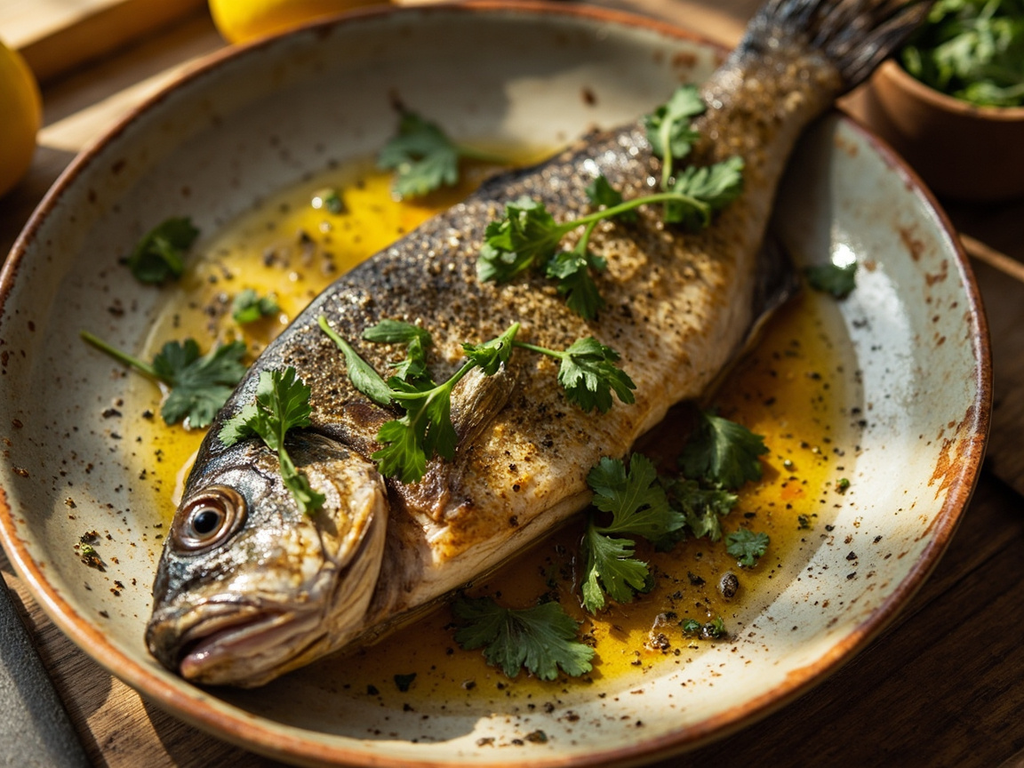
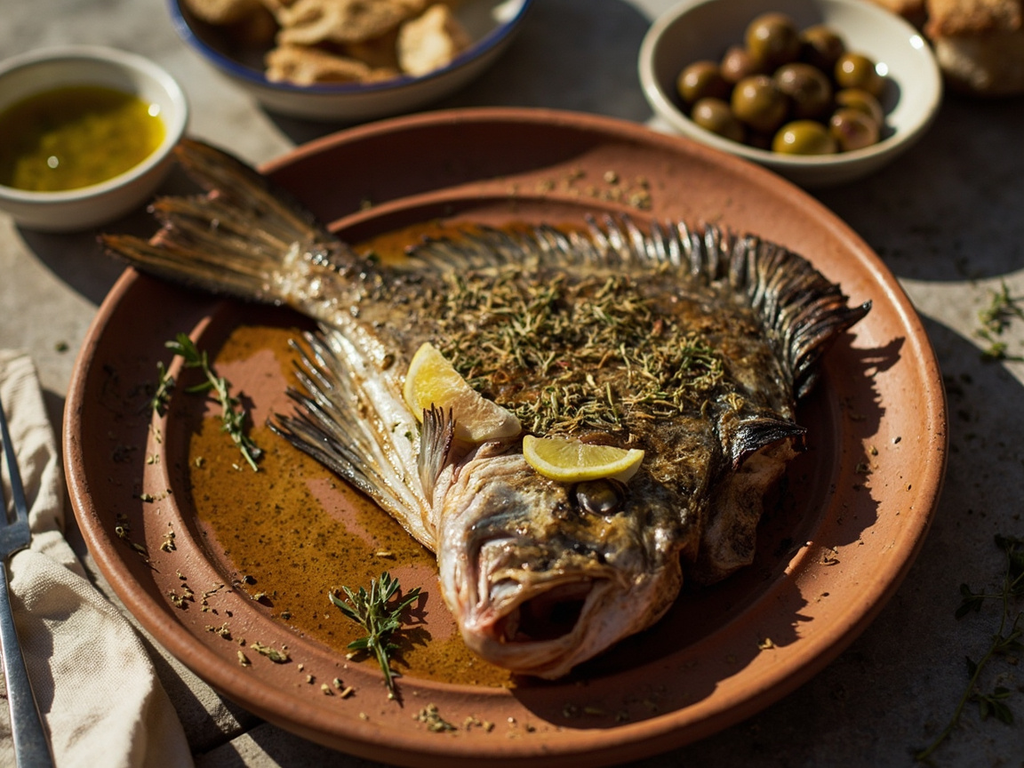
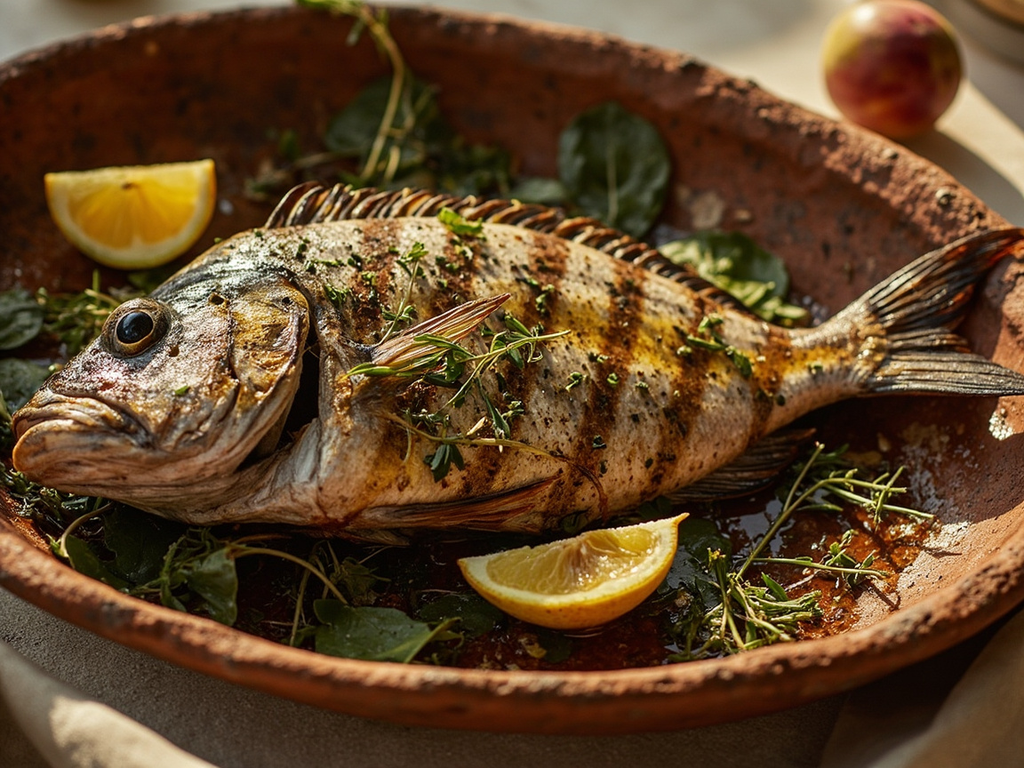
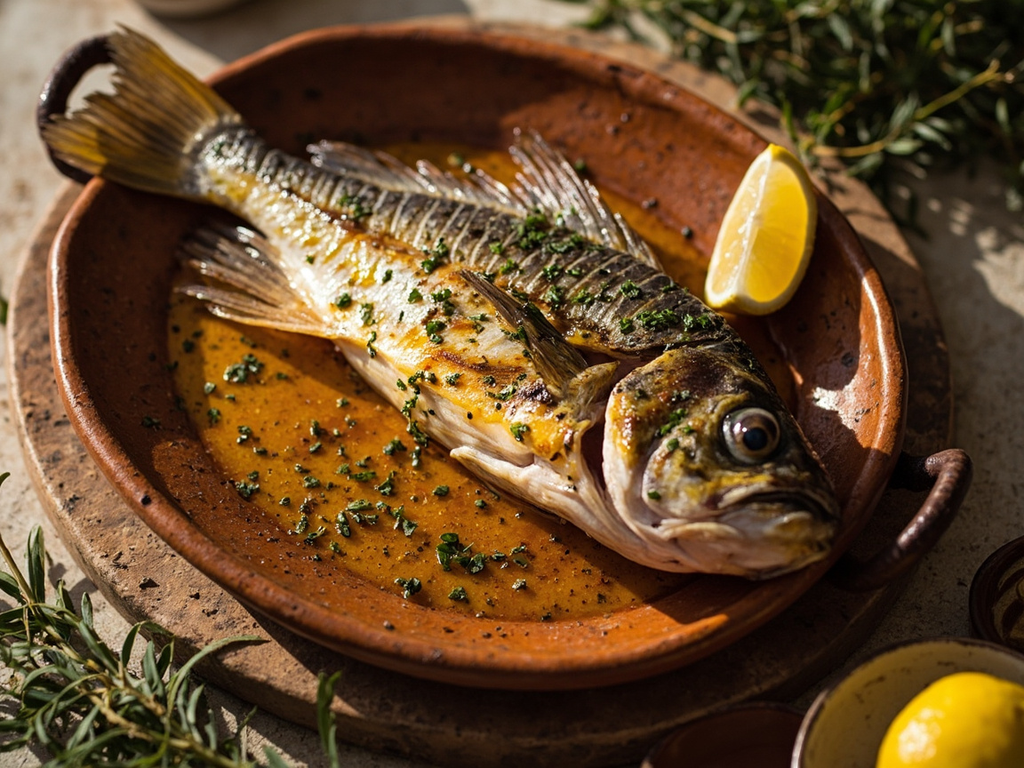
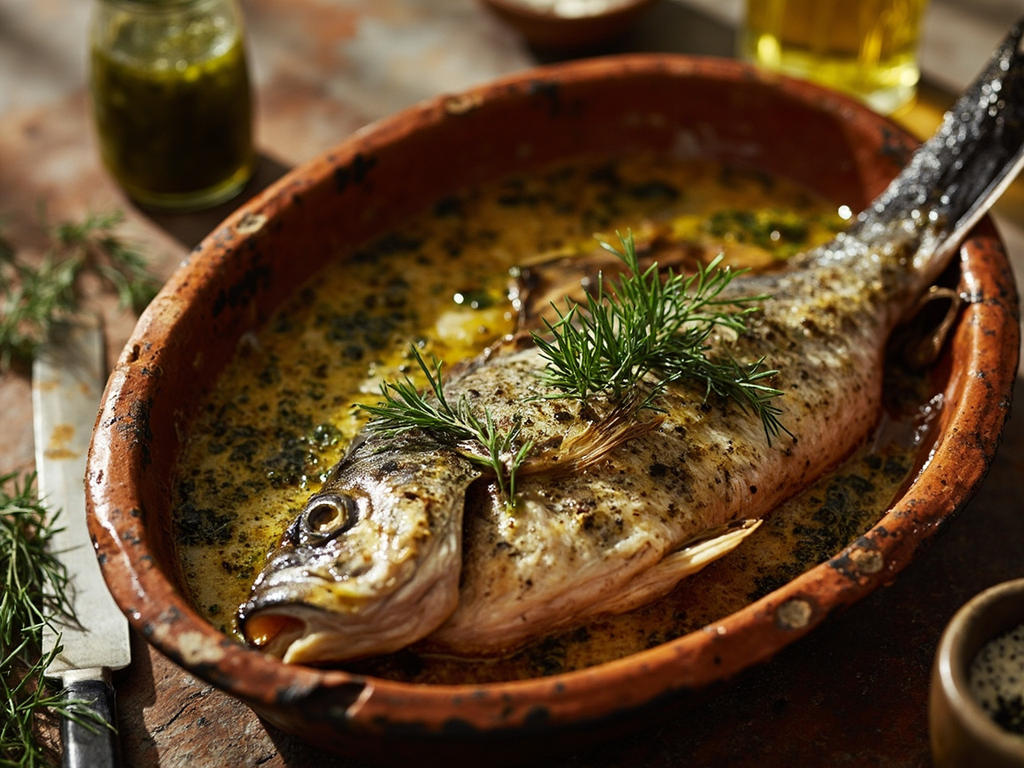
A whole grilled fish, brushed with olive oil and oregano, heightened with a touch of garos (fish brine). The most coveted opson of wealthy Greeks, which crowned a festive dinner.
At Pyrrha, on the shores of Lesbos, I spent my days bent over fish: their gills, their manner of spawning, the number of their fins — nothing escaped me, for knowing the living animal illuminates the animal served. Choose it firm and clear-eyed, rub it with oil and oregano, and entrust it to the embers without troubling it. A drop of garos suffices to awaken its flesh. Study nature first, then honor it with a meal worthy of it.
- •Whole sea fish (sea bream, red mullet, sea bass) — a fine one (heart of the dish)
- •Olive oil — generous (fat and binder)
- •Dried oregano — to perfume (signature herb)
- •Garos (fish brine) — a few drops (umami)
- •Sea salt — to taste (seasoning)
Grilled Lesbos fish with oregano
A whole grilled fish, brushed with olive oil and oregano, heightened with a touch of garos (fish brine). The most coveted opson of wealthy Greeks, which crowned a festive dinner.
Why this dish? Aristotle stayed on the island of Lesbos, where he observed and dissected the marine creatures of the Pyrrha lagoon — research that nourished his History of Animals. Fresh fish, a festive dish prized by the Greeks, was literally under his eyes as both object of study and table pleasure.
At Pyrrha, on the shores of Lesbos, I spent my days bent over fish: their gills, their manner of spawning, the number of their fins — nothing escaped me, for knowing the living animal illuminates the animal served. Choose it firm and clear-eyed, rub it with oil and oregano, and entrust it to the embers without troubling it. A drop of garos suffices to awaken its flesh. Study nature first, then honor it with a meal worthy of it.
Ingredients (period version)
- Whole sea fish (sea bream, red mullet, sea bass) — a fine one (heart of the dish)
- Olive oil — generous (fat and binder)
- Dried oregano — to perfume (signature herb)
- Garos (fish brine) — a few drops (umami)
- Sea salt — to taste (seasoning)
Ingredients
- Whole sea bream or sea bass, gutted — 1 (about 600 g) (heart of the dish)
- Olive oil — 3 tbsp (fat and binder)
- Dried oregano — 1 tbsp (signature herb)
- Fish sauce (colatura or nuoc-mam, in lieu of garos) — 1 tsp (umami)
- Salt and lemon (optional) — to taste (seasoning)
Method
- Score the fish on the flanks and rub it with olive oil, salt and oregano, inside and out.
- Let rest 15 minutes while the embers (or grill) heat up.
- Grill over high heat 5 to 7 minutes per side, without turning too much, until the skin is golden and crispy.
- When serving, drizzle with diluted fish sauce and fresh olive oil.
- Present whole on the barley cake or a bed of herbs.
How it was made : Fresh fish (the opson par excellence) was a sought-after luxury in Athens: the best cuts drove up prices at the market. It was simply grilled over embers, olive oil and herbs being enough to elevate it; garos, the Greek ancestor of Roman garum, provided the salty-umami depth.
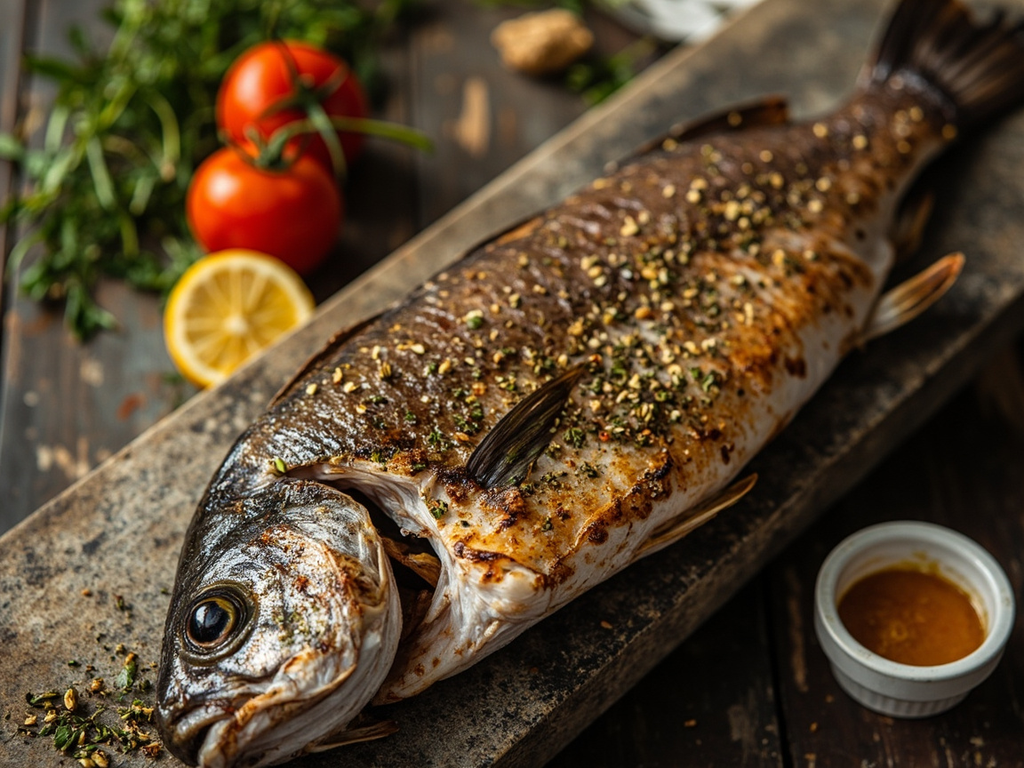
The contemporary twist : Plate it "like a naturalist": whole fish on slate, fresh herbs fanned out, small bowl of sauce on the side, observation-board style.
Sources : Aristotle, History of Animals · Athenaeus, The Deipnosophists · James Davidson, Courtesans and Fishcakes
Aristotle · Charactorium