 flip
flipBarley Grouta with Fava Beans and Liquamen
Barley Grouta with Fava Beans and Liquamen
Why this dish? Theodosius II was of austere piety, nicknamed "the Calligrapher" for his devotion; he rigorously observed Christian fasts. This barley porridge, a staple food of monks and common people, also appeared at the imperial table on fast days, simply ennobled by better spices.
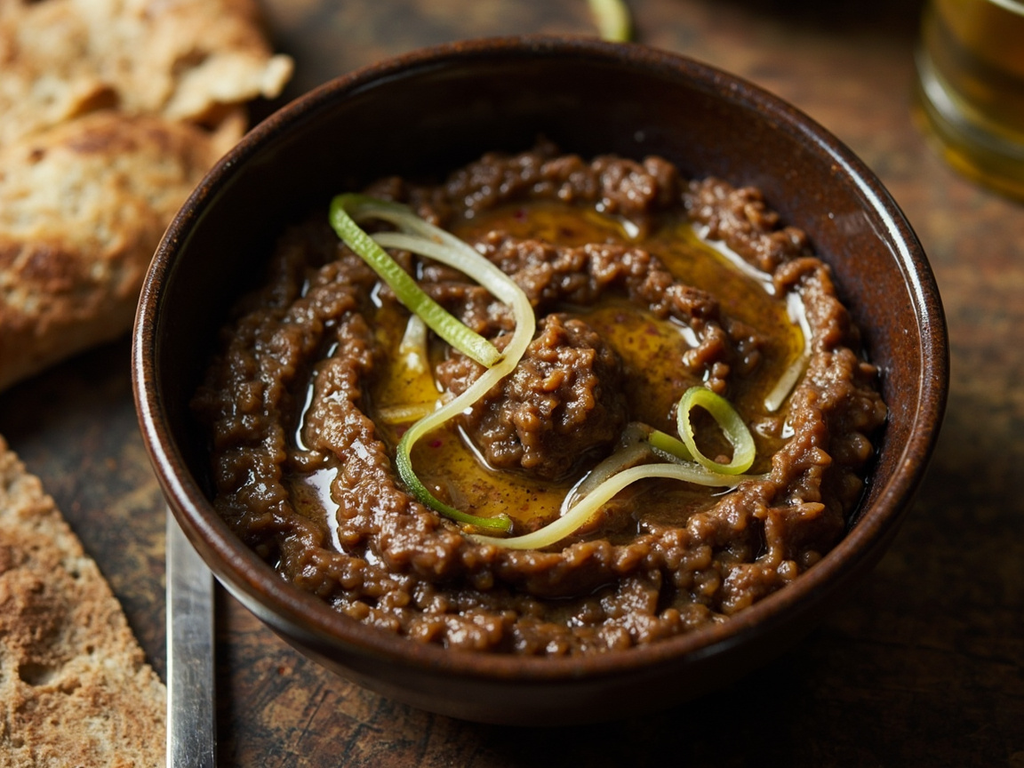
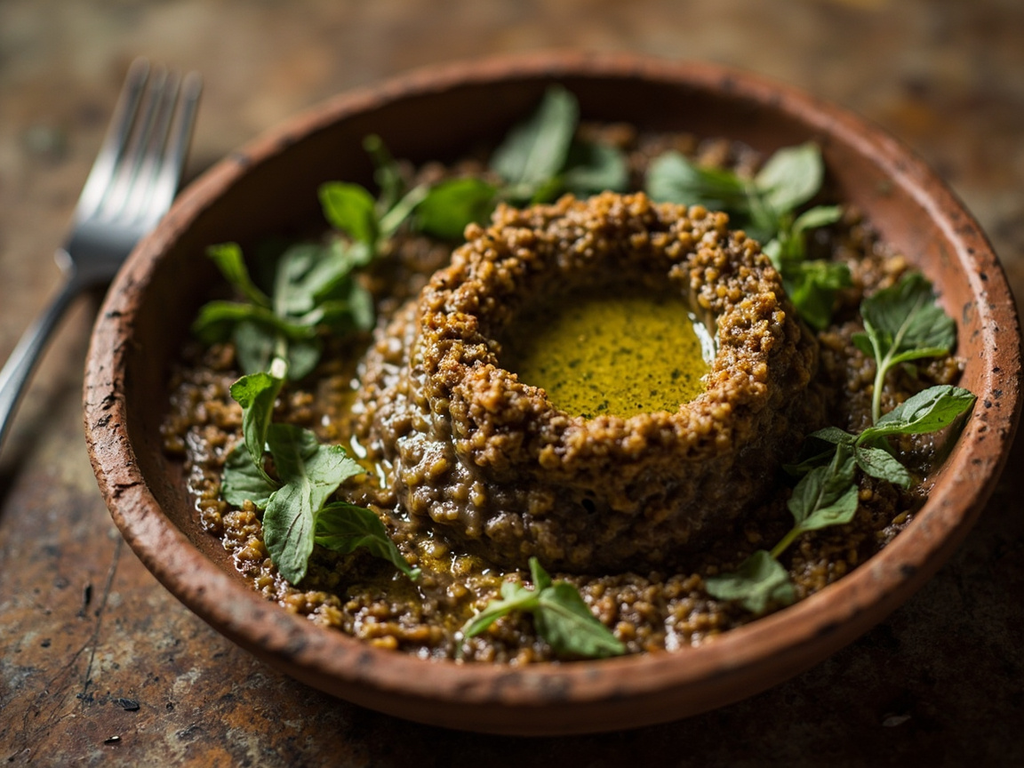
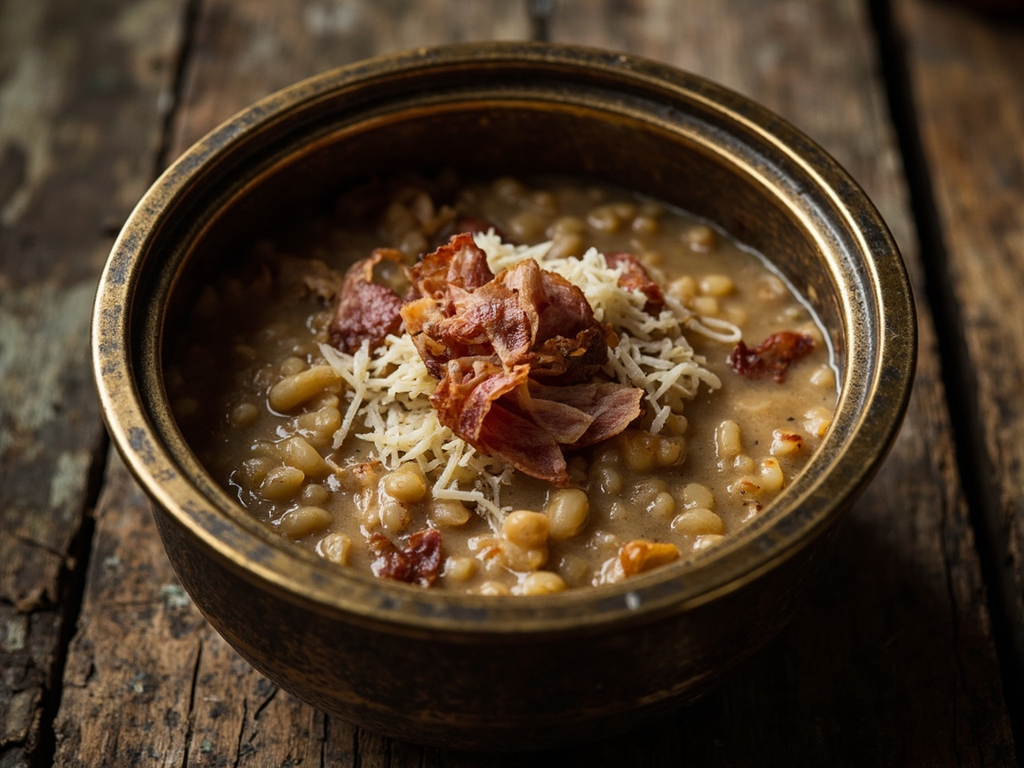
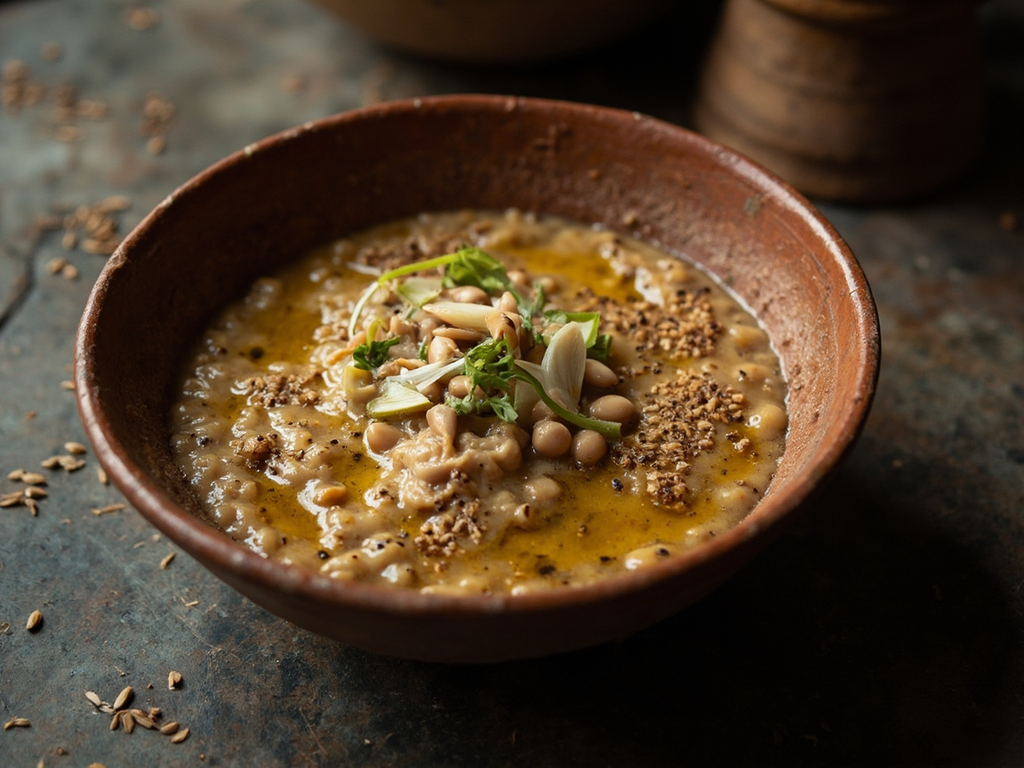
A thick porridge of hulled barley and mashed fava beans, seasoned with olive oil, liquamen, and herbs — the Byzantine staple food, humble but comforting, found from monastery to palace.
Do not think, dear reader, that the master of Romania scorns the poor man's porridge. On the fast days that holy Church teaches me, I set aside meat and break bread before a bowl of long-cooked barley, as the monks of the mountains do. Oil is poured in, a dash of liquamen, a pinch of cumin, and we thank Christ for this simplicity. Believe me: he who knows how to fast on barley governs his soul better than he who gorges on pheasants.
- •Hulled barley — two handfuls (base of the porridge)
- •Dried fava beans — one handful (binder and protein)
- •Olive oil — as needed (fat)
- •Liquamen (garum) — a few drops (salt and umami)
- •Cumin and coriander — a pinch (flavor)
- •Leek — a little (aromatic)
Barley Grouta with Fava Beans and Liquamen
A thick porridge of hulled barley and mashed fava beans, seasoned with olive oil, liquamen, and herbs — the Byzantine staple food, humble but comforting, found from monastery to palace.
Why this dish? Theodosius II was of austere piety, nicknamed "the Calligrapher" for his devotion; he rigorously observed Christian fasts. This barley porridge, a staple food of monks and common people, also appeared at the imperial table on fast days, simply ennobled by better spices.
Do not think, dear reader, that the master of Romania scorns the poor man's porridge. On the fast days that holy Church teaches me, I set aside meat and break bread before a bowl of long-cooked barley, as the monks of the mountains do. Oil is poured in, a dash of liquamen, a pinch of cumin, and we thank Christ for this simplicity. Believe me: he who knows how to fast on barley governs his soul better than he who gorges on pheasants.
Ingredients (period version)
- Hulled barley — two handfuls (base of the porridge)
- Dried fava beans — one handful (binder and protein)
- Olive oil — as needed (fat)
- Liquamen (garum) — a few drops (salt and umami)
- Cumin and coriander — a pinch (flavor)
- Leek — a little (aromatic)
Ingredients
- Hulled barley (pearl) — 150 g (base of the porridge)
- Dried split fava beans — 100 g (soaked overnight) (binder and protein)
- Extra virgin olive oil — 4 tbsp (fat)
- Fish sauce (nuoc-mâm as substitute for garum) — 1 to 2 tsp (salt and umami)
- Ground cumin and coriander — 1/2 tsp each (flavor)
- Sliced leek white — 1 (aromatic)
Method
- Sauté the leek in olive oil until softened.
- Add the barley and drained fava beans, cover generously with water.
- Cook over low heat for 1 to 1 hour 15 minutes, stirring, until a thick porridge forms; mash some of the beans with a spoon.
- At the end of cooking, season with fish sauce, cumin, and coriander.
- Serve hot, drizzled with a splash of raw olive oil.
How it was made : Barley was the grain of the poor and the ascetic; it was cooked into a porridge (grouta, an Eastern polenta) in an earthenware pot over embers. Liquamen replaced salt, and fava beans provided protein on meatless days, which were very numerous in the Byzantine liturgical calendar.
The contemporary twist : Served in a steaming bowl with a poached egg on top and a dusting of za'atar, this grouta becomes a very trendy savory breakfast porridge.
Sources : Apicius, De re coquinaria (recipes for porridges and use of liquamen) · A. Dalby, Flavours of Byzantium (2003)
Theodosius · Charactorium