 flip
flipLamb with Honey, Liquamen, and Long Pepper (in patina)
Lamb with Honey, Liquamen, and Long Pepper (in patina)
Why this dish? At the imperial table of Constantinople, refined meats were served — lamb and poultry mentioned in Theodosius II's diet. The sweet-and-sour marriage of honey and garum, a Romano-Byzantine signature, marked the prestige of the Great Palace kitchens.
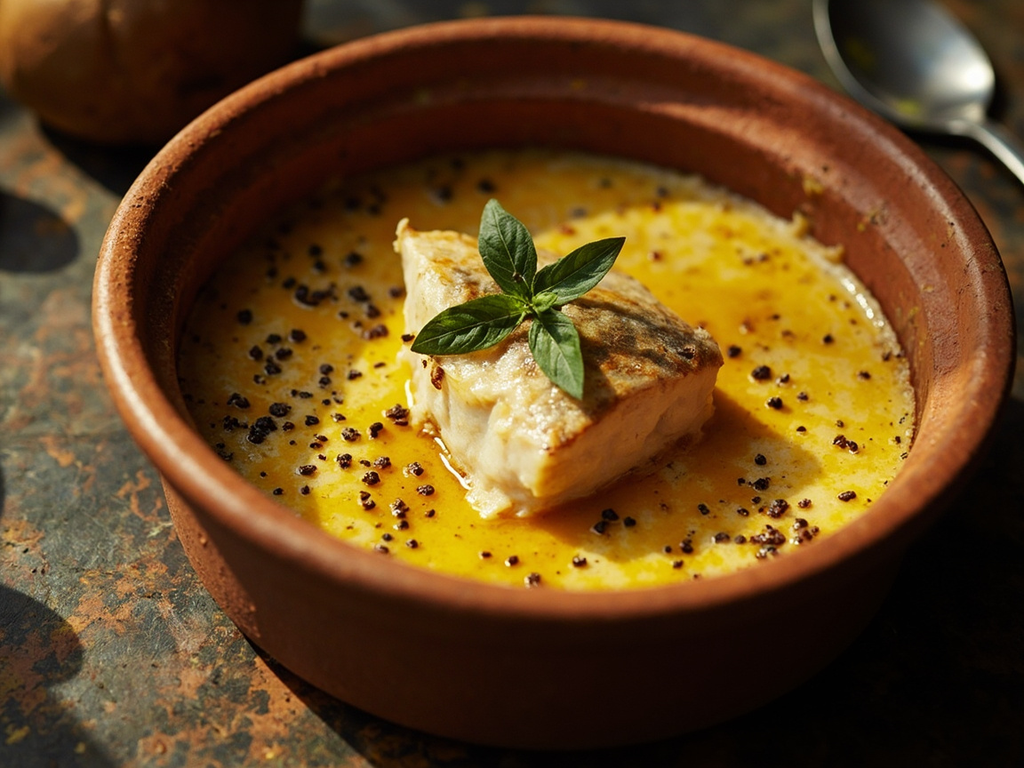
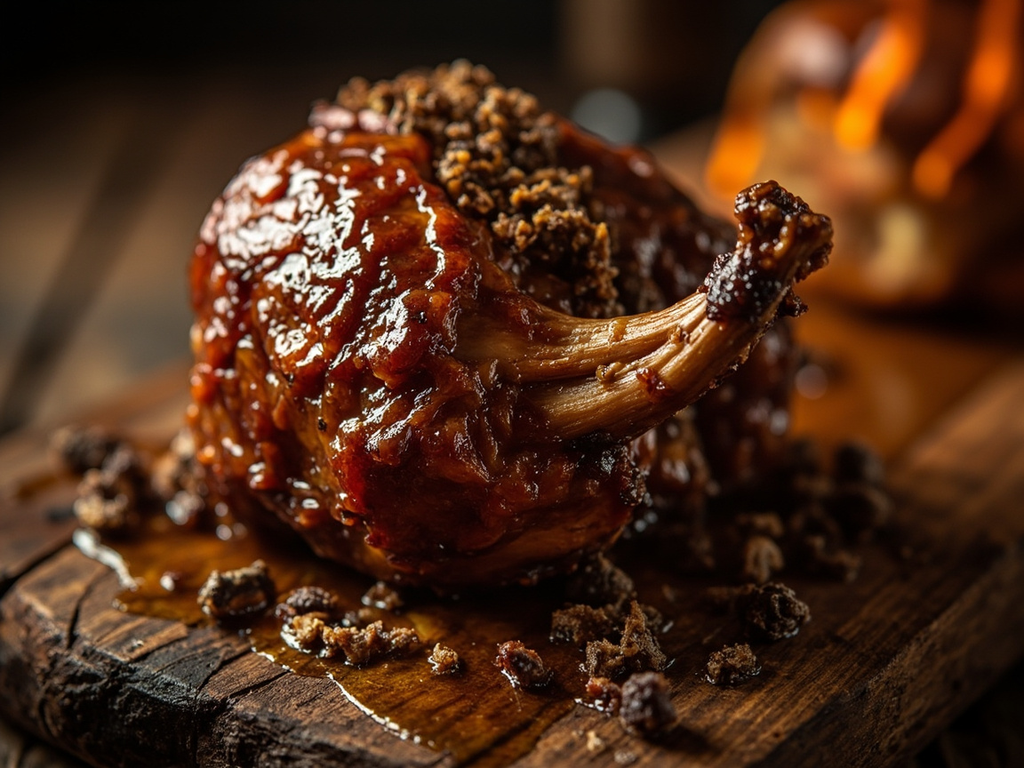
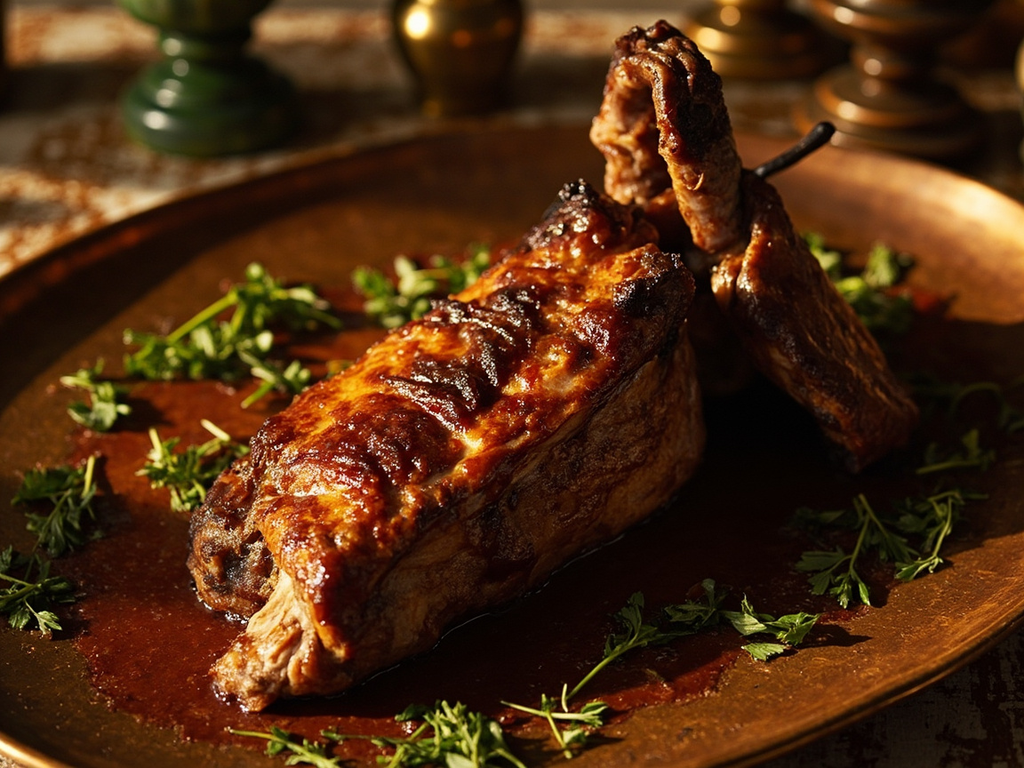
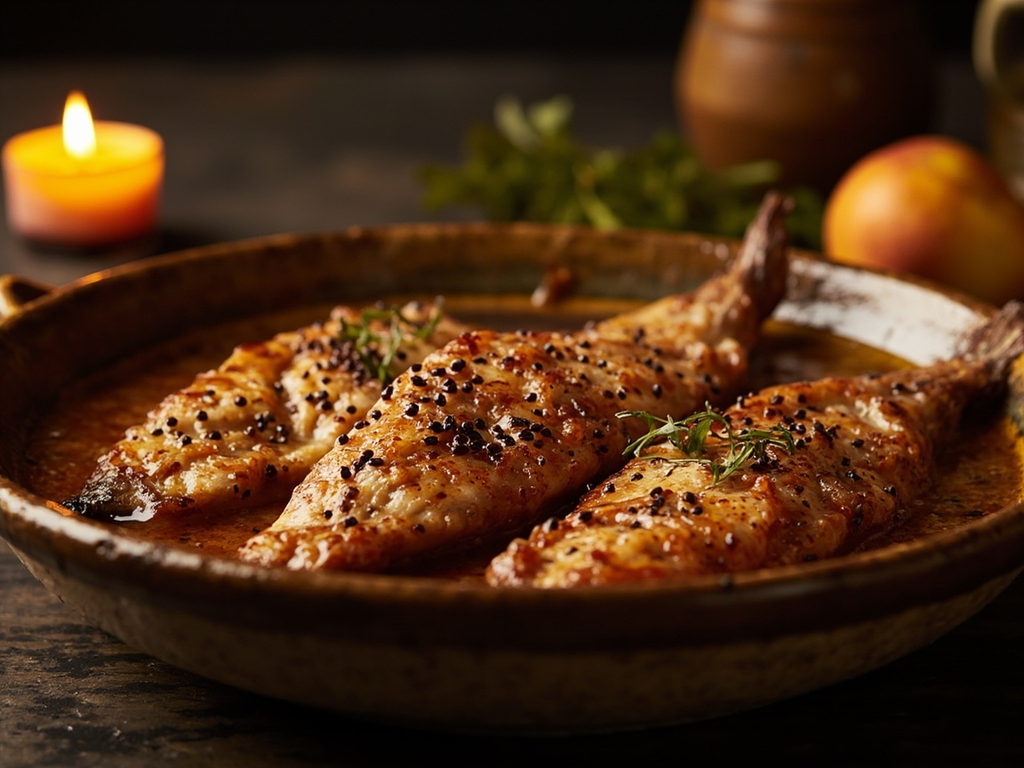
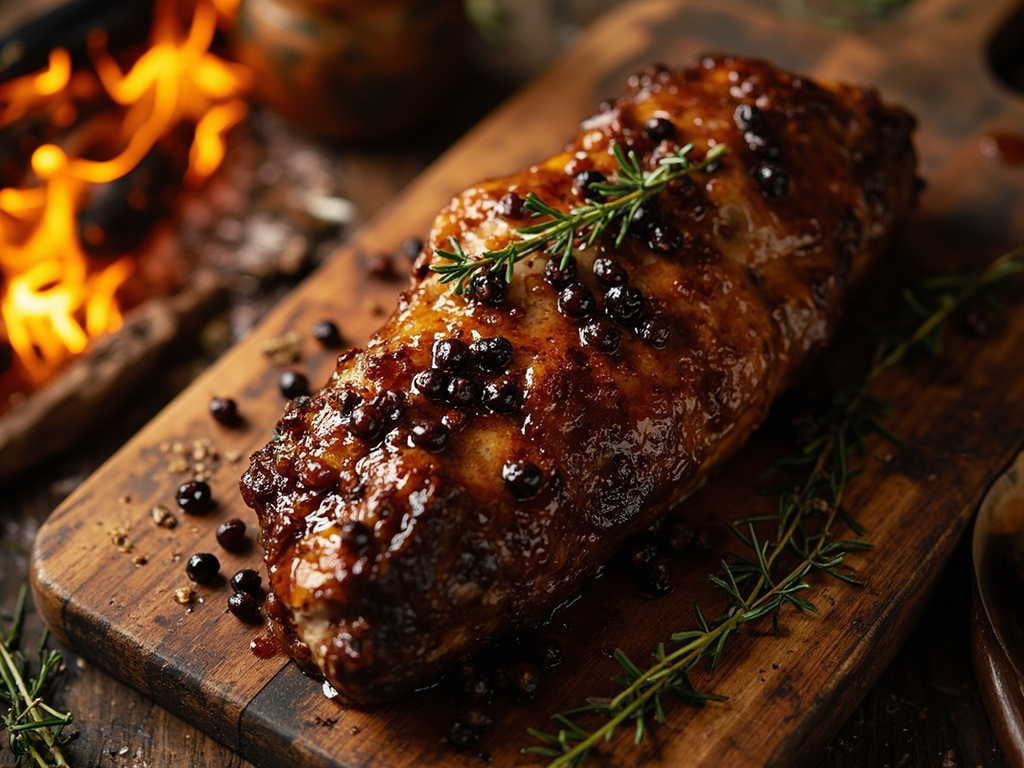
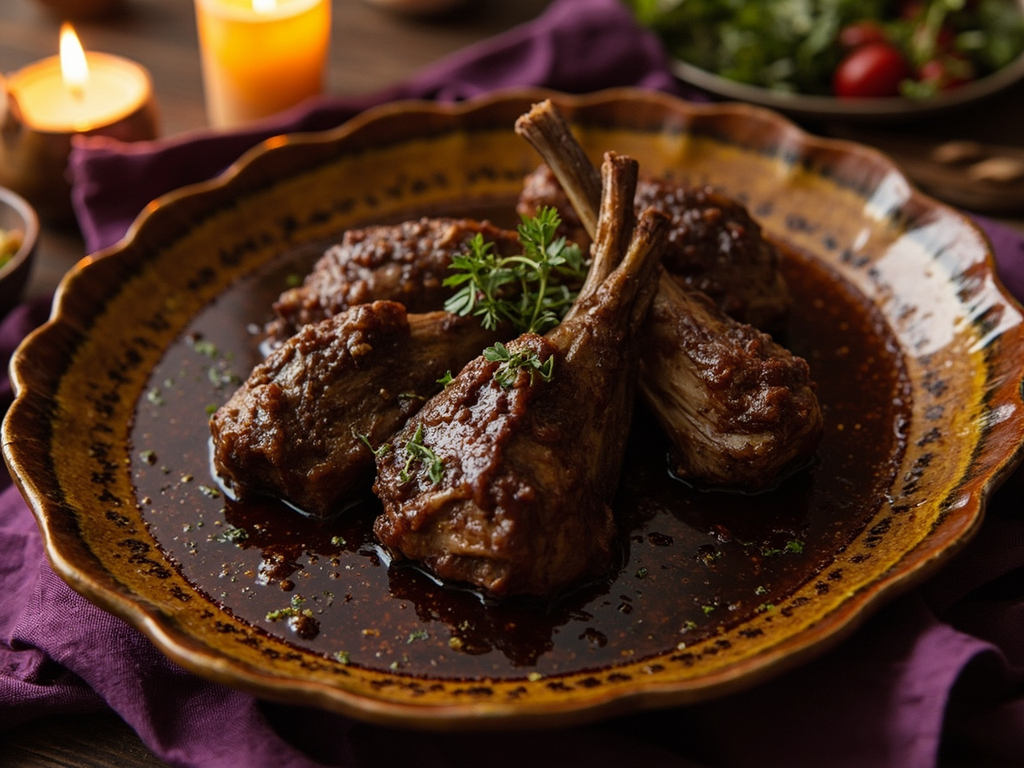
A lamb braised slowly in a dark sauce where honey, liquamen, reduced wine, and Eastern spices meet — the characteristic sweet-and-sour taste of Byzantine banquets.
Come, and see what my cooks prepare for the deipnon! We take the young lamb, sear it, then let it simmer in Thracian honey and the finest liquamen, with the long pepper that merchants bring me from the borders of Persia. The cooked wine gives the sauce its purple color — my color, that of the Empire. Taste how sweet and salty embrace: thus one governs, by measure between rigor and grace.
- •Lamb shoulder — one piece (noble meat)
- •Honey — generously (sweetness)
- •Liquamen (garum) — a drizzle (salt and umami)
- •Cooked wine (defrutum) — a cup (color and depth)
- •Long pepper, cumin, coriander — to taste (Eastern spices)
- •Rue and dried mint — a little (herbs)
Lamb with Honey, Liquamen, and Long Pepper (in patina)
A lamb braised slowly in a dark sauce where honey, liquamen, reduced wine, and Eastern spices meet — the characteristic sweet-and-sour taste of Byzantine banquets.
Why this dish? At the imperial table of Constantinople, refined meats were served — lamb and poultry mentioned in Theodosius II's diet. The sweet-and-sour marriage of honey and garum, a Romano-Byzantine signature, marked the prestige of the Great Palace kitchens.
Come, and see what my cooks prepare for the deipnon! We take the young lamb, sear it, then let it simmer in Thracian honey and the finest liquamen, with the long pepper that merchants bring me from the borders of Persia. The cooked wine gives the sauce its purple color — my color, that of the Empire. Taste how sweet and salty embrace: thus one governs, by measure between rigor and grace.
Ingredients (period version)
- Lamb shoulder — one piece (noble meat)
- Honey — generously (sweetness)
- Liquamen (garum) — a drizzle (salt and umami)
- Cooked wine (defrutum) — a cup (color and depth)
- Long pepper, cumin, coriander — to taste (Eastern spices)
- Rue and dried mint — a little (herbs)
Ingredients
- Boneless lamb shoulder — 1.2 kg (noble meat)
- Honey — 3 tbsp (sweetness)
- Fish sauce (substitute for garum) — 2 tbsp (salt and umami)
- Red wine reduced by half with 1 tbsp grape must/raisin — 200 ml (color and depth)
- Ground pepper, cumin, coriander — 1 tsp each (spices)
- Dried mint — 1 tsp (herb)
Method
- Sear the lamb cut into large pieces in a little oil, on all sides.
- Deglaze with the reduced wine, add honey, fish sauce, and spices.
- Cover halfway with water or broth, cover, and braise for 2 hours over very low heat.
- Uncover at the end of cooking to let the sauce coat and caramelize slightly.
- Sprinkle with dried mint and serve with bread or barley grouta.
How it was made : Imperial kitchens braised meats in complex sauces bound with honey and liquamen; long pepper and spices, a sign of wealth, arrived via trade routes that the Eastern Empire controlled. Defrutum (reduced grape must) gave color and roundness.
The contemporary twist : Shredded and served in grilled pita bread with mint yogurt, this imperial lamb becomes a sweet-and-sour 'gyros' for a feast.
Sources : Apicius, De re coquinaria, Book VIII (lamb with honey and liquamen) · A. Dalby, Flavours of Byzantium (2003)
Theodosius · Charactorium